Custom-built, life-size exhibits engineered to your venue — your dimensions, your movement set, your control type.

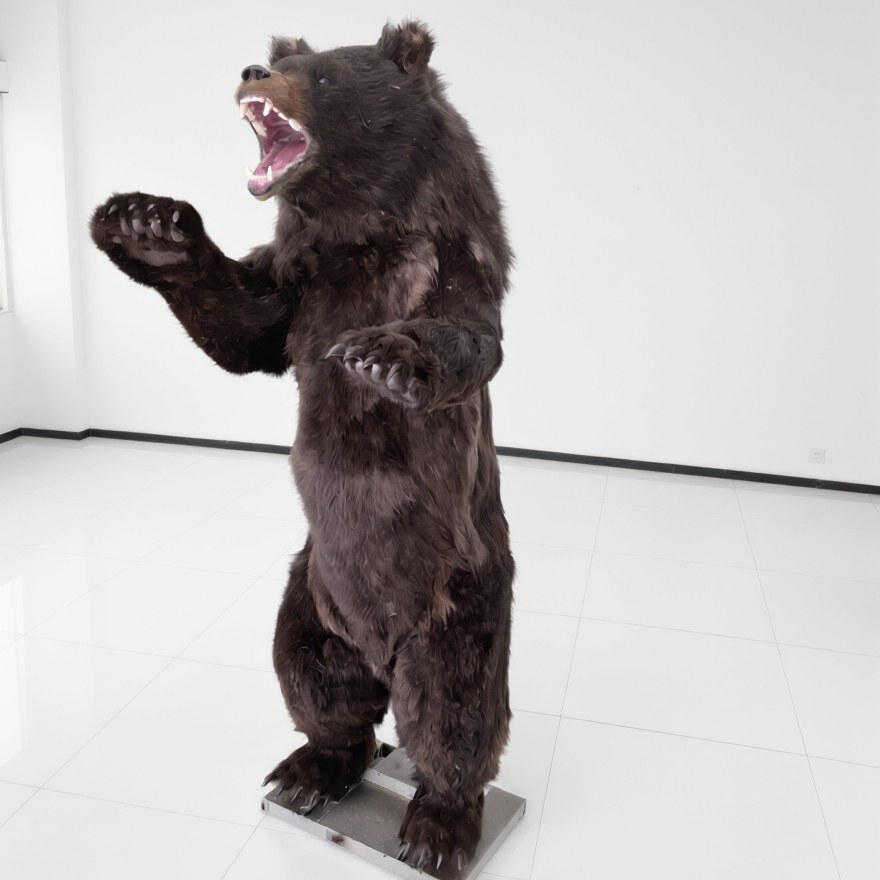
A brown bear is read from its mass — the humped shoulders, the heavy forelimbs and the broad…
View Product
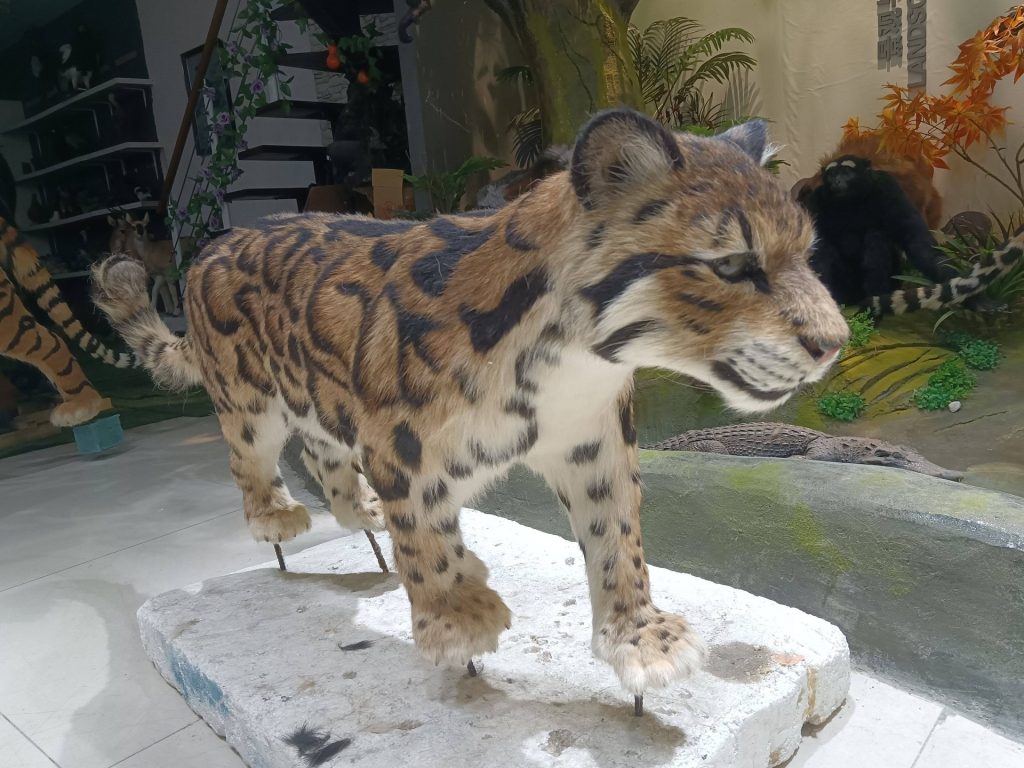
A clouded leopard is read from its markings — the large, irregular cloud-shaped dark rosettes over a pale…
View Product
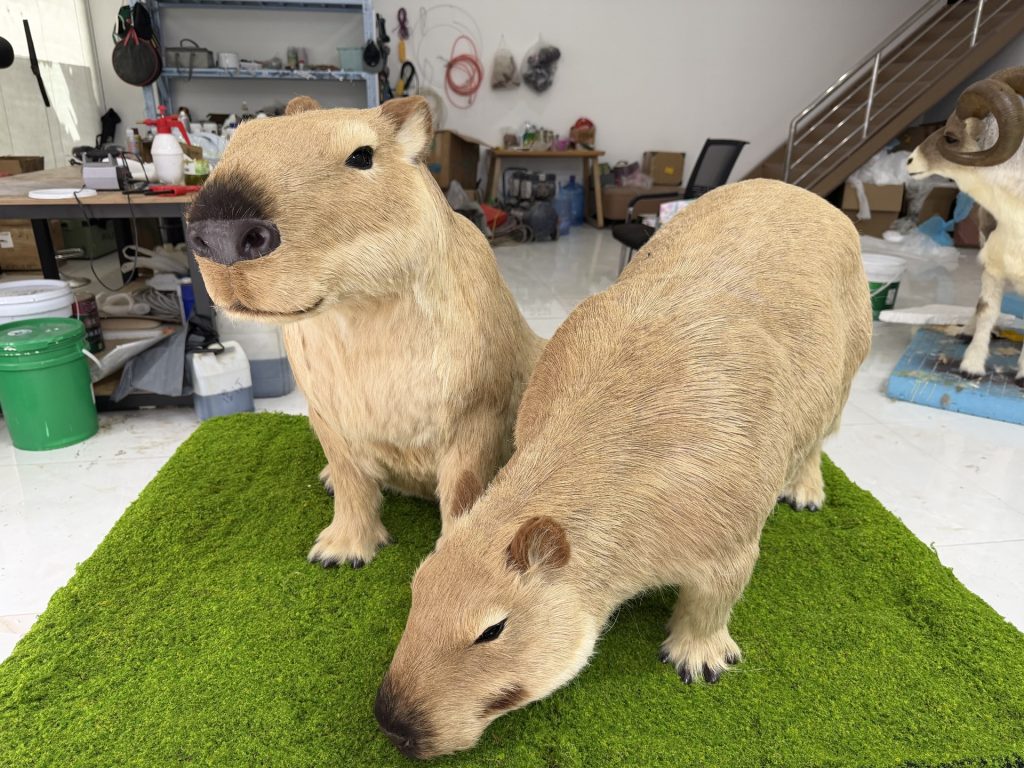
A capybara is read from its shape first — the barrel body, the blunt rounded snout and the…
View Product
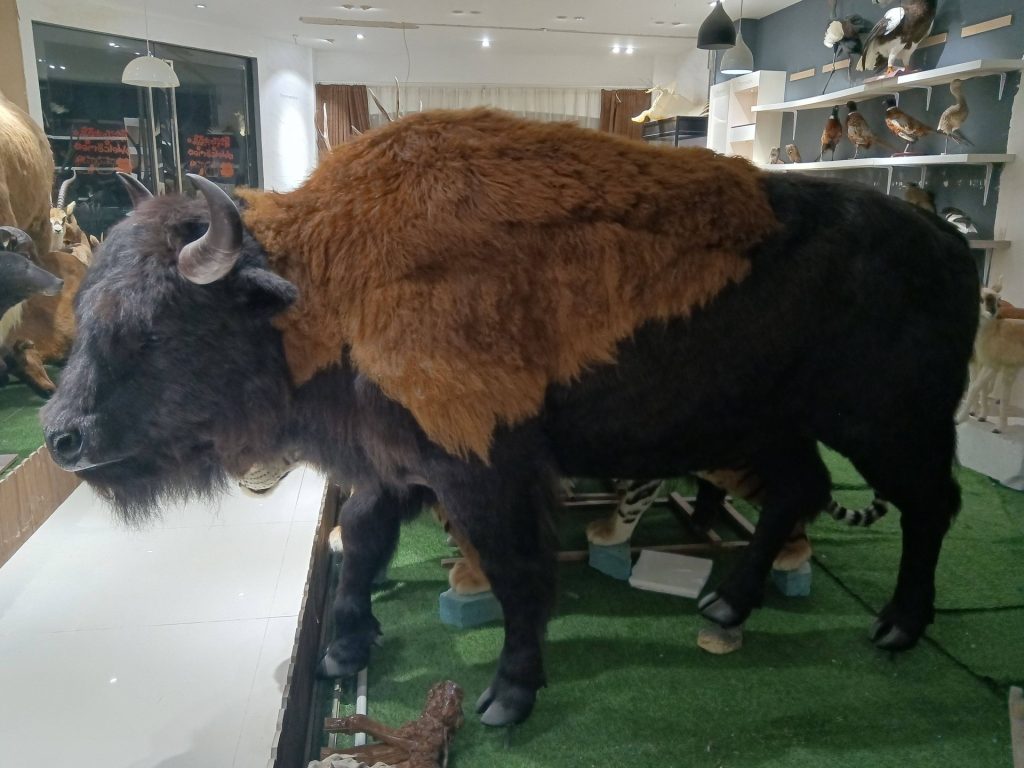
A bison is read from its hump — the high shoulder mound and the shaggy dark coat over…
View Product
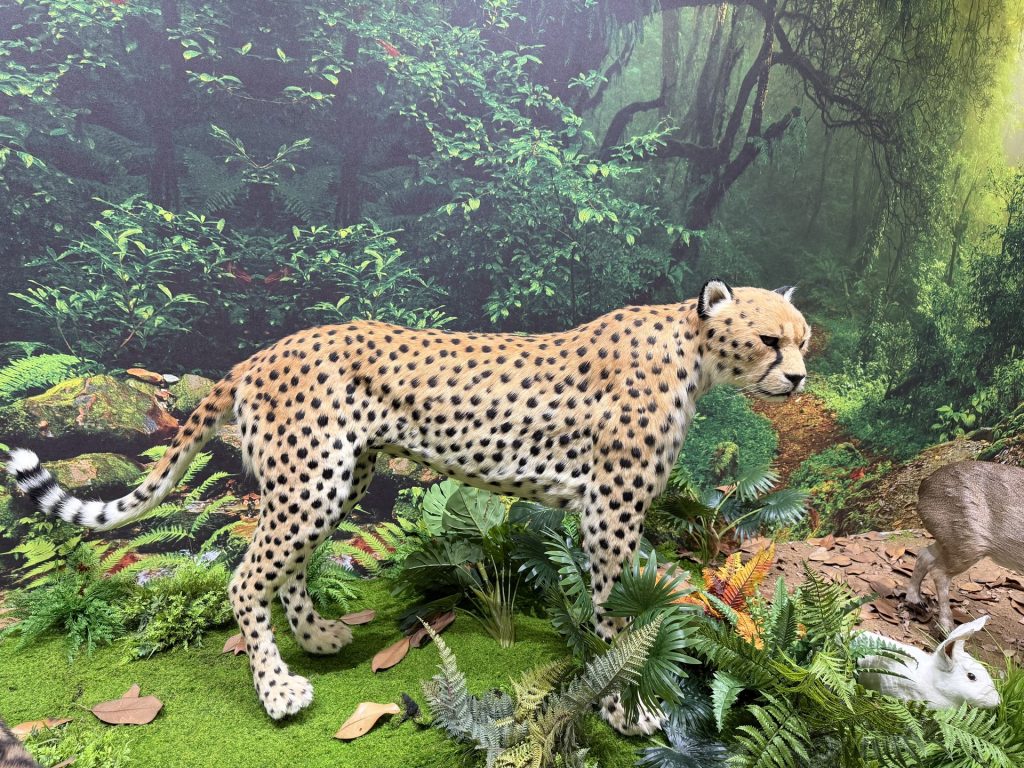
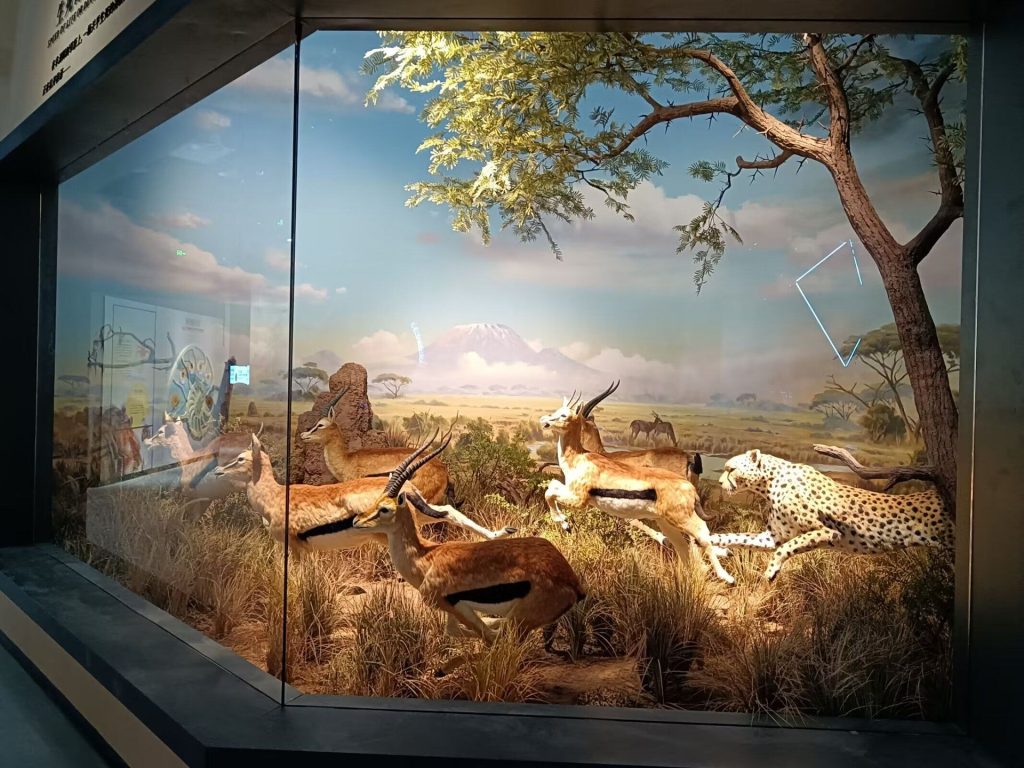
A cheetah is read from its lines — the small head, the solid black spots and the black…
View Product
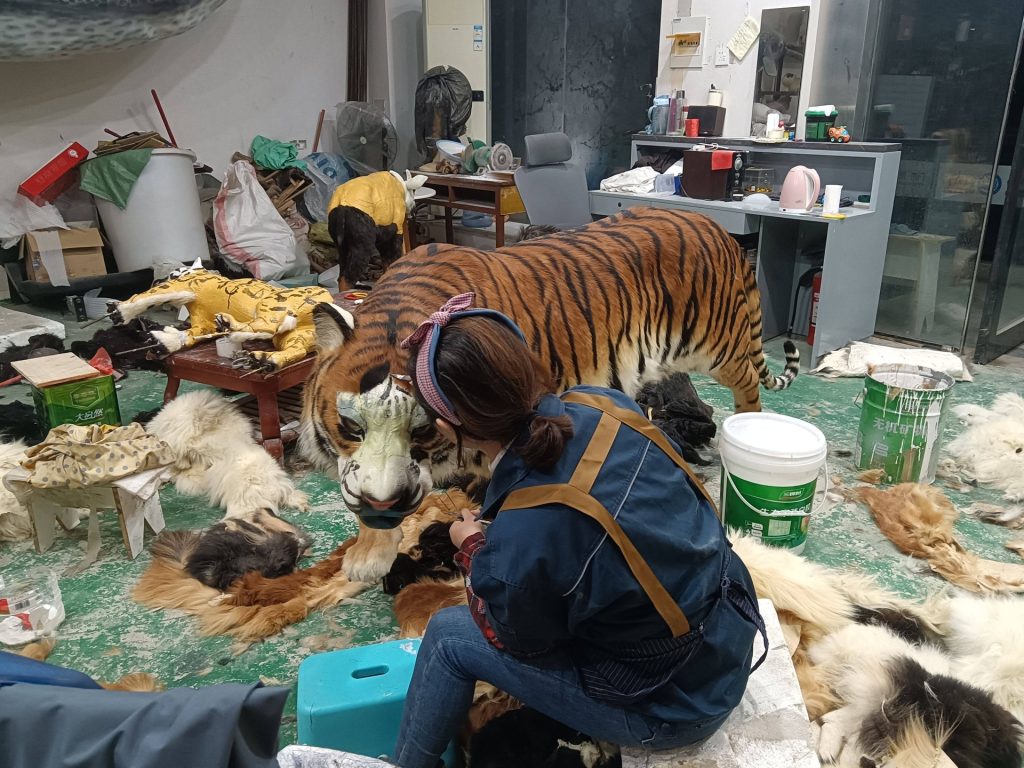
A tiger is read from its stripes and its weight — the orange coat with black bands, the…
View Product
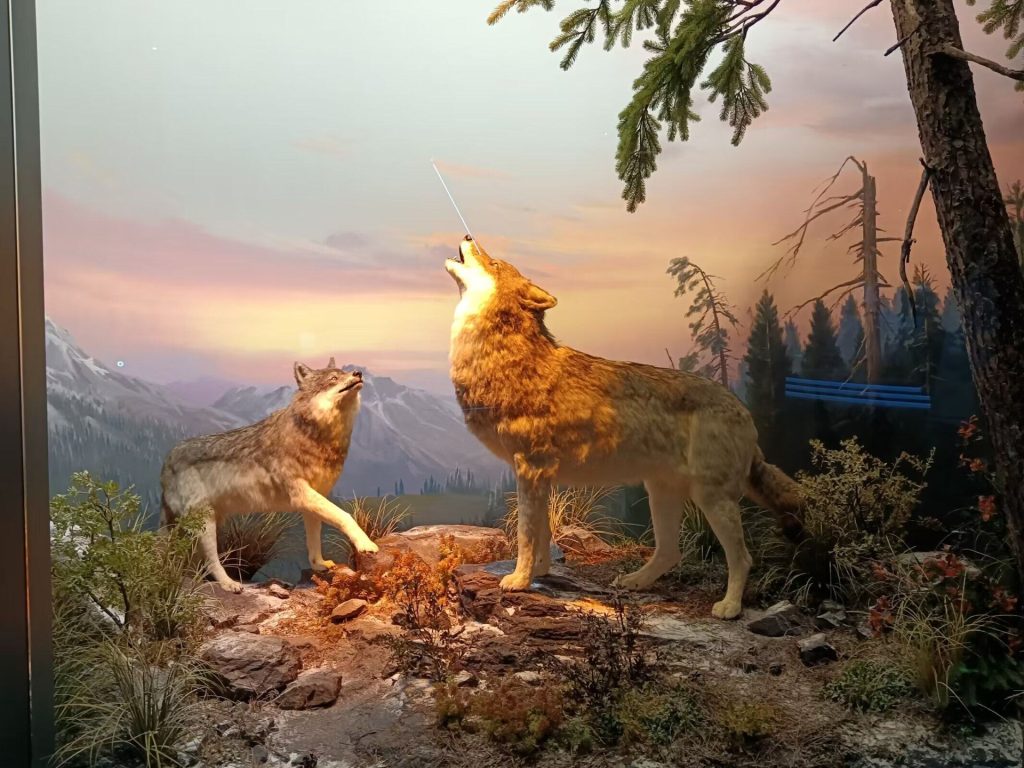
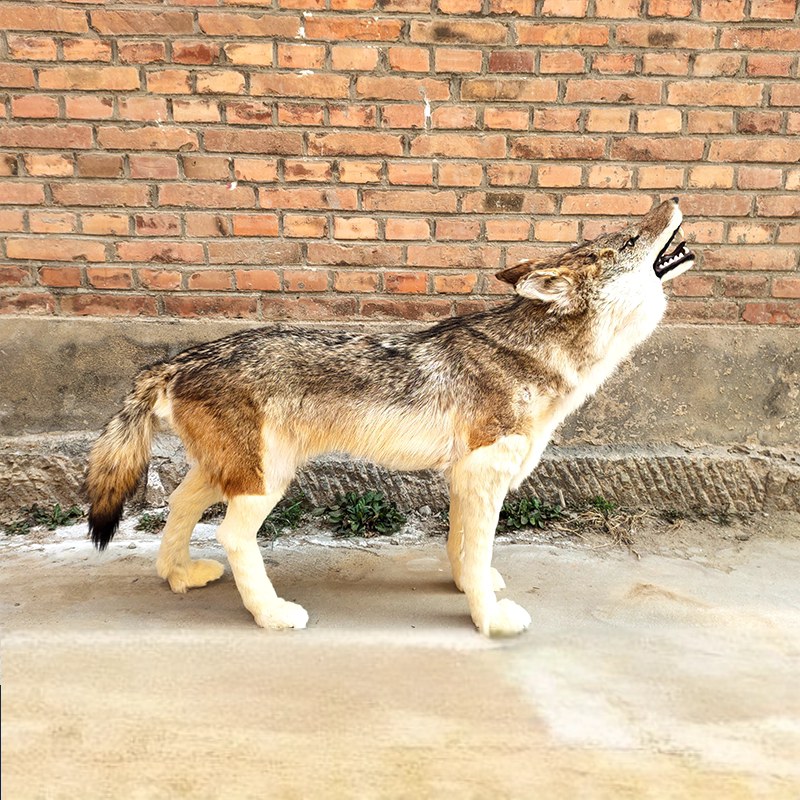
A wolf is read from the head and the coat — the upright ears, the long muzzle and…
View Product
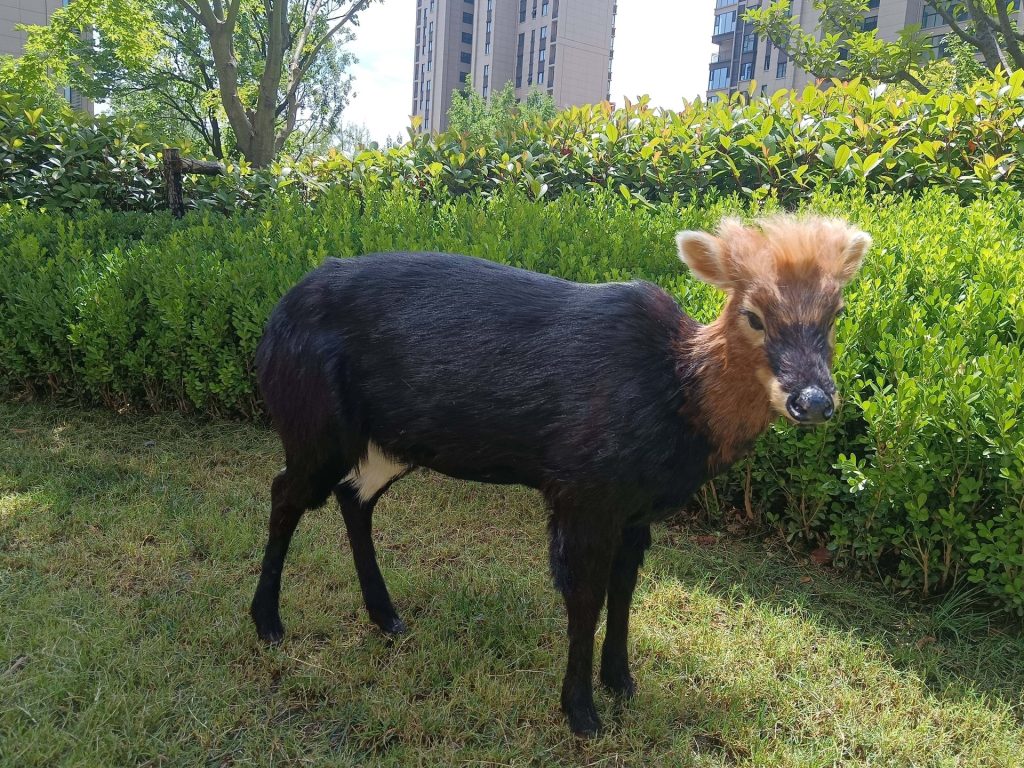
A muntjac is read from its small deer build and its single short antler behind a bare pedicel…
View Product
A gazelle is read from its grace — the slender legs, the tan coat with a black flank…
View Product
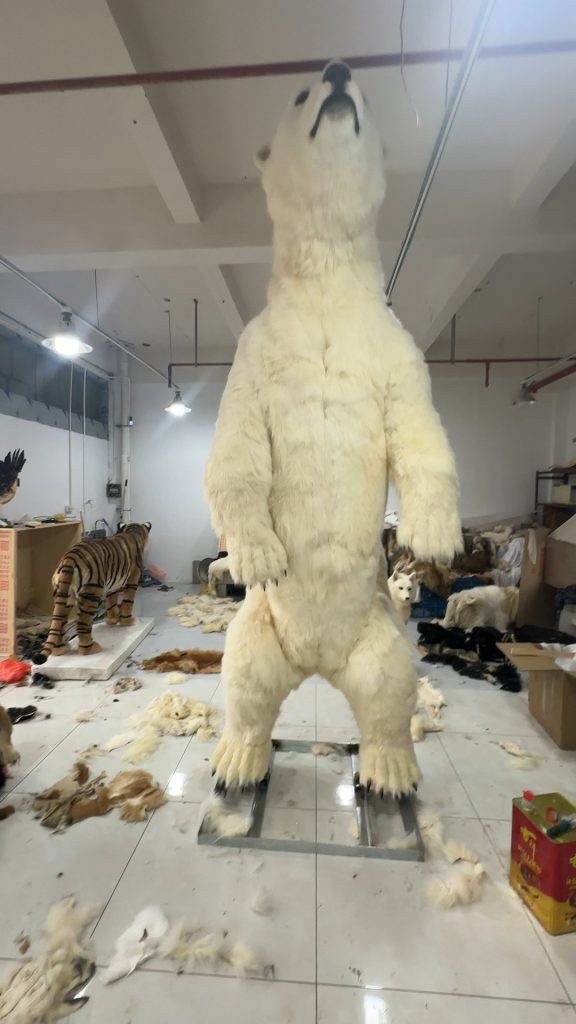
A polar bear is read from its pale mass and its gait — the long body, the plantigrade…
View Product
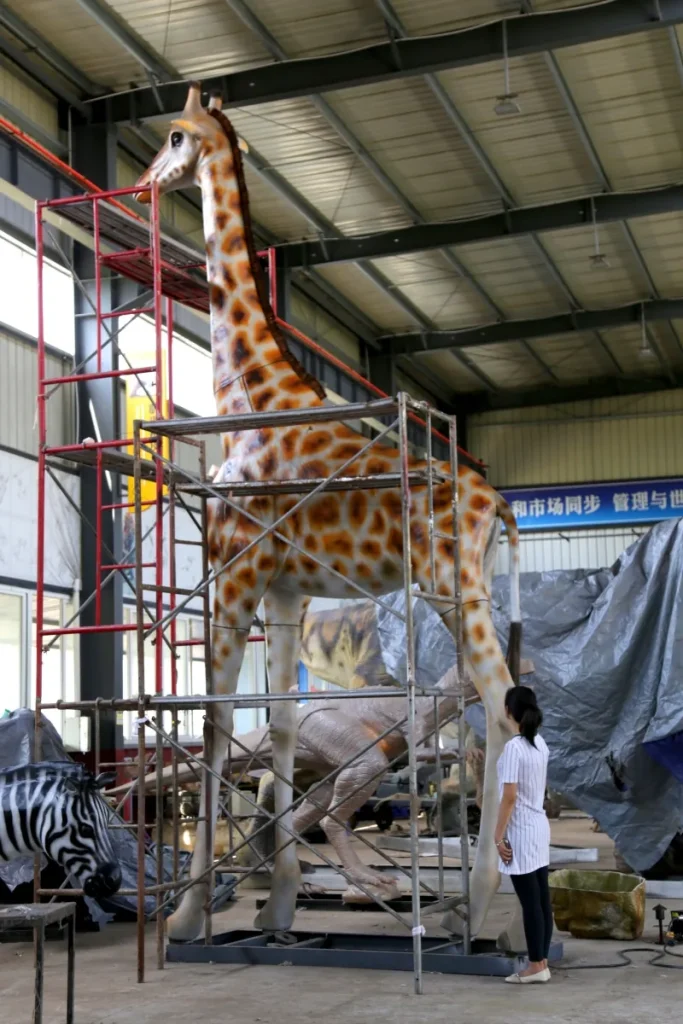
Life-size animatronic giraffe from 2 to 6 m, with a multi-section neck, hand-painted pattern and optional browsing pose.…
View Product
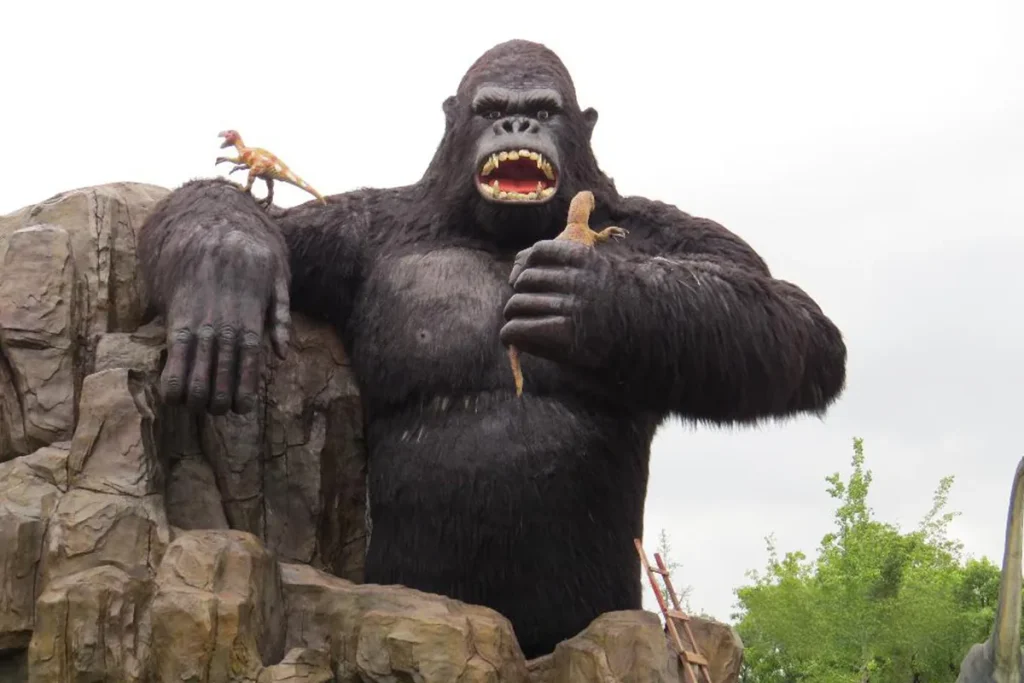
Life-size animatronic silverback gorilla with hand-rooted hair, twelve motion points and a calm sensor response. For zoo zones,…
View Product
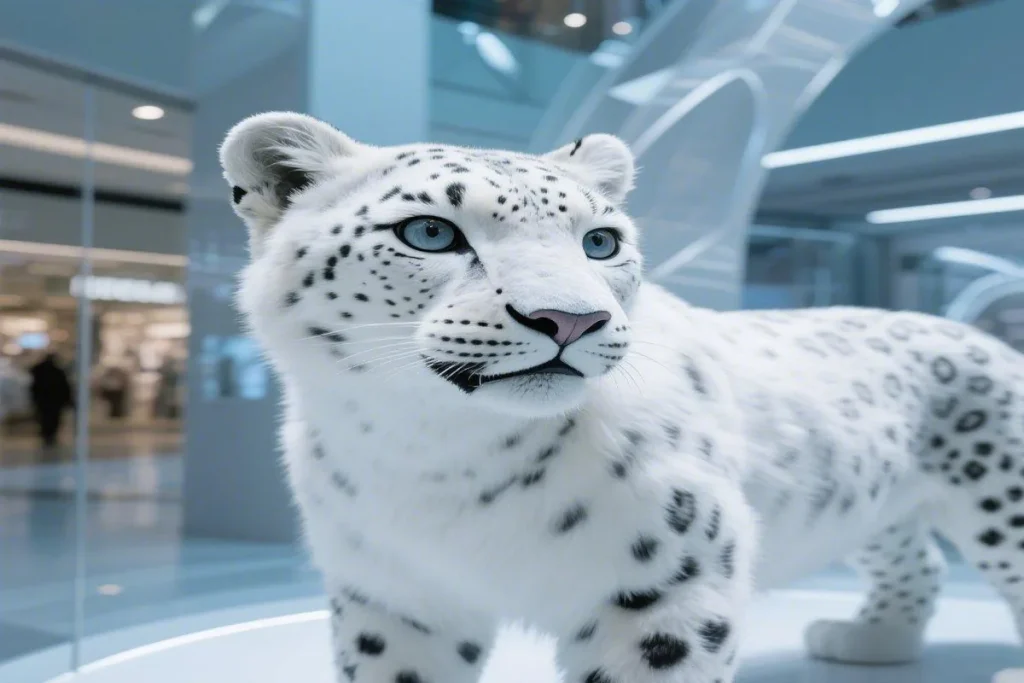
Life-size animatronic snow leopard with a full-length balancing tail, rosette-painted coat and chuff call. Built for mountain zoo…
View Product
A wolf is read from the head and the coat — the upright ears, the long muzzle and…
View Product
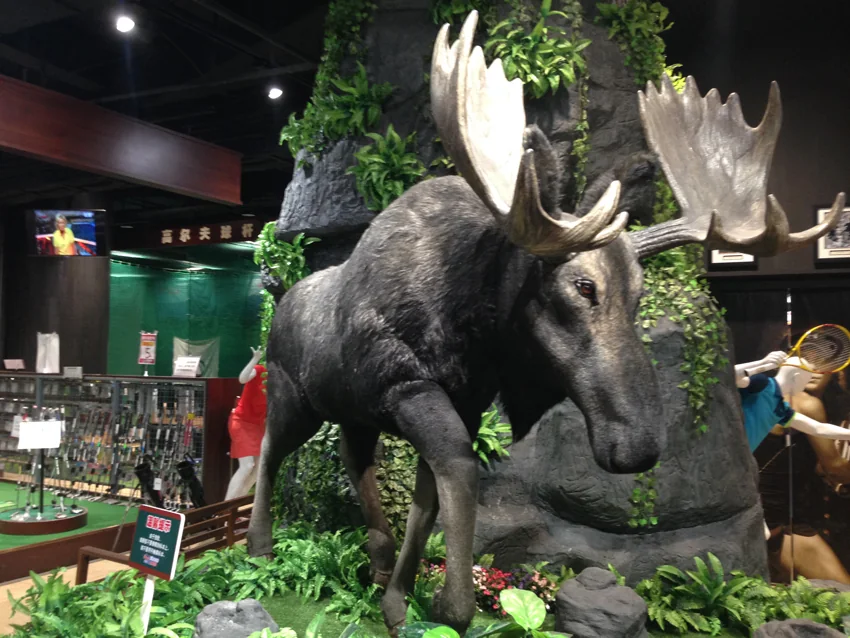
A moose is recognised by three things and nothing else: the palmate antlers, the hanging dewlap under the…
View Product
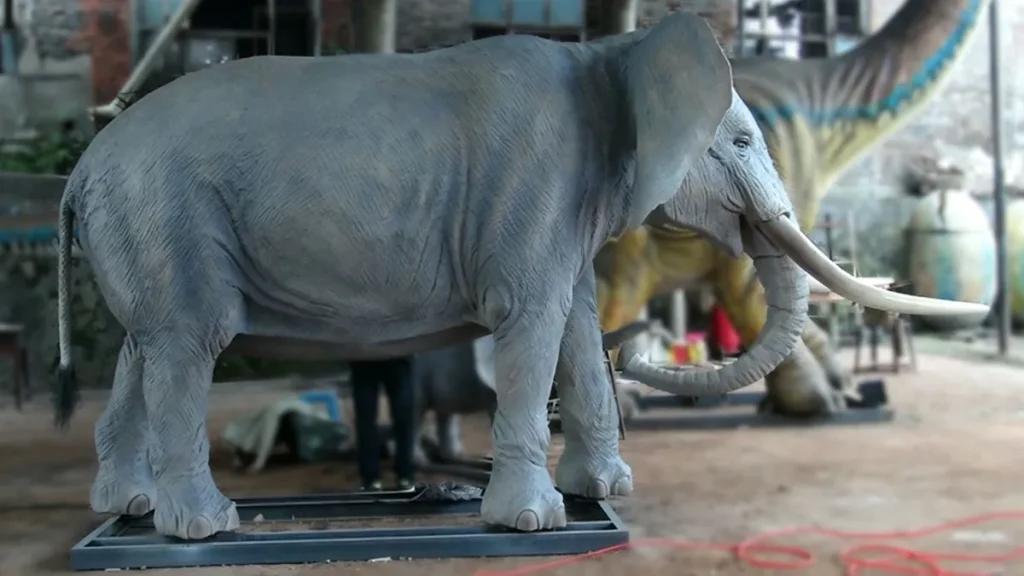
Our animatronic African elephant brings Loxodonta africana to life at full scale — from the deeply wrinkled skin…
View Product
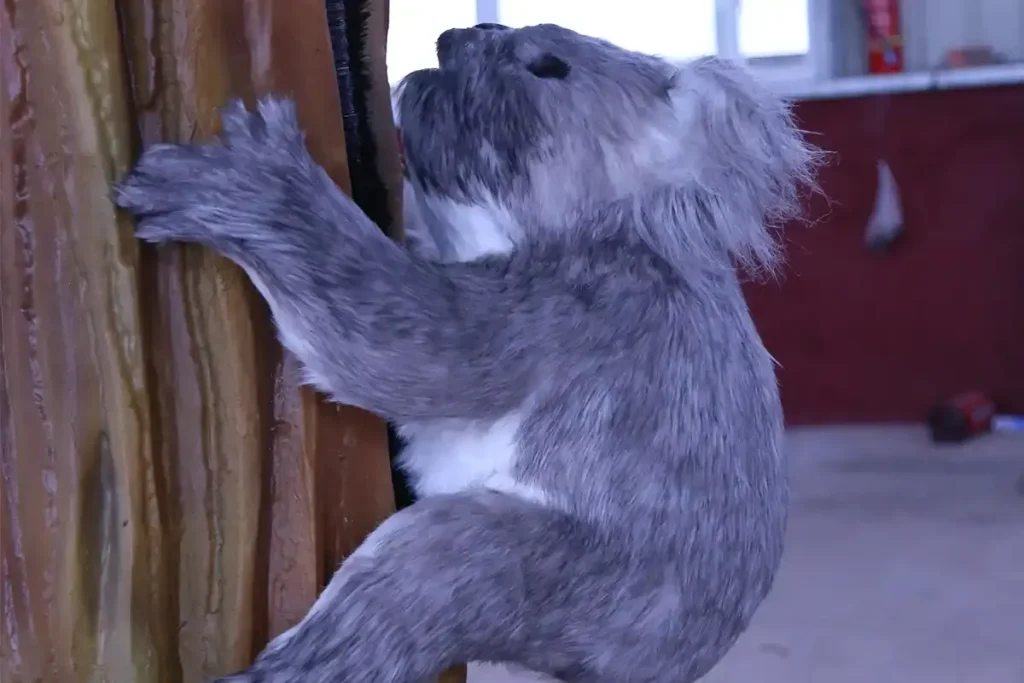
A koala on the ground is a grey lump. The species is defined by its grip: curled around…
View Product
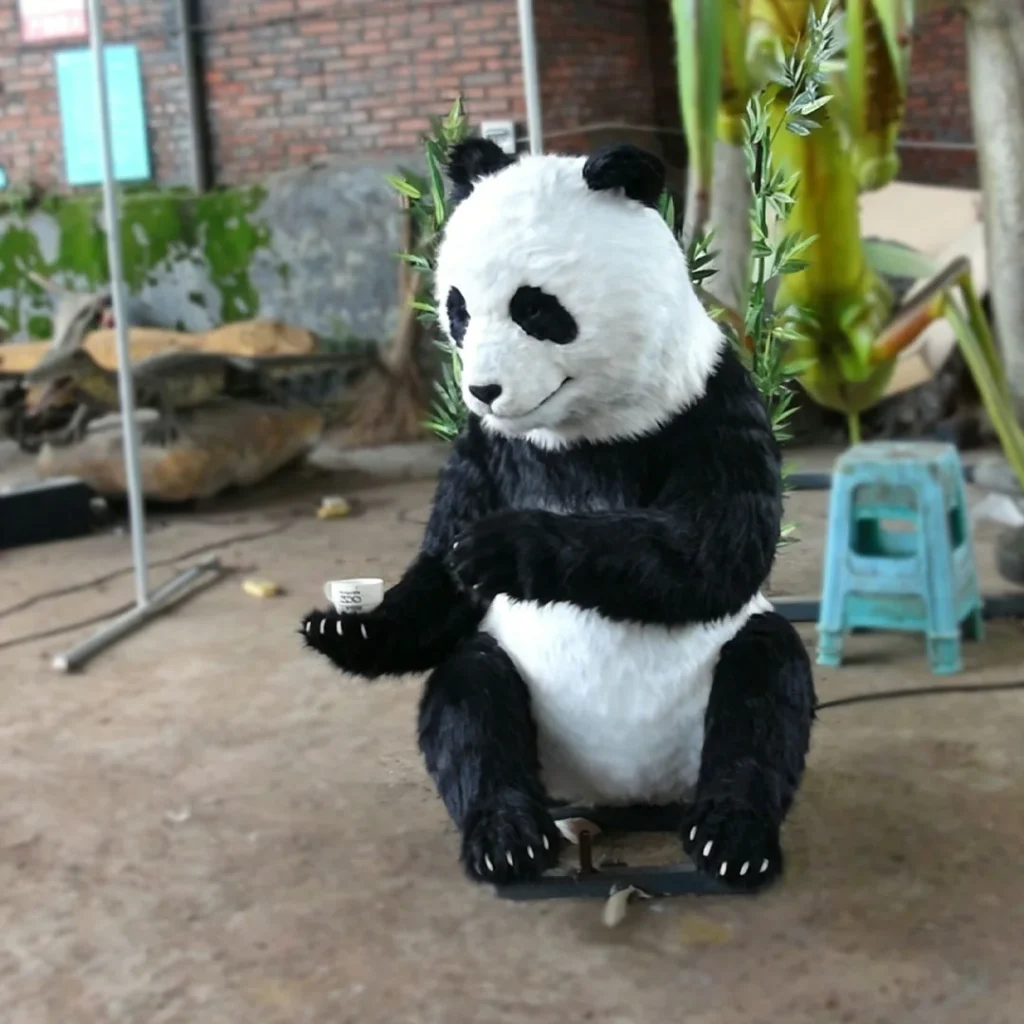
A panda is the most photographed animal in the catalogue and the one where a small error is…
View Product
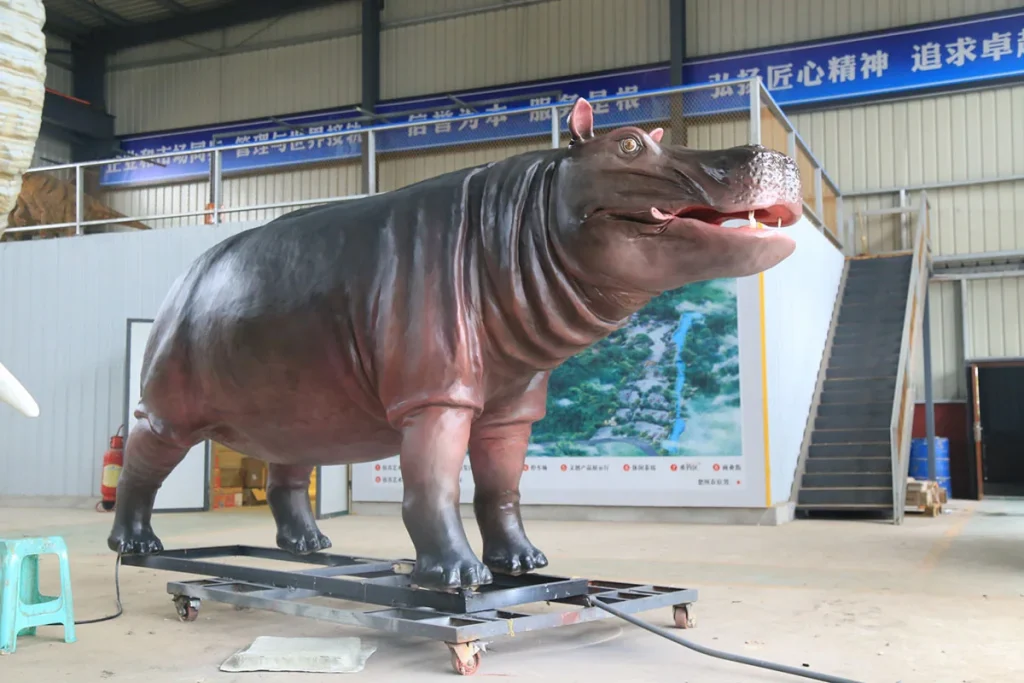
A hippopotamus is the one animal where the motion design is mostly about restraint. Real hippos stand still…
View Product
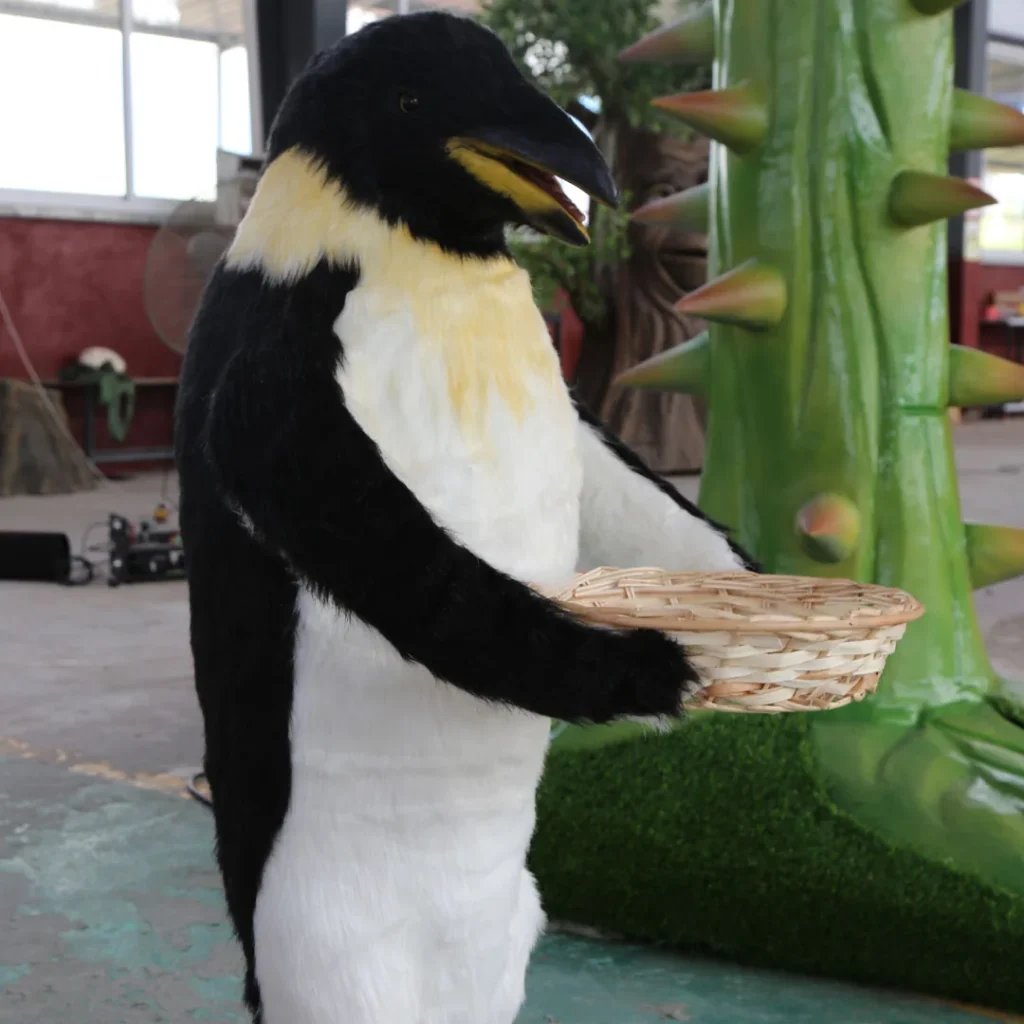
One penguin reads as a toy. Five, at different heights, with one bent over and one mid-waddle, read…
View Product
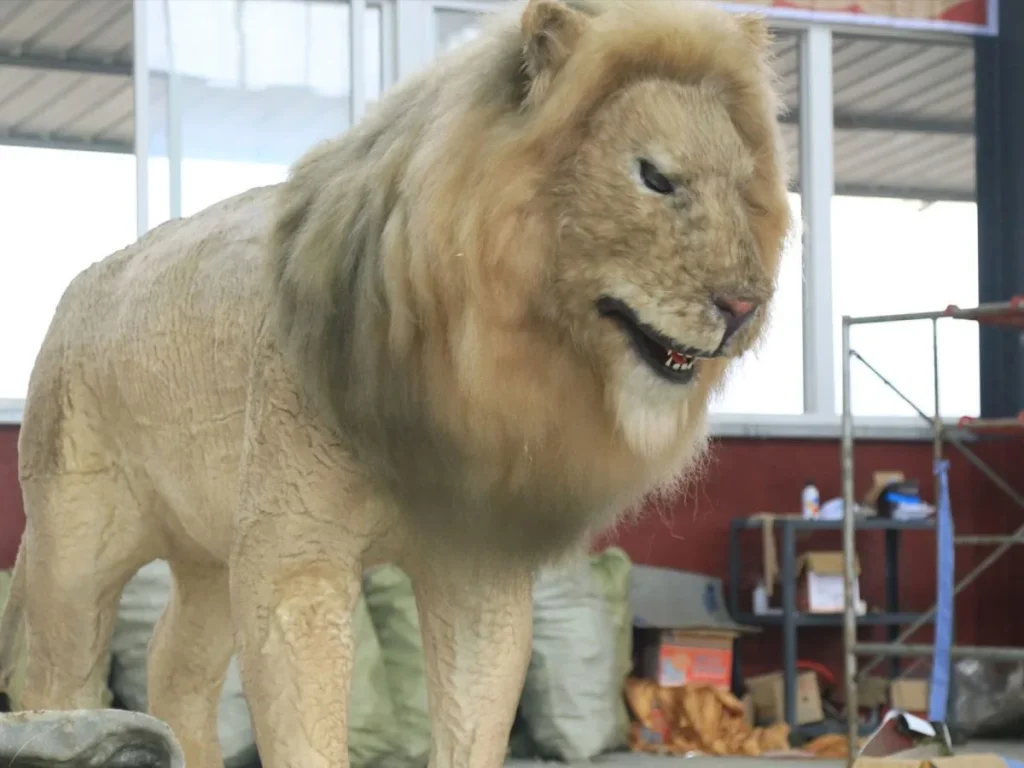
A lion is the easiest animal in the catalogue to get wrong. Everyone knows what a lion looks…
View Product
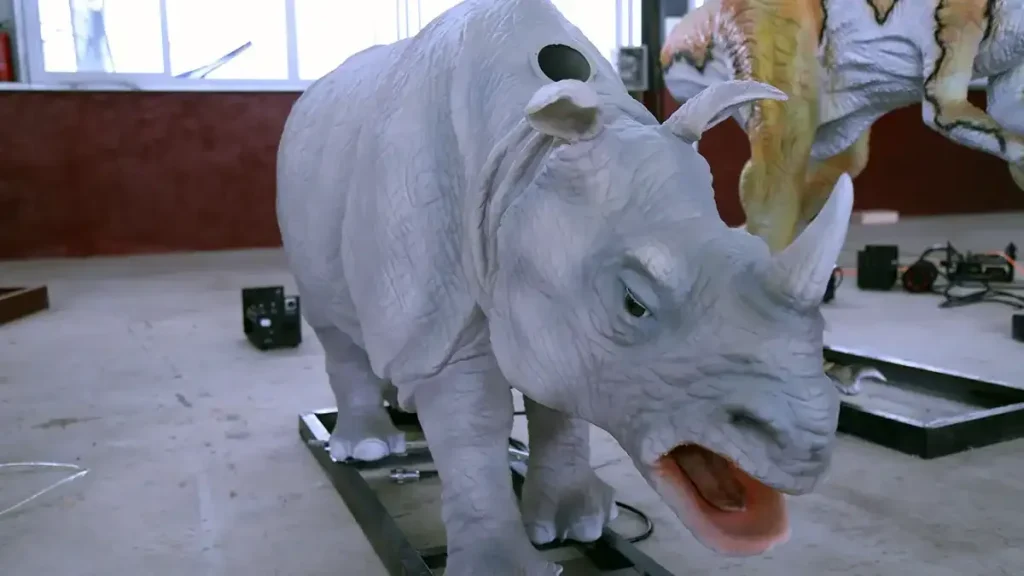
Animatronic white rhino built for year-round outdoor display — mouth and vocal system, head raise, concrete base for…
View Product
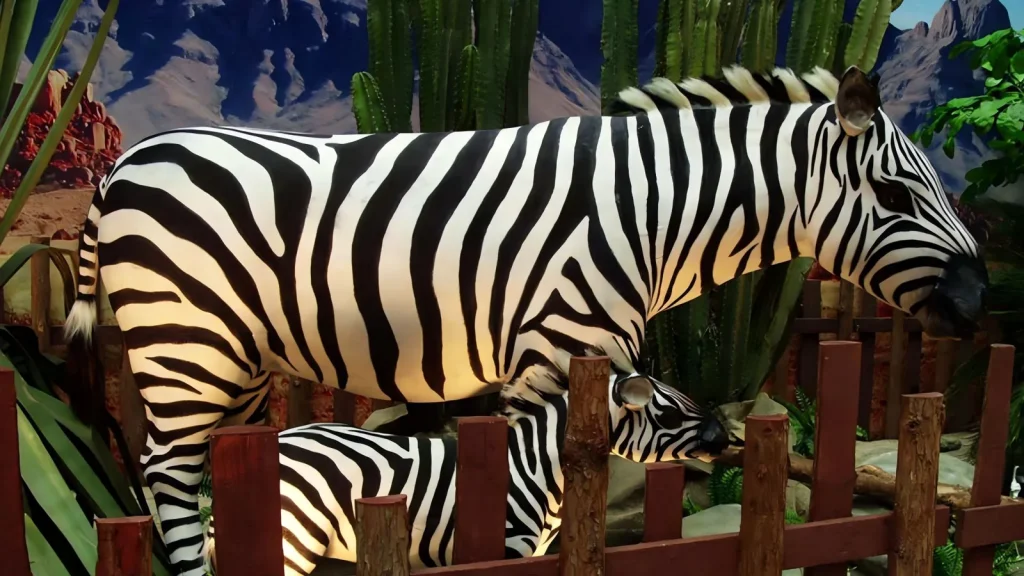
Life-size animatronic zebra mare and foal with individually painted stripes and coordinated mother-and-offspring behaviour for savanna exhibits.
View Product
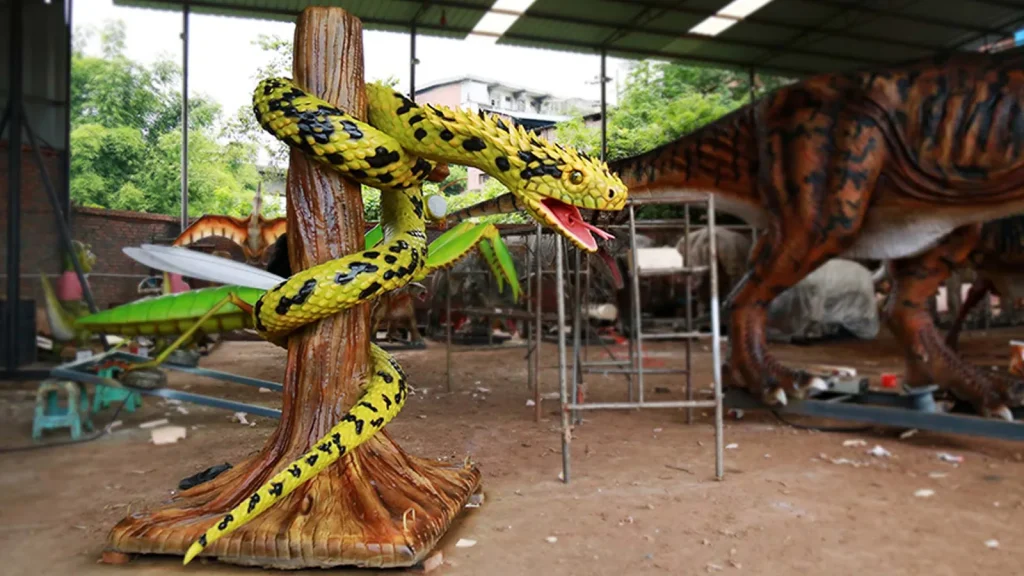
Animatronic python coiled on a branch — individually sculpted scales, flicking forked tongue, coiling motion and hissing audio…
View ProductAnimals are harder than dinosaurs, and it is not the engineering. It is that every visitor has seen a real lion, and knows exactly how one stands. A dinosaur has room for interpretation; a zebra does not.
So the work moves from skeleton to surface. Hair direction, mane volume, the way weight sits on the front legs of a big cat, the set of the ears — these are what separate a convincing animal from a mascot. Our builds use moulded skin with hand-applied fur detail rather than a fur fabric glued to a shell, because fabric reads wrong at three metres and cannot be repaired invisibly.
Two very different briefs. A zoo wants an animal that matches its collection and behaves like the real thing — slow, idle, occasionally reactive. A mall wants something that photographs well and survives being touched by a thousand children a week. The same species is specified differently for each: zoo builds prioritise behaviour and anatomy, mall builds prioritise skin durability and a fixed, safe footprint.
Indoor and outdoor similarly. A panda in a shaded garden ages well; the same panda in full sun shows yellowing on the white sections first, and that cannot be reversed.
The same questions we answer in email, published openly — sizing, cost drivers, technology and lead times.

The four parts that fail first, the weekly to annual service schedule, the spare kit that prevents closures, and what really sets service life.
Read Article
Planning ranges for power by figure size, what changes when actions are pneumatic, compressor and generator sizing, and the eight numbers worth specifying.
Read Article
Which details actually fail on an outdoor animatronic dinosaur, the IP ratings to specify by zone, and how wind, snow and cabinet placement decide whether it survives year five.
Read ArticleSend us the floor plan and ceiling or canopy clearance. As a rule of thumb, allow 1.5× the model's length as clear space so the movement reads properly and visitors can step back. We model the footprint in 3D before you commit.
30–45 days for the build itself, once drawings and material samples are approved. Add crating, ocean or air freight and on-site installation — you get a dated schedule before the deposit, not after.
Yes, if it is specified for it. Outdoor builds get corrosion-protected Q235 frames and sealed electrical enclosures, rated from −20°C to +60°C. Indoor-only models are cheaper — we will tell you when you do not need the outdoor spec.
An installation manual, wiring diagrams, a spare-parts list and a maintenance guide — plus a 12-month warranty with maintenance support and remote troubleshooting for control and drive issues.
Send us your venue, species list and rough dimensions. You'll get a realistic feasibility read and a ballpark lead time — no pressure, no template replies.
Or email info@hltdino.com — we reply within one business day.