Animatronic Animals
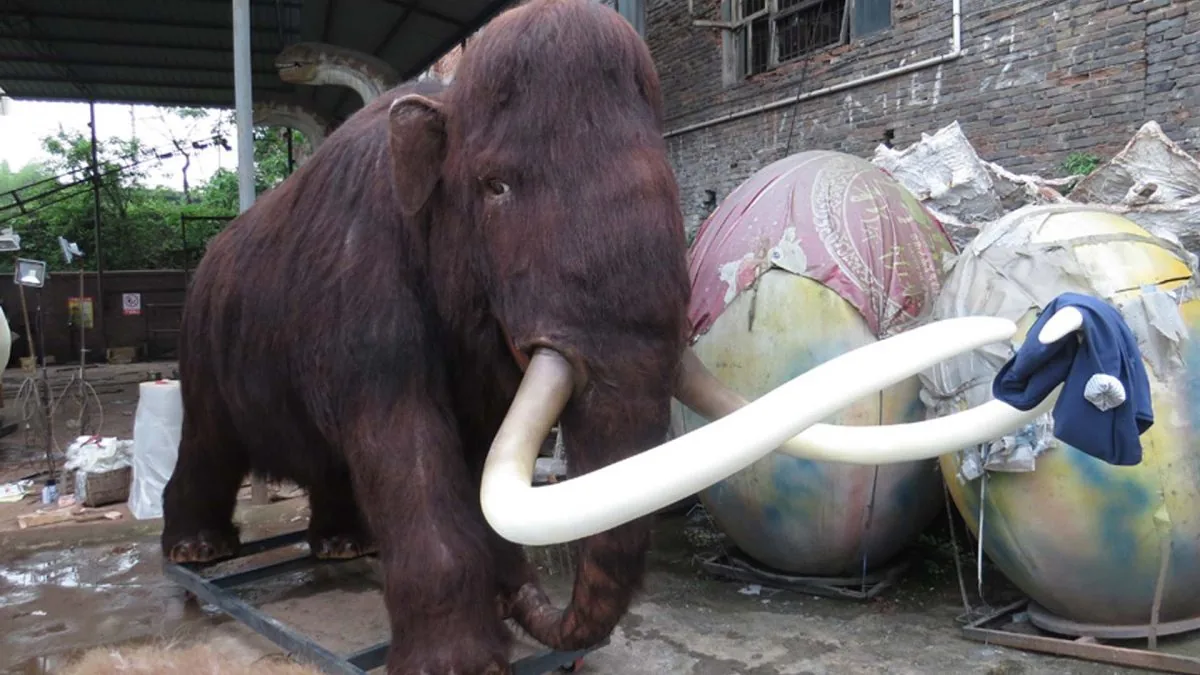
Life-Size Animatronic Woolly Mammoth
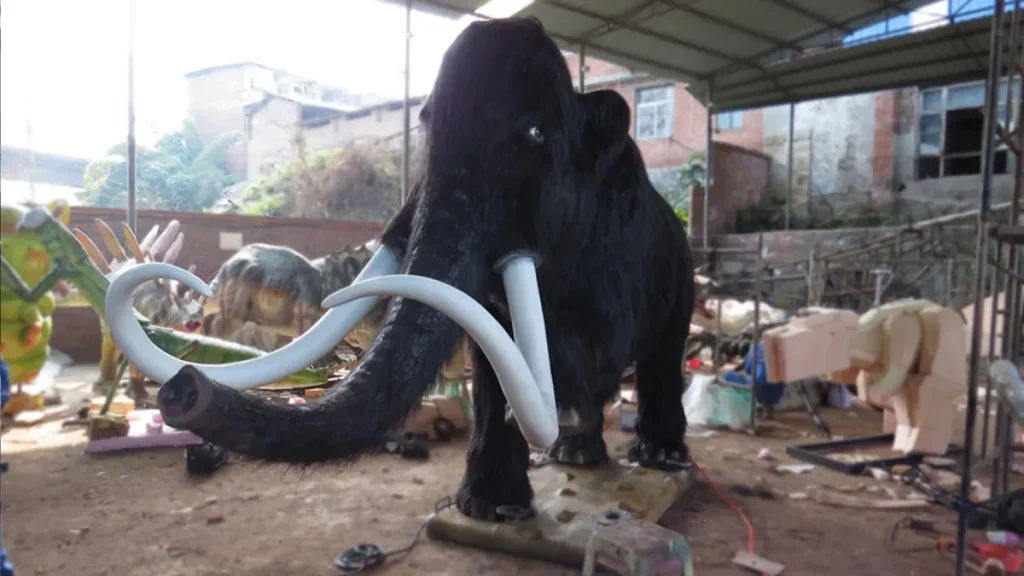
Life-size animatronic woolly mammoth — 4 m at the shoulder, 3 m tusks, articulating trunk and proximity triggers for Ice Age halls.
Life-size animatronic woolly mammoth — 4 m at the shoulder, 3 m tusks, articulating trunk and proximity triggers for Ice Age halls.
The mammoth is the heaviest and most power-hungry animal in the range, and both numbers are worth knowing before you plan the site: about 1200 kg installed, 1500 W average and 2500 W peak. It is also the only build with a seven-axis trunk, which is the part that sells it.
| Species | Mammuthus primigenius (woolly mammoth) |
|---|---|
| Trunk | Seven-axis curl and sway, independent of head |
| Other motion | Ears flap, eyes blink, tail swish |
| Audio | 60 W speaker system, mammoth call plus breathing |
| Power | 110–240 V AC, 1500 W average / 2500 W peak |
| Control | PLC multi-sequence, infrared trigger, remote |
| Fur | UV-stabilised synthetic, replaceable panels |
| Operating temp | −30 °C to +45 °C |
| Weight | About 1200 kg installed |
| Support | 12 months mechanical and electronics |
| Duty | Outdoor rated, cold climate suitable |
The trunk curls and sways on seven axes, independently of the head. That is what makes a mammoth read as alive rather than as an elephant with fur — a stiff trunk is the single clearest sign of a cheap build, because it is the part everyone watches.
Ears flap, eyes blink and the tail swishes on separate drives. A 60 W speaker carries the call, which real mammoths would have produced partly below hearing range; the audio is designed for the audible band plus a low component you feel rather than hear.
The fur is UV-stabilised synthetic in module-replaceable panels. That matters because a mammoth coat wears unevenly — the shoulders and flanks go first — and a panel system lets a worn section be swapped instead of the animal being re-furred.
Operating range is −30 °C to +45 °C, the widest in the range, which is what makes this the one animal we recommend for winter trails and light festivals in cold climates.
1500 W average with a 2500 W peak, on a PLC with multi-sequence control, infrared trigger and remote. The peak is what the supply has to carry, and at 2500 W it is a dedicated circuit rather than a shared ring.
At about 1200 kg installed, the base is a designed slab, not a hard standing.
Why 2500 W peak? The peak is what the supply must carry when trunk and head drives start together. Specify a dedicated circuit.
Can the fur be replaced in sections? Yes — module-replaceable panels, because the shoulders and flanks wear first.
Is it suitable for winter events? Yes. −30 °C to +45 °C, the widest operating range in the range.
What foundation does it need? A designed slab. At about 1200 kg a hard standing is not enough.
1500 W average and 2500 W peak on 110–240 V AC. This is the one build in the range that needs a dedicated circuit — share it and the peak trips the breaker on the first full cycle of the day.
The foundation is a designed slab. At 1200 kg installed, a sauropod-style hard standing will settle, and a settled mammoth shows a gap at the belly line.
Assembly with lifting equipment, then the trunk is calibrated axis by axis — that is the longest part of commissioning and the part that decides whether the animal works.
Then the sequence is programmed: idle breathing, occasional ear flap, and the call on trigger rather than on a loop. A mammoth calling on a loop is the fastest way to make a good build annoying.
Materials. Steel frame, high-density foam, hand-finished surface, UV-stabilised synthetic fur in replaceable panels, 60 W audio system, PLC control.
The −30 °C rating is the reason this build works on winter trails, but cold operation has its own routine. The trunk axes stiffen in deep cold, so the movement set is reduced for the coldest weeks rather than left at summer settings. The fur panels are the other item: snow sitting in the coat is fine, but snow that melts and refreezes in the shoulder panels is what makes them shed — brush it out at the end of each day rather than at the end of the season.
Related. the Ice Age animal range, the cave bear, museum exhibit layout, request a quote.
Same factory and the same build standard. What changes is size, movement set and how the exhibit is meant to be used on site.

A panda is the most photographed animal in the catalogue and the one where a small error is most visible. Everyone has seen a […]
View Product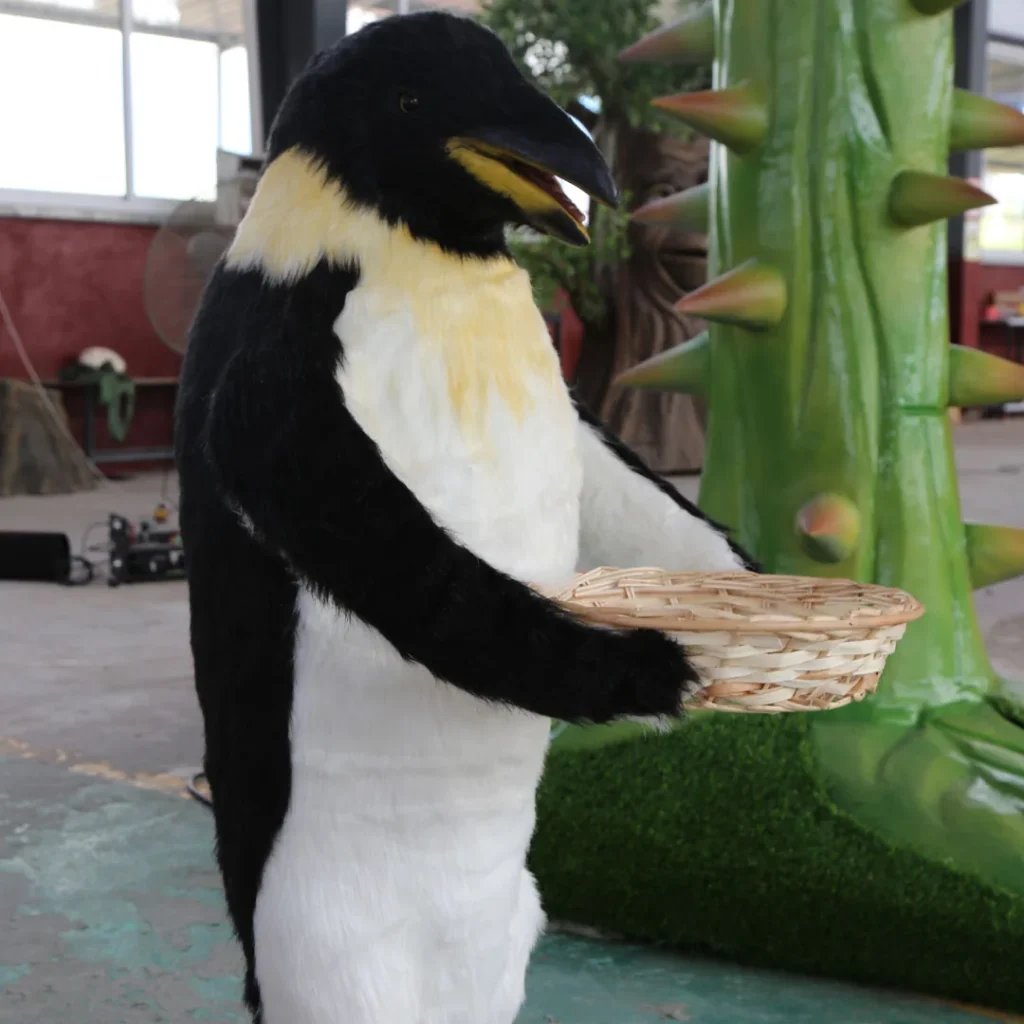
One penguin reads as a toy. Five, at different heights, with one bent over and one mid-waddle, read as a colony — and a […]
View Product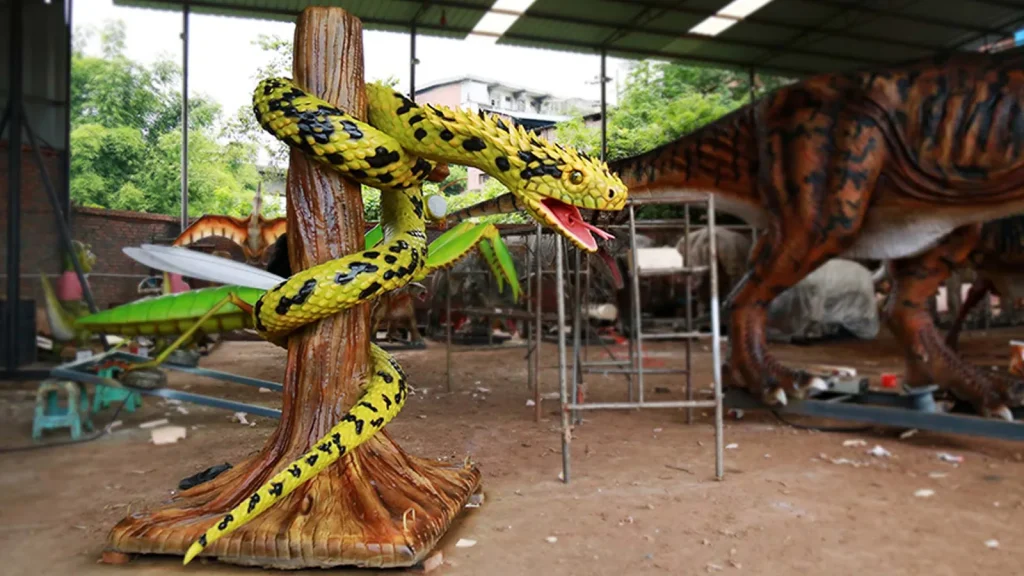
Animatronic python coiled on a branch — individually sculpted scales, flicking forked tongue, coiling motion and hissing audio for biology exhibits.
View ProductThree things buyers usually want settled before they ask for a drawing — what drives the number, how the piece is actually built, and what to check between suppliers.
Extinct and hard-to-keep species, sculpted to anatomy keepers can check — where animatronic animals earn a place beside a living collection.
Read the guide →From fossil reference to finished skin — how proportions, texture, colour and weathering are decided, and what separates a realistic build from a cartoon one.
Read the guide →How Much Does an Animatronic Dinosaur Cost? Understanding the Key Cost Factors If you are planning a museum exhibition, theme park attraction, or promotional […]
Read the guide →Send your dimensions, movement requirements and installation site. You get a realistic budget range and a dated build schedule.
Or email info@hltdino.com — we reply within one business day.