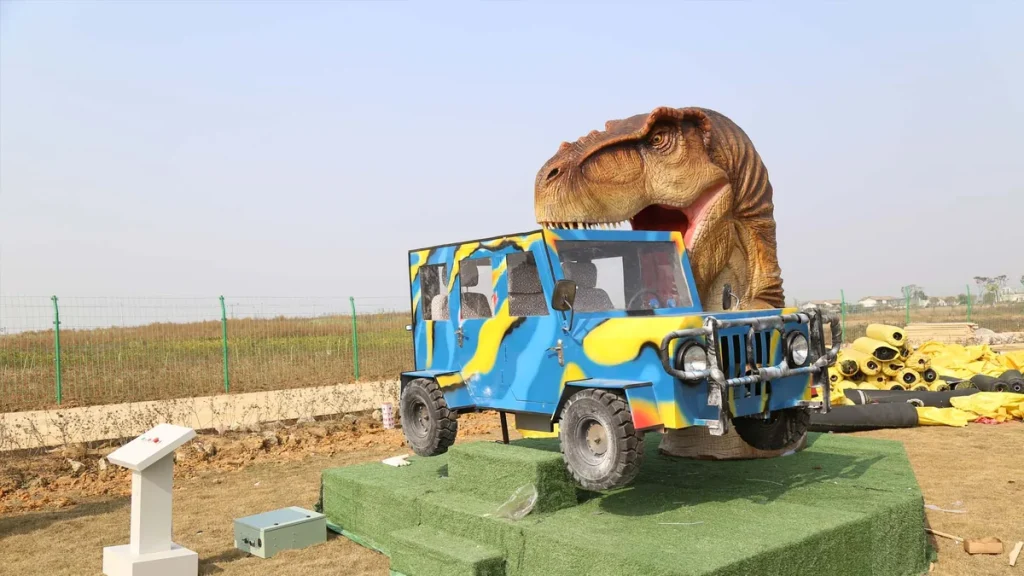
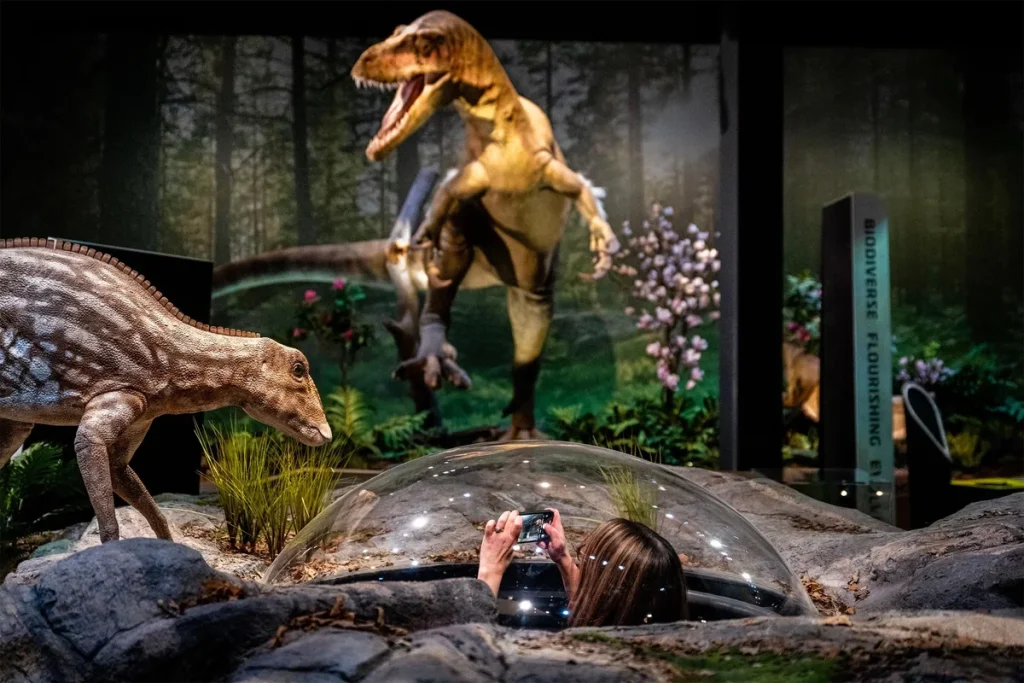
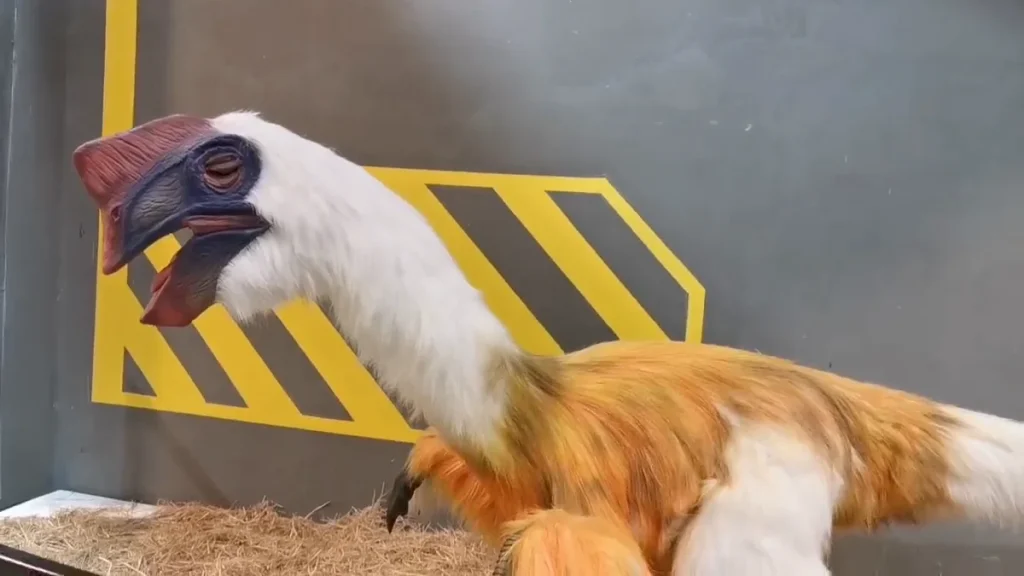
Custom Interactive Dinosaur Exhibits, Engineered for Your Venue
The interesting question with an interactive exhibit is not whether it moves. It is when it moves, and what triggers it. Get that wrong and the animal performs constantly, which reads as a machine; get it right and the animal seems to notice people.
Three trigger types cover most installs. Microwave or infrared proximity sensors work through glass and are unaffected by weather, which suits malls and entrance halls. Sound triggers catch a group approaching noisily. Gesture sensors read hand movement and are the most engaging, and the least reliable in a crowded space where everyone is moving.
Where Interactive Installs Work
Mall atriums, science centres, museum entrances and exhibition stands. The common factor is dwell time: an interactive animal earns its cost where visitors stop for more than thirty seconds. On a pass-through trail a fixed-cycle animal does the same job for less money.
Commissioning matters more on these builds than on any other, because the trigger distance, the delay and the cooldown are all set against the actual approach path. Those numbers cannot be set in a workshop.
Send us the floor plan and ceiling or canopy clearance. As a rule of thumb, allow 1.5× the model's length as clear space so the movement reads properly and visitors can step back. We model the footprint in 3D before you commit.
How long does a custom dinosaur take to build?
30–45 days for the build itself, once drawings and material samples are approved. Add crating, ocean or air freight and on-site installation — you get a dated schedule before the deposit, not after.
Can a dinosaur stay outdoors all year?
Yes, if it is specified for it. Outdoor builds get corrosion-protected Q235 frames and sealed electrical enclosures, rated from −20°C to +60°C. Indoor-only models are cheaper — we will tell you when you do not need the outdoor spec.
What arrives with the exhibit?
An installation manual, wiring diagrams, a spare-parts list and a maintenance guide — plus a 12-month warranty with maintenance support and remote troubleshooting for control and drive issues.
Get a Quote
Tell Us What You're Building
Send us your venue, species list and rough dimensions. You'll get a realistic feasibility read and a ballpark lead time — no pressure, no template replies.