Animatronic Animals
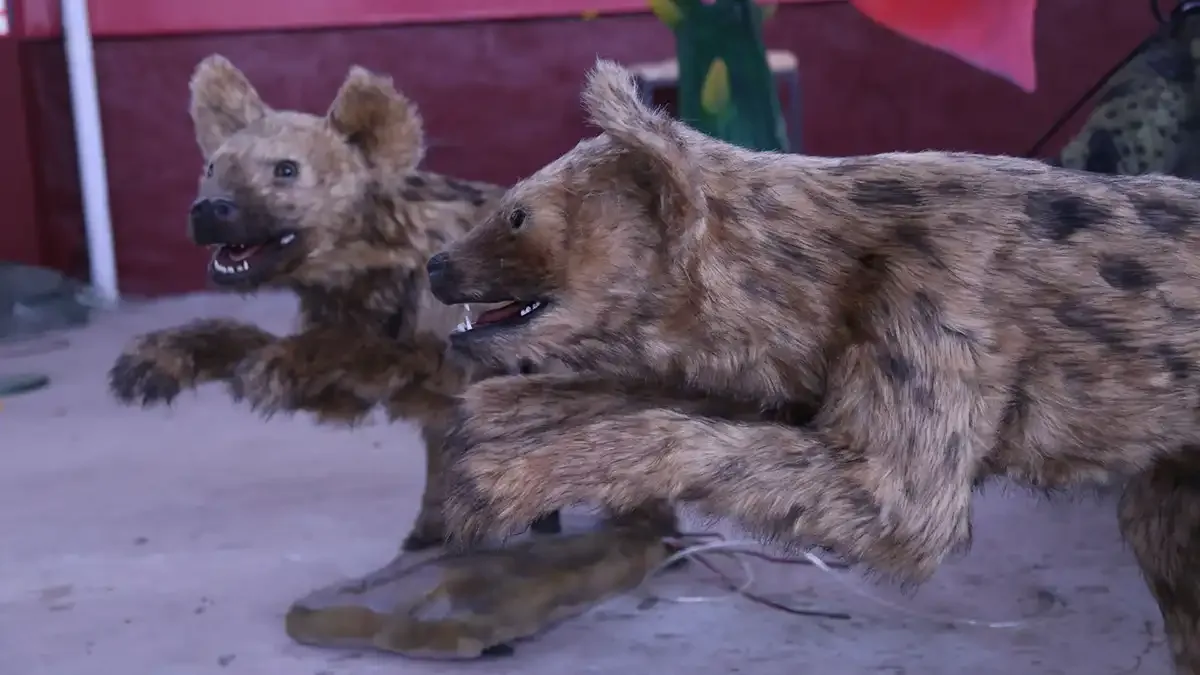
Animatronic Hyena
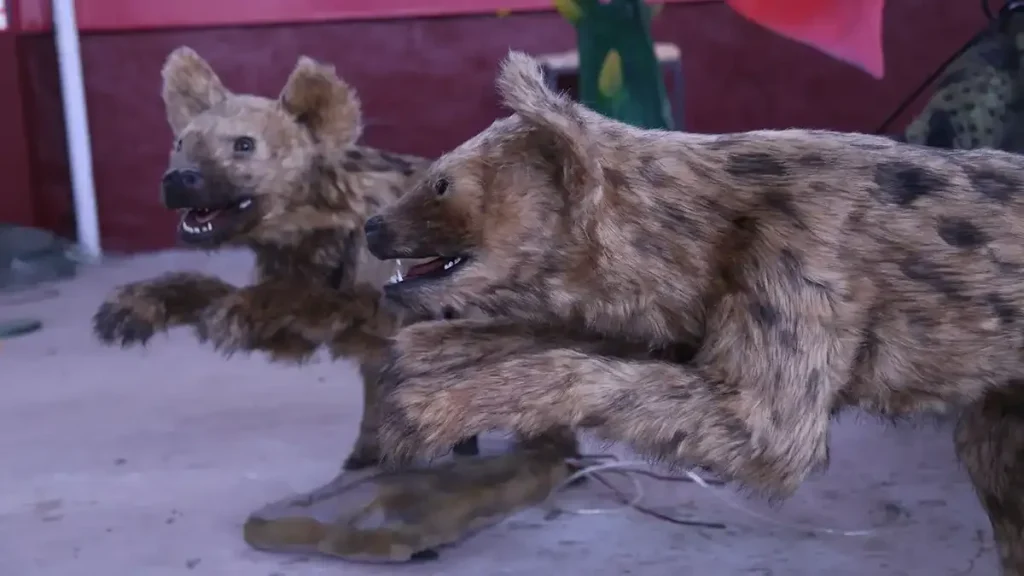
A 1.4–1.7 m spotted hyena designed to be ordered in packs, with staggered trigger timing.
A 1.4–1.7 m spotted hyena designed to be ordered in packs, with staggered trigger timing.
A hyena is not a dog and not a cat, and the build has to sit between the two: high shoulders, sloping back, a heavy neck and a jaw built for bone. Most animatronic hyenas are built on a dog frame, which is why they look like large dogs with spots.
| Species | Crocuta crocuta (spotted hyena) |
|---|---|
| Era | Modern, extant species |
| Type | Full animatronic with synchronised movement |
| Size | Up to 1.6 m long × 0.85 m shoulder height; custom |
| Material | Weatherproof internal frame, high-density foam core, patented hand-finished surface |
| Surface | Hand-painted UV-resistant finish with realistic spot patterning |
| Animation | Head turn, jaw, tail sway, breathing (4 to 6 servos) |
| Sound | Synchronised whoop call, growls and breathing, motion-activated |
| Power | 110 / 220 V AC, about 300 W average, outdoor-rated control box |
| Installation | Modular assembly; 2 to 3 technicians, one day |
| Customisation | Size, pose (alert / running / foraging), spot density, coat tone, base |
| Support | On-site technician option, remote commissioning, crated shipment |
The spotted hyena carries its shoulders higher than its hips, with the head low and the neck heavy. That silhouette is the identifier, and it is a frame decision rather than a paint decision.
Spot density and coat tone are customisable, which matters because hyena populations vary in both. A single standard pattern reads as a generic animal.
Head turn, jaw, tail sway and breathing on four to six servos, with an optional motion sensor trigger. About 300 W average on 110 / 220 V AC.
The audio is a synchronised whoop call plus growls and breathing, motion-activated. The whoop is the sound people recognise, and it is what makes a static-looking animal feel like a clan animal.
Zoo exhibits, and it works best as a pair or a small group — hyenas are clan animals and a single one on a trail reads as a dog. Installation is modular across two or three technicians in a day.
Is it built on a dog frame? No. Higher shoulders, sloping back, heavy neck — a different frame, not a recoloured dog.
Can the spot pattern be changed? Yes: spot density and coat tone are specified at order, because populations vary.
Should I order one or a group? A group. Hyenas are clan animals; a single one reads as a dog.
How long to install? One day with two or three technicians.
110 / 220 V AC at about 300 W average with an outdoor-rated control box. A single supply covers it.
Outdoors the base needs a hard standing and drainage. On a group installation, plan the spacing and the power drops together — retro-fitting drops across a finished trail is the usual delay.
Assembly, then movement paced: head turn slowed, jaw cycle set, tail sway reduced. The breathing is set to a slow idle so the animal reads as resting between visitors.
On a group, stagger the cycles. Two hyenas moving in unison read as a mechanism; the same two running a few seconds apart read as a clan.
Materials. Weatherproof internal frame, high-density foam core, patented hand-finished surface, hand-painted spot pattern, optional audio module.
A group of hyenas needs to read as a group, which is a spacing decision rather than a number of animals. Two metres between animals reads as a pair; one and a half metres reads as a clan, provided the poses differ and the facings do not all point the same way. Three animals with one alert, one moving and one resting will always read better than four identical builds in a row.
Related. the animatronic animal range, the lion, zoo installations, request a quote.
Same factory and the same build standard. What changes is size, movement set and how the exhibit is meant to be used on site.
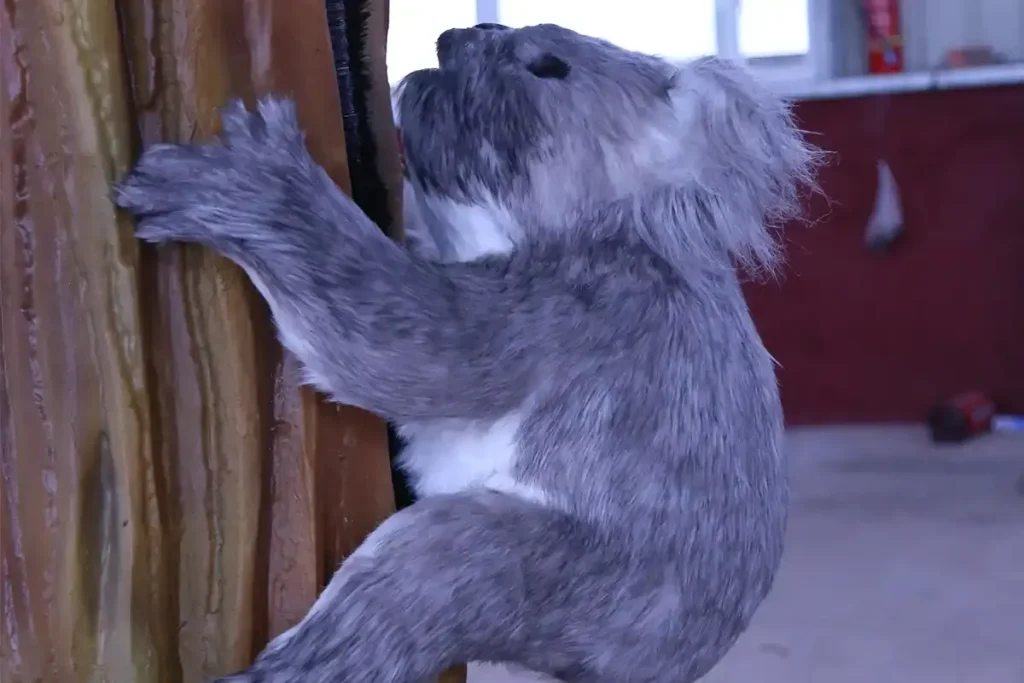
A koala on the ground is a grey lump. The species is defined by its grip: curled around a trunk, back to the viewer, […]
View Product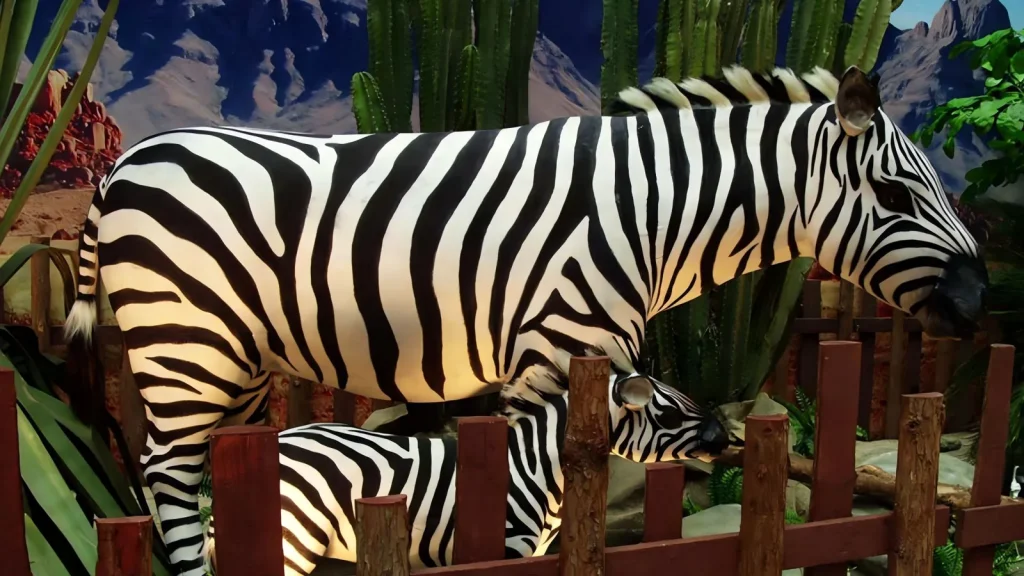
Life-size animatronic zebra mare and foal with individually painted stripes and coordinated mother-and-offspring behaviour for savanna exhibits.
View Product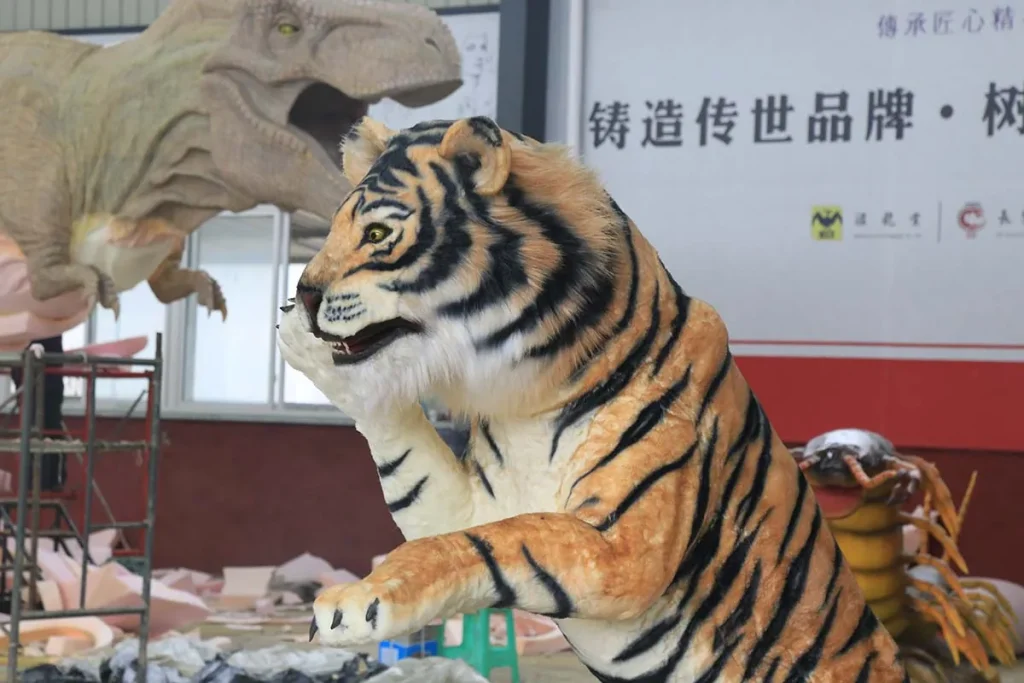
A life-size tiger built to zoo-grade anatomy — 2.6–3.1 m, slow stalking motion, painted stripe detail.
View ProductThree things buyers usually want settled before they ask for a drawing — what drives the number, how the piece is actually built, and what to check between suppliers.
Extinct and hard-to-keep species, sculpted to anatomy keepers can check — where animatronic animals earn a place beside a living collection.
Read the guide →From fossil reference to finished skin — how proportions, texture, colour and weathering are decided, and what separates a realistic build from a cartoon one.
Read the guide →How Much Does an Animatronic Dinosaur Cost? Understanding the Key Cost Factors If you are planning a museum exhibition, theme park attraction, or promotional […]
Read the guide →Send your dimensions, movement requirements and installation site. You get a realistic budget range and a dated build schedule.
Or email info@hltdino.com — we reply within one business day.