Animatronic Animals
Animatronic Cave Bear Model
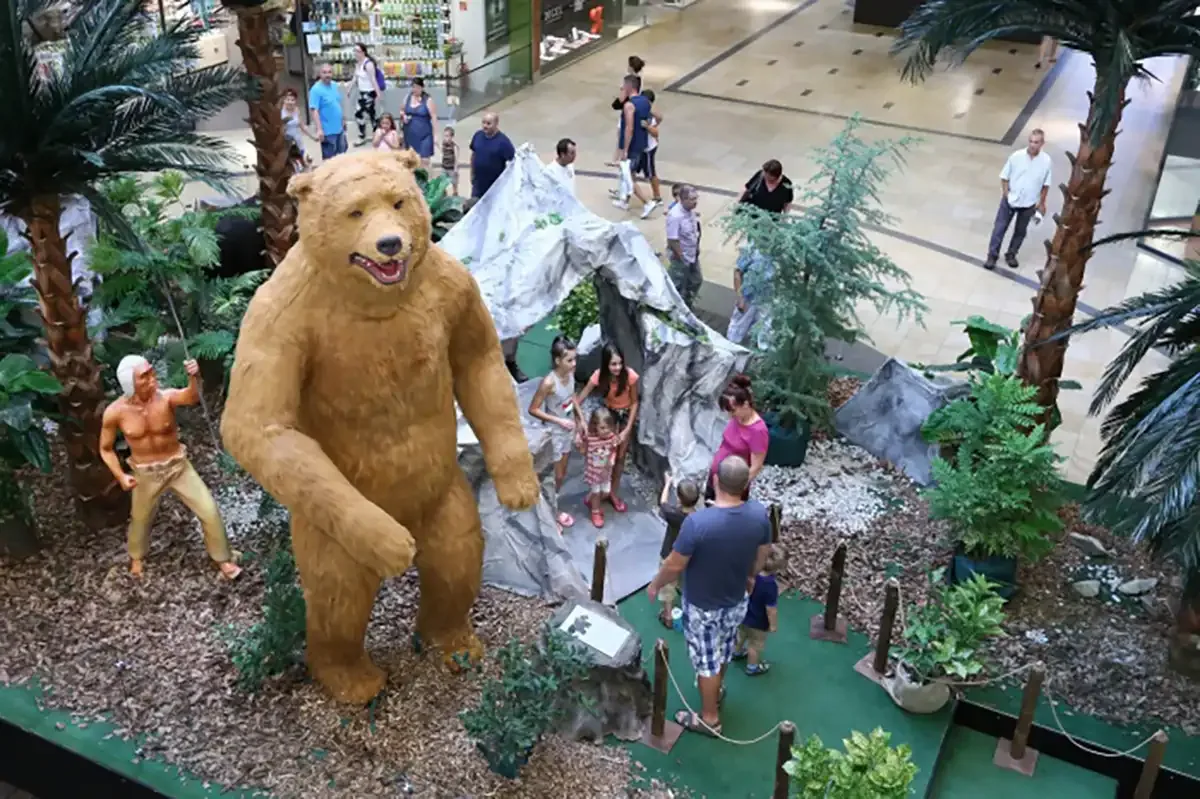
Life-size animatronic cave bear with hand-pasted fur, glass eyes and the heavy Pleistocene stance — for museum dioramas and Ice Age trails.
Life-size animatronic cave bear with hand-pasted fur, glass eyes and the heavy Pleistocene stance — for museum dioramas and Ice Age trails.
The cave bear was a third larger than a modern brown bear and it is the one Ice Age animal that reads as genuinely prehistoric without explanation. The reason is the head: a domed forehead and a steep facial profile that no living bear has. Build a cave bear on a brown bear head and the result is a large bear, not an extinct one.
| Species | Cave bear (Ursus spelaeus), extinct Pleistocene |
|---|---|
| Type | Animatronic prehistoric wildlife model |
| Size | Life-size 1.4 m to 2.5 m body length; shoulder height up to 1.5 m |
| Frame | Weatherproof metal with reinforced shoulder hump structure |
| Skin | Premium hand-finished surface (patent ZL 2022 1 0224489.5) |
| Fur | Hand-pasted synthetic fur, deep brown with lighter shoulder banding |
| Head | Domed forehead, broad shoulder hump, steep facial profile |
| Mouth | Open snarl option with sculpted canines and finished palate |
| Eyes | Glass eyes with amber irises and hand-painted catchlight |
| Animation | Optional: head turn, eye movement, chest breathing |
| Sound | Optional built-in speaker with cave bear vocalisation |
| Power | 110 / 220 V AC, 200 W average |
| Installation | Modular 2 to 3 sections; 2 to 3 technicians, 4 to 6 hours |
| Support | 12 months mechanical / 12 months electronic |
Three features identify it: a high domed forehead, a steep drop from forehead to snout, and a heavy shoulder hump set further forward than a grizzly’s. The dome is the one people notice — it makes the head look larger than the body expects, which is exactly how the fossils read.
Those are sculpt decisions, made before the fur goes on. They cannot be corrected afterwards, and they are the reason this build is not a recoloured brown bear.
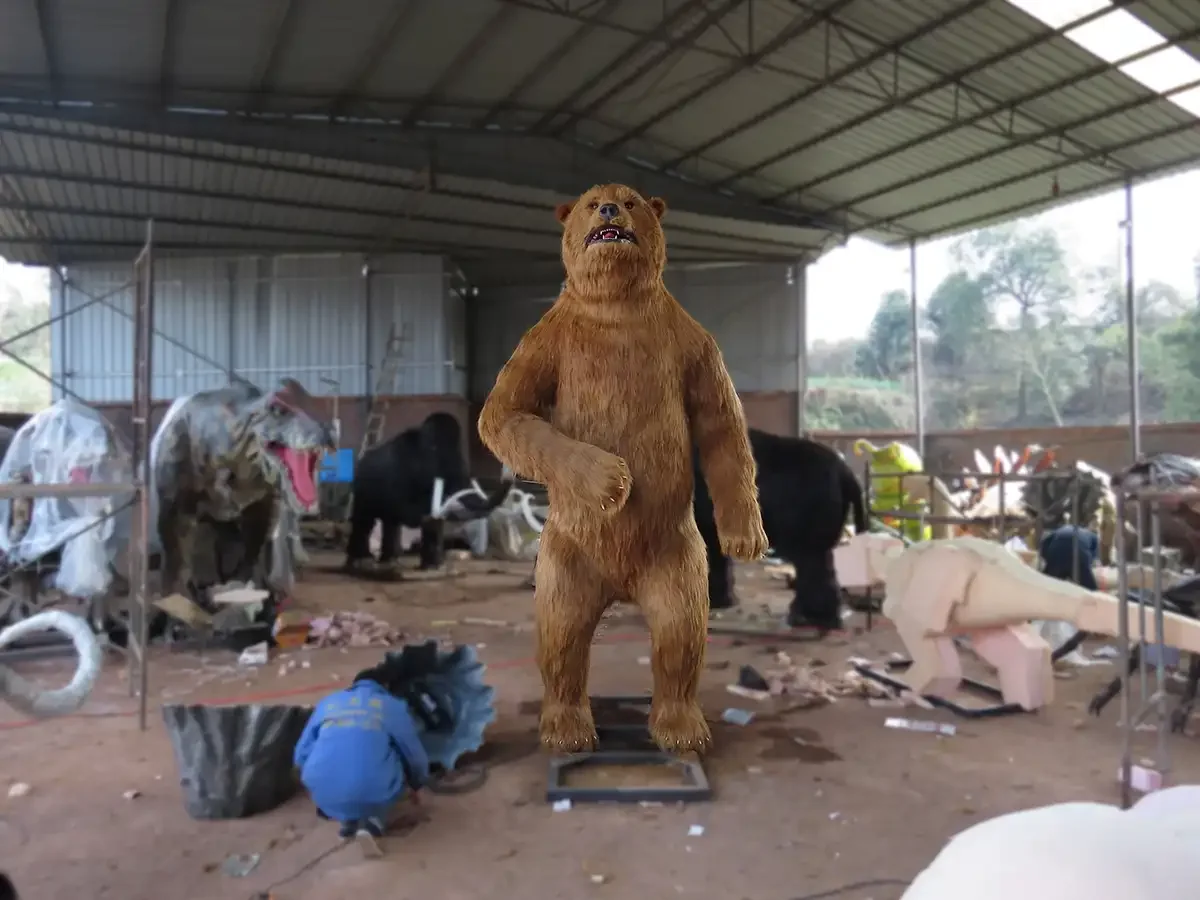
Deep brown hand-pasted fur with lighter banding on the shoulders, applied strand by strand so the direction follows the body. The mouth is an open snarl option with sculpted canines and a finished palate; glass eyes with amber irises and a hand-painted catchlight.
At 200 W average and a 1.4 to 2.5 m body length, this is a modest build electrically and a manageable one physically — most orders are single animals rather than groups, which suits a gallery corner better than a trail.
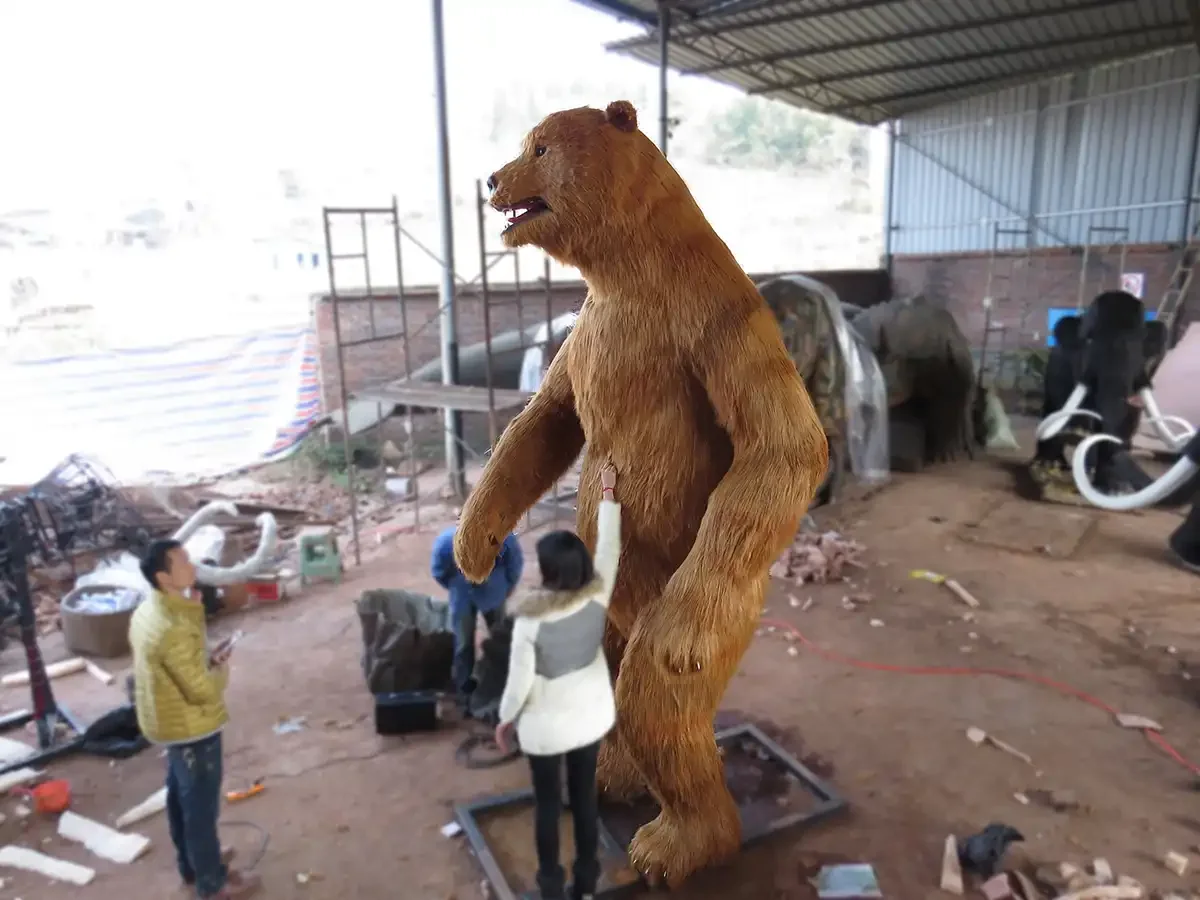
Ice Age galleries, natural history museums and winter trails, usually paired with a mammoth or a sabre-toothed cat. As a single piece it works best in a cave-mouth setting or a diorama, because the animal is a cave species and the context does half the storytelling.
Is it just a big brown bear? No. Domed forehead, steep facial profile and a forward shoulder hump. The skull is a different sculpt.
Does the animation include walking? No. Head turn, eye movement and chest breathing only — this is a display animal, not a walking one.
Can it be ordered without fur? Yes, on a smooth-skinned specification, but the fur is what sells the species.
How long to install? Four to six hours with two or three technicians on a modular assembly.
110 / 220 V AC at 200 W average. A single supply at the animal covers it, and the control box is weatherproof where the unit is outdoors.
Indoors, the constraint is the diorama rather than the electrics: a cave-mouth setting needs clearance behind the animal for the fur to be brushed and the mechanism reached. Plan that gap at layout stage — retro-fitting access behind a finished diorama is a rebuild.
Modular assembly first, then the optional movement is set: head turn amplitude reduced until it reads as a slow look rather than a scan, eye movement kept small, and chest breathing set at a rate that looks asleep.
On a bear, the breathing is the whole animation. A cave bear that only moves when triggered looks stuffed between visitors; one that breathes slowly looks alive whether anyone is there or not.
Materials. Weatherproof welded metal frame, high-density foam, patented hand-finished surface, hand-pasted synthetic fur, glass eyes with amber irises.
Related. the Ice Age animal range, the woolly mammoth, museum exhibit layout, request a quote.
Same factory and the same build standard. What changes is size, movement set and how the exhibit is meant to be used on site.
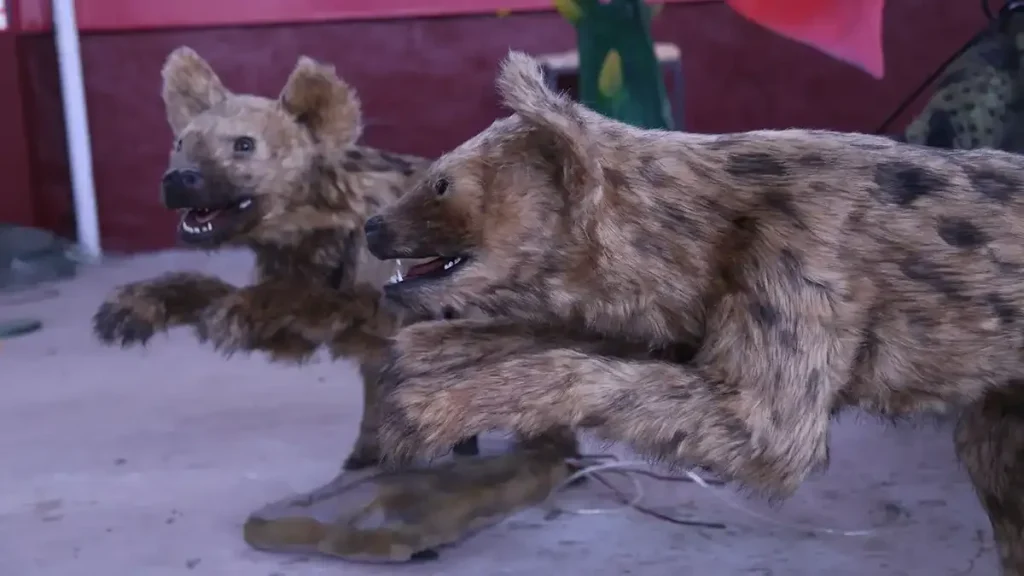
A 1.4–1.7 m spotted hyena designed to be ordered in packs, with staggered trigger timing.
View Product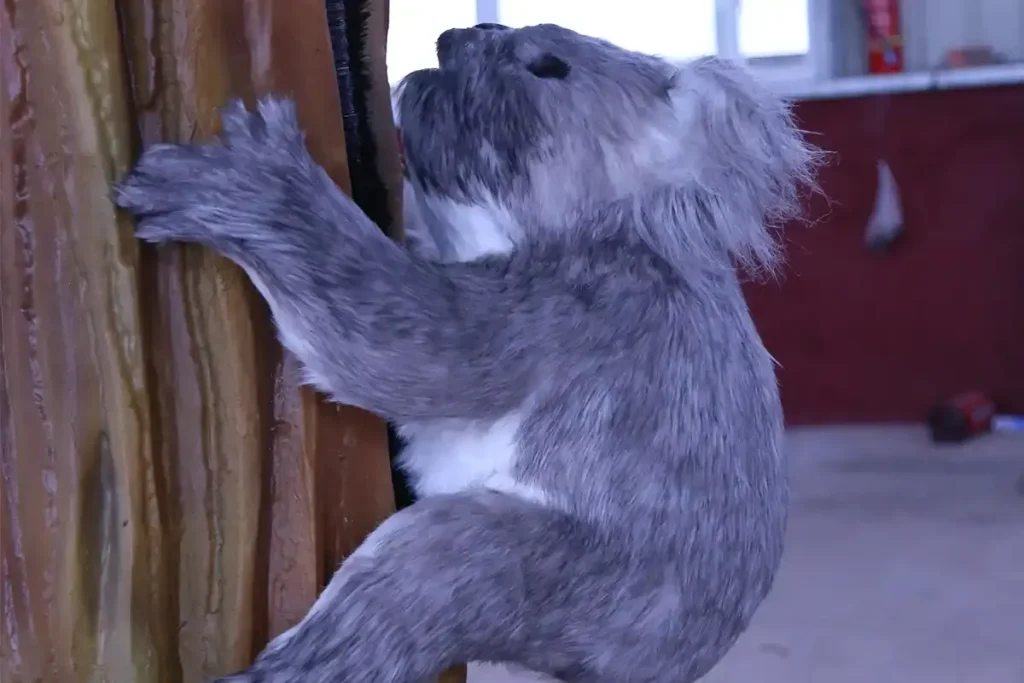
A koala on the ground is a grey lump. The species is defined by its grip: curled around a trunk, back to the viewer, […]
View Product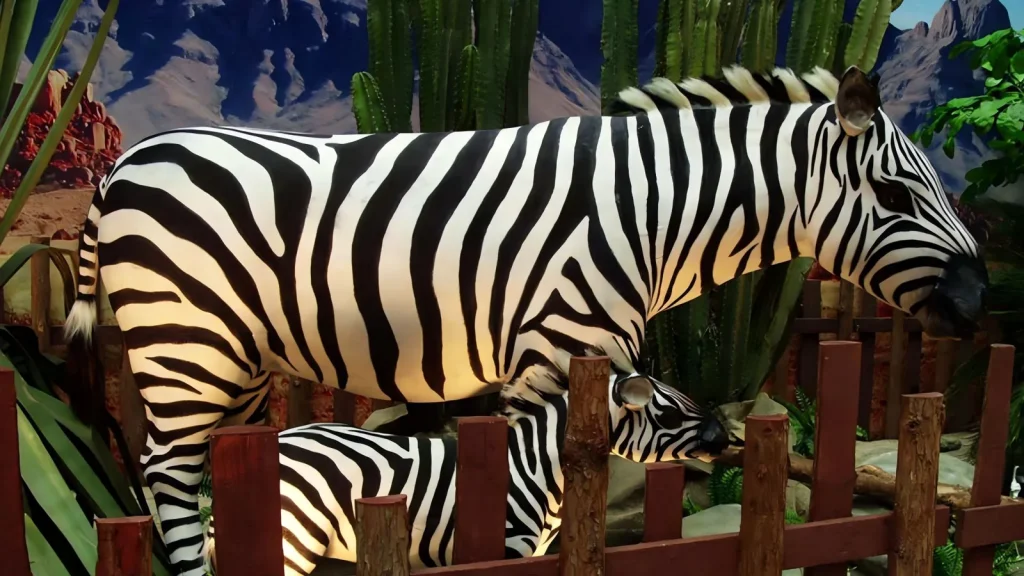
Life-size animatronic zebra mare and foal with individually painted stripes and coordinated mother-and-offspring behaviour for savanna exhibits.
View ProductThree things buyers usually want settled before they ask for a drawing — what drives the number, how the piece is actually built, and what to check between suppliers.
Extinct and hard-to-keep species, sculpted to anatomy keepers can check — where animatronic animals earn a place beside a living collection.
Read the guide →From fossil reference to finished skin — how proportions, texture, colour and weathering are decided, and what separates a realistic build from a cartoon one.
Read the guide →How Much Does an Animatronic Dinosaur Cost? Understanding the Key Cost Factors If you are planning a museum exhibition, theme park attraction, or promotional […]
Read the guide →Send your dimensions, movement requirements and installation site. You get a realistic budget range and a dated build schedule.
Or email info@hltdino.com — we reply within one business day.