Custom Marine & Sea Creatures, Engineered for Your Venue
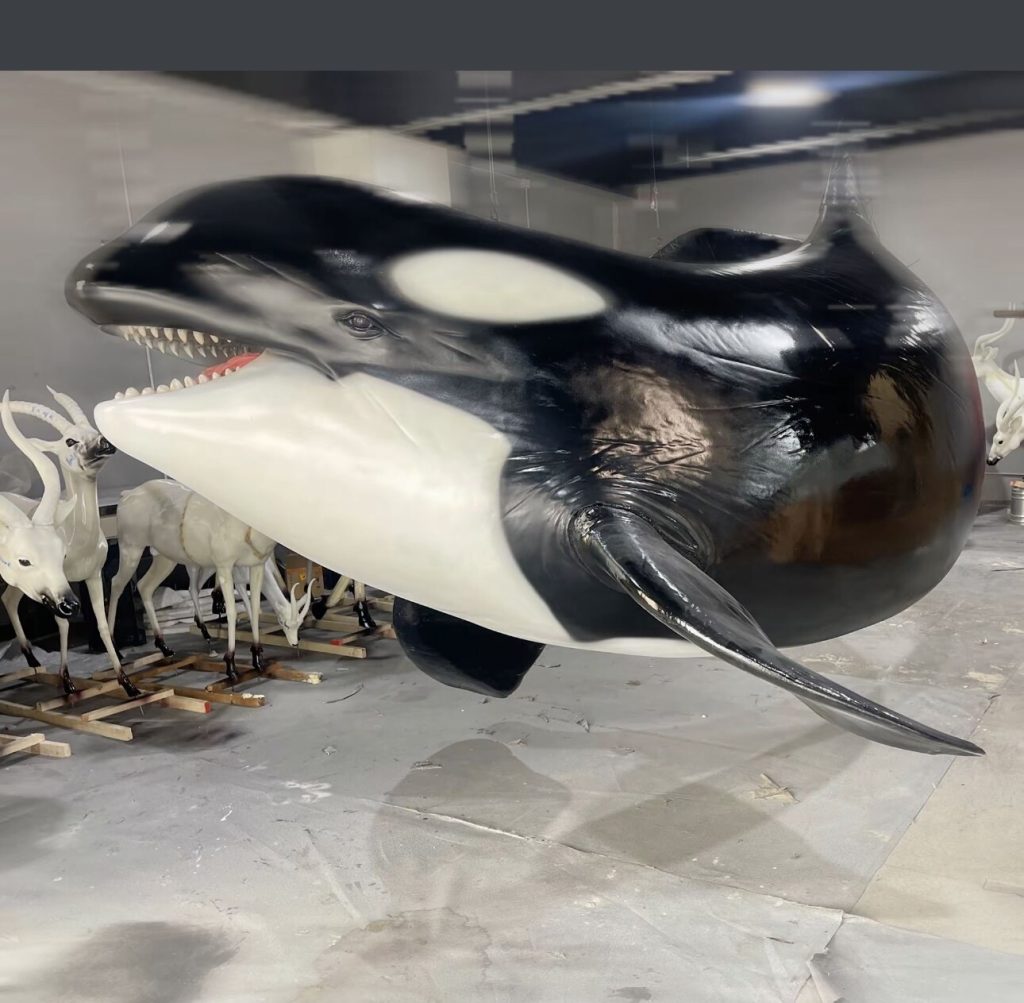
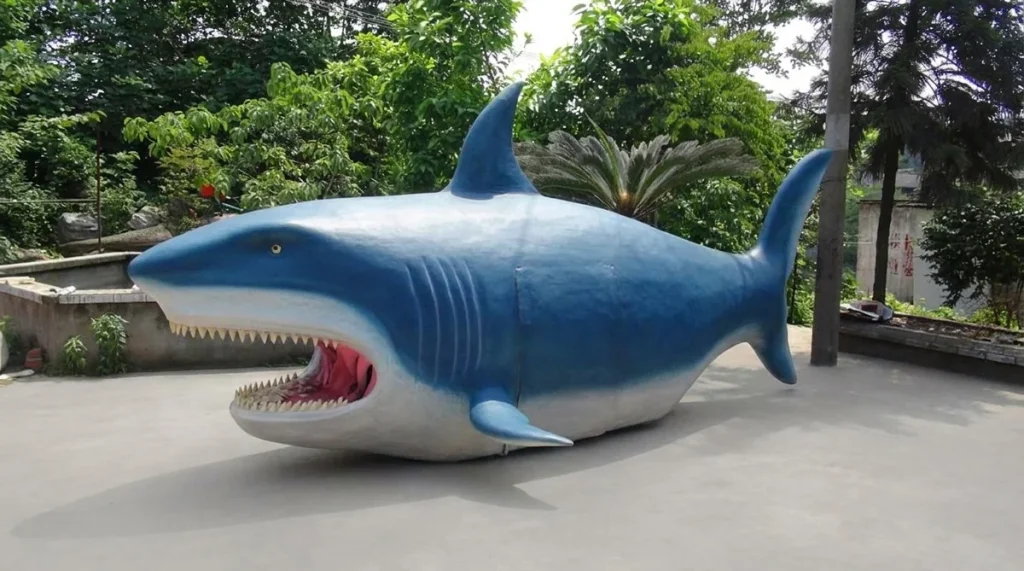
Most marine builds hang rather than stand. That single fact reorganises the whole brief: the load goes into the ceiling, the viewing angle is from below, and the rig that holds the animal is a bigger design problem than the animal.
Frames are 316L stainless steel, not mild steel with a coating. An aquarium hall combines humidity with salt, and a standard frame inside a fibreglass shell rusts from the inside out — the shell looks perfect for years while the structure behind it fails. 316L is standard on every marine build we make, and it is not an upgrade.
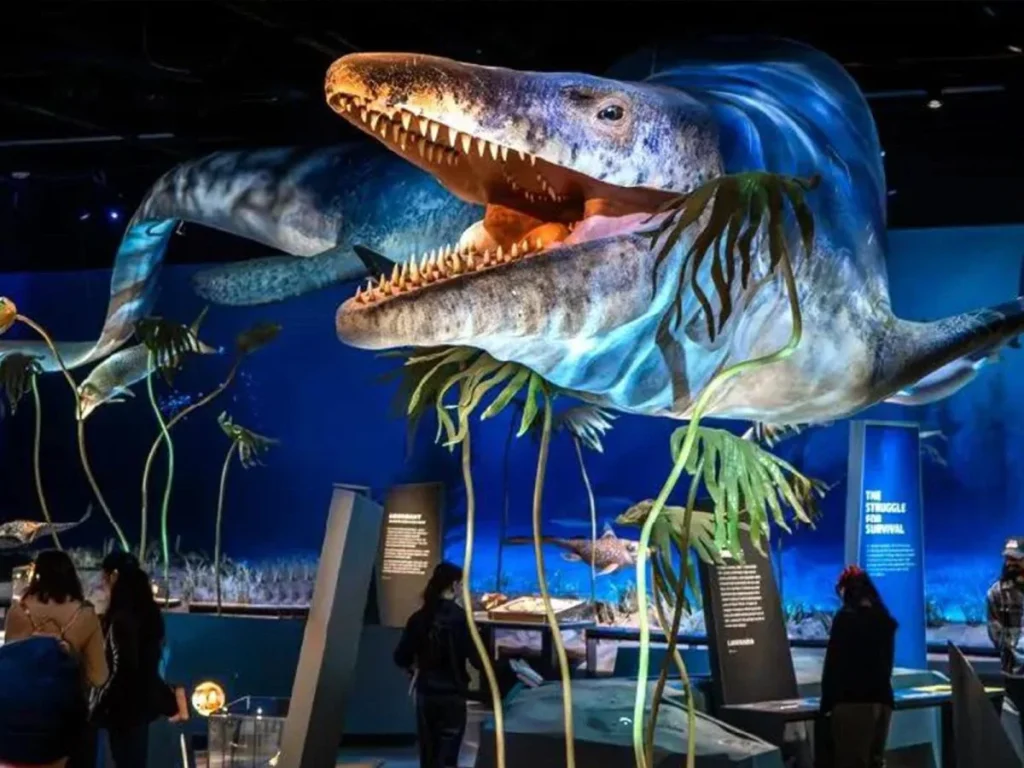
Aquarium Halls and Ocean Exhibits
Suspended over a circulation route is the version that photographs best: four to six rigging points, each with adjustable tension, and the body set at ten to fifteen degrees nose-down with a slight roll so it reads as swimming rather than hanging. Where the ceiling cannot take the load, a floor plinth or wall bracket keeps the animal readable at the cost of the overhead effect.
Anything going over open water needs the tank specification declared at order — frame treatment, fixings and surface finish all differ from a dry-hall build.
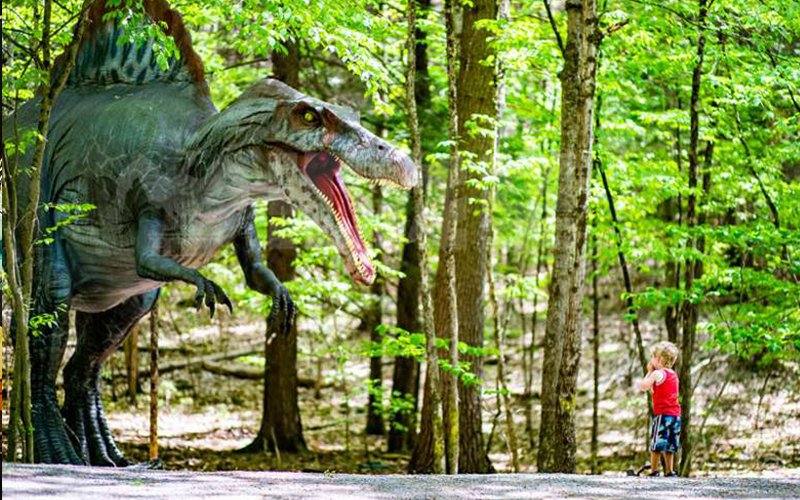
Send us the floor plan and ceiling or canopy clearance. As a rule of thumb, allow 1.5× the model's length as clear space so the movement reads properly and visitors can step back. We model the footprint in 3D before you commit.
How long does a custom dinosaur take to build?
30–45 days for the build itself, once drawings and material samples are approved. Add crating, ocean or air freight and on-site installation — you get a dated schedule before the deposit, not after.
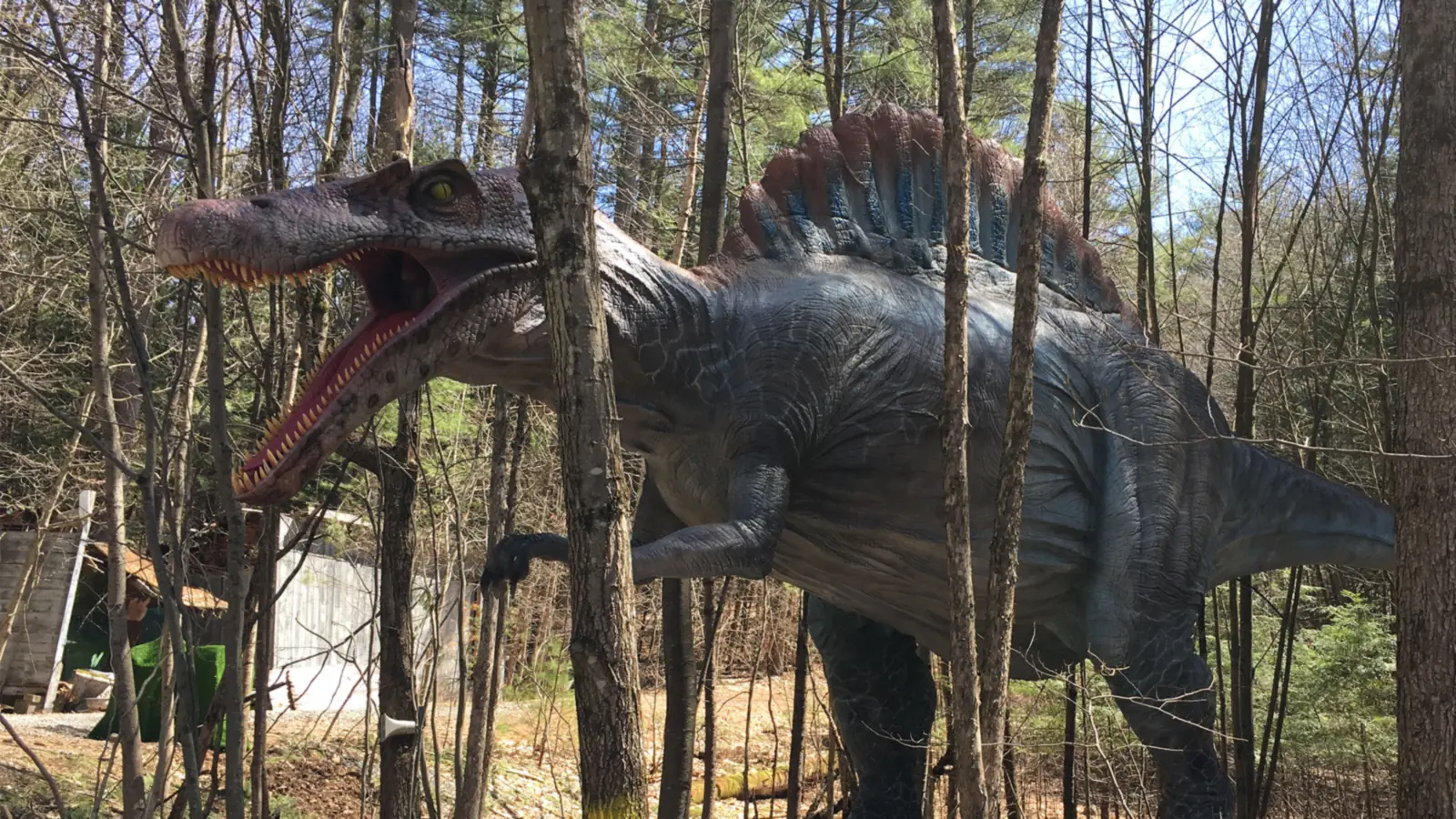
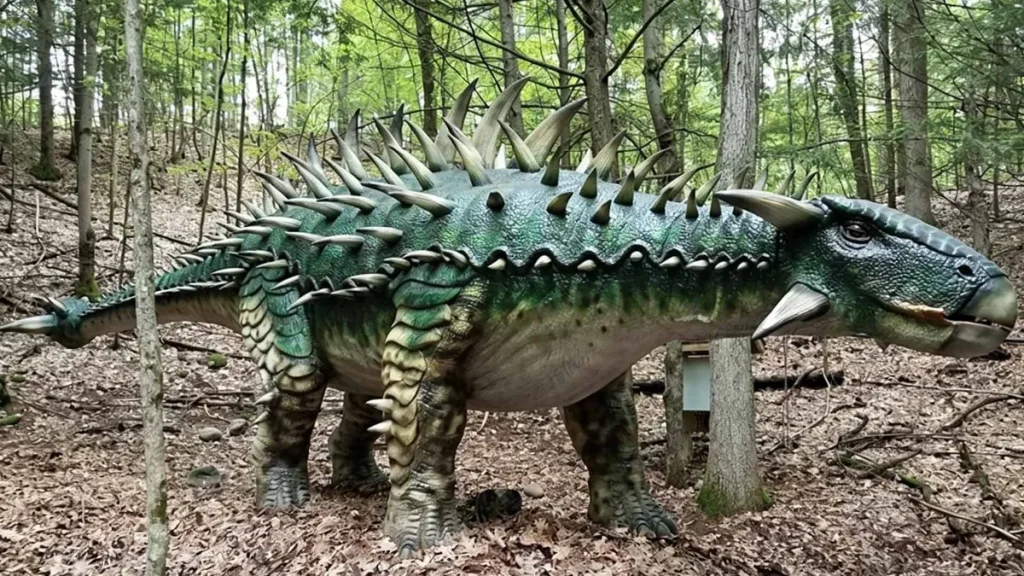
Can a dinosaur stay outdoors all year?
Yes, if it is specified for it. Outdoor builds get corrosion-protected Q235 frames and sealed electrical enclosures, rated from −20°C to +60°C. Indoor-only models are cheaper — we will tell you when you do not need the outdoor spec.
What arrives with the exhibit?
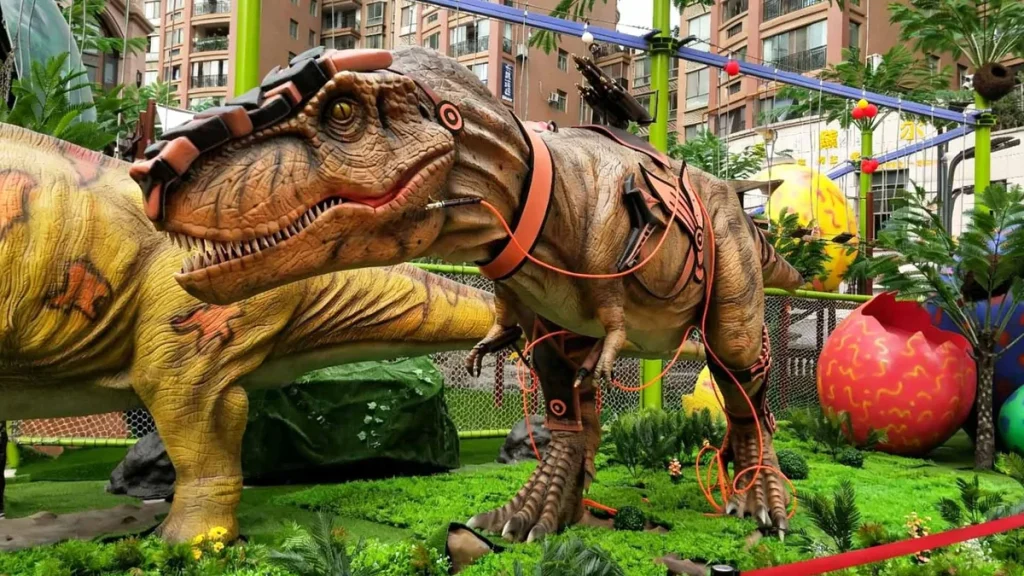
An installation manual, wiring diagrams, a spare-parts list and a maintenance guide — plus a 12-month warranty with maintenance support and remote troubleshooting for control and drive issues.
Get a Quote
Tell Us What You're Building
Send us your venue, species list and rough dimensions. You'll get a realistic feasibility read and a ballpark lead time — no pressure, no template replies.