Animatronic Animals
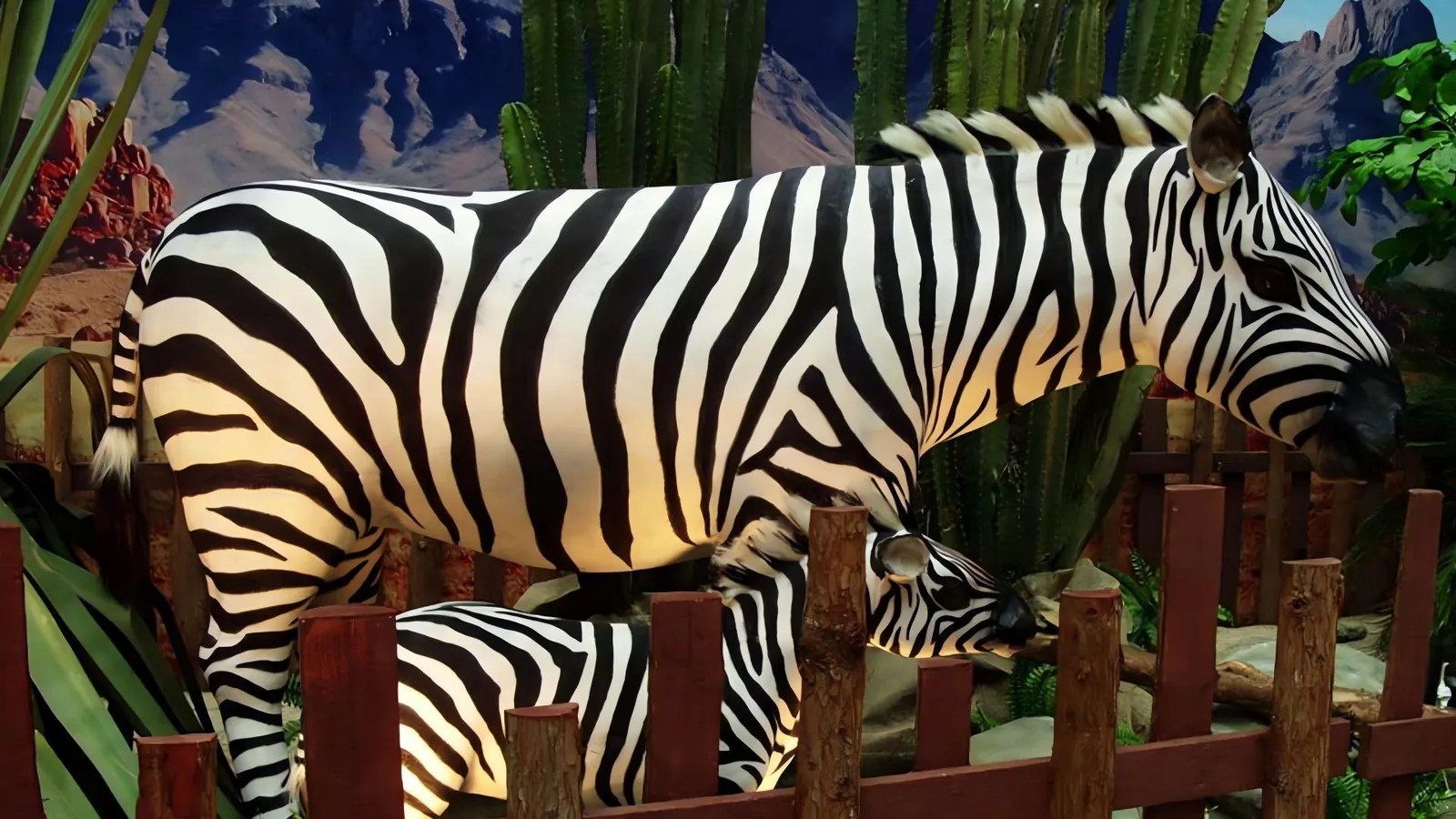
Animatronic Zebra and Foal
Life-size animatronic zebra mare and foal with individually painted stripes and coordinated mother-and-offspring behaviour for savanna exhibits.
Life-size animatronic zebra mare and foal with individually painted stripes and coordinated mother-and-offspring behaviour for savanna exhibits.
No two zebras carry the same stripes. Not a family resemblance and not a regional variation: a unique set of line widths, breaks and angles, the way a fingerprint is unique. That fact is the design brief for this pair. The mare and the foal are painted from separate reference photographs, one stripe group at a time, so the exhibit reads as two specific animals rather than as two copies of one mould.
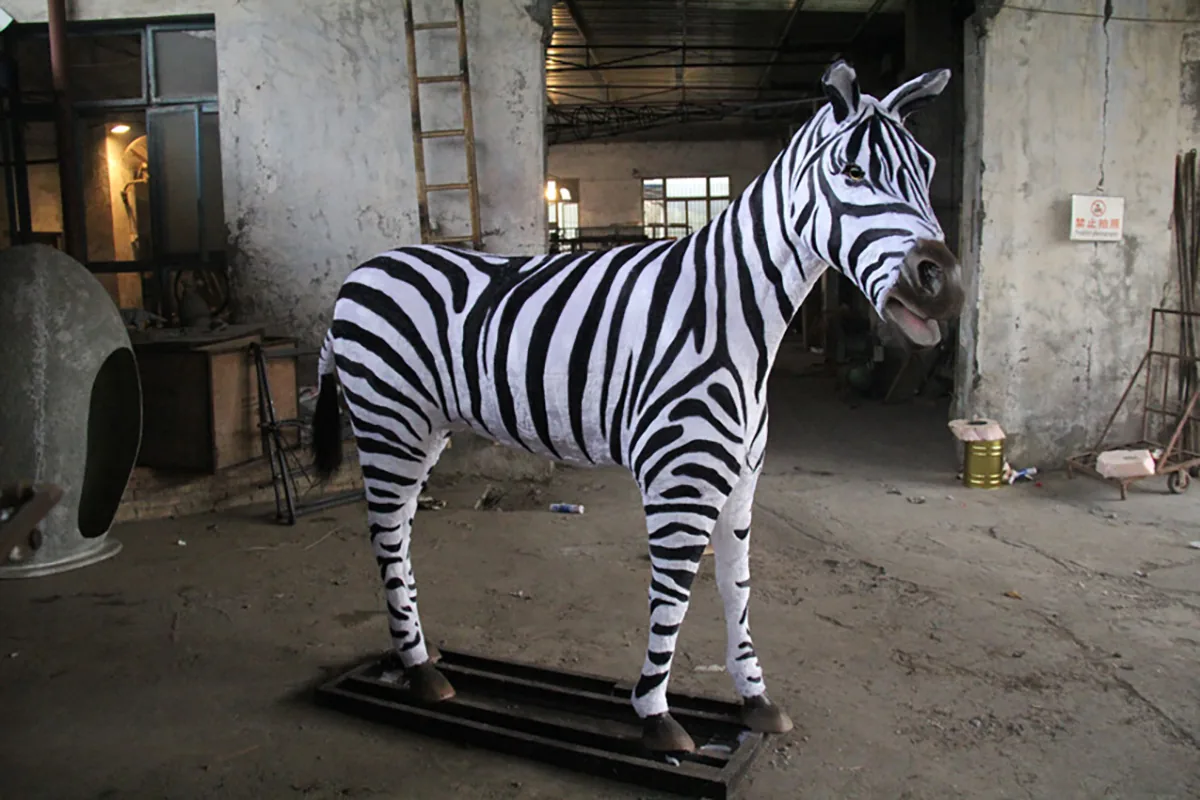
The mare is 2.5 metres long and 1.5 metres at the shoulder. The foal is 1.5 metres by 1.0 metre, and it is not a scaled copy: a foal has proportionally longer legs, a shorter neck and a head that has not finished growing. Those proportions are what make the pair read as parent and offspring, and they have to be sculpted separately.
Additional herd members can be added later. We keep the paint reference and the sculpt files on record, so a horse bought in a later order matches the first pair.
Two animals running independent cycles look like two displays. The pair is programmed as a group: the foal’s head turns toward the mare, the mare shifts her weight between the two, and the cycles are offset so neither animal copies the other. That is what makes a visitor stop.
The movement set per animal is head turn, ear movement, tail sway and a slow weight shift. Servo drives throughout, tuned for savanna viewing distances of 5 to 20 metres.
Each stripe group is masked and painted by hand, then sealed. The coat texture is a short, even fur that is moulded into the skin rather than applied, so it does not lift at the edges. Painting is the slowest stage of the build and it is the reason we ask for reference images early: it is included in the quoted lead time, not an afterthought.
Zoo savanna zones, as a companion to a live collection or as a static group for the closed season. Safari parks and drive-through attractions, set back from the track so it reads at vehicle distance. Natural history galleries showing coat variation. Mall displays, where a mother-and-offspring group is the photograph families stop for.
Can we specify the stripe pattern? Send photographs of real animals or a pattern you want and we work from it. What we do not do is mirror one side of the body onto the other.
Is the foal fragile? It is built to the same standard as the mare, with a lighter frame. For a children’s contact zone we would change the base and the jaw force, which is a different brief.
Does the pair need a wider plinth? The pair stands within a 3 by 2 metre footprint as standard. Herd additions extend it, and the base drawing is supplied for your contractor.
Materials. National-standard steel skeleton, moulded silicone skin, acrylic paint colour finish.
Related. the hyena group, zoo placement, the animatronic animals range.
Same factory and the same build standard. What changes is size, movement set and how the exhibit is meant to be used on site.
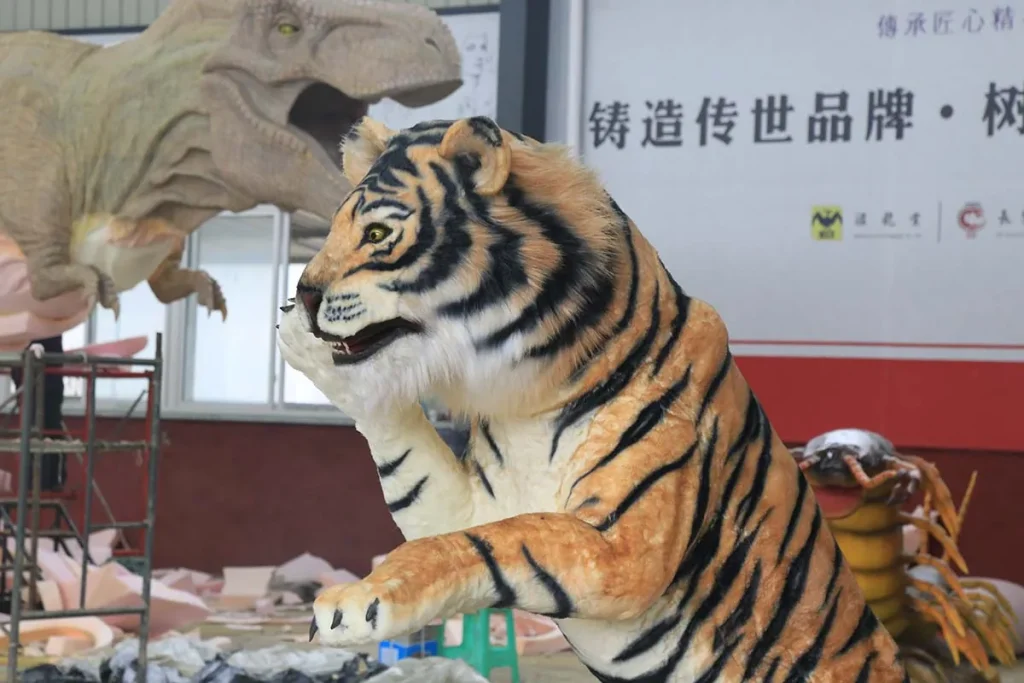
A life-size tiger built to zoo-grade anatomy — 2.6–3.1 m, slow stalking motion, painted stripe detail.
View Product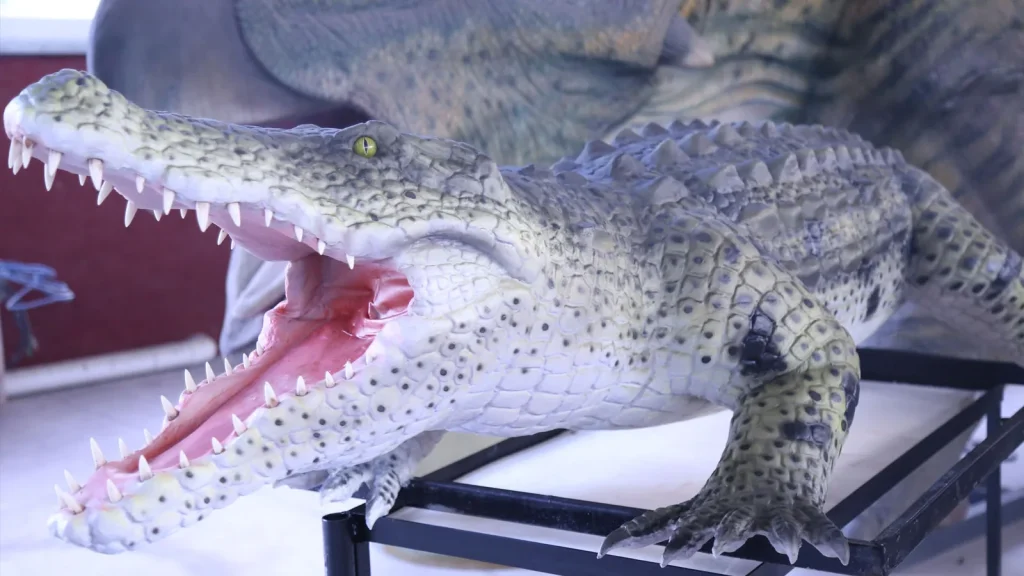
Hyper-realistic animatronic crocodile with hand-sculpted osteoderms, opening jaw and two poses — threat display or low hunting stance.
View Product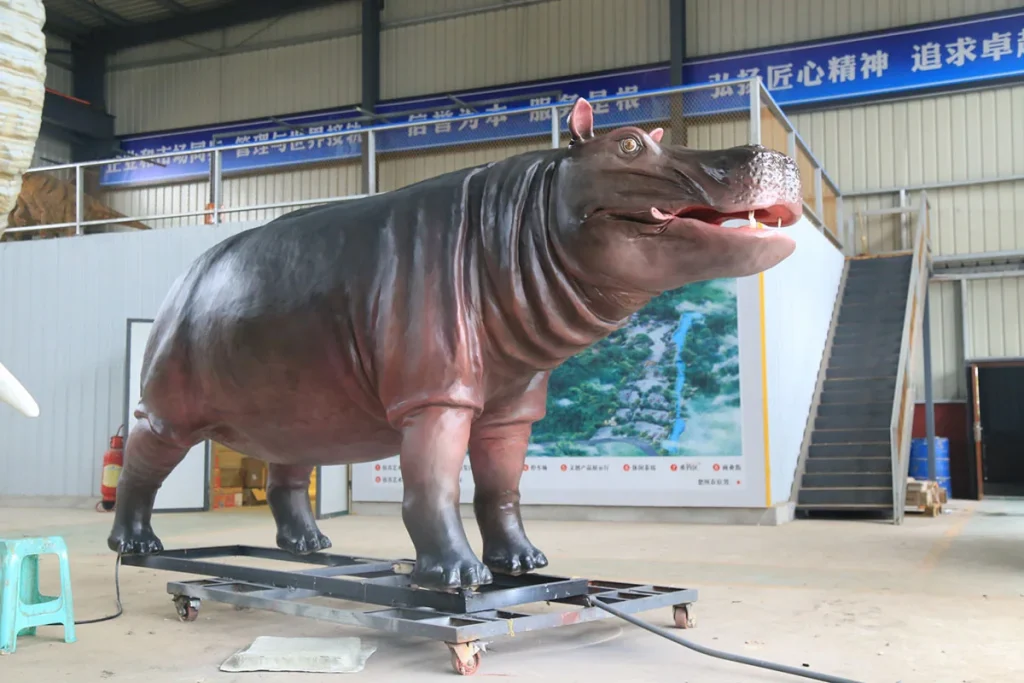
A hippopotamus is the one animal where the motion design is mostly about restraint. Real hippos stand still for long stretches, and a build […]
View ProductThree things buyers usually want settled before they ask for a drawing — what drives the number, how the piece is actually built, and what to check between suppliers.
Extinct and hard-to-keep species, sculpted to anatomy keepers can check — where animatronic animals earn a place beside a living collection.
Read the guide →From fossil reference to finished skin — how proportions, texture, colour and weathering are decided, and what separates a realistic build from a cartoon one.
Read the guide →How Much Does an Animatronic Dinosaur Cost? Understanding the Key Cost Factors If you are planning a museum exhibition, theme park attraction, or promotional […]
Read the guide →Send your dimensions, movement requirements and installation site. You get a realistic budget range and a dated build schedule.
Or email info@hltdino.com — we reply within one business day.