A mall has no ticket gate — the exhibit has to earn attention in three seconds and pay for itself in dwell time. Here is how atriums, fire lanes and overnight install windows shape the build.
Atrium TakeoversSensor TriggersOvernight Install30–45 Day Build
Mall Outcomes
Footfall Follows the Photo, Not the Exhibit
Why retail operators book animatronic exhibits for school holidays and campaign weeks.
01
A Reason to Walk In
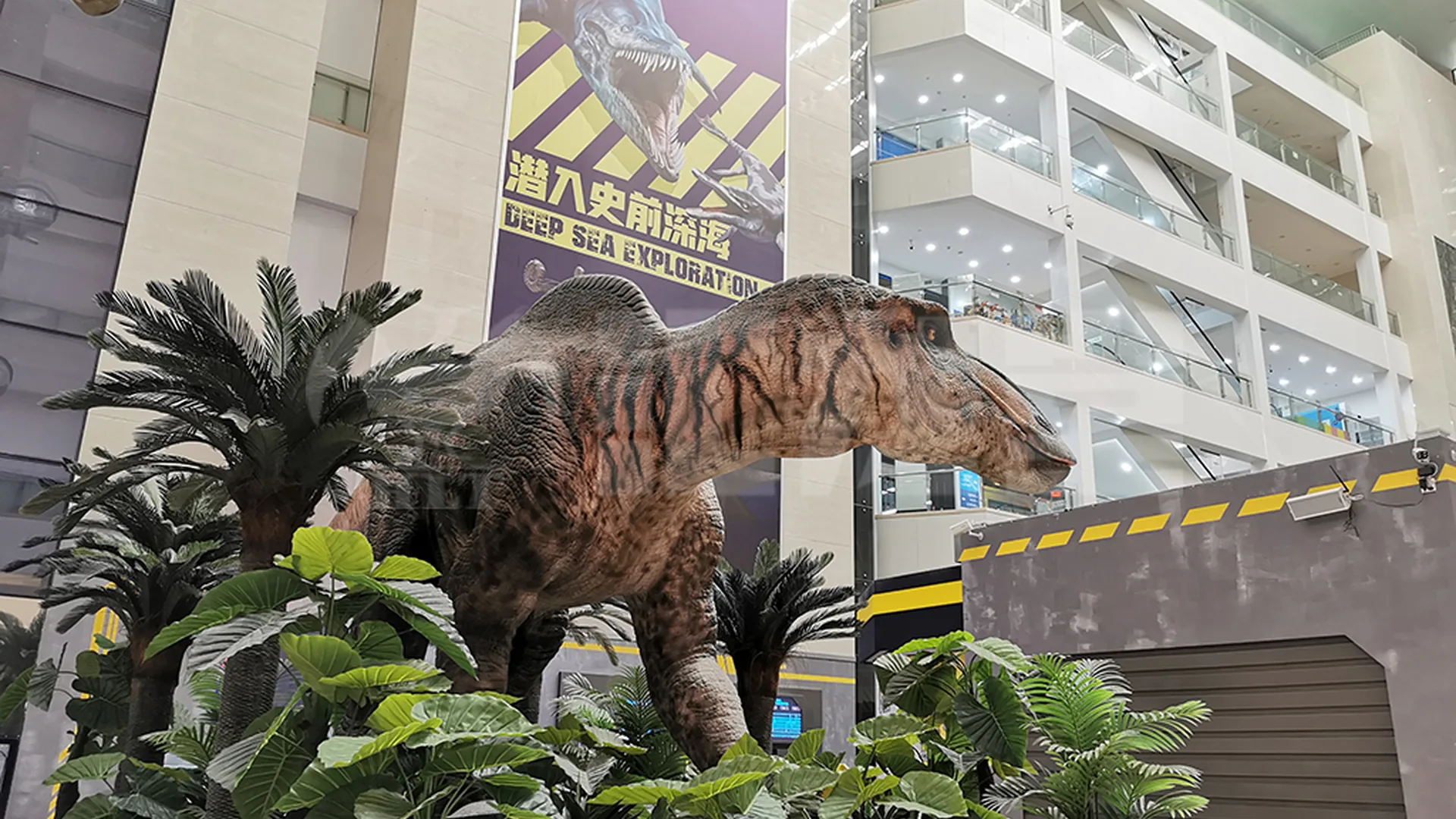
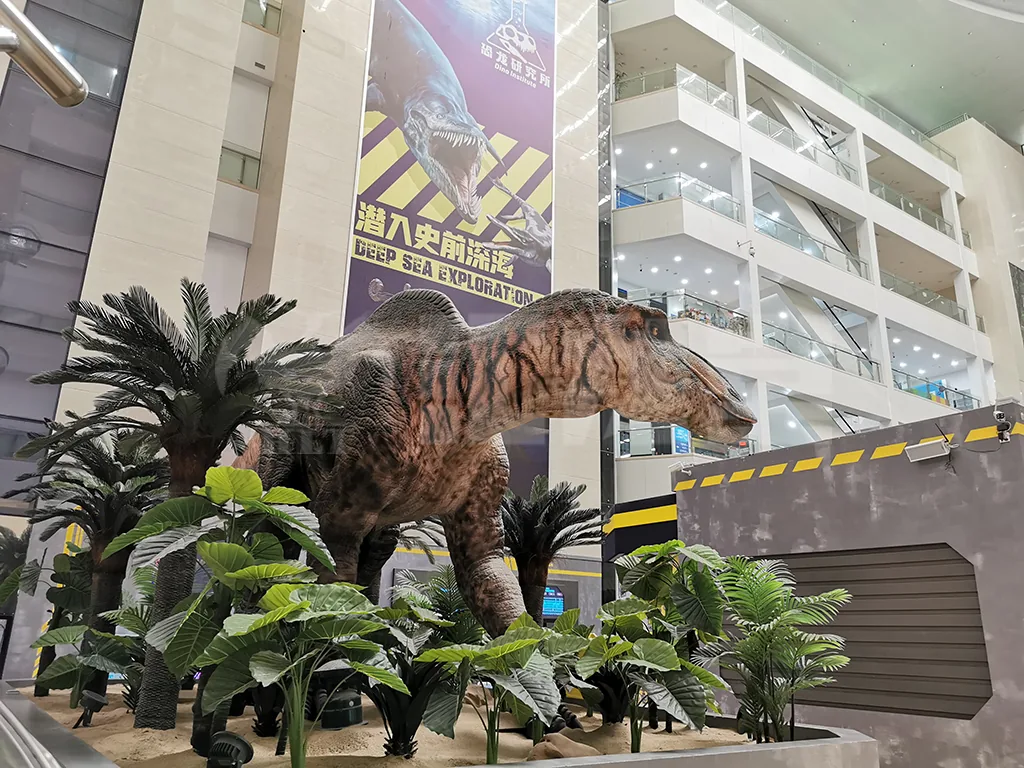
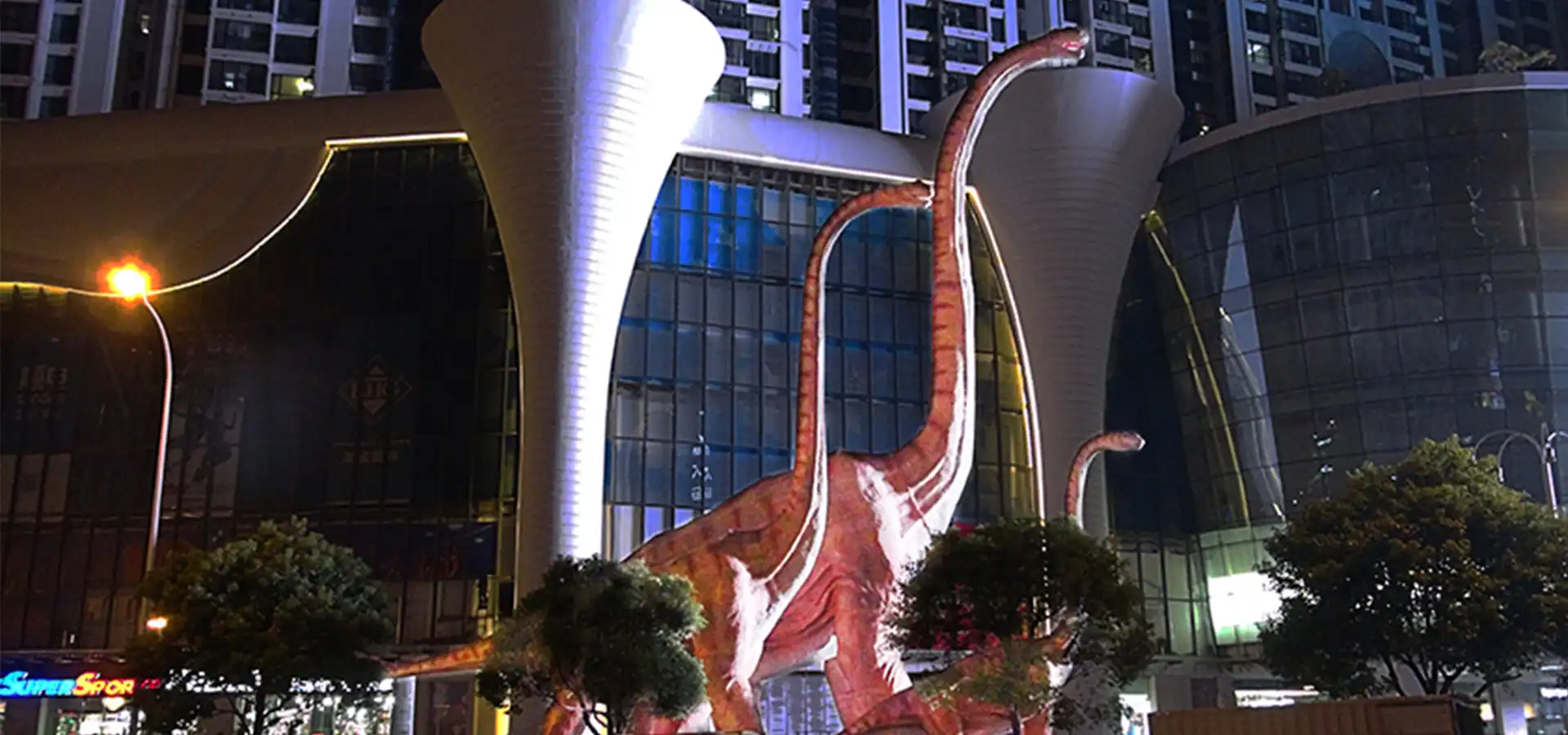
An atrium takeover gives families a destination, not a detour. Campaigns work best when the exhibit is visible from the main entrance before a visitor decides to stop.
02
Longer Dwell, More Spend
Visitors who stop for a show stay for coffee and food. Placement near F&B and anchor tenants is where the exhibit earns its rent.
03
Content That Travels
Every phone that films the show publishes the mall. Sensor-triggered reactions are what gets shared — a statue does not.
Recommended Mix
Size to the Clear Height, Not to the Animal
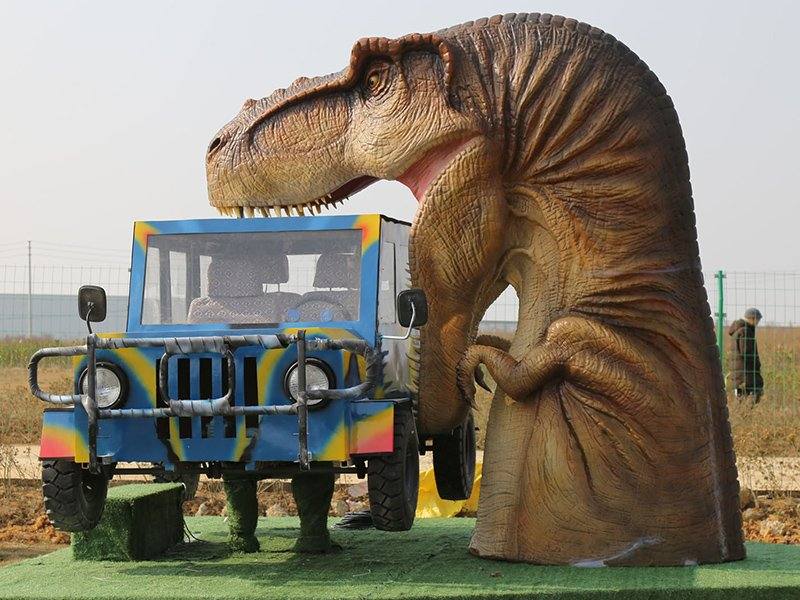
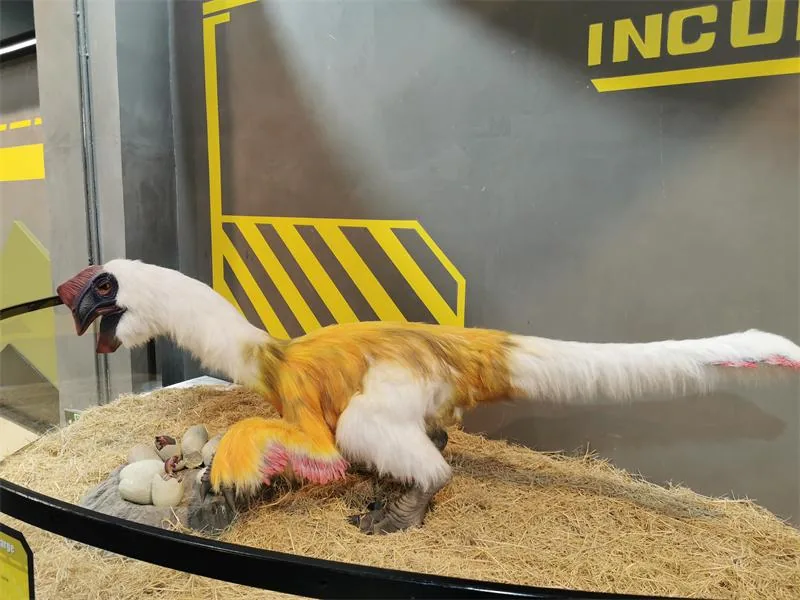
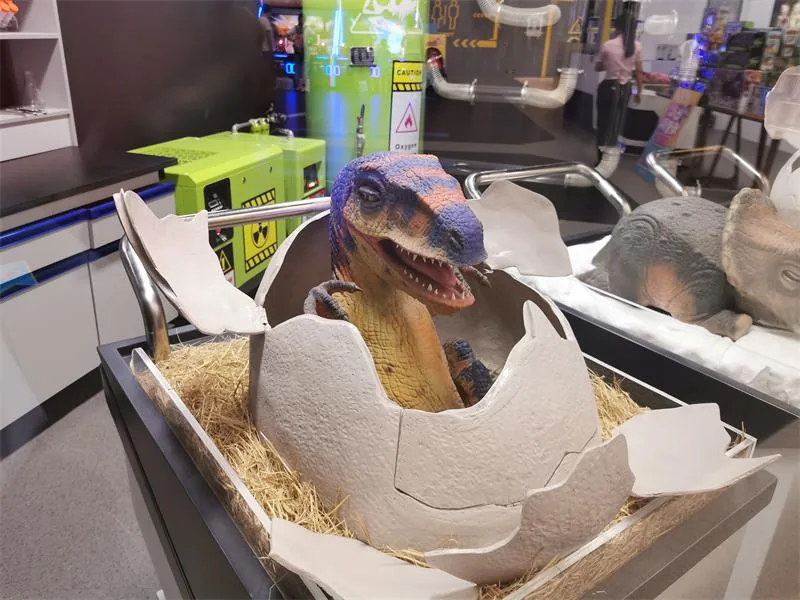
One hero piece, one photo wall, one family cluster — sized to the clear height you actually have.
Clear height and rigging are the first limit. Atrium installations are usually built in sections that pass through service lifts and are assembled on site, so the build has to be designed for the route it travels, not just the space it lands in.
Fire egress decides placement. Exhibits cannot narrow an escape route, and plinths have to be visible under emergency lighting. Send the floor plan with egress routes marked and we will position the installation around them.
Install windows are short and usually overnight. We ship prepared sections with a numbered assembly sequence so a crew can position, connect and test before trading hours — then return for final calibration.
Mall FAQ
What Mall Operators Ask
Can it be installed overnight?
Yes. Builds are sectioned and numbered so a crew can move them through service lifts, position and connect them before trading hours, with final calibration the following morning.
Does it block fire egress?
It must not — we position the installation against your marked egress routes and keep plinths visible under emergency lighting. Your safety officer signs off the layout before production.
How do we keep it busy all day?
Run a timed cycle with sensor override: it performs on a loop, then reacts harder when someone steps close. Staff can pause it during announcements.
What about cleaning and maintenance?
Surfaces wipe clean with a neutral cleaner. We supply a touch-up kit and a maintenance schedule, plus remote support for control and drive issues.