Animatronic Animals
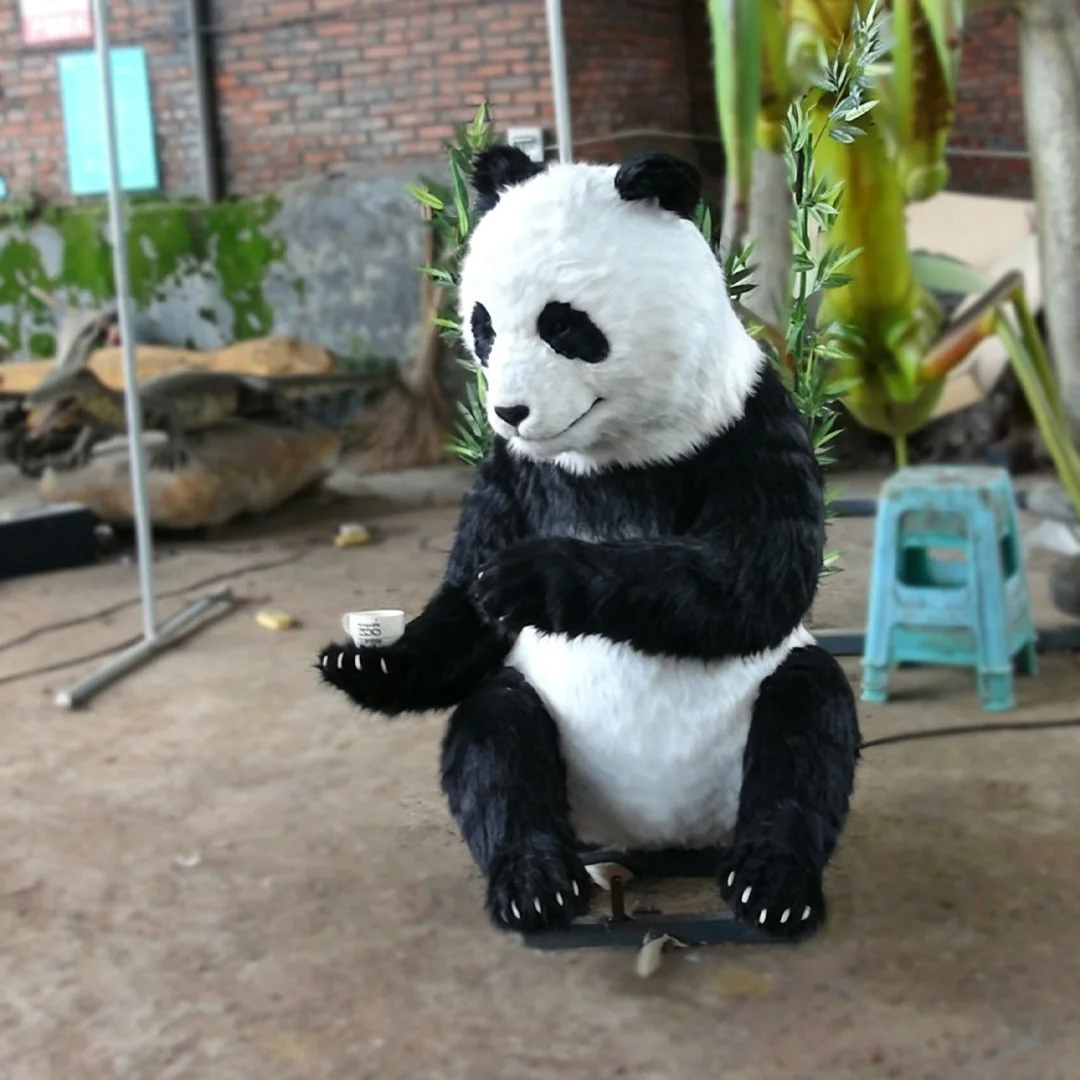
A panda is the most photographed animal in the catalogue and the one where a small error is most visible. Everyone has seen a panda, everyone knows the pattern, and the failure mode is specific: eye patches that are the wrong shape, fur that reads as plush, and a black-and-white boundary that is too clean.
| Height | 120 cm to 200 cm seated, built to order |
|---|---|
| Frame | Weatherproof internal frame, modular assembly |
| Surface | Hand-finished fur and facial detail |
| Power | 110 V / 220 V AC, 250 W average |
| Motion | Head turn, blink, paw and cup movement on the tea ceremony pose |
| Pose | Seated tea ceremony as standard; other poses on request |
| Assembly | Modular — goes together on site without lifting equipment |
| Duty | Indoor standard, outdoor on request |
Three details decide whether a panda reads as a panda. The eye patches, which are angled and irregular rather than two ovals. The black-and-white boundary, which is soft and broken by individual hairs rather than a clean line. And the muzzle, which is short and round rather than pointed.
All three are hand-finished, and all three are what separates this from a plush toy at four metres. When we quote a panda we send the face for approval before the body is built, because a panda with the wrong face cannot be corrected afterwards.
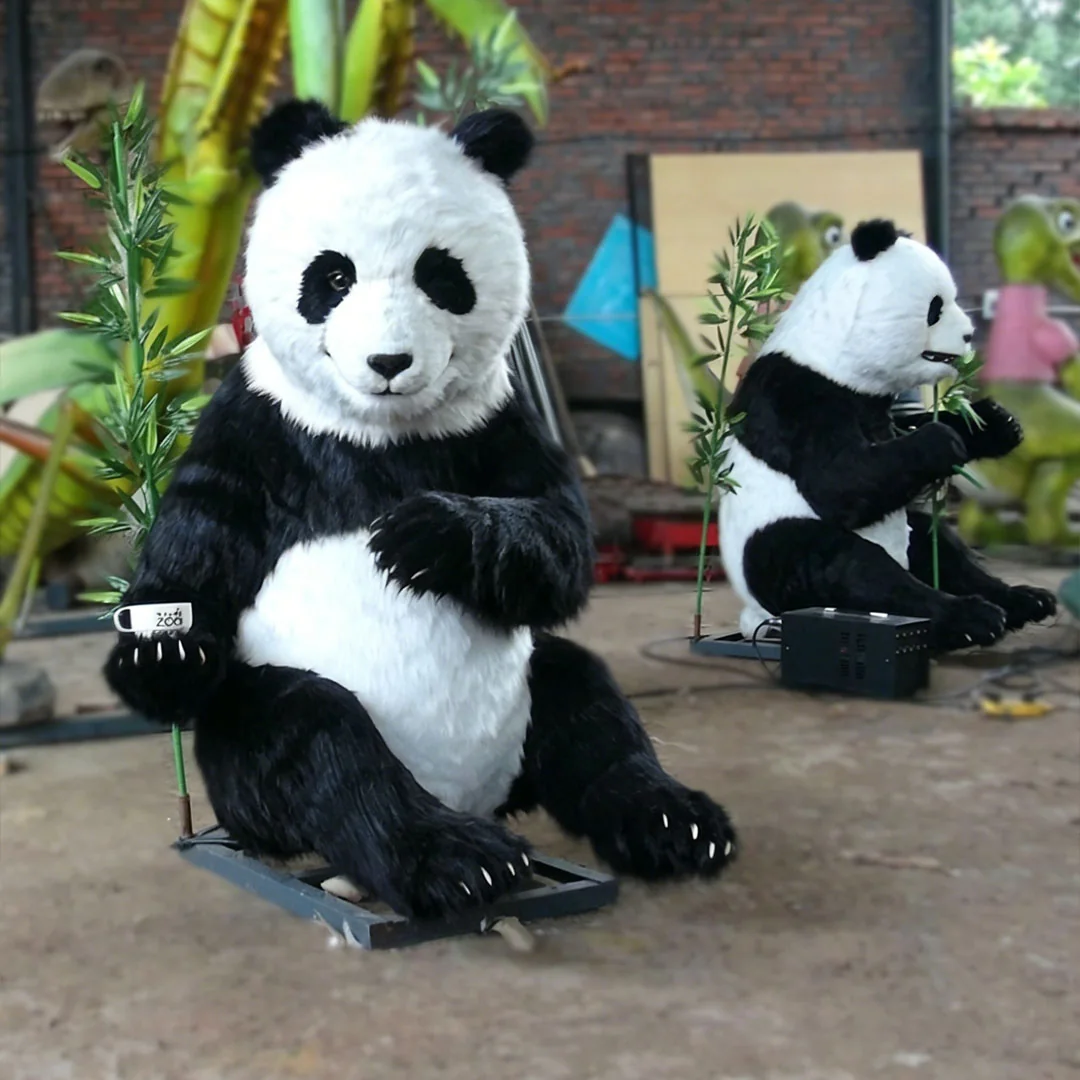
A standing panda is a zoo exhibit. A seated panda holding a cup is a cultural image, and it is the version that gets ordered for botanical gardens, Chinese-themed festivals and hotel lobbies rather than for zoos.
The pose also solves a practical problem: a seated animal is stable, needs no ballast, and assembles on site without lifting gear. A standing 2-metre panda needs a frame and a crew; this one goes together modularly.
Three settings work. A garden setting with bamboo, where the animal reads as part of the planting. A themed festival zone, where the tea pose fits the cultural frame. And an indoor lobby or atrium, where the seated pose and modest footprint suit a corner rather than a centrepiece.
Outdoors, keep it out of full sun. The black sections absorb heat and the white sections show any yellowing first, so a shaded position ages far better than an exposed one.
Is it a specific pose only? Seated tea ceremony is the standard build. Standing, climbing and cub poses are available and are different sculpts, not adjustments.
Does the cup move? Yes, on the standard build the paw raises and lowers the cup as part of the cycle.
Can it be outdoors? Yes with the outdoor finish. Shade is strongly recommended — this is the animal where sun damage shows most.
How heavy is it? Light enough for two people to position the assembled sections, which is why it is specified for lobbies and event venues.
250 W and a standard socket. The site requirement is a flat, dry position — a seated animal on an uneven surface rocks visibly, and the rocking is obvious because the pose is static and the eye is drawn to any movement that should not be there.
If the panda is going into an event venue rather than a permanent exhibit, ask for the touring packing. The modular assembly is what makes it practical to move, and the packing is what makes it survive being moved.
Assembly first — the sections go together without lifting equipment, which is the point of the modular design. Then the motion is set: the head turn is slowed, and the cup movement is timed so it does not repeat on an obvious loop.
The blink is the detail that makes the face work. Set too fast it looks mechanical; set at an irregular interval it makes the animal look alive between visitors, which is the whole job.
Materials. Weatherproof internal frame, hand-finished fur and facial detail, modular assembly.
Related. the animatronic animal range, the penguin, plants and trees, request a quote.
Same factory and the same build standard. What changes is size, movement set and how the exhibit is meant to be used on site.
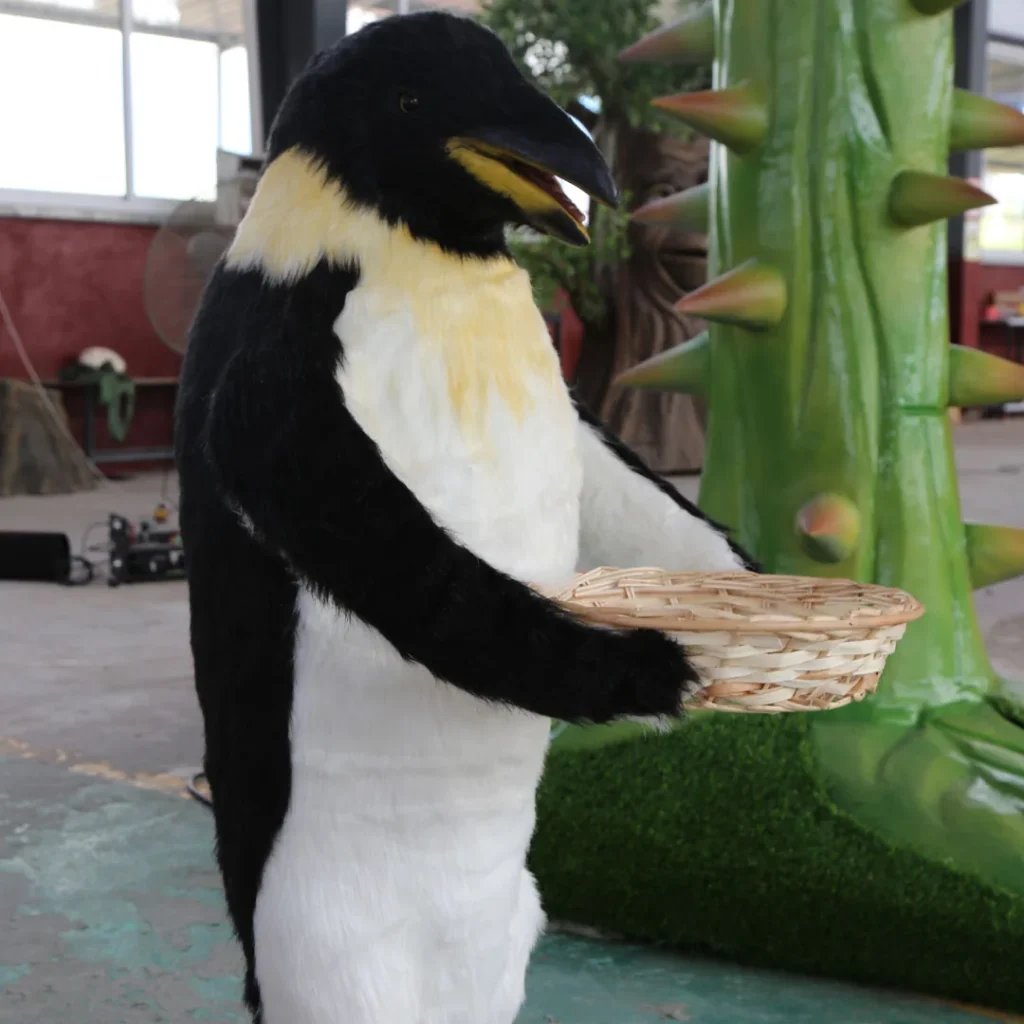
One penguin reads as a toy. Five, at different heights, with one bent over and one mid-waddle, read as a colony — and a […]
View Product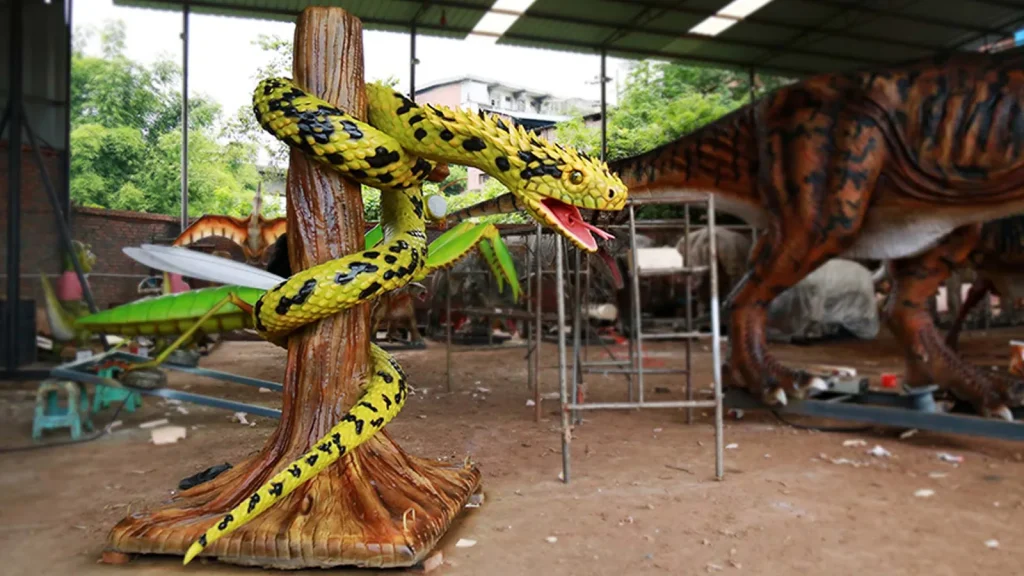
Animatronic python coiled on a branch — individually sculpted scales, flicking forked tongue, coiling motion and hissing audio for biology exhibits.
View Product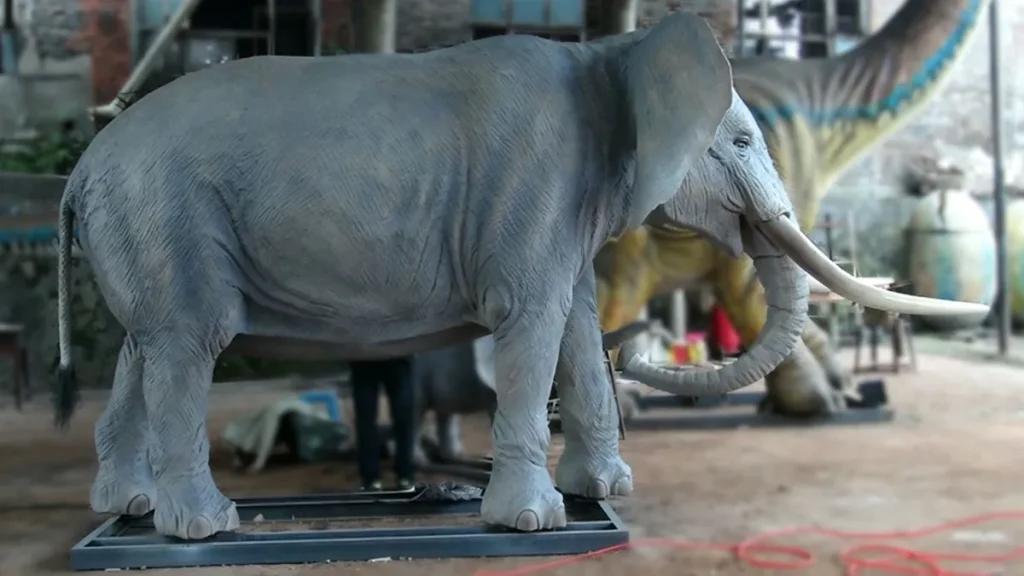
Our animatronic African elephant brings Loxodonta africana to life at full scale — from the deeply wrinkled skin to the independently moving ears and […]
View ProductThree things buyers usually want settled before they ask for a drawing — what drives the number, how the piece is actually built, and what to check between suppliers.
Extinct and hard-to-keep species, sculpted to anatomy keepers can check — where animatronic animals earn a place beside a living collection.
Read the guide →From fossil reference to finished skin — how proportions, texture, colour and weathering are decided, and what separates a realistic build from a cartoon one.
Read the guide →How Much Does an Animatronic Dinosaur Cost? Understanding the Key Cost Factors If you are planning a museum exhibition, theme park attraction, or promotional […]
Read the guide →Send your dimensions, movement requirements and installation site. You get a realistic budget range and a dated build schedule.
Or email info@hltdino.com — we reply within one business day.