Animatronic Animals
Realistic Animatronic Python Snake Model
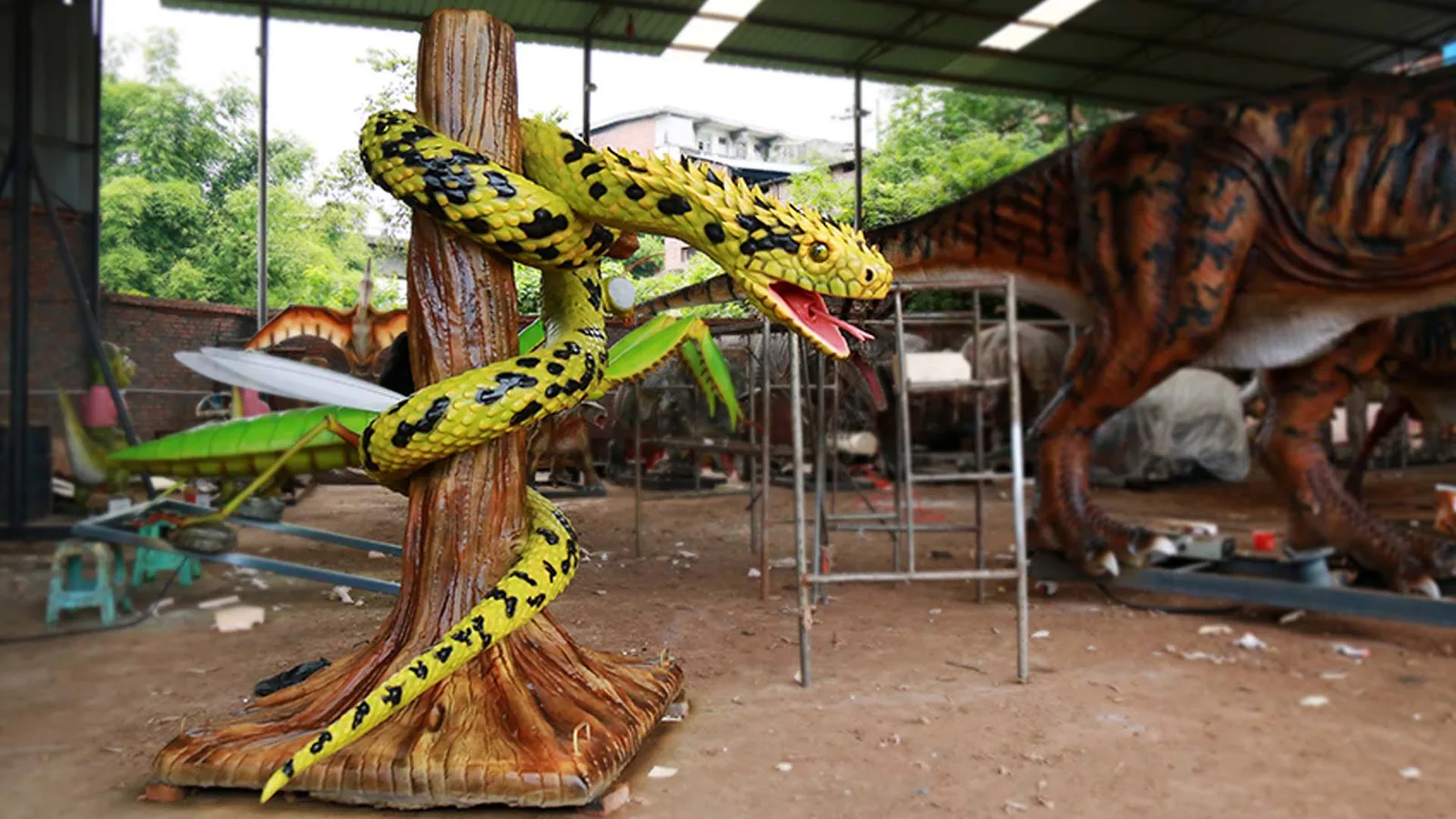
Animatronic python coiled on a branch — individually sculpted scales, flicking forked tongue, coiling motion and hissing audio for biology exhibits.
Animatronic python coiled on a branch — individually sculpted scales, flicking forked tongue, coiling motion and hissing audio for biology exhibits.
A python is the one reptile where the body does almost all the work. There are no legs to plant, no tail to counterbalance a step — just a long mass that has to look heavy, hold a coil, and move slowly enough that visitors believe it. Get the pace wrong and a 5-metre snake reads as a prop.
| Species | Pythonidae family — species specified at order |
|---|---|
| Type | Animatronic or static, specified at order |
| Size | Life-size; custom dimensions available |
| Material | Metal armature with high-density foam and hand-finished surface |
| Surface | Hand-painted textured finish with UV-resistant coating |
| Base | FRP tree branch with textured bark |
| Animation | Body coiling, head rotation, tongue flicking, jaw opening (optional) |
| Sound | Synchronised hissing on motion sensors |
| Power | 110–240 V AC, weatherproof control box included |
| Duty | Indoor and outdoor compatible |
| Support | 2-year mechanical / 1-year electronic |
A ground-level snake is a snake visitors step over. Coiled on a branch at chest height, it is at eye level and it is unavoidable. The FRP branch is not decoration — it solves two problems at once: the animal is lifted clear of wet ground, and the coil gives the animatronic a natural place to hide its structure.
The branch also sets the viewing angle. Coiled with the head forward and slightly down, the animal looks like it is watching the path. Coiled flat, it looks like a display piece.
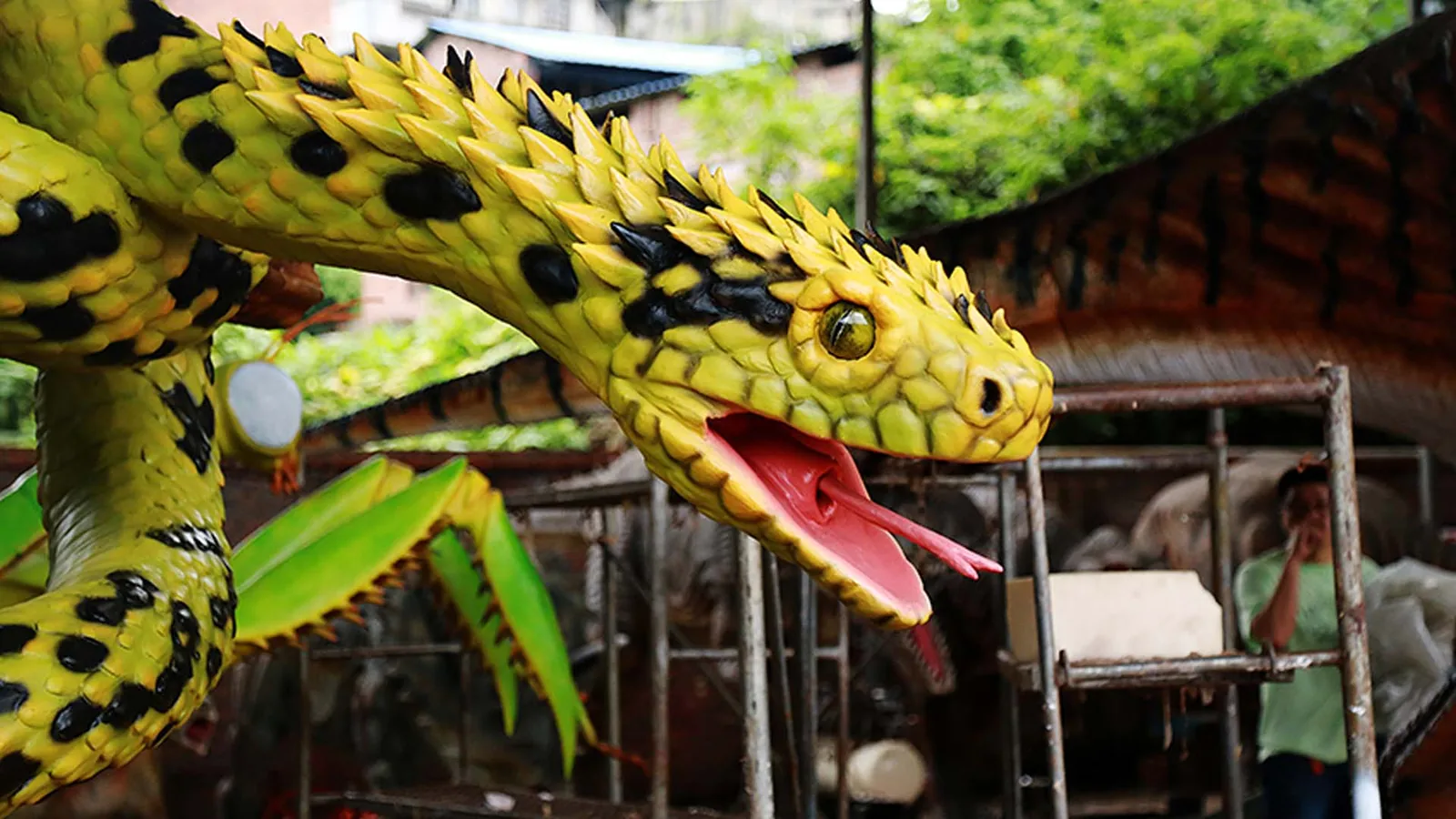
Two details separate a convincing python from a painted tube. Scales: every one is individually sculpted and hand-painted, so the surface catches light the way real integument does — a smooth skin with a printed pattern reads as plastic from two metres. And the tongue: a forked tongue that flicks on an irregular interval reads as investigation; one on a fixed loop reads as a mechanism.
The jaw is the optional extra. On a static pose it adds little; on a coiled animal facing the path, a slow jaw opening on approach is what makes visitors stop.
Is the tree branch included? Yes on the standard build, and the shape is customisable. A custom branch changes the lead time, not the price structure.
Can it be a different species? Yes — reticulated, Burmese and other Pythonidae on the same structure. Colour and pattern are painted per species.
How far does the body move? The coil tightens and relaxes by a small amount; the head rotates further. A body that travels visibly reads as a machine.
Does it run on a sensor? Motion sensor is standard for the hiss and the head turn. A fixed cycle is available where the exhibit is unattended.
110–240 V AC with a weatherproof control box included, so the electrical side is a single supply to the base. The site question is drainage: an outdoor build sitting on soil holds water under the branch, and standing water is what ages the base before the animal.
Indoors, keep it out of direct sun through glazing. The UV-resistant coating slows fading; it does not stop a south-facing window in summer, and a faded pattern cannot be repainted on a textured surface without losing the scale detail.
The motion is tuned down, not up. Coil movement is set to a range where it reads as breathing rather than sliding, the head rotation is slowed, and the tongue interval is randomised so it does not loop.
Then the sensor is ranged against the actual path. A snake that fires on everyone walking past performs constantly; one that fires at the point where visitors lean in gets a reaction every time.
Materials. Metal armature, high-density foam, hand-finished sculpted scales, FRP branch base, weatherproof control box.
An outdoor python collects dust in the sculpted scale texture, and dust is what kills the painted pattern. Cleaning is a soft brush and a damp cloth, working along the scale direction rather than across it — across the grain is how individual scale edges get chipped. Twice a season on a sheltered build, monthly on an exposed one. Do not use a pressure washer: the same texture that makes the skin convincing is what traps the water.
Related. the animatronic animal range, the crocodile, zoo installations, request a quote.
Same factory and the same build standard. What changes is size, movement set and how the exhibit is meant to be used on site.
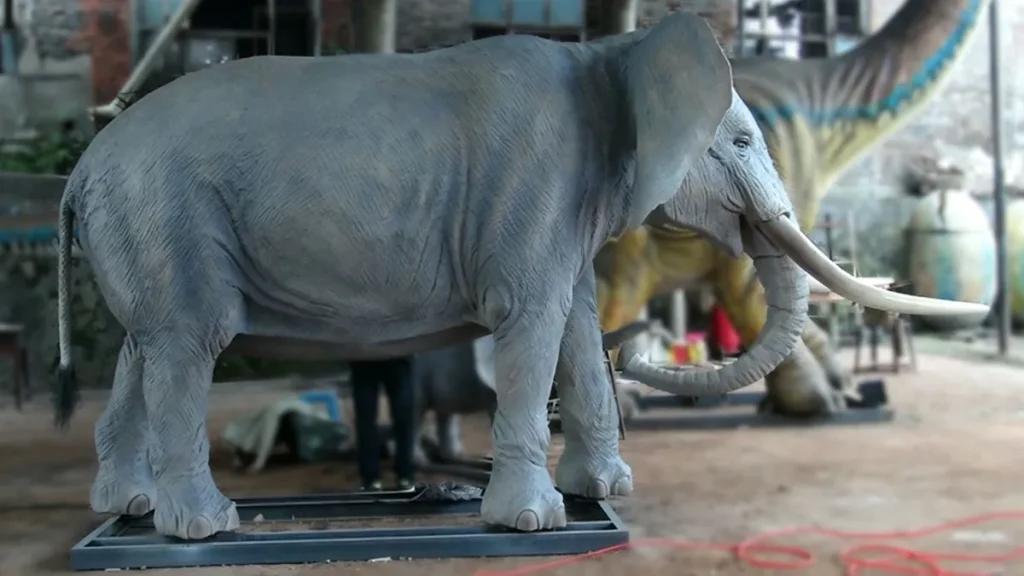
Our animatronic African elephant brings Loxodonta africana to life at full scale — from the deeply wrinkled skin to the independently moving ears and […]
View Product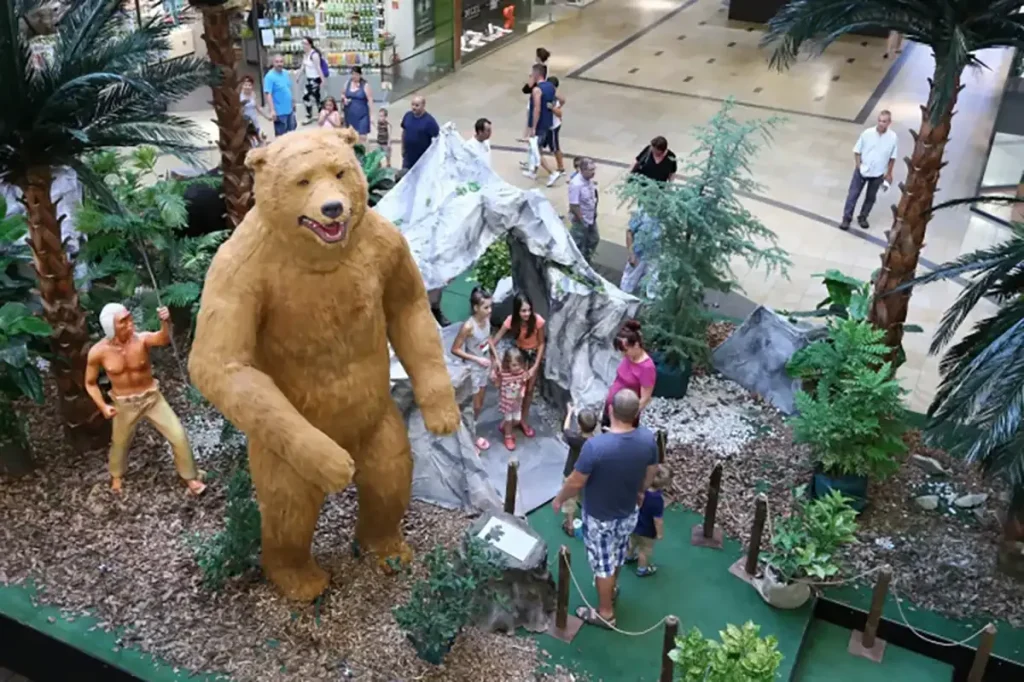
Life-size animatronic cave bear with hand-pasted fur, glass eyes and the heavy Pleistocene stance — for museum dioramas and Ice Age trails.
View Product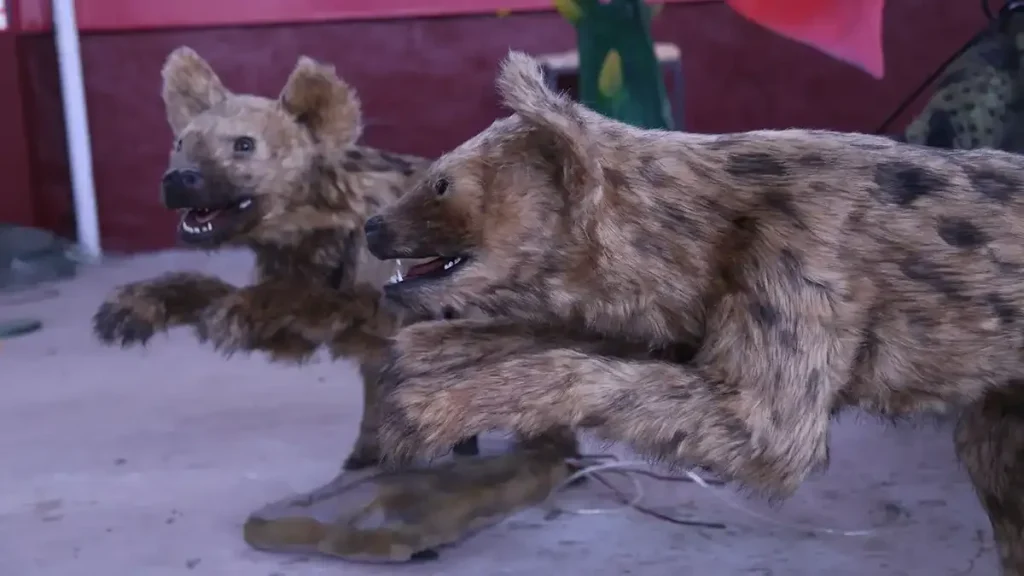
A 1.4–1.7 m spotted hyena designed to be ordered in packs, with staggered trigger timing.
View ProductThree things buyers usually want settled before they ask for a drawing — what drives the number, how the piece is actually built, and what to check between suppliers.
Extinct and hard-to-keep species, sculpted to anatomy keepers can check — where animatronic animals earn a place beside a living collection.
Read the guide →From fossil reference to finished skin — how proportions, texture, colour and weathering are decided, and what separates a realistic build from a cartoon one.
Read the guide →How Much Does an Animatronic Dinosaur Cost? Understanding the Key Cost Factors If you are planning a museum exhibition, theme park attraction, or promotional […]
Read the guide →Send your dimensions, movement requirements and installation site. You get a realistic budget range and a dated build schedule.
Or email info@hltdino.com — we reply within one business day.