Animatronic Animals
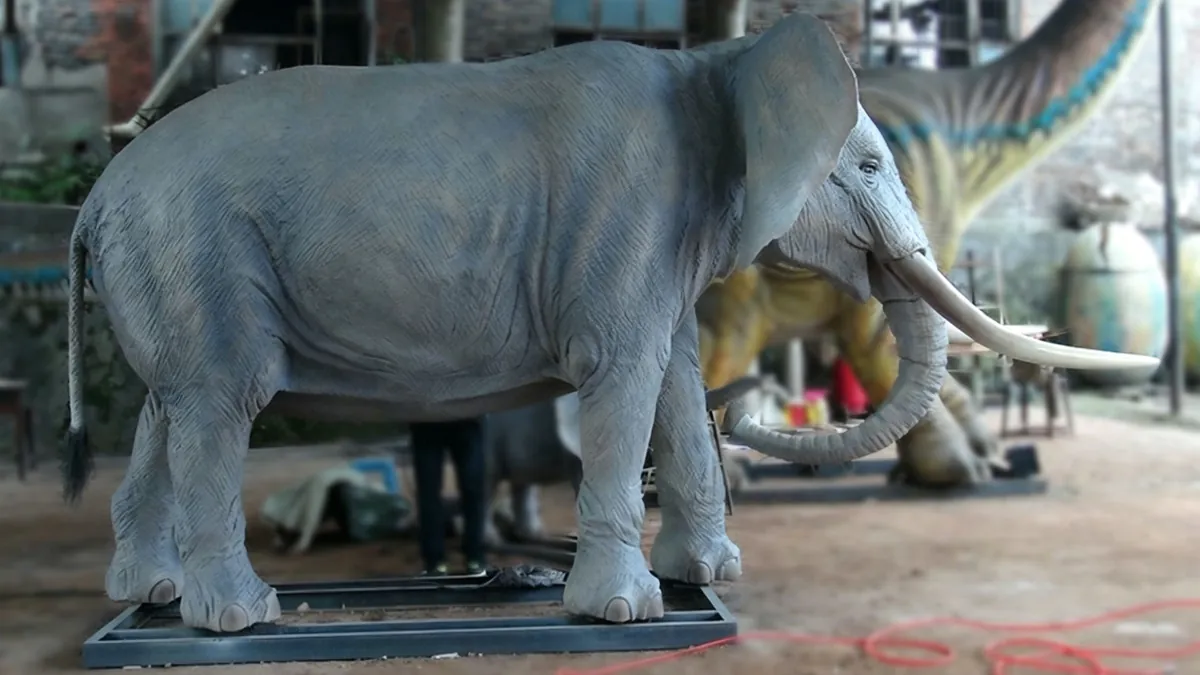
Our animatronic African elephant brings Loxodonta africana to life at full scale — from the deeply wrinkled skin to the independently moving ears and the trunk that curls, extends and sweeps sideways. It is the largest animal in the range, and the one where a single wrong detail is most obvious, because everyone has stood near a real elephant.
| Species | Loxodonta africana (African bush elephant) |
|---|---|
| Movement | Multi-segment trunk (curl, extend, sweep), independent ear flapping, eye rotation, head sway |
| Sound | Trumpeting, rumbling and low-frequency vocalisation |
| Frame | Steel frame with high-density foam |
| Skin | Patented moulded silicone overmoulding (patent ZL 2022 1 0224489.5) |
| Tusks | Composite resin with ivory-tone finish |
| Water resistance | IP65 |
| Operating temperature | −20 °C to +60 °C |
| Power | 220 V AC input, 24 V / 12 V internal control |
| Control | Infrared remote with proximity sensor activation |
| Lead time | 20 to 30 days production plus shipping |
| Installation | Bolt-down base plate; two-person team, 3 to 5 hours |
A real elephant trunk carries roughly forty thousand muscle units and no bone at all. We cannot reproduce that, but segment count is what decides whether the trunk reads as a limb or as a hose. At three segments it curls in a visible arc and the joints announce themselves; at eight it can extend, curl and sweep to the side as one continuous movement.
Segment count also sets how it fails. A short trunk driven past its travel buckles at a single joint and stays buckled. Eight segments distribute the load, so a trunk that meets a visitor’s hand retreats instead of deforming.
An African elephant’s ears are a radiator. The animal flaps them to move air across a dense vessel network, and the rhythm is not constant — it speeds up in heat and nearly stops in the cool of the evening. Building both ears to flap in unison is the most common error on an animatronic elephant, and it is the one visitors notice without being able to name.
Left and right run on separate drives here, on independent timings. That is the difference between an animal standing in the sun and a machine waving.
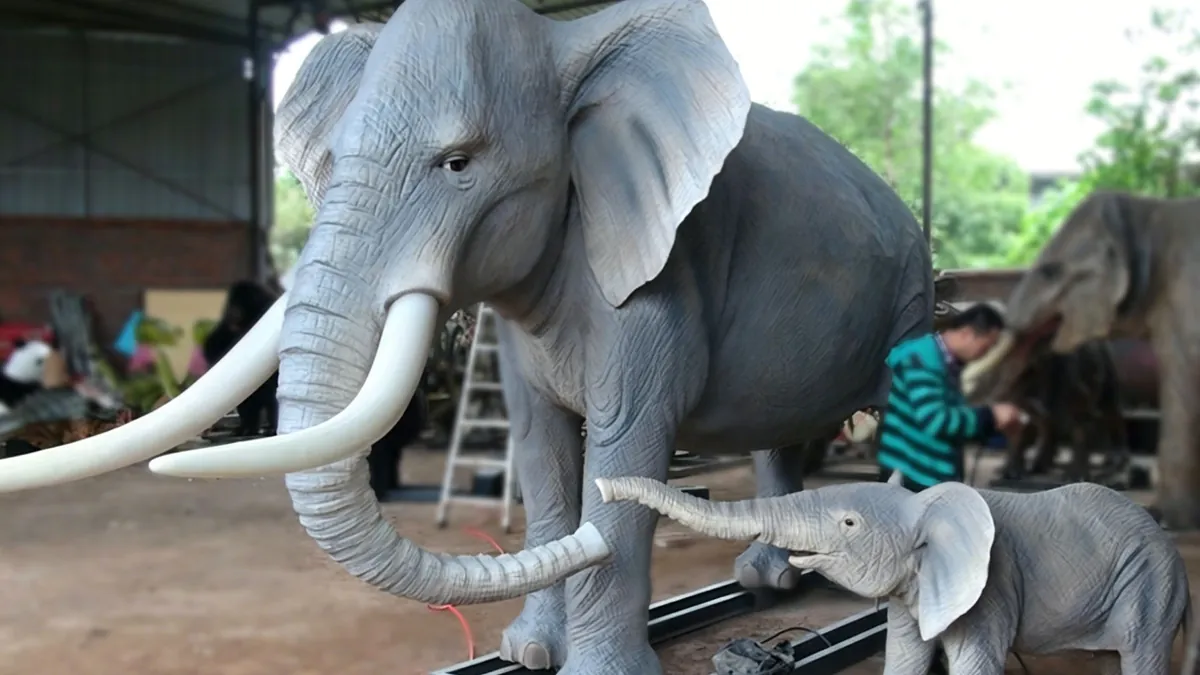
The skin is the part that survives scrutiny. Thousands of wrinkles, folds and skin creases are moulded from reference photography rather than pressed from a repeating pattern, because a repeated wrinkle reads as fabric at conversational distance. The finish is soft to the touch, which matters more than it sounds — visitors reach out, and a hard shell breaks the illusion instantly.
The tusks are composite resin with the ivory colour and surface of the real thing, deliberately light so that a leaning visitor does not snap them. The eyes rotate on their own drive, adding a layer of awareness without ever looking mechanical.
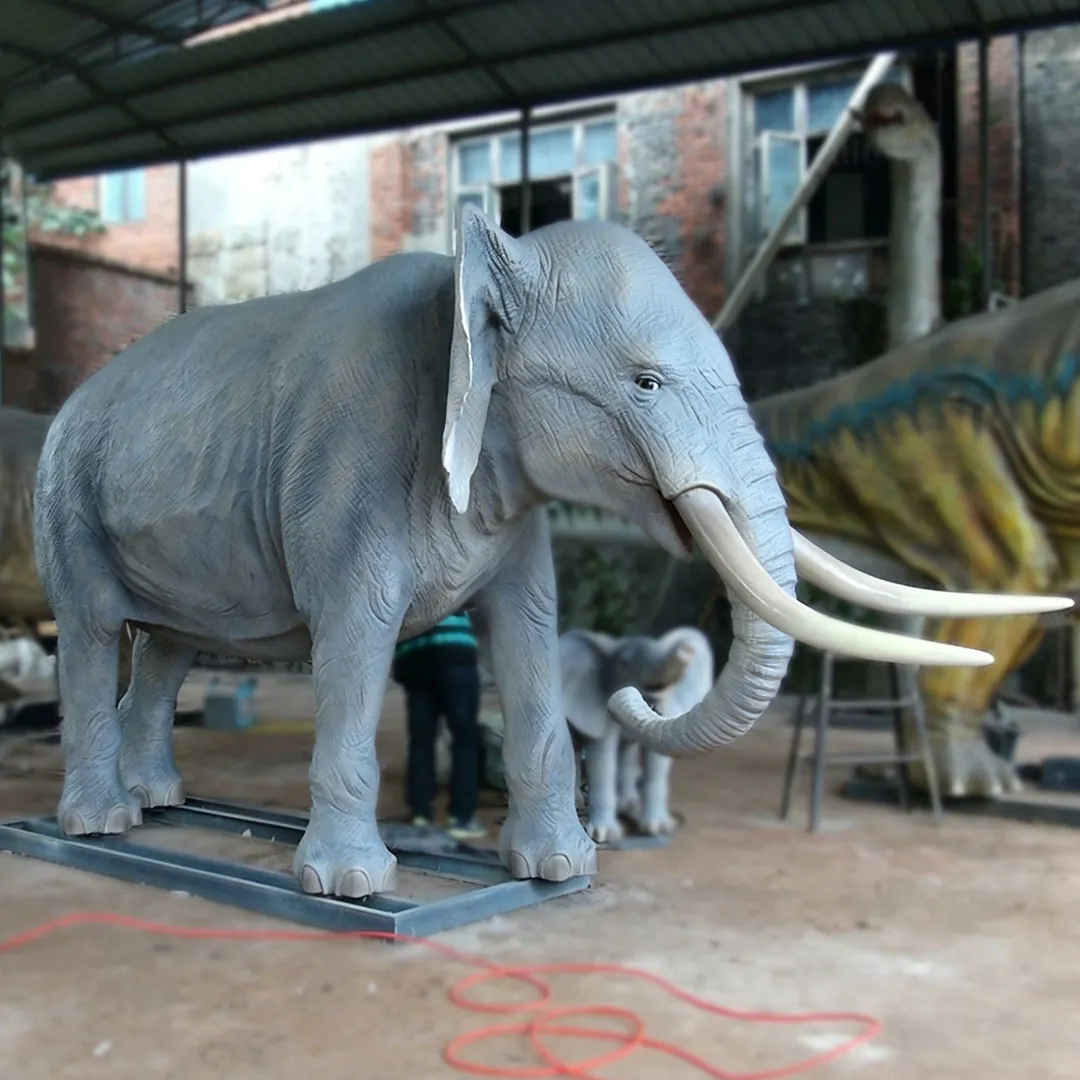
Zoos and wildlife parks use it as a companion exhibit beside a living enclosure. Natural history museums use it as a hall-of-mammals centrepiece or in an African savanna diorama. Safari-style attractions place it along a drive-through or walk-through route. Shopping centres and hotels use it for seasonal African wildlife events and lobby landmarks. Film and television productions use it as a high-realism animal double.
For museum interiors we offer a reduced-motion mode that minimises noise and removes sudden movements — the same animal, tuned for a quiet gallery rather than a busy trail.
How realistic is it up close? Very. The moulded silicone skin replicates individual wrinkles and folds from real elephant reference photography, and the surface is soft to the touch. At conversational distance most visitors react before they work out why.
Can the trunk interact with visitors? The standard configuration runs a pre-programmed cycle on proximity activation. An optional feeding mechanism lets visitors place an item in a zone and the trunk reaches toward it.
Is it suitable for a museum interior? Yes, with the reduced-motion mode — quieter drives, no sudden movement, tuned for gallery acoustics.
How does it differ from the dinosaur builds? Same core technology, different programming. Animal builds use smoother, more organic motion and finer surface detail; dinosaur builds prioritise dramatic movement sequences.
220 V AC input with 24 V / 12 V internal control, so the site supplies one mains feed and nothing else. IP65 means the animal is sealed against dust and water jets, and the operating range of −20 °C to +60 °C covers everything from a Nordic winter trail to a Middle Eastern summer forecourt.
The base is a bolt-down plate and the anchor layout ships with the drawing. A life-size elephant is heavy enough that the slab has to be engineered — this is the item that delays installations when it is left until delivery week. Two people install in three to five hours once the slab is ready.
Commissioning is mostly timing. The trunk sequence is set first — extend, curl, sweep, each taking several seconds, because a fast trunk reads as a grab. Then the ear drives are offset from one another so they never pulse together, and the eye rotation is slowed to the point where it registers as attention rather than scanning.
Proximity sensors are ranged last, against the real approach path. Set too wide and the elephant performs continuously; set to where visitors actually stop, and it reacts to each group.
Materials. Steel frame, high-density foam, patented moulded silicone skin (ZL 2022 1 0224489.5), composite resin tusks, eight-segment trunk, independent ear drives.
Related. the animatronic animal range, the koala model, the moose, zoo installations, request a quote.
Same factory and the same build standard. What changes is size, movement set and how the exhibit is meant to be used on site.
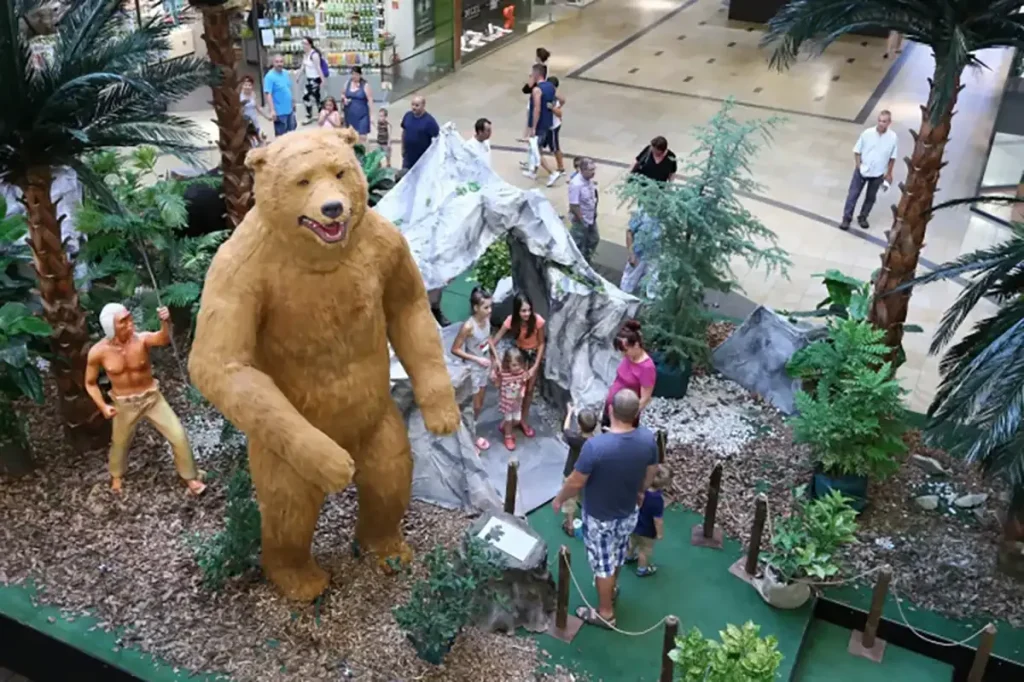
Life-size animatronic cave bear with hand-pasted fur, glass eyes and the heavy Pleistocene stance — for museum dioramas and Ice Age trails.
View Product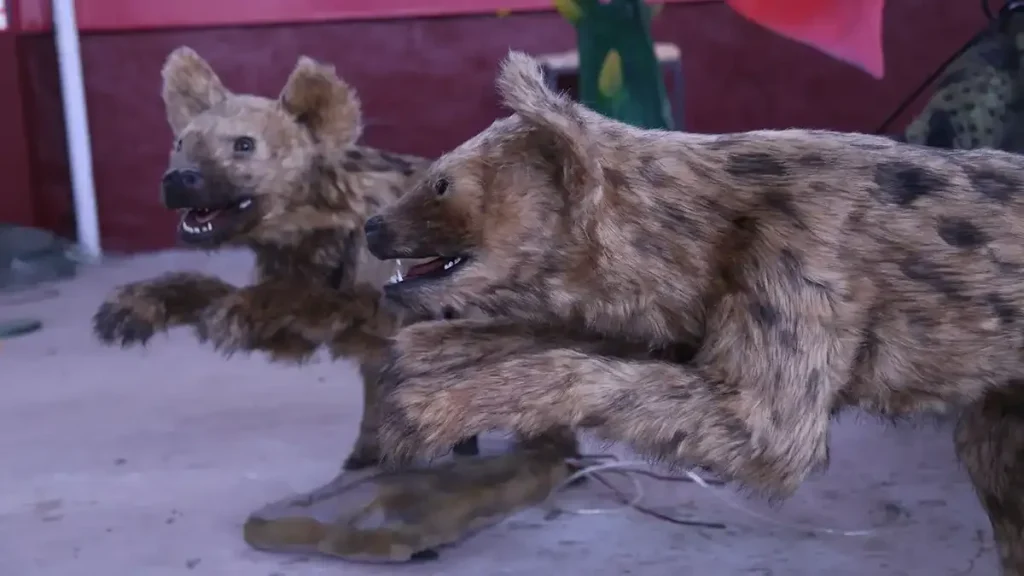
A 1.4–1.7 m spotted hyena designed to be ordered in packs, with staggered trigger timing.
View Product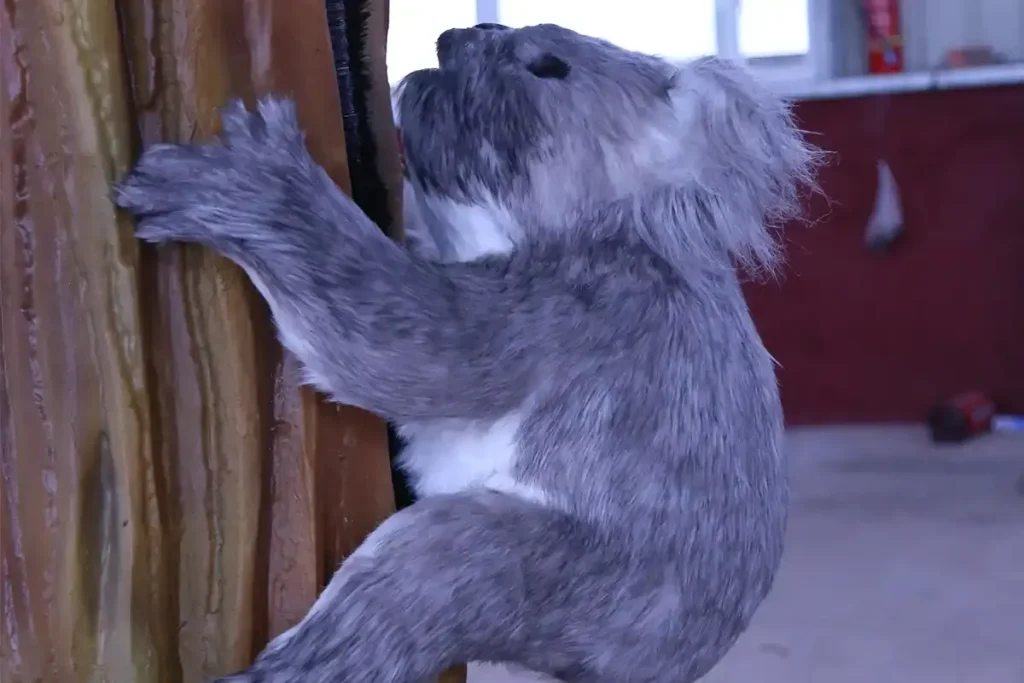
A koala on the ground is a grey lump. The species is defined by its grip: curled around a trunk, back to the viewer, […]
View ProductThree things buyers usually want settled before they ask for a drawing — what drives the number, how the piece is actually built, and what to check between suppliers.
Extinct and hard-to-keep species, sculpted to anatomy keepers can check — where animatronic animals earn a place beside a living collection.
Read the guide →From fossil reference to finished skin — how proportions, texture, colour and weathering are decided, and what separates a realistic build from a cartoon one.
Read the guide →How Much Does an Animatronic Dinosaur Cost? Understanding the Key Cost Factors If you are planning a museum exhibition, theme park attraction, or promotional […]
Read the guide →Send your dimensions, movement requirements and installation site. You get a realistic budget range and a dated build schedule.
Or email info@hltdino.com — we reply within one business day.