Custom Dinosaur Skeletons & Fossils, Engineered for Your Venue
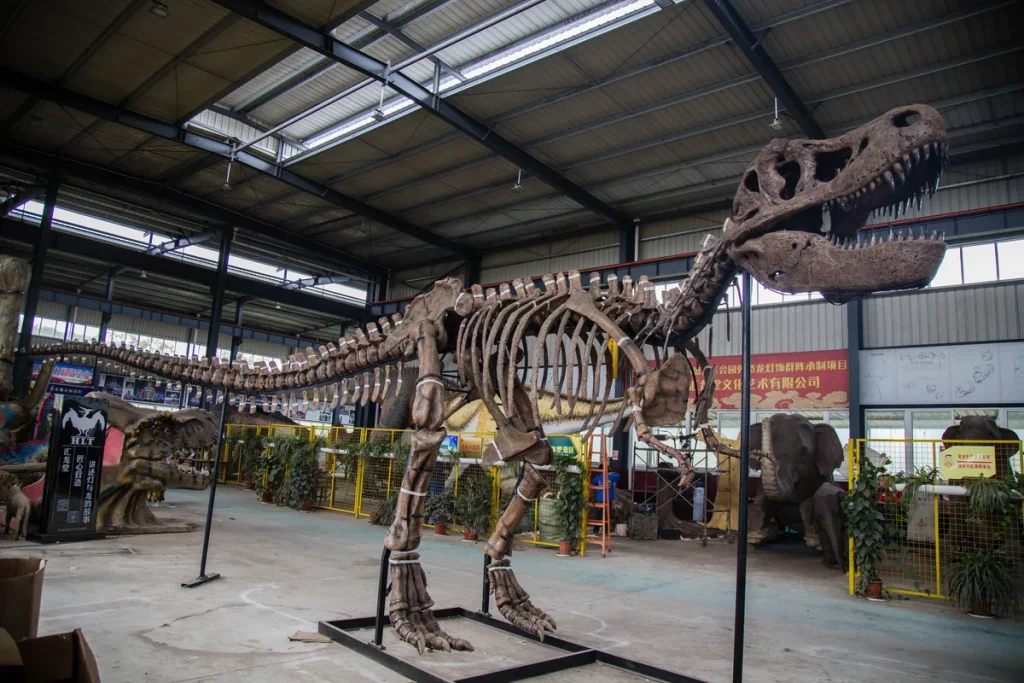
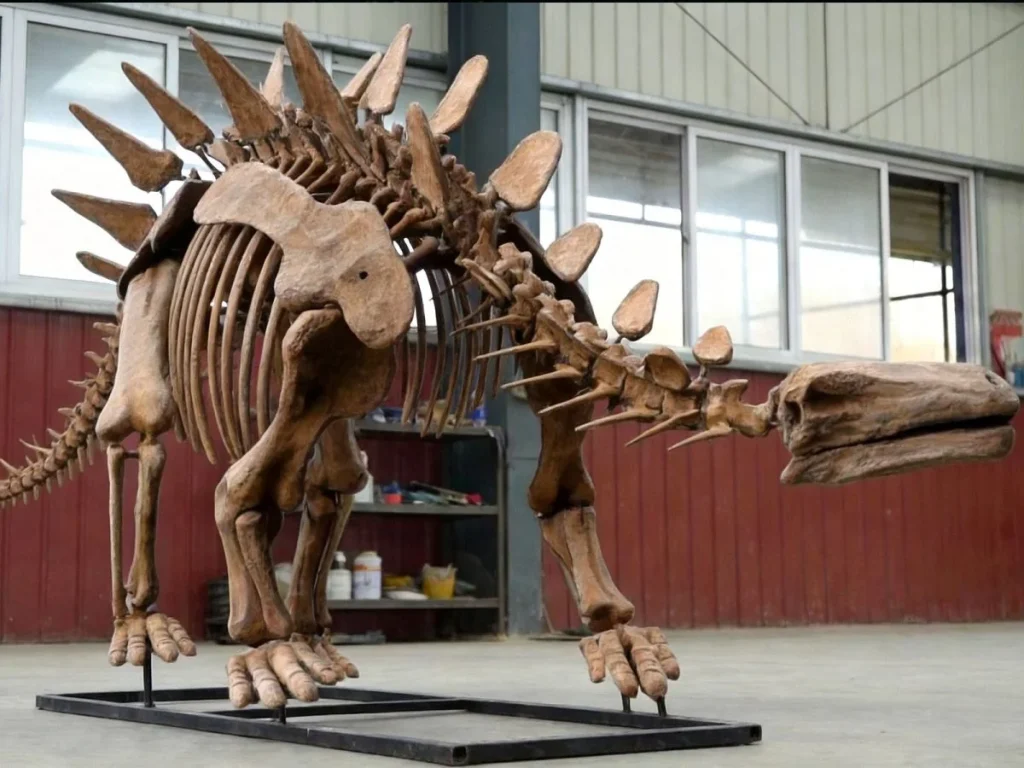
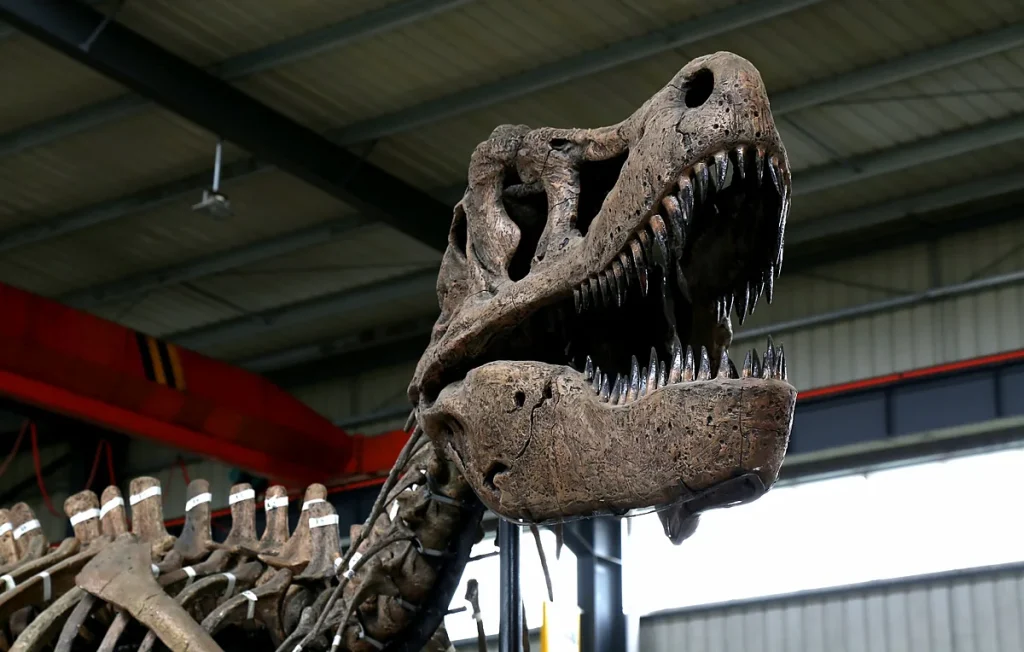
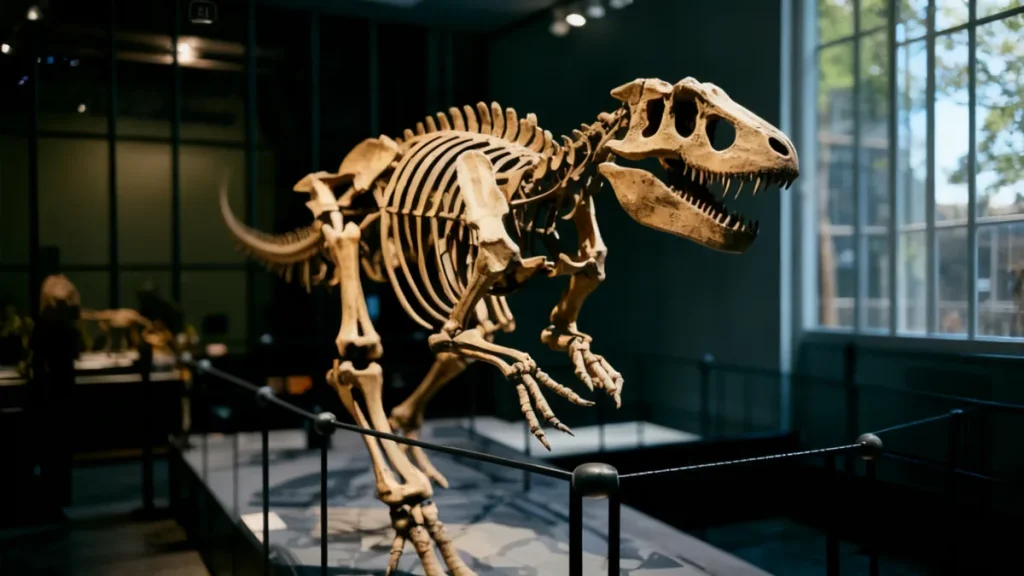
A skeleton is the honest version of a dinosaur. There is no skin, no paint, no expression to carry it — only proportion. A hip set ten centimetres too high is invisible on a reconstructed animal and obvious on a mount.
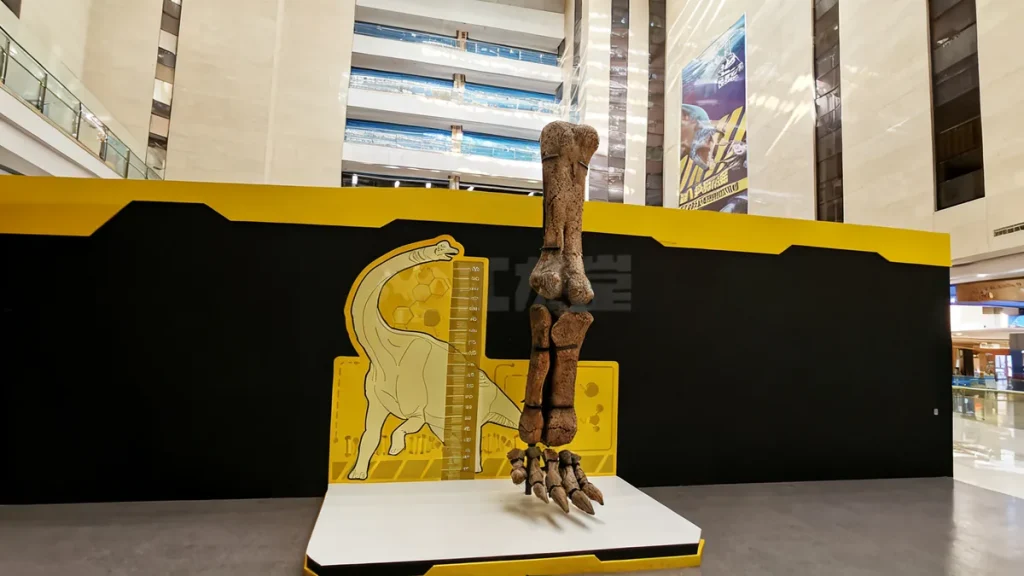
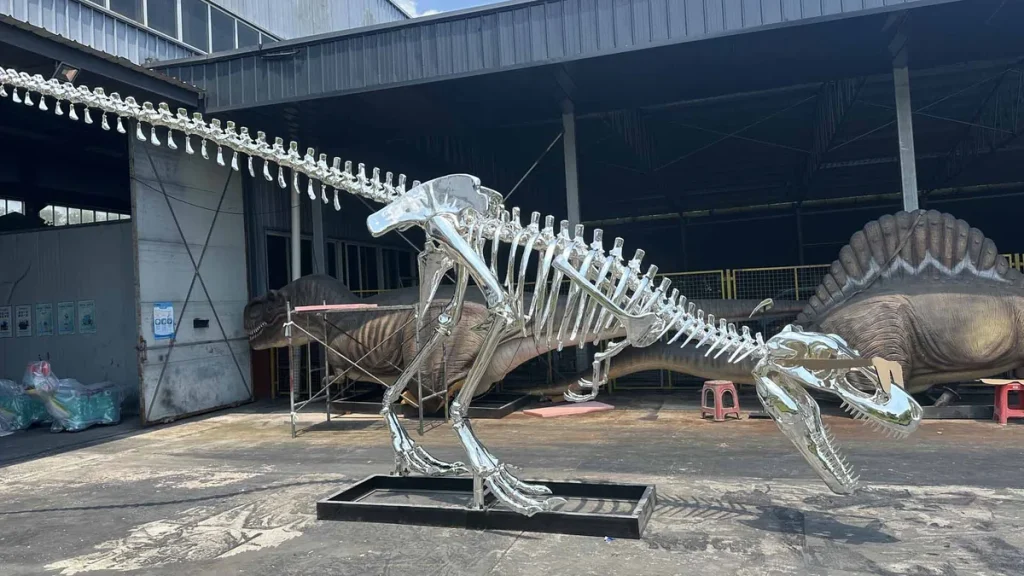
Bone is cast in fibreglass composite and none of it carries load. The internal steel frame carries the animal; the bones are shells fixed to brackets. That is what allows a 9 m mount to be stable without being impossibly heavy, and it is why the frame drawing is signed off before production begins.
Museum Halls and Outdoor Trails
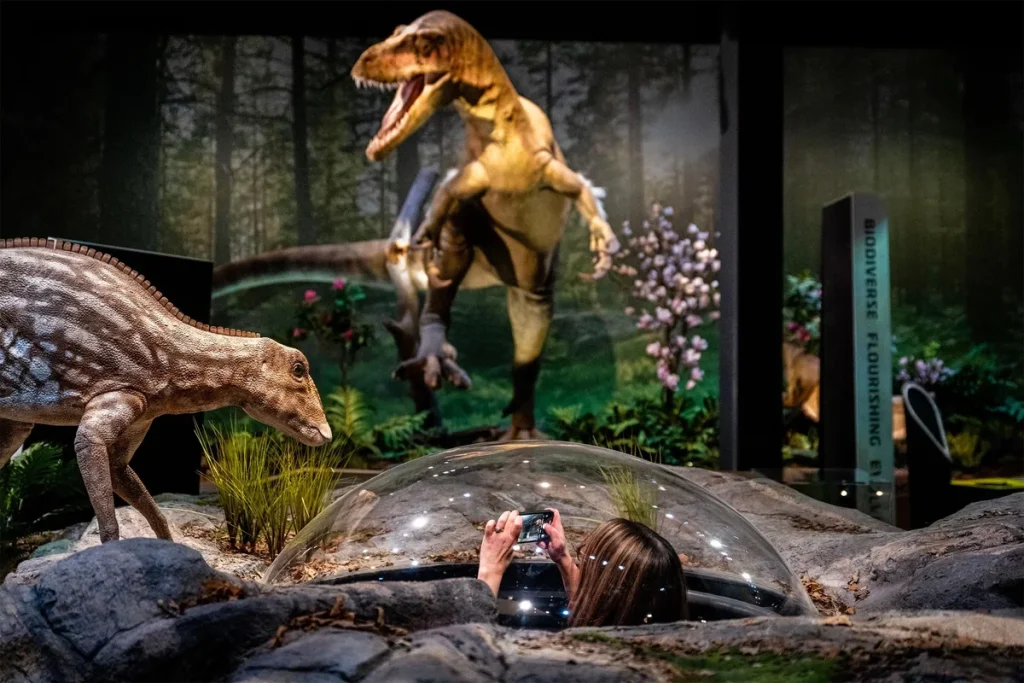
Indoors, the design question is lighting: two sources at a shallow angle from opposite sides give every bone its own edge, while a single frontal flood flattens the ribcage into a panel. Position the mount first and design the track afterwards, not the other way round.
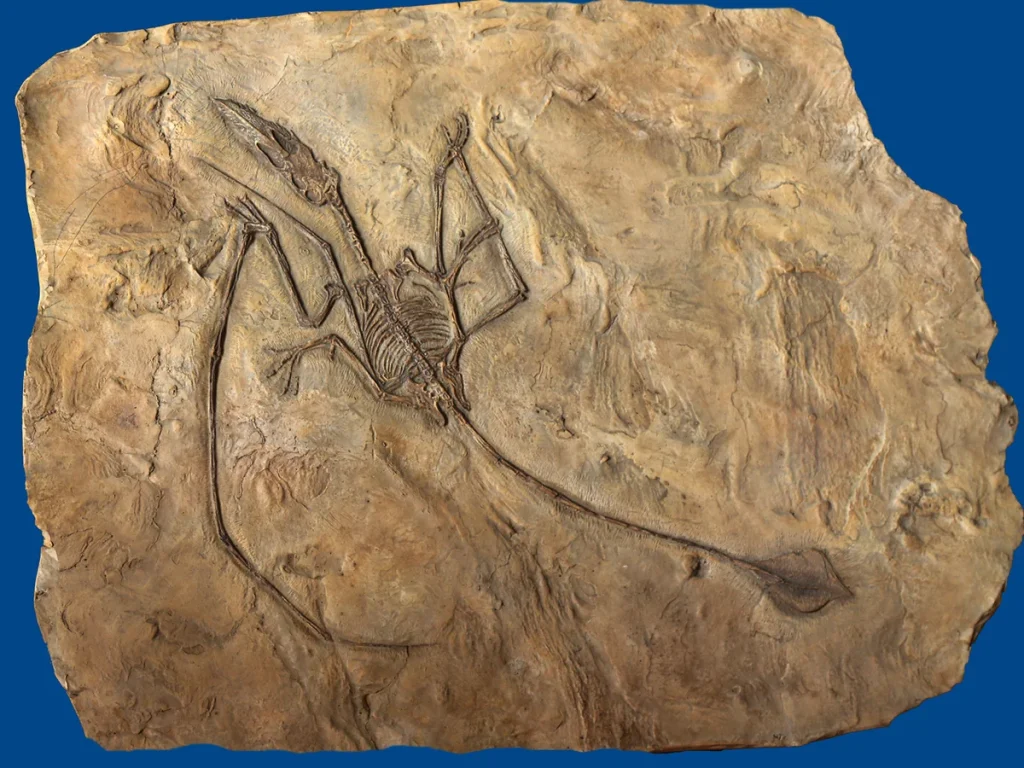
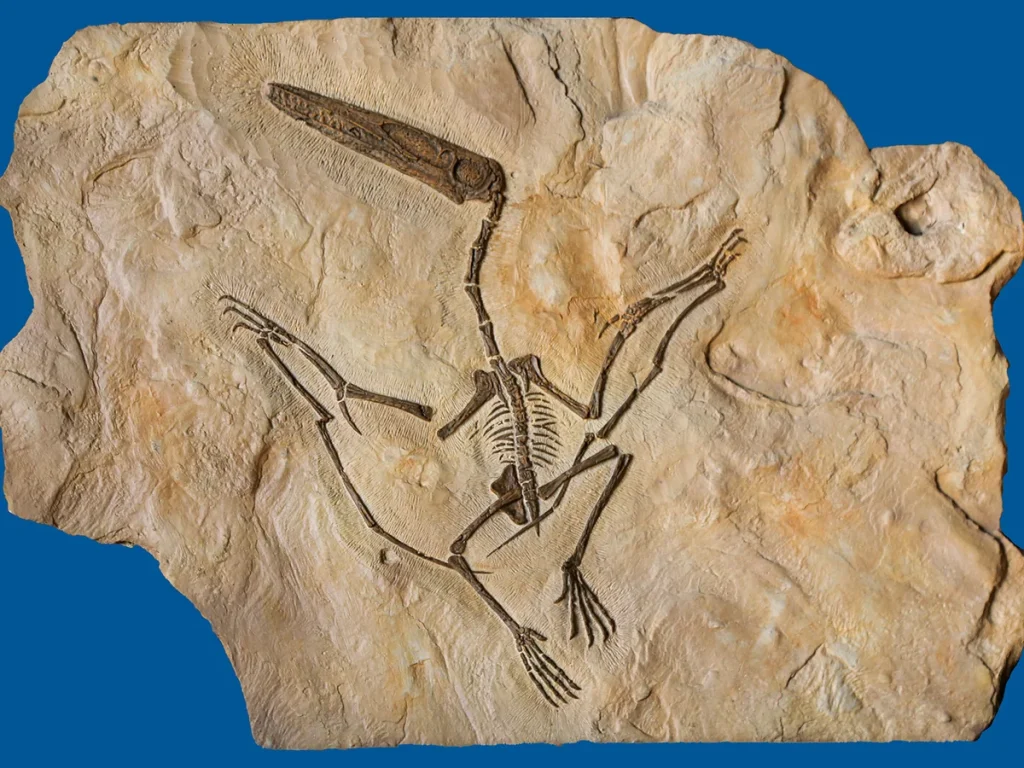
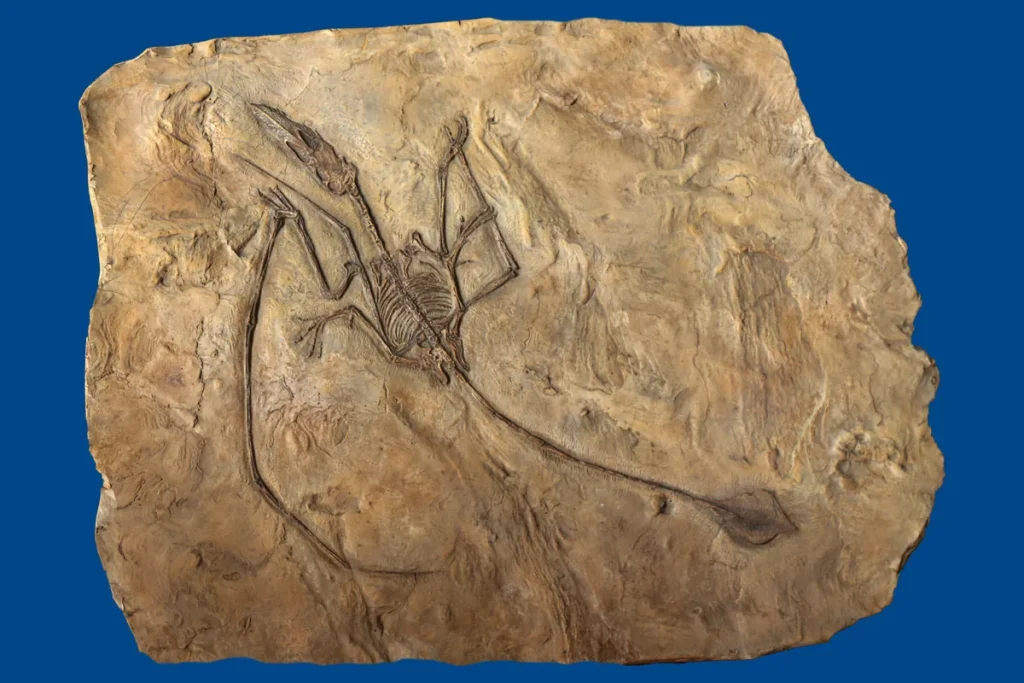
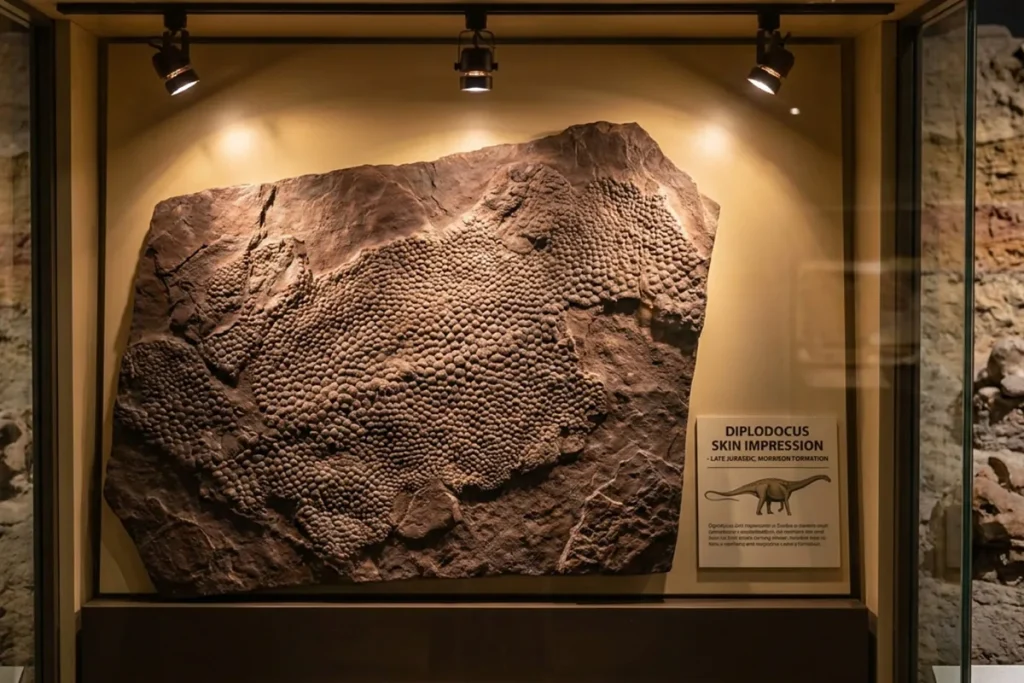
Outdoors, the question is the frame treatment and the foundation. A mount on a hard standing lasts; one on soil settles and the whole alignment shifts with it. Fossil plates — skin casts, bone impressions, footprints — are the small end of this range and are usually bought in sets for touch tables and education programmes.
Send us the floor plan and ceiling or canopy clearance. As a rule of thumb, allow 1.5× the model's length as clear space so the movement reads properly and visitors can step back. We model the footprint in 3D before you commit.
How long does a custom dinosaur take to build?
30–45 days for the build itself, once drawings and material samples are approved. Add crating, ocean or air freight and on-site installation — you get a dated schedule before the deposit, not after.
Can a dinosaur stay outdoors all year?
Yes, if it is specified for it. Outdoor builds get corrosion-protected Q235 frames and sealed electrical enclosures, rated from −20°C to +60°C. Indoor-only models are cheaper — we will tell you when you do not need the outdoor spec.
What arrives with the exhibit?
An installation manual, wiring diagrams, a spare-parts list and a maintenance guide — plus a 12-month warranty with maintenance support and remote troubleshooting for control and drive issues.
Get a Quote
Tell Us What You're Building
Send us your venue, species list and rough dimensions. You'll get a realistic feasibility read and a ballpark lead time — no pressure, no template replies.