Dinosaur Skeletons & Fossils
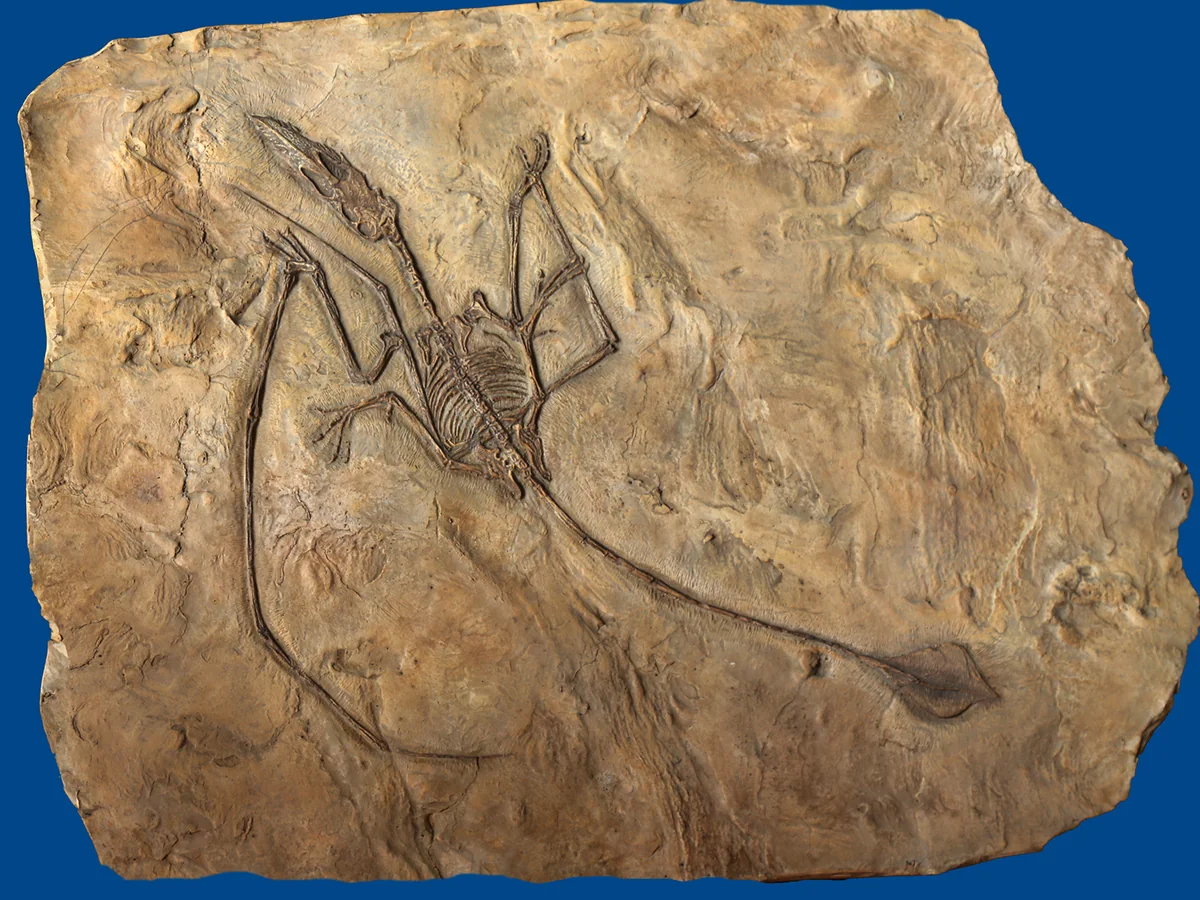
The long-tailed pterosaurs are the ones that look like the drawings everybody remembers: a diamond-shaped tail vane at the end of a long stiffened tail, a skull full of forward-pointing teeth, and wings folded back along the flanks. The tail is the identifier, and it is also the part that a replica gets wrong most often — too thin, too flexible-looking, or with the vane modelled as a flat fin.
On a real specimen the tail is a bundle of ossified tendons that read as a single stiff rod, and the vane at the end is a soft-tissue impression. Reproducing both is what makes the plate convincing.
| Species | Rhamphorhynchus-type long-tailed pterosaur |
| Era | Late Jurassic, roughly 150–148 million years ago |
| Type | Wall-mounted fossil plate replica — static, no mechanism |
| Size | Plate 1,100 × 700 mm typical; specimen about 1.2 m wingspan folded; custom sizes available |
| Material | FRP plate cast over a light steel stiffener, bones in cast composite |
| Surface | Hand-finished stone texture, layered mineral pigment, matte sealed |
| Animation | None |
| Sound | None; interpretation audio can be added as a separate unit |
| Power | None |
| Installation | French cleat or two-point concealed bracket, two-person lift, under an hour |
| Customisation | Plate size, matrix tone, tail curvature, vane proportion, label plate, framed or unframed |
| Support | 12-month warranty; bracket and touch-up pigment supplied |
A diamond vane modelled as a flat fin looks like a decoration glued to a rod. On the real animal it is a soft-tissue structure, thicker at the centre line and thinning to the edge, with the tail rod running through it rather than ending at it.
This plate casts the vane in the pigment layer with a slight relief along the centre, so the rod appears to continue into it. Small detail, and it is the difference between a specimen and a diagram.
Long-tailed pterosaurs carry a set of forward-pointing teeth that interlock when the jaw closes. In a plate the jaw is usually closed, so the teeth appear as a comb along the jaw line rather than as individual points. Modelling them as separate elements at that scale produces a row of lumps; casting the jaw line with the teeth in relief keeps the profile sharp.
Where the plate is going into a gallery with close viewing, that profile is the part people lean in to look at. It is worth specifying a larger plate for a close-view position rather than hanging a small one at eye level.
A long-tailed pterosaur plate is identifiable from three features before anyone reads the caption: the tail is longer than the body and ends in a diamond vane, the wing finger is enormously elongated relative to the leg bones, and the teeth sit forward in a jaw that tapers to a point rather than a beak. Get those three right and the species is recognisable at a glance; get the vane wrong and it reads as a lizard with wings.
Light it from above and slightly to one side, at a shallow angle. The relief in a cast plate is only a few millimetres deep, and a frontal light flattens it into a painted panel. A raking light from about thirty degrees reveals the wing finger joints, the ribs and the tail segments as separate shadows, which is how the fossil reads in a museum case.
One side only, always. A plate reproduces the impression the animal left in the sediment — the counterpart slab, with the raised side, is a separate specimen, and trying to show both on one plate produces a double image that does not exist in nature.
The two plates are built to hang together. Set the specimens at the same height, keep the gap between plates equal, and let the tail difference do the work — the long tail on one side, its absence on the other, is the comparison visitors actually notice.
Where only one plate is being installed, the long-tailed version is the one that reads as “pterosaur” to a general audience, because it carries the features people recognise. The short-tailed plate is the one that rewards a closer look.
Yes. The curvature is a sculpting choice, and a straighter tail suits a plate that is being read as a technical specimen rather than as a dramatic mount.
No. It is cast into the plate surface, so there is nothing hanging free. That is deliberate — a vane modelled as a raised fin would be the first thing to break in handling.
Yes, from pale limestone grey through to a warmer ochre. The tone is usually chosen against the wall colour, because a plate on a same-tone wall loses its edge.
Yes. Ordered together they are finished to the same matrix tone and despatched in one crate, which keeps the pair consistent and avoids a second freight charge.
Same factory and the same build standard. What changes is size, movement set and how the exhibit is meant to be used on site.
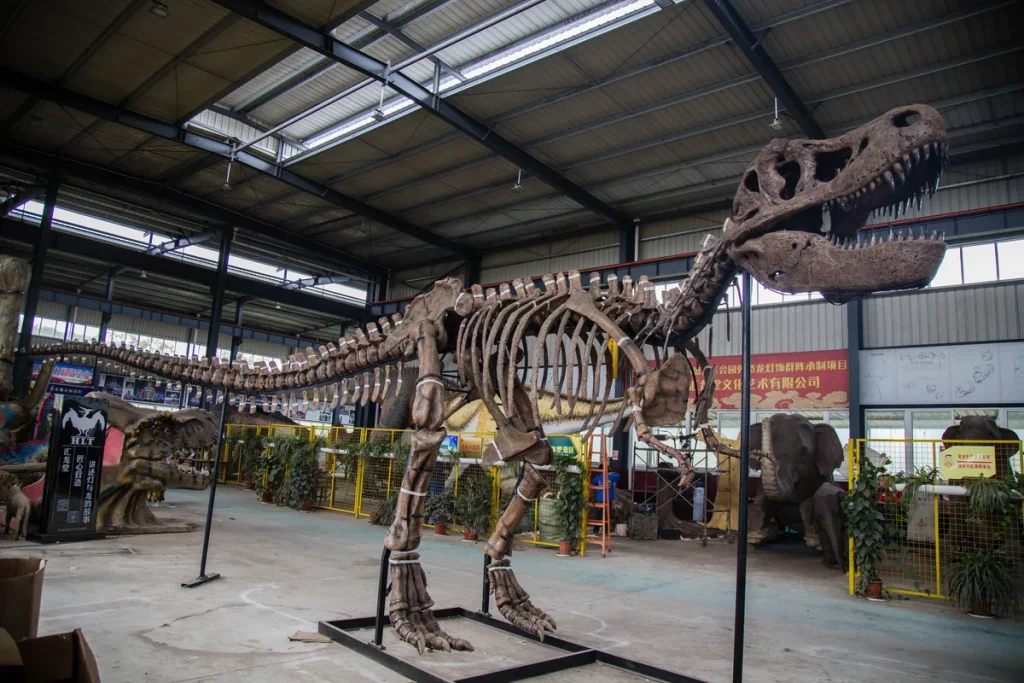
A skeleton reads differently from a mounted animal, and the difference is the gaps. There is no skin to hide the joints, no pose […]
View Product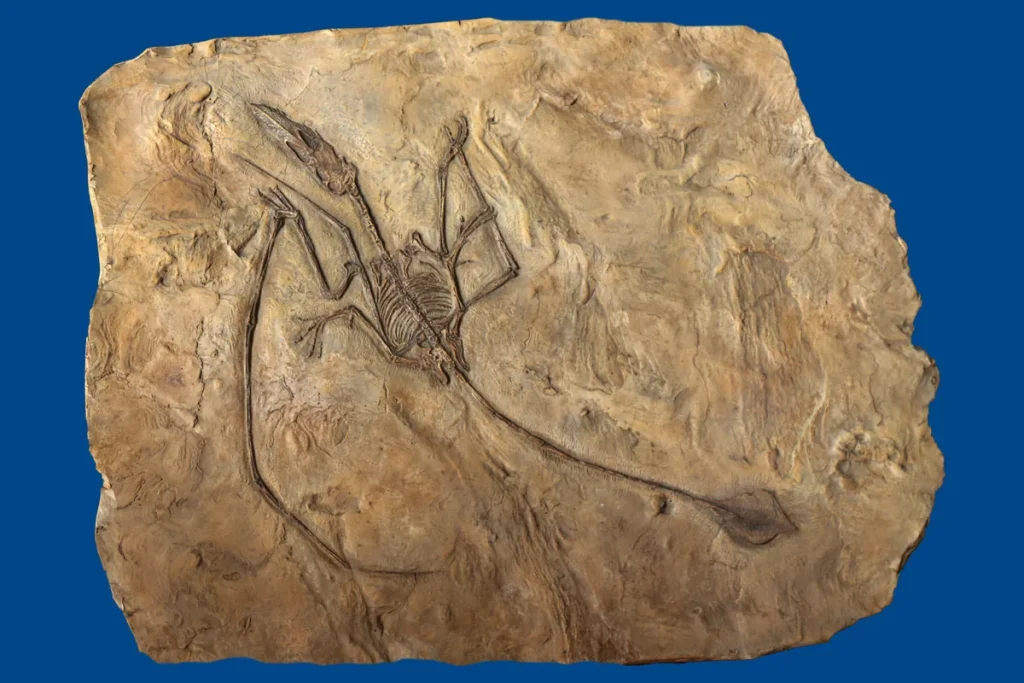
A pterosaur is the one prehistoric exhibit where the skeleton cannot be separated from the membrane. The wing is the fourth finger, drawn out […]
View Product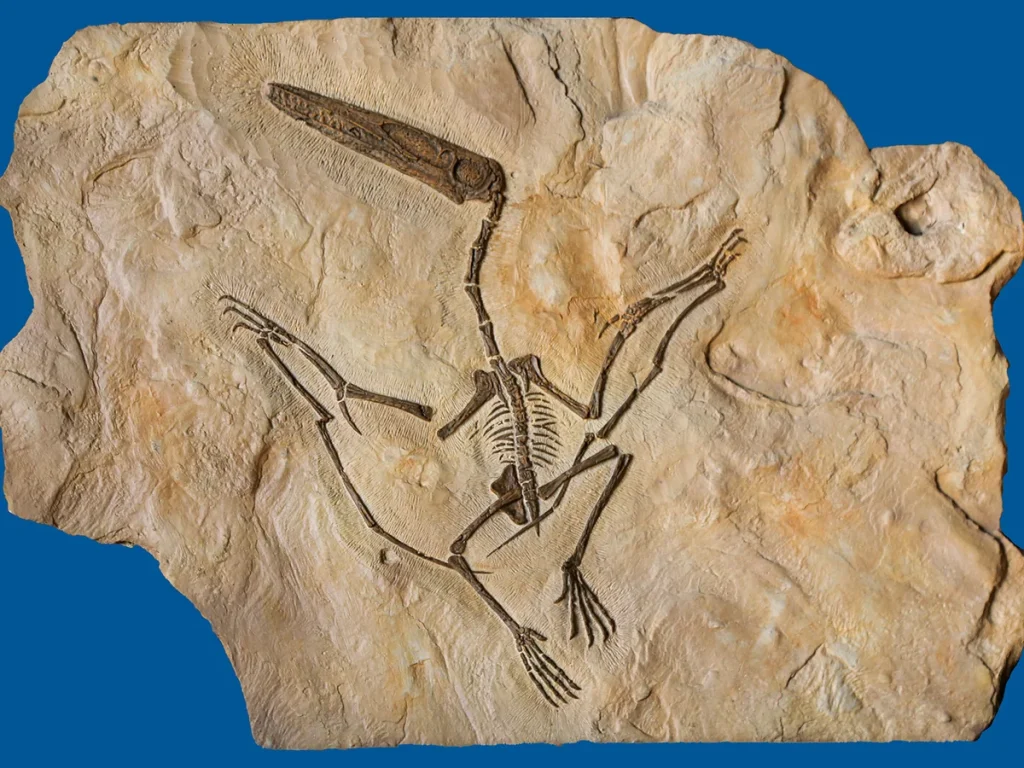
The short-tailed pterosaurs are the ones that look wrong at first glance. No long bony tail, a much shorter skull, and the wing finger […]
View ProductThree things buyers usually want settled before they ask for a drawing — what drives the number, how the piece is actually built, and what to check between suppliers.
From fossil reference to finished skin — how proportions, texture, colour and weathering are decided, and what separates a realistic build from a cartoon one.
Read the guide →Frame, drives, skin, sensors, sound and weatherproofing — the six systems behind every animatronic dinosaur, and how each one changes cost and behaviour.
Read the guide →Choosing the right animatronic dinosaurs for your venue is not just about picking the most famous species — it is about matching each dinosaur […]
Read the guide →Send your dimensions, movement requirements and installation site. You get a realistic budget range and a dated build schedule.
Or email info@hltdino.com — we reply within one business day.