Dinosaur Skeletons & Fossils
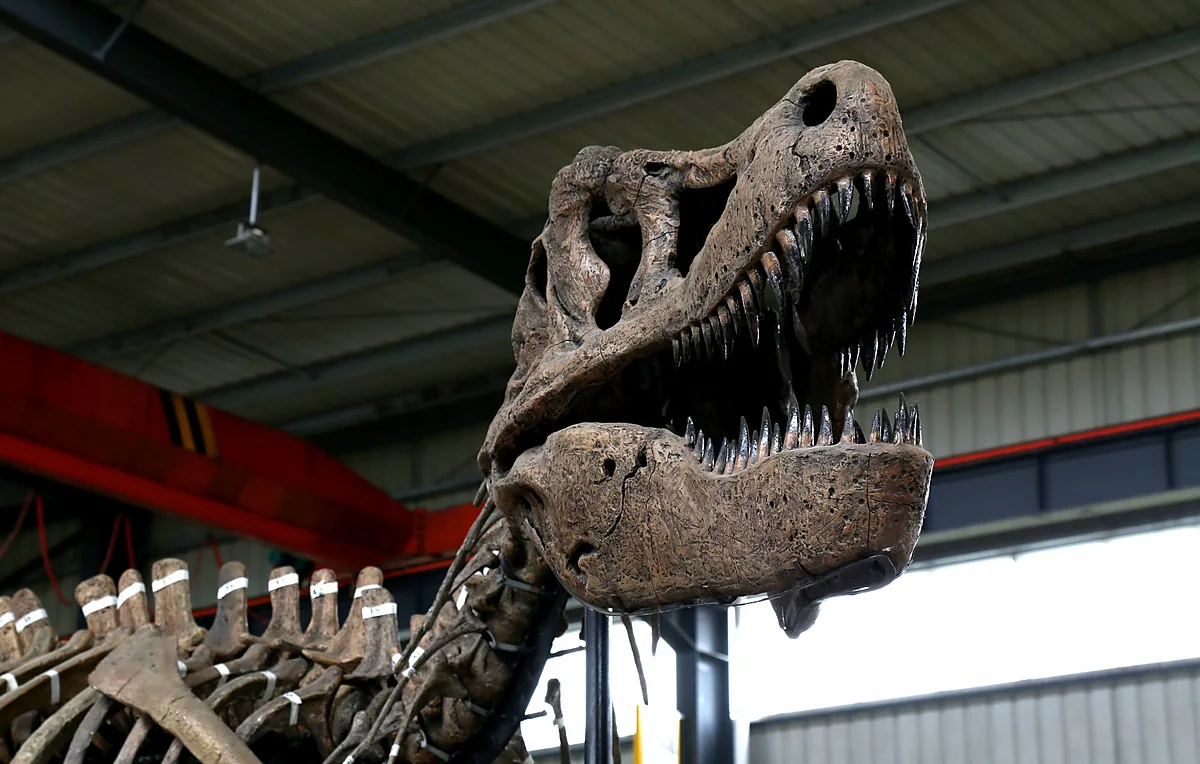
A skull is where most buyers start. It is the cheapest way to own a piece of a T-Rex, it survives a change of exhibition, and it is the one part of a skeleton that reads correctly at arm’s length. A full mount is a project; a skull is a decision.
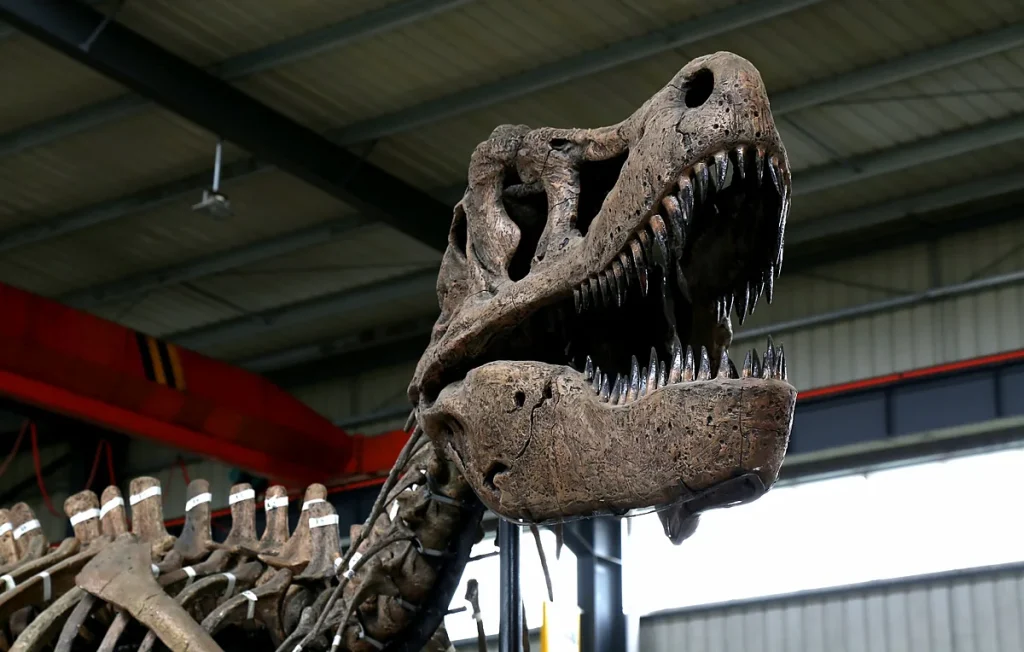
The same 1.5-metre skull behaves completely differently in three positions, and the position decides the size you actually want.
On a wall at eye level, a full-size skull dominates the room rather than anchoring it — most wall-mounted orders end up at around 65 to 70 percent of life size for that reason. On a plinth, full size works: the skull sits at chest height and visitors look slightly down into the jaw. On a low floor base, full size reads as an excavated find, and that is the version museums usually photograph.
Tell us the room, not only the species. The mounting decision comes before the casting decision.
Look at the teeth before anything else. On a cheap cast they come out of the mould as a single connected row, with a clean seam where the two mould halves met and every tooth the same colour.
Ours are cast individually and set into the jaw, so each one sits at its own angle, with the size variation along the jaw that the animal actually had. Enamel is not one colour either: it runs from a pale worn tip to a darker root, and that gradient is applied by hand.
The same test applies to the fenestrae — the openings behind the eye and in the snout. On a good casting you can see through them and the bone thins toward the edge. On a bad one they are shallow dishes.
The lower jaw is a separate piece on a hinge, so it opens and closes and holds where you set it. That matters more than it sounds: a permanently open jaw is dramatic for a month and then reads as a prop.
The stand is adjustable in angle, which is how a skull is made to work in a room it was not designed for. If the piece is going into an existing case, send the internal dimensions and we will set the stand height before shipping.
This is a reconstruction, built from published measurements for Tyrannosaurus rex rather than moulded from one named specimen. That is the honest answer and it matters if your institution needs to cite a specimen number.
If you need a cast of a specific individual, that requires a caster working from the original material, and it is a different product at a different order of cost. We will say so rather than imply otherwise.
| Overall length | 1.5 m at 1:1; also produced at 1:2 |
|---|---|
| Jaw | Complete upper and lower, articulated on a hinge |
| Teeth | 50-plus, individually cast and set |
| Material | High-density resin, mineral pigment ageing |
| Mount | Adjustable display stand included |
| Display options | Wall bracket, plinth or low floor base |
| Duty | Indoor as standard; outdoor specification on request |
Is it a cast of a real skull? No. It is a reconstruction from published measurements. We do not have access to original material and we will not describe a reconstruction as a cast.
Does 1:2 lose the detail? The teeth and the fenestrae still read, but the surface texture softens. At half scale it is an education piece rather than a display piece, and it is priced accordingly.
Can it go outdoors? Yes, with the outdoor specification: a UV-stable topcoat and a drainage detail on the base. Indoor is the default because that is where most are sited.
Can the stand be changed later? The stand is a separate assembly, so yes. If you plan to move between wall and plinth, order both fittings at the start.
Materials. High-density resin cast with mineral pigment ageing finish, adjustable resin-bonded display stand.
Related. the skeleton and fossil range, the full T-Rex skeleton replica, museum exhibit layout, request a quote.
Same factory and the same build standard. What changes is size, movement set and how the exhibit is meant to be used on site.
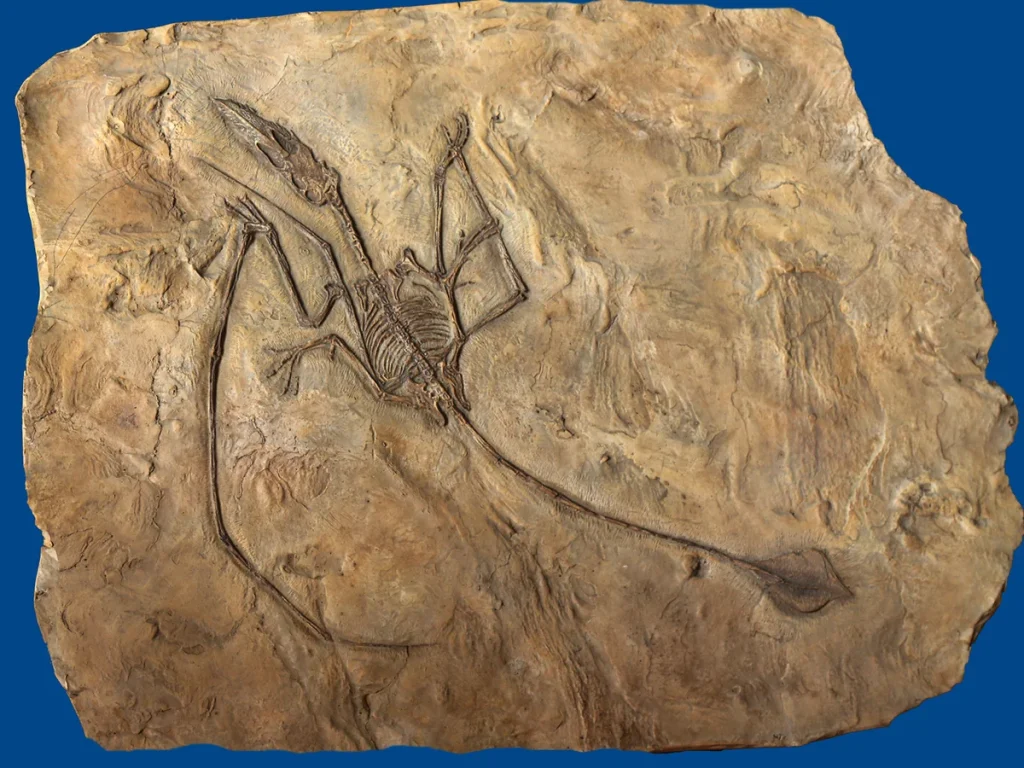
The long-tailed pterosaurs are the ones that look like the drawings everybody remembers: a diamond-shaped tail vane at the end of a long stiffened […]
View Product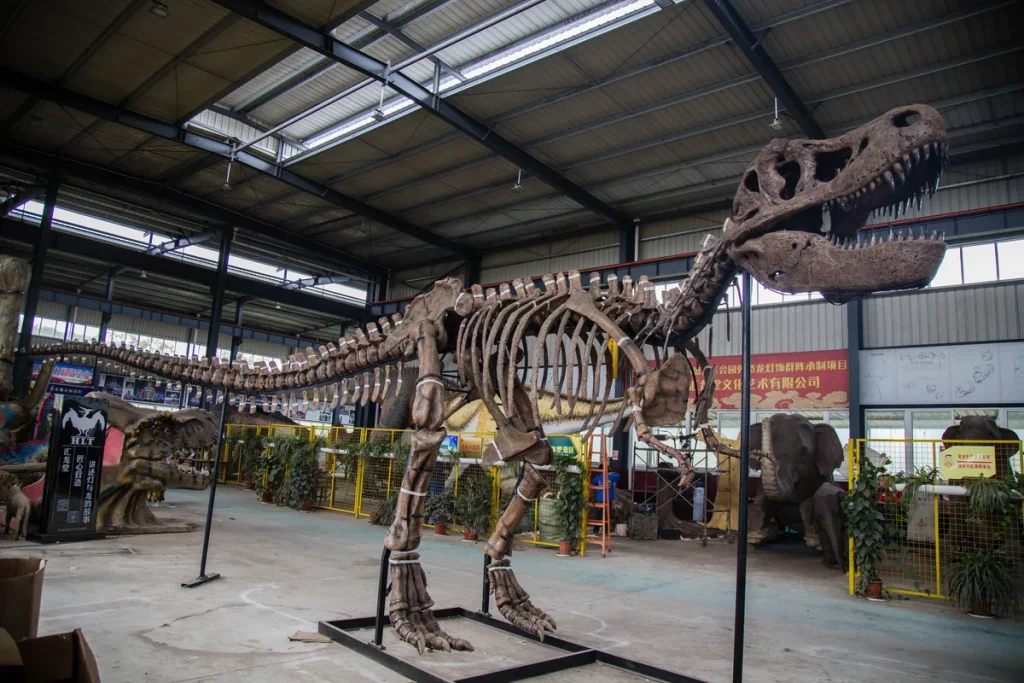
A skeleton reads differently from a mounted animal, and the difference is the gaps. There is no skin to hide the joints, no pose […]
View Product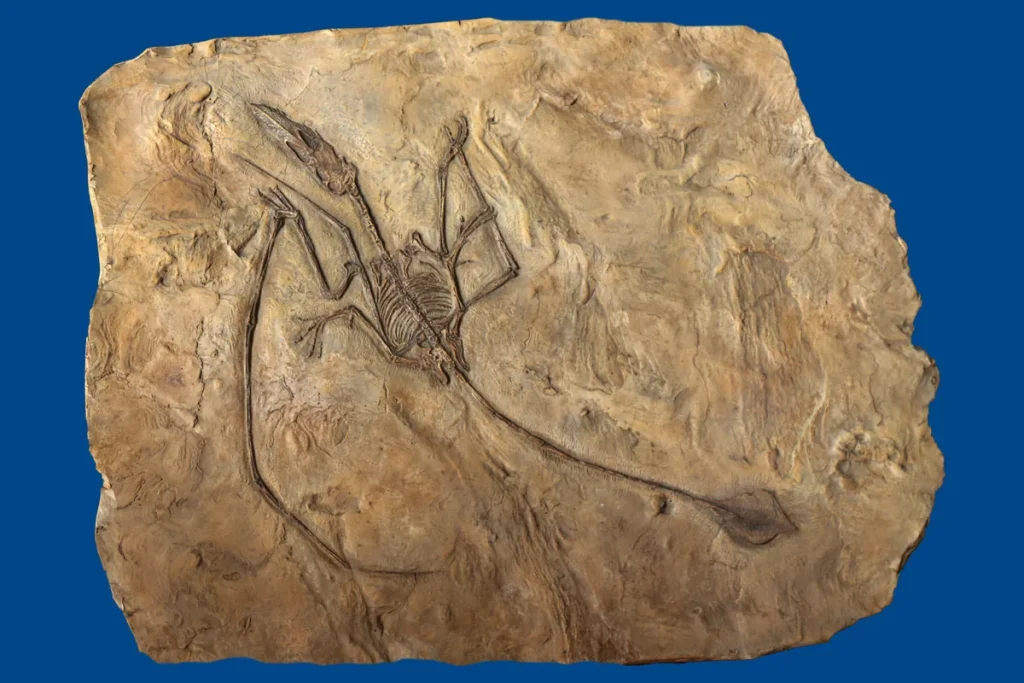
A pterosaur is the one prehistoric exhibit where the skeleton cannot be separated from the membrane. The wing is the fourth finger, drawn out […]
View ProductThree things buyers usually want settled before they ask for a drawing — what drives the number, how the piece is actually built, and what to check between suppliers.
From fossil reference to finished skin — how proportions, texture, colour and weathering are decided, and what separates a realistic build from a cartoon one.
Read the guide →Frame, drives, skin, sensors, sound and weatherproofing — the six systems behind every animatronic dinosaur, and how each one changes cost and behaviour.
Read the guide →Choosing the right animatronic dinosaurs for your venue is not just about picking the most famous species — it is about matching each dinosaur […]
Read the guide →Send your dimensions, movement requirements and installation site. You get a realistic budget range and a dated build schedule.
Or email info@hltdino.com — we reply within one business day.