Dinosaur Skeletons & Fossils
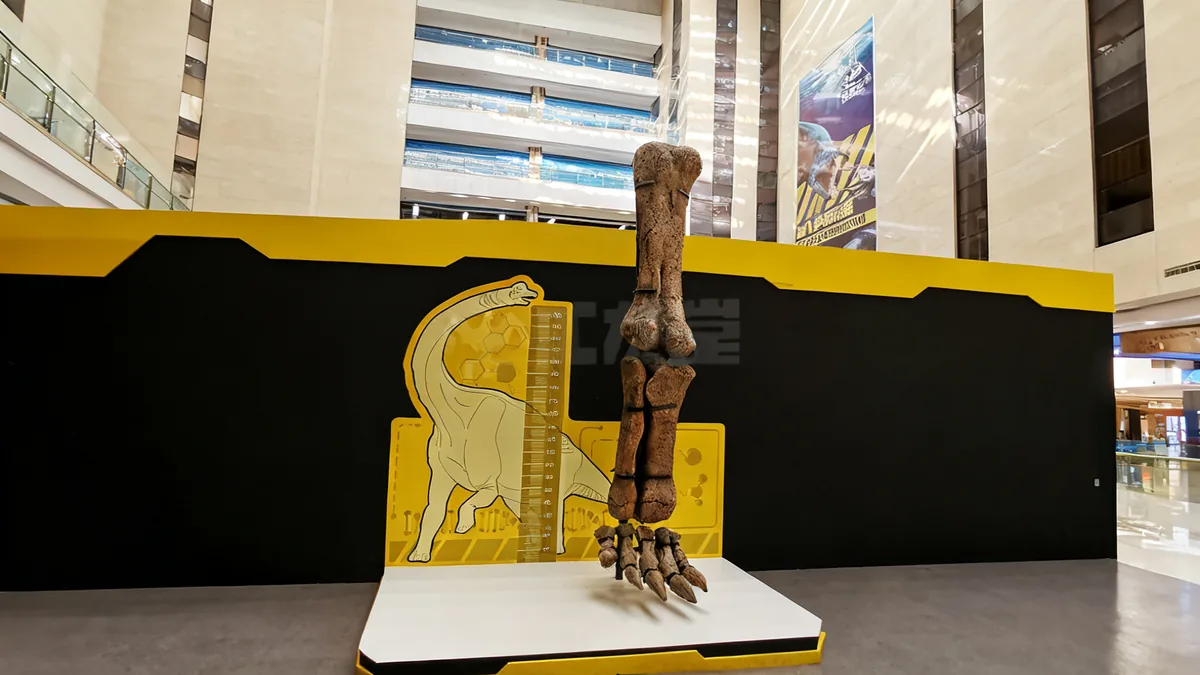
Single bones are the least glamorous thing we make and the most useful thing a museum can buy. They go on handling tables, into school loan boxes, onto desks in education rooms, and into the hands of people who have never touched a fossil and never will if the only option is behind glass.
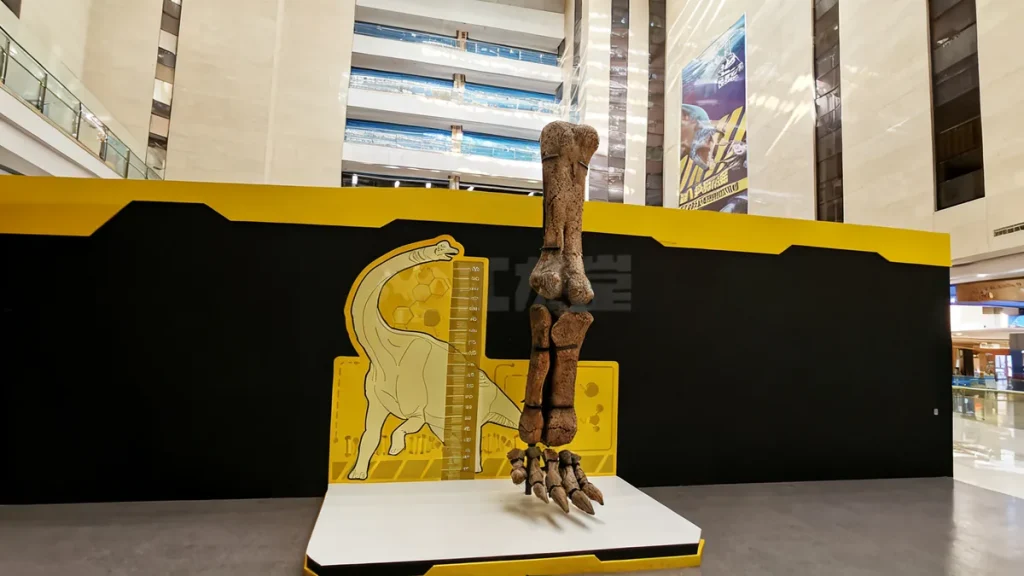
Three reasons. They are the only replica a small institution can budget for. They are the piece that survives a handling session, because there is no armature to break and no membrane to tear. And they are the honest way to judge a workshop: if the surface of a single bone is convincing at arm’s length, everything else that workshop casts will be too.
There is no structure to hide behind. A leg bone has to carry the cortical texture, the weathering at the ends where the cartilage sat, the sediment staining in the low points and the fill where the original was reconstructed. Get any of those wrong and it reads as a dog chew.
The ends are where most replicas fail. Real bone at a joint surface is porous and irregular; a cast that comes out of a two-part mould with a clean seam there looks machined. We cast the joint ends separately and blend them, which is slower and is the reason a single bone costs what it costs.
These are two different products and it matters which one you order. A display casting is finished for the eye: sharper ageing, a more contrasty surface, edges left as they were cast.
A handling casting is finished for the hand: edges dressed and rounded, the finish built in layers so it wears evenly rather than in bright patches, and the weight set so it sits in the hand without feeling hollow. Say which one you need; the price difference is small and the wrong choice is obvious within a month.
A table piece needs nothing. A wall piece needs a bracket or a shadow box, and a plinth piece needs a base that stops it rolling, which is usually a small machined cradle rather than a glue joint.
Education buyers usually want a set rather than a single piece: a leg bone, a tooth, a claw and a piece of skin impression, in a foam-lined case. That is a different order and it is worth saying so at the start, because a set is matched for scale and finish and pulling pieces from separate orders never matches well.
| Length | Built to specification; sauropod limb bone by default |
|---|---|
| Material | High-density resin |
| Finish | Mineral pigment ageing, layered for even wear |
| Spec | Display casting or handling casting — different edge and finish |
| Mount | Table, wall bracket, or machined cradle for a plinth |
| Sets | Available as an education set with a foam-lined loan case |
| Duty | Indoor |
Is it a specific species? It is modelled on a sauropod limb bone unless you specify otherwise. Species-specific bones are available where the reference material exists.
How heavy is it? Light enough for one hand, heavy enough not to feel like plastic. If you need a specific weight for a handling programme, tell us the audience.
Can it be dropped? It can survive a drop onto carpet. Onto tile, the thin sections at the ends will chip, which is true of the original as well.
Do you supply the case? Foam-lined loan cases are available as part of an education set, not as a separate item.
Materials. High-density resin cast with mineral pigment ageing finish.
Related. the skeleton and fossil range, skin fossil replicas, museum exhibit layout.
Same factory and the same build standard. What changes is size, movement set and how the exhibit is meant to be used on site.
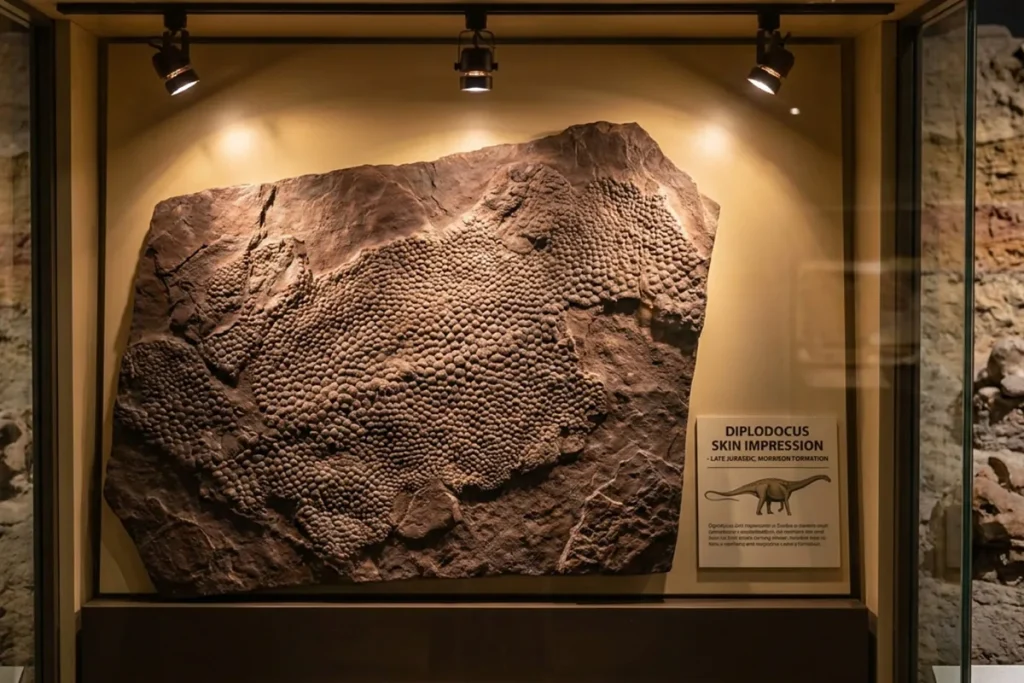
Skin impressions are the hardest fossil to fake and the easiest to ruin. Everyone knows what dinosaur skin is supposed to look like, which […]
View Product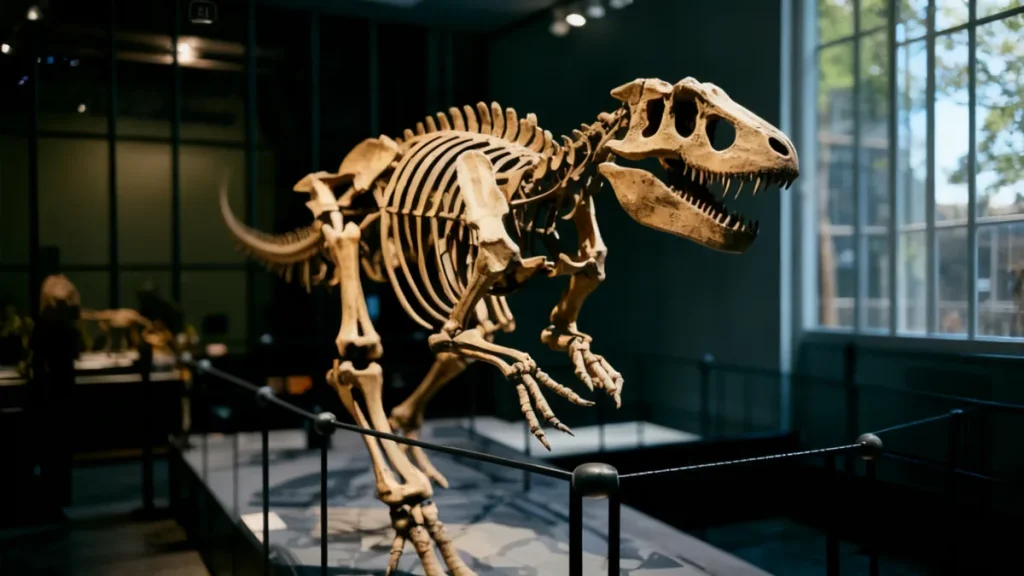
Above about ten metres a dinosaur skeleton stops being an exhibit and becomes a structure. The engineering changes category: wind load replaces handling as […]
View Product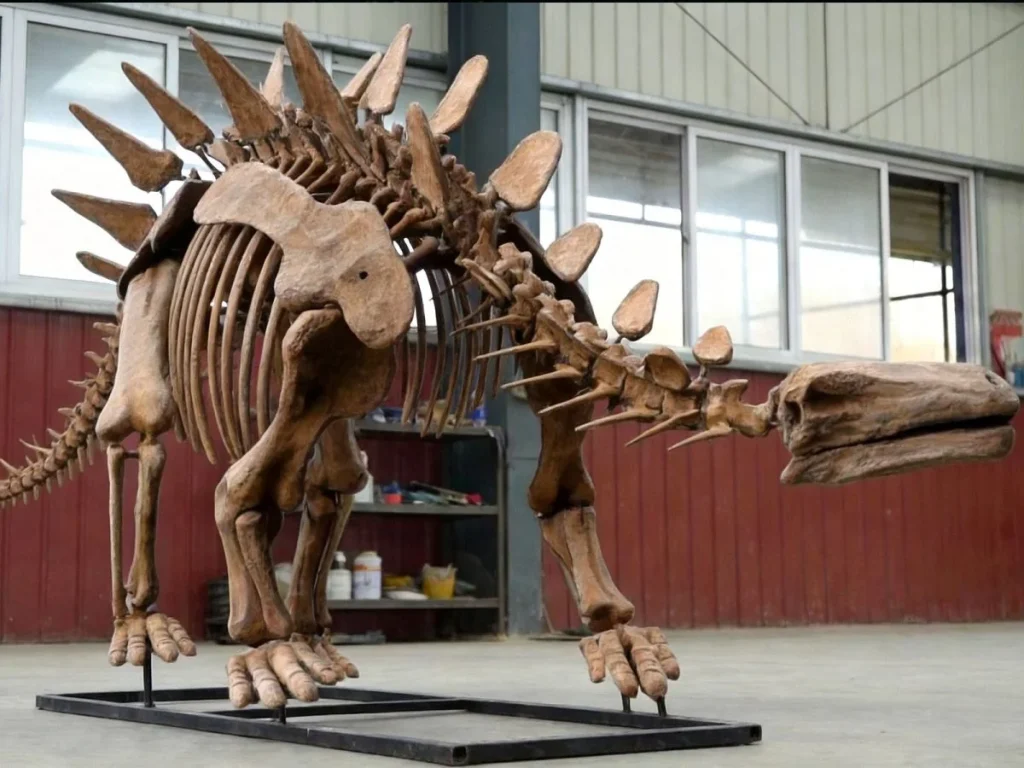
A skeleton is easier to read than a living reconstruction, and harder to get right. With no skin to hide behind, every proportion is […]
View ProductThree things buyers usually want settled before they ask for a drawing — what drives the number, how the piece is actually built, and what to check between suppliers.
From fossil reference to finished skin — how proportions, texture, colour and weathering are decided, and what separates a realistic build from a cartoon one.
Read the guide →Frame, drives, skin, sensors, sound and weatherproofing — the six systems behind every animatronic dinosaur, and how each one changes cost and behaviour.
Read the guide →Choosing the right animatronic dinosaurs for your venue is not just about picking the most famous species — it is about matching each dinosaur […]
Read the guide →Send your dimensions, movement requirements and installation site. You get a realistic budget range and a dated build schedule.
Or email info@hltdino.com — we reply within one business day.