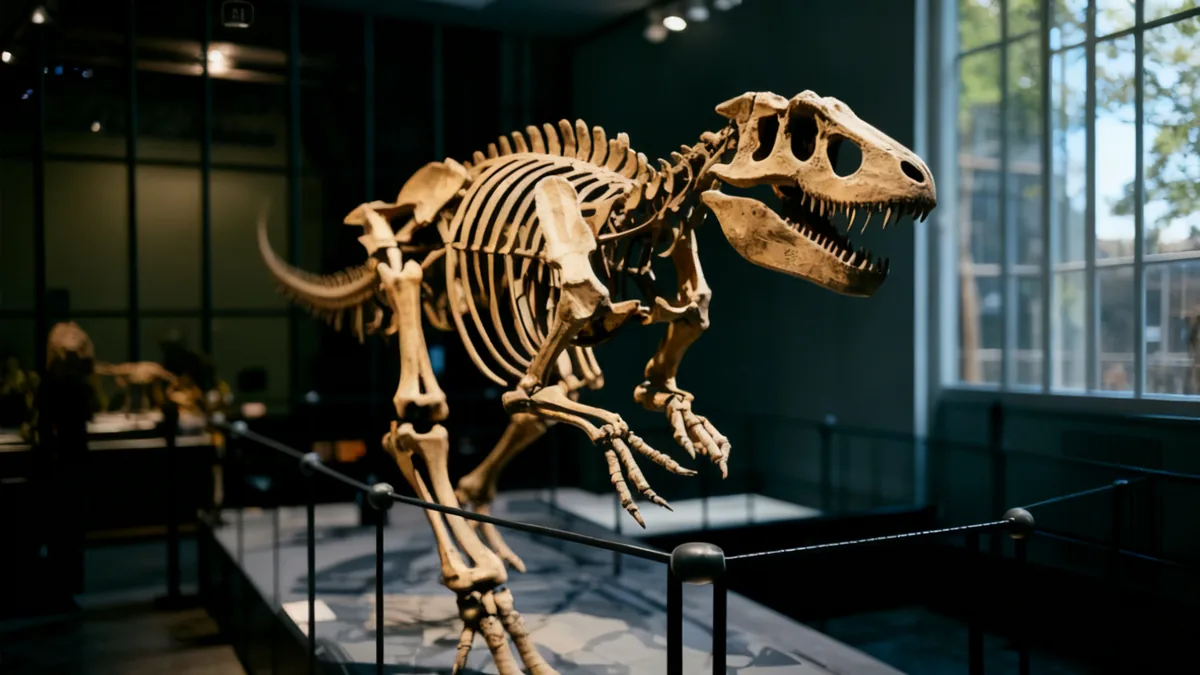
Dinosaur Skeletons & Fossils
Above about ten metres a dinosaur skeleton stops being an exhibit and becomes a structure. The engineering changes category: wind load replaces handling as the governing case, the foundation becomes part of the design, and the piece has to survive being climbed on by people who assume it is solid.
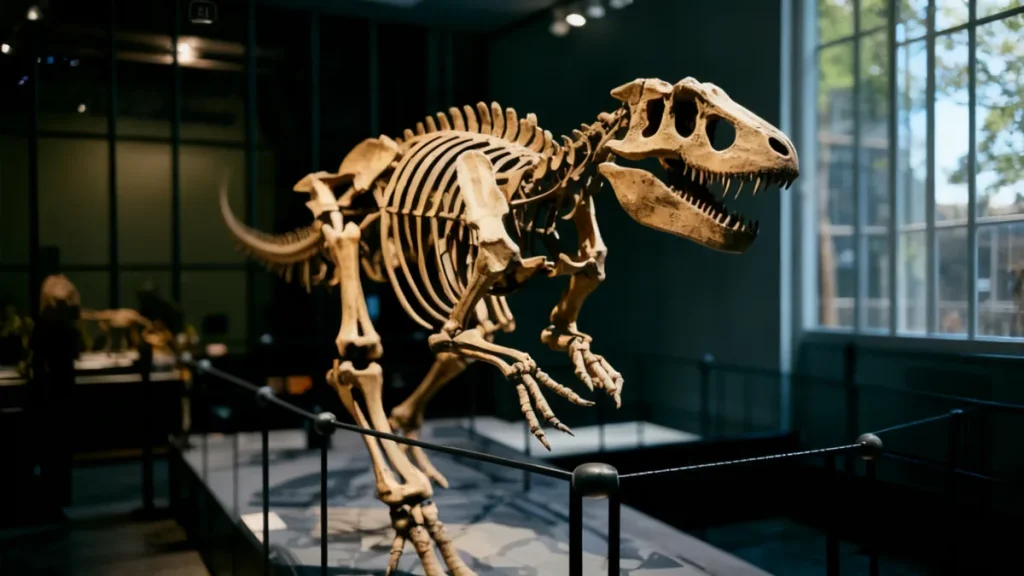
An open lattice of bones catches wind like a frame rather than like a wall, which helps, but the lever arm does not. A 20-metre mount on four legs sees a bending moment at the base that dwarfs anything the piece weighs, and that moment is what the foundation is designed against, not the mass.
We ask for the site’s design wind speed before quoting. A coastal site and an inland park can differ by a factor that changes both the steel section and the concrete. Quoting a large skeleton without that number produces a price that is either unsafe or needlessly heavy.
The frame is weathering steel, sized for the moment rather than for the look. The bones are resin shells fixed to it. That combination is what makes a large piece affordable: the structure is ordinary steelwork, and only the visible surface is cast.
Every shell is mechanically fixed, not bonded, because an outdoor piece moves thermally every day of its life and adhesive eventually lets go. Fixings are stainless, and the interface between shell and steel is detailed so water runs off rather than sitting in the joint.
We supply the anchor layout, the base plate design and the reactions at each support. The foundation itself is designed and built locally, which is normally cheaper than shipping a design that has to be re-approved anyway.
The critical detail is drainage. A base that holds water corrodes the section at exactly the point where the load is highest, and that is the failure that takes these pieces down.
Three coats: an inorganic zinc primer, an epoxy intermediate, and a fluorocarbon topcoat. The topcoat is what decides whether the piece still looks like bone after five summers of UV, and it is also the layer that can be refreshed on site without dismantling anything.
At this scale the piece is a night landmark as much as a day exhibit. Up-lighting from the base throws the ribcage into silhouette, which is the effect most sites want; lighting the bones from outside the frame flattens it and reads as a fairground decoration.
| Overall height | 10 to 30 m, built to order |
|---|---|
| Frame | Weathering steel, sized for the wind moment at the base |
| Bone shells | Resin, mechanically fixed rather than bonded |
| Finish | Inorganic zinc primer, epoxy intermediate, fluorocarbon topcoat |
| Foundation | Anchor layout and reactions supplied; slab designed and built locally |
| Wind | Site design wind speed required at brief stage |
| Maintenance | Annual fixing inspection and topcoat refresh |
| Duty | Outdoor, permanent site |
How tall can it go? Up to about 30 metres, but above roughly 18 metres the steel and foundation cost rises faster than the visual gain. Ask us to model two heights before committing.
Can it be climbed? Assume it will be. We detail the lower bones as a climbing surface and specify no-entry at the frame, which is cheaper than repairing shells every season.
Does it need maintenance? An annual inspection of fixings and a topcoat refresh on a cycle that depends on UV exposure. That is the whole schedule.
Can it be moved later? Not economically at this size. Treat the site as permanent.
Materials. Weathering steel frame with resin bone shells, inorganic zinc primer, epoxy intermediate and fluorocarbon topcoat.
Related. the skeleton and fossil range, theme park installations, animatronic dinosaurs.
Same factory and the same build standard. What changes is size, movement set and how the exhibit is meant to be used on site.
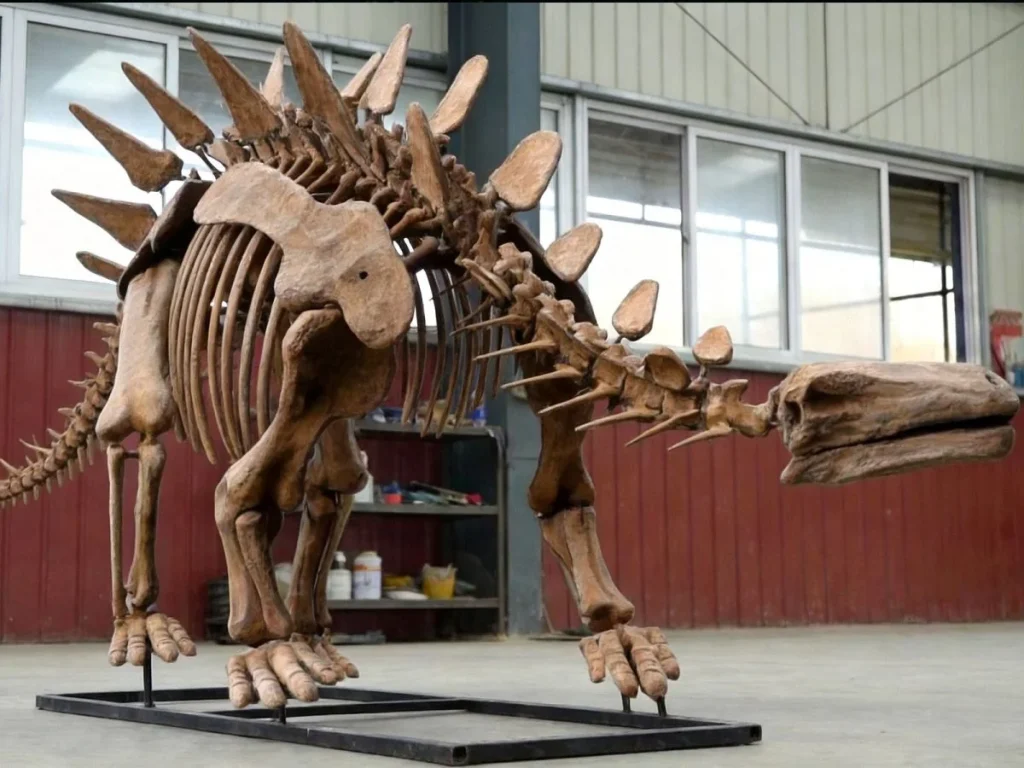
A skeleton is easier to read than a living reconstruction, and harder to get right. With no skin to hide behind, every proportion is […]
View Product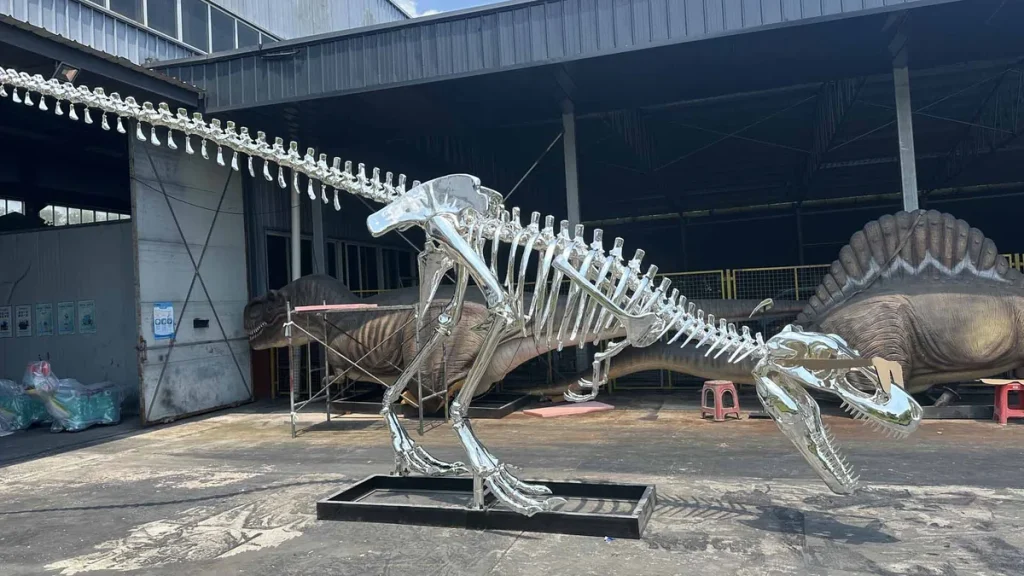
A dinosaur skeleton replica is not a model of bones. It is a steel structure that happens to be dressed in bones, and every […]
View Product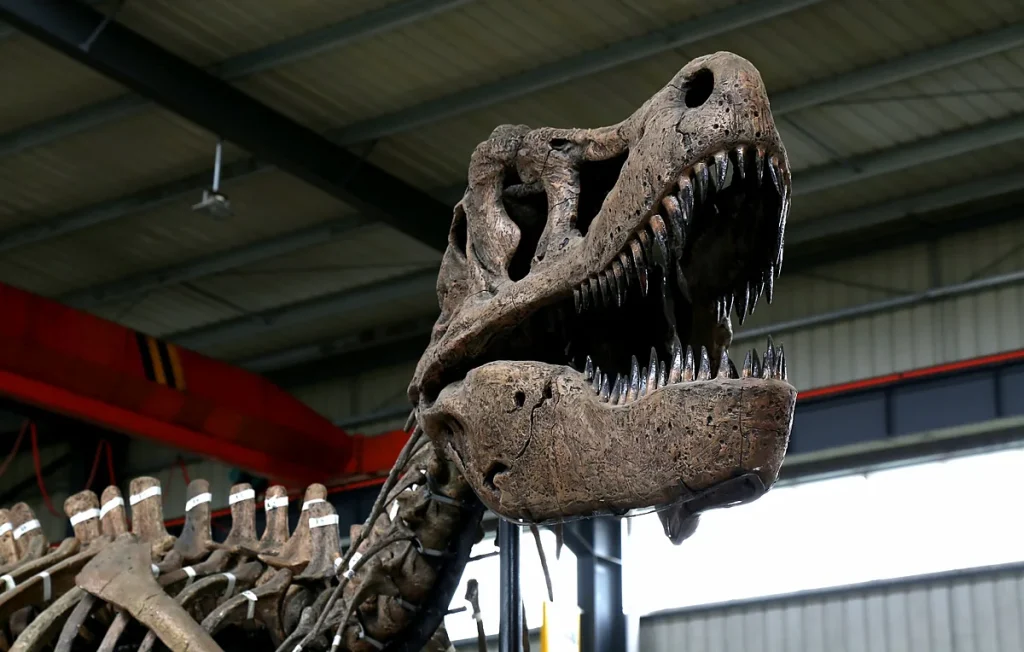
A skull is where most buyers start. It is the cheapest way to own a piece of a T-Rex, it survives a change of […]
View ProductThree things buyers usually want settled before they ask for a drawing — what drives the number, how the piece is actually built, and what to check between suppliers.
From fossil reference to finished skin — how proportions, texture, colour and weathering are decided, and what separates a realistic build from a cartoon one.
Read the guide →Frame, drives, skin, sensors, sound and weatherproofing — the six systems behind every animatronic dinosaur, and how each one changes cost and behaviour.
Read the guide →Choosing the right animatronic dinosaurs for your venue is not just about picking the most famous species — it is about matching each dinosaur […]
Read the guide →Send your dimensions, movement requirements and installation site. You get a realistic budget range and a dated build schedule.
Or email info@hltdino.com — we reply within one business day.