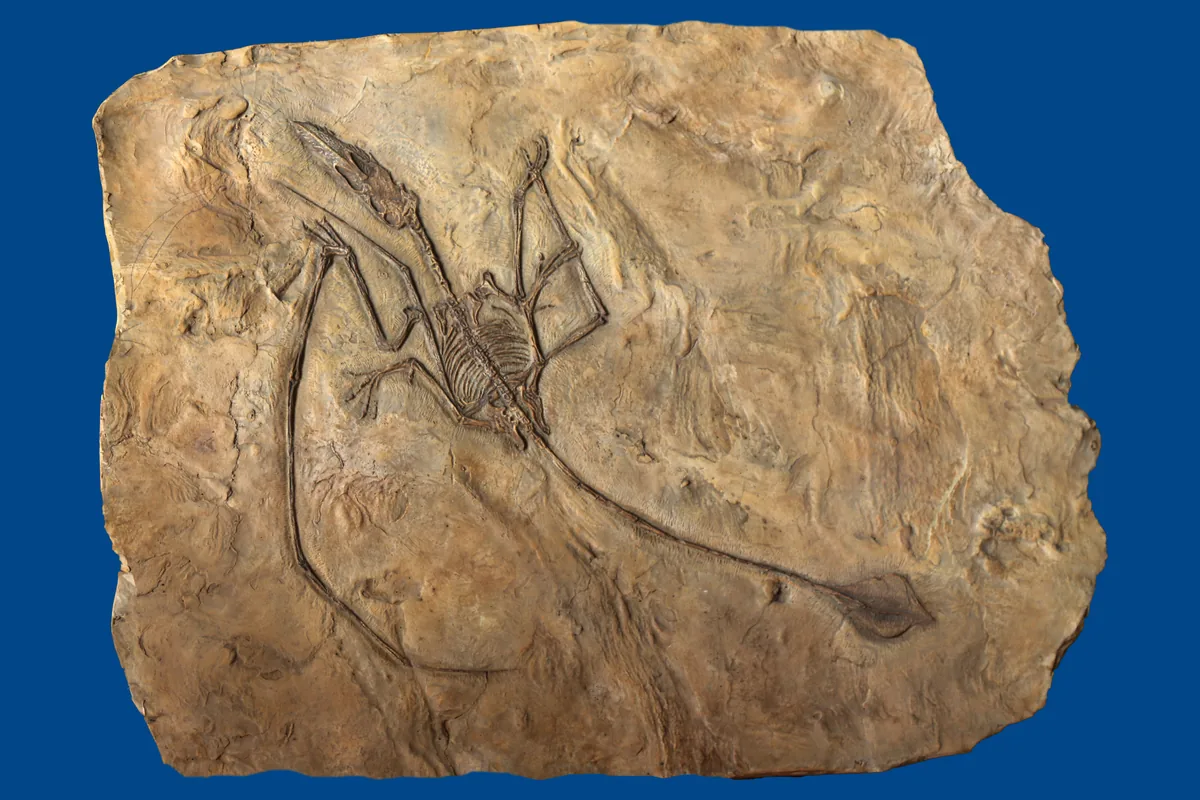
Dinosaur Skeletons & Fossils
A pterosaur is the one prehistoric exhibit where the skeleton cannot be separated from the membrane. The wing is the fourth finger, drawn out to absurd length, with a skin membrane running from fingertip to body. Mount the bones without the membrane and it reads as a bird. Mount the membrane badly and the whole piece reads as a kite.
Two things make it work: how much light passes through, and how the membrane hangs. Opaque fabric dyed to look like skin never does, because a real membrane is thin enough that a backlit hall turns it into a glowing silhouette.
We cast the membrane in translucent PU, which takes a tint, resists UV yellowing, and can be repaired. It hangs under slight tension between the wing finger and the body, and the tension is set on site, because a membrane pulled tight in the workshop arrives slack after a long shipment.
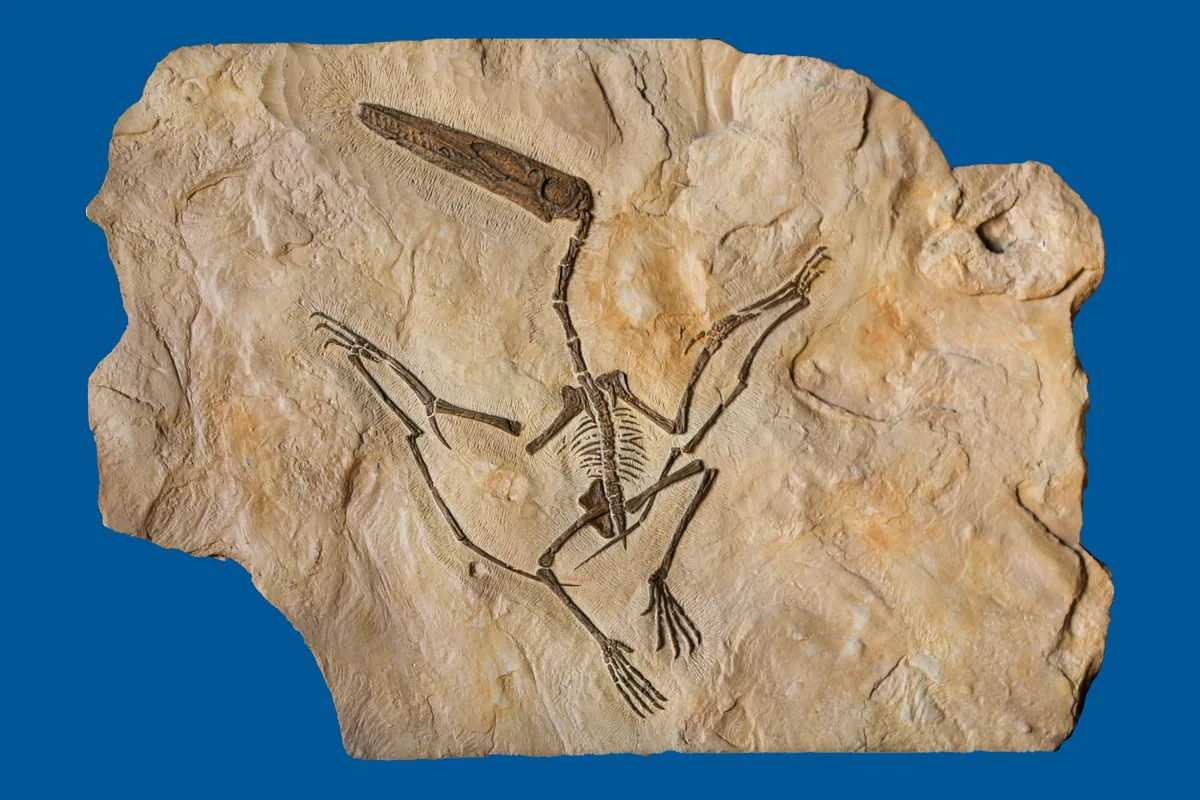
A pterosaur on a plinth reads as a sculpture. A pterosaur in the air reads as an animal, and that is what visitors photograph. The catch is that a suspended piece puts its whole load into the building, not into the floor.
We supply the hanging layout and the load figures per point, and the fixing design is signed off locally against the structure above. A 6-metre span typically lands on four to six points, each with an adjustable turnbuckle so the attitude can be corrected after the piece is up rather than during the lift.
Standard builds run from 3 to 10 metres. The span is a ceiling decision as much as a species decision: a 10-metre animal needs roughly 12 metres of clear hall and a viewing distance of at least 15 metres, or visitors spend their time looking at a wing instead of an animal.
Species matters for proportion rather than for size. Long-tailed forms like Rhamphorhynchus read completely differently from the short-tailed, crest-bearing pteranodontids, and the crest is usually the single most photographed detail in the room.
The bones are fibreglass over a light internal structure, because every kilogram of bone becomes kilograms of steel in the ceiling. Total hung weight for a 6-metre build sits in the low hundreds of kilograms, and we publish the figure before the structure is designed rather than after.
A backlit membrane is a different exhibit from a front-lit one, and the difference is worth planning for. Up-lighting from below the piece turns the underside of the wing into a glowing panel; a downlight from above throws the membrane into shadow and reads as wet skin.
| Wingspan | 3 to 10 m, built to order |
|---|---|
| Bone frame | Fibreglass bone over a light internal structure |
| Membrane | Translucent PU, UV resistant, repairable |
| Hanging points | 4 to 6, each with an adjustable turnbuckle |
| Mount options | Suspended, plinth or wall bracket |
| Pose | Open wings as standard; folded on request |
| Total hung weight | Low hundreds of kilograms at a 6 m span, confirmed on drawing |
| Duty | Indoor |
Can it be floor mounted instead? Yes, on a plinth or a wall bracket. The membrane sits differently, and a plinth mount usually needs a smaller span to look right.
Is the transition where it meets the body obvious? Only if the membrane is cast in one piece with the body. We cast it separately and blend the seam under the shoulder, which is where the real animal had the thickest tissue.
How is it cleaned? Dry brush on the bone, and a damp non-woven cloth on the membrane. Solvents cloud the PU.
Can the wings be posed open or folded? Open is standard. A folded pose is possible for a travelling piece and changes the tensioning design.
Materials. Fibreglass bone frame with a translucent PU wing membrane, mineral pigment finish.
Related. the skeleton and fossil range, museum exhibit layout, interactive exhibit options.
Same factory and the same build standard. What changes is size, movement set and how the exhibit is meant to be used on site.
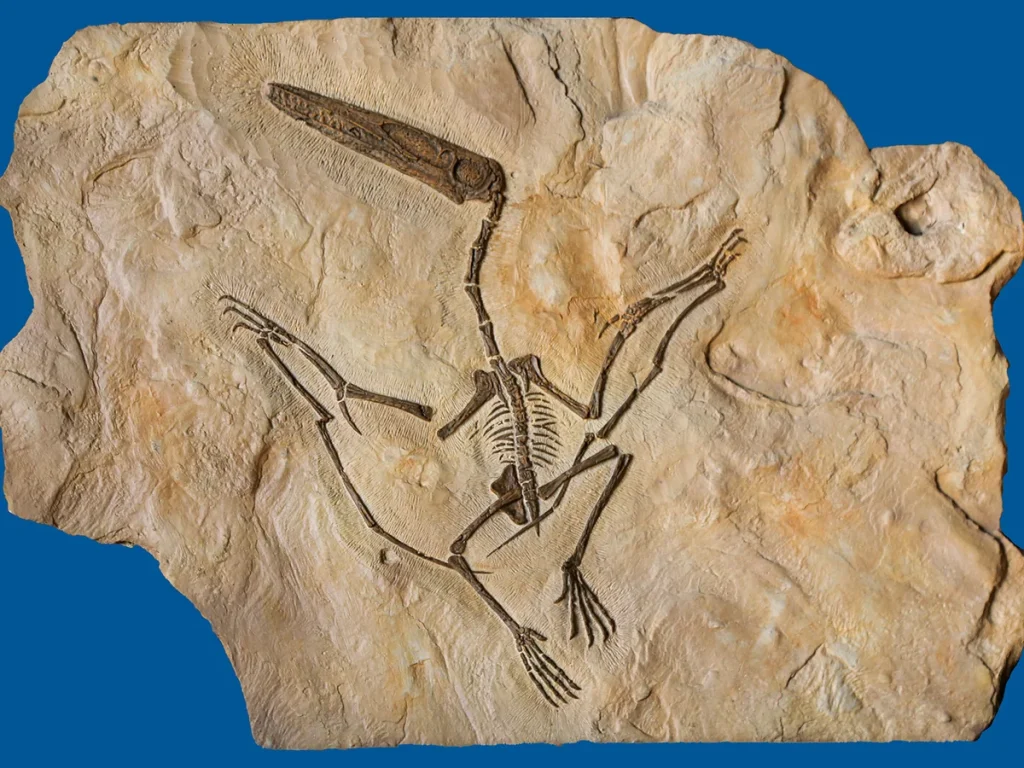
The short-tailed pterosaurs are the ones that look wrong at first glance. No long bony tail, a much shorter skull, and the wing finger […]
View Product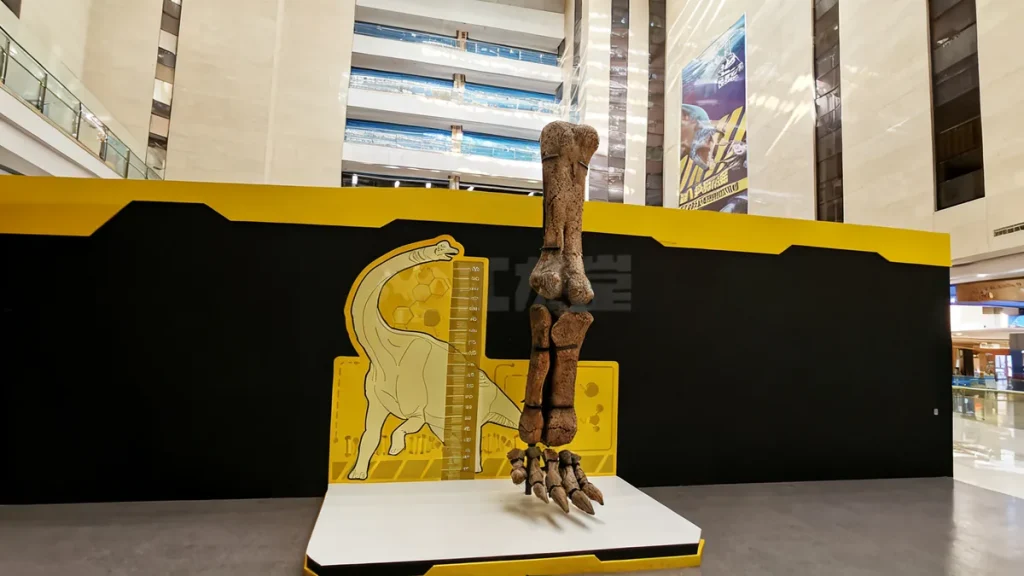
Single bones are the least glamorous thing we make and the most useful thing a museum can buy. They go on handling tables, into […]
View Product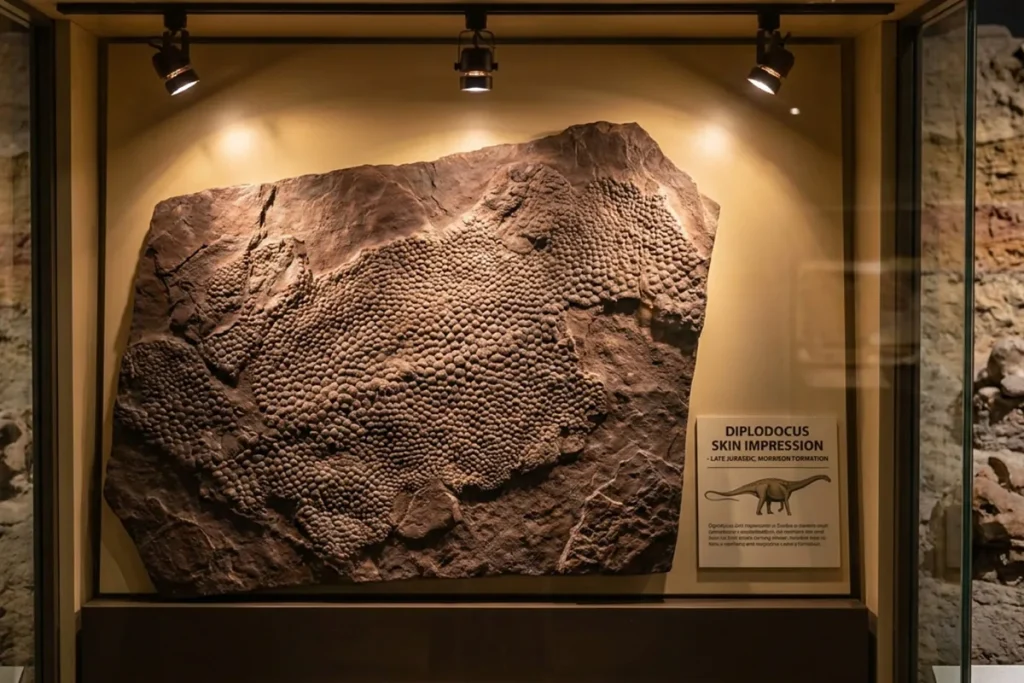
Skin impressions are the hardest fossil to fake and the easiest to ruin. Everyone knows what dinosaur skin is supposed to look like, which […]
View ProductThree things buyers usually want settled before they ask for a drawing — what drives the number, how the piece is actually built, and what to check between suppliers.
From fossil reference to finished skin — how proportions, texture, colour and weathering are decided, and what separates a realistic build from a cartoon one.
Read the guide →Frame, drives, skin, sensors, sound and weatherproofing — the six systems behind every animatronic dinosaur, and how each one changes cost and behaviour.
Read the guide →Choosing the right animatronic dinosaurs for your venue is not just about picking the most famous species — it is about matching each dinosaur […]
Read the guide →Send your dimensions, movement requirements and installation site. You get a realistic budget range and a dated build schedule.
Or email info@hltdino.com — we reply within one business day.