Animatronic Plants & Trees
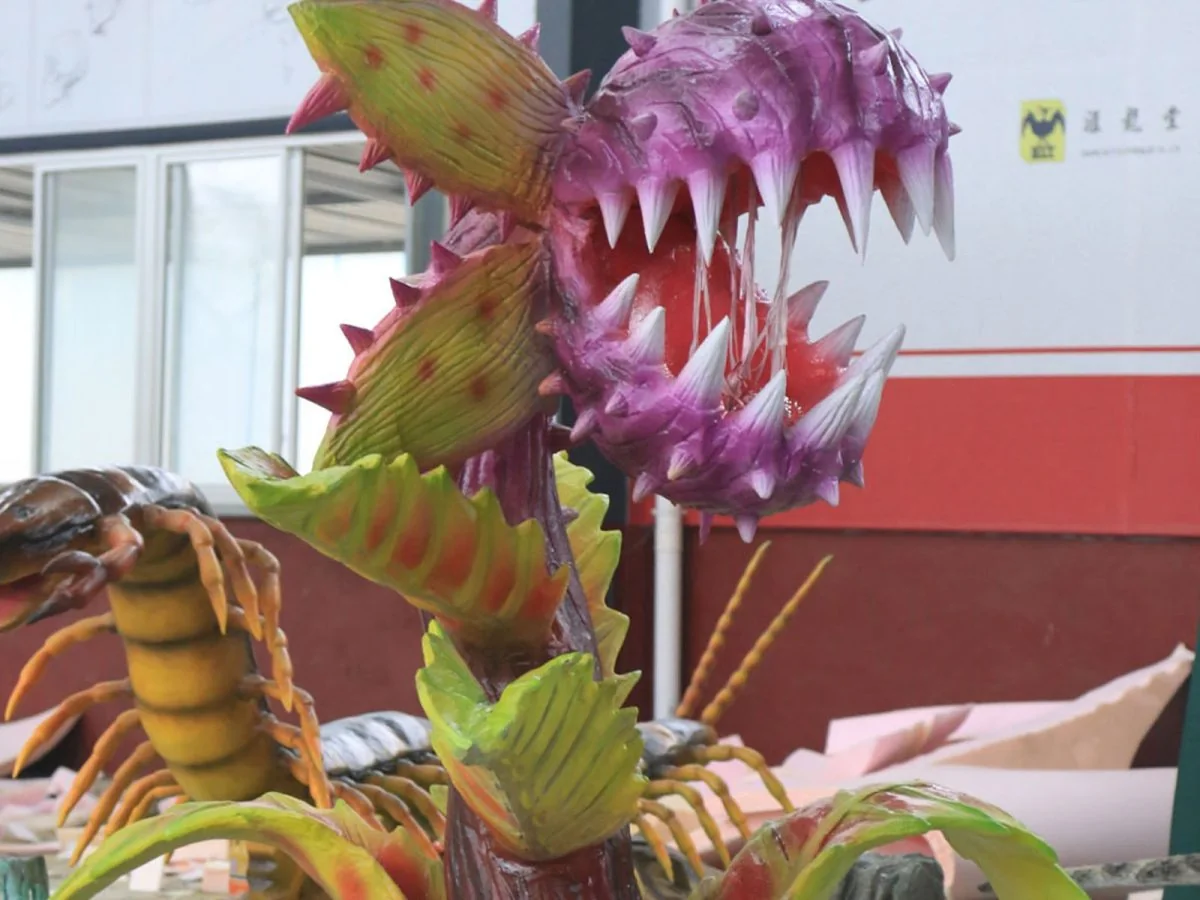
Plants are the hardest sell in an animatronic catalogue, because a plant that moves is either magical or ridiculous and there is not much middle ground. The Venus flytrap is the exception: it already moves in real life, so a giant one that closes when you lean in does not need to be explained.
| Configuration | Standard unit includes one large trap; multi-trap clusters on request |
|---|---|
| Power | 110–240 V AC, 400 W per trap |
| Sound | Optional, 20 W |
| Trap surface | High-density finish, interior coloured to species |
| Frame | Hot-dip galvanised weathering steel |
| Trigger | Proximity sensor; closes on approach and reopens on a delay |
| Duty | Outdoor standard, indoor on request |
| Size | Built to order; trap scale set by the viewing distance |
A visitor knows the Venus flytrap closes. Nothing has to be taught, no signage is needed, and the reaction is immediate — lean in, it shuts. A walking tree or a waving flower needs the visitor to accept a premise first; the flytrap does not.
The corollary matters for site planning: this piece works best where visitors pass close to it. On a wide trail it is a curiosity; on a narrow path with the trap at chest height it is an event.
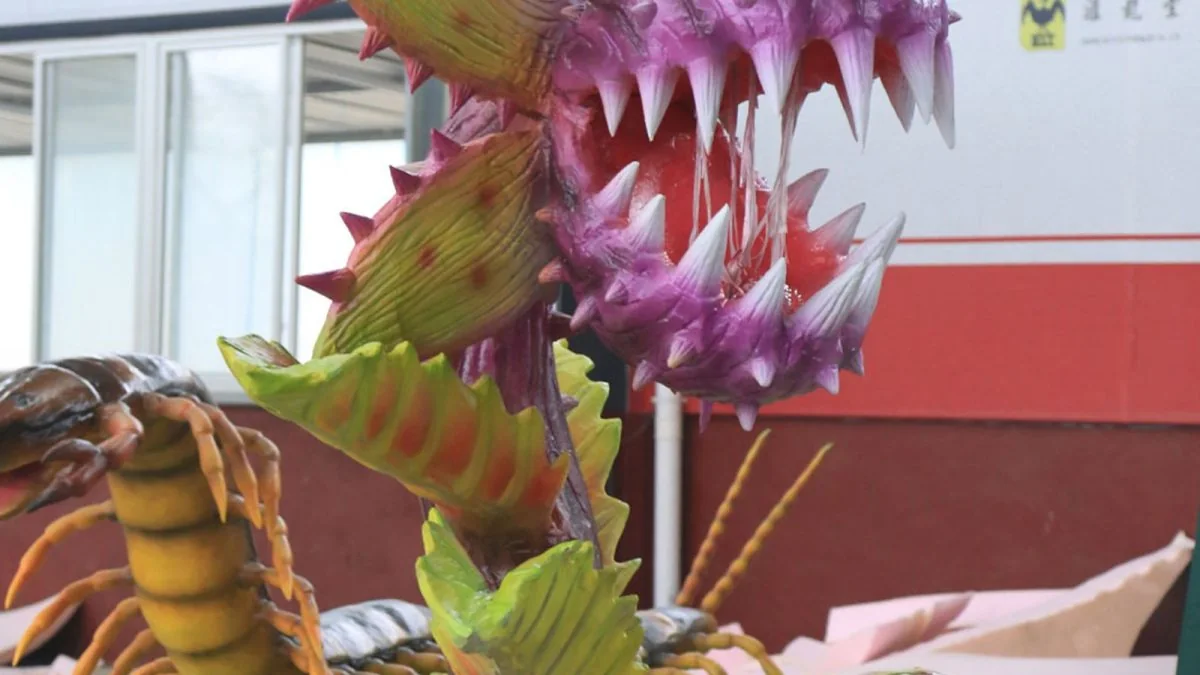
Two details. The interior colouring — a real trap is red inside with a paler rim, and a trap painted one colour from the outside in looks like a prop. And the trigger hairs, three of them on each lobe, which are the detail a child will point at.
The rim is the third. Real traps have a fringe of spines along the edge; a trap that closes with a clean plastic edge looks like a clamshell. The fringe is cast with the lobe rather than glued on, because glued spines are the first thing to come off.
400 W per trap is the closing mechanism, and it is the only thing on the piece that moves. That keeps the build simple: one drive, one sensor, one controller, and very little to go wrong compared with a full dinosaur.
It also means the trap is the maintenance item. The hinge is where wear shows, and it is designed to be reached without dismantling the plant.
The optional 20 W audio is a snap or a low hiss, and the honest advice is to use it at low volume or not at all. A cartoon snap on a plant that already looks convincing takes it backwards; a quiet dry click as the trap closes is what makes people look twice.
How many traps should a display have? One large trap is the standard unit and works as a single focal point. Three at different heights make a cluster that reads as a plant rather than a sculpture.
Does it close on everyone? The sensor range is set at commissioning. On a busy path the range is short so it fires on people who lean in rather than on everyone walking past.
Can it be indoors? Yes. Indoor builds suit botanical gardens and museum foyers, and the galvanised frame is specified for both.
What happens if someone holds it shut? The drive is protected against stall, so it holds and resets rather than burning out. It is worth telling staff this, because the first reaction is to think it has broken.
400 W at the plant position, which is a single supply. The site question is the base: the plant has to be anchored against being pushed, because a trap at chest height invites leaning on it and a free-standing plant will eventually be tipped.
Outdoors, put the base on a hard standing rather than directly on soil. A galvanised frame sitting in wet ground still corrodes at the ground line, and the ground line is where nobody looks.
Short. The sensor range is set by walking the path at the speed visitors actually walk, the close-and-reopen delay is set against how long people stay to watch, and the sound level is set or muted.
The delay is the setting worth taking time over. Too quick and the trap reopens before the visitor has finished reacting; too long and the next group arrives at a closed plant that looks broken.
Materials. High-density trap surface on a hot-dip galvanised weathering steel frame, cast spine fringe, proximity trigger.
Related. the plant and tree range, dinosaur exhibits, theme park installations, request a quote.
Same factory and the same build standard. What changes is size, movement set and how the exhibit is meant to be used on site.
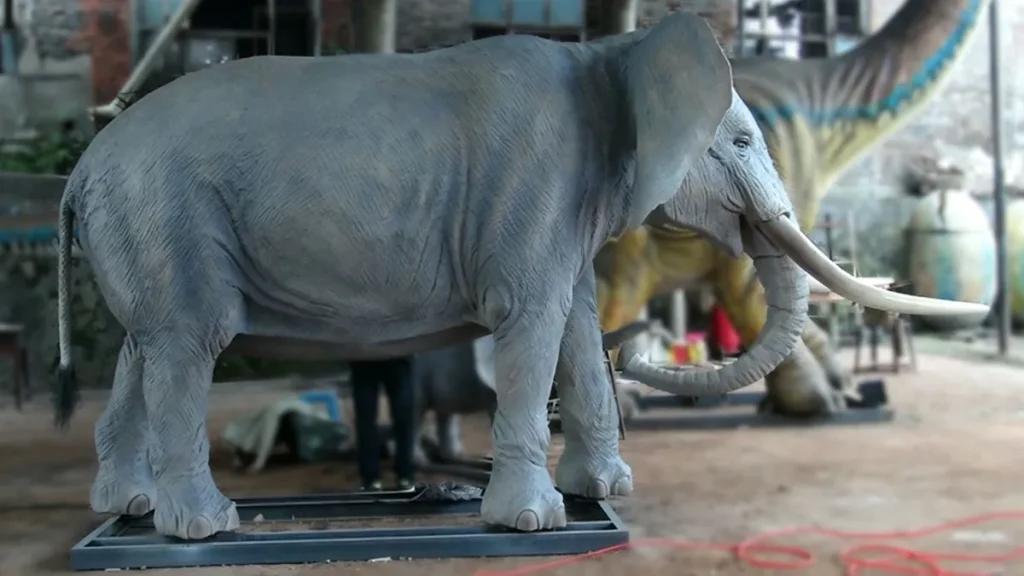
Our animatronic African elephant brings Loxodonta africana to life at full scale — from the deeply wrinkled skin to the independently moving ears and […]
View Product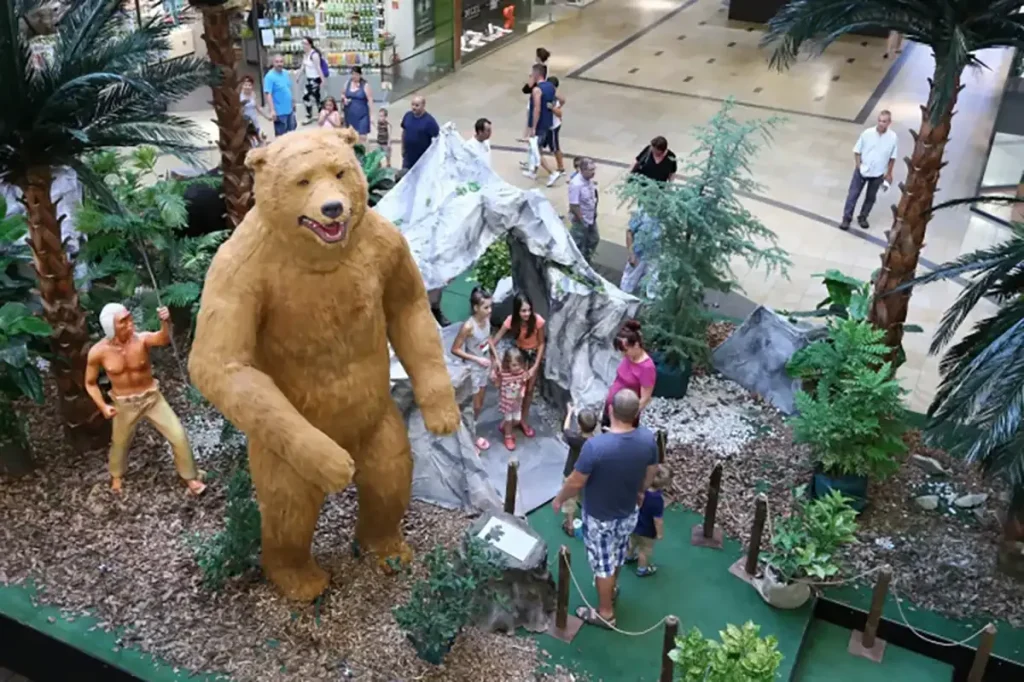
Life-size animatronic cave bear with hand-pasted fur, glass eyes and the heavy Pleistocene stance — for museum dioramas and Ice Age trails.
View Product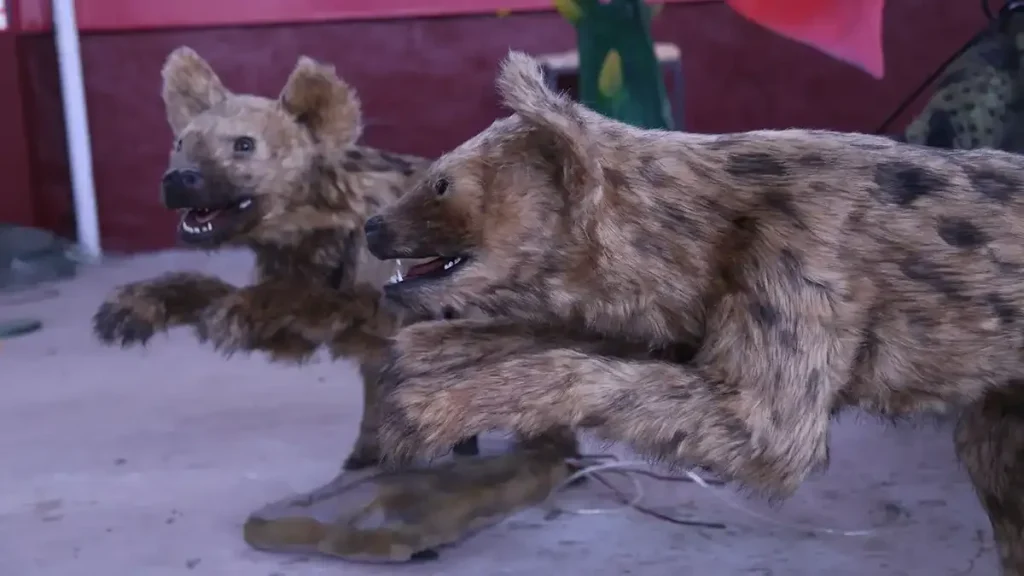
A 1.4–1.7 m spotted hyena designed to be ordered in packs, with staggered trigger timing.
View ProductThree things buyers usually want settled before they ask for a drawing — what drives the number, how the piece is actually built, and what to check between suppliers.
Extinct and hard-to-keep species, sculpted to anatomy keepers can check — where animatronic animals earn a place beside a living collection.
Read the guide →What Animatronic Products Are Actually Used For Buyers come to animatronic products with one of two jobs in mind, and the job determines almost […]
Read the guide →From fossil reference to finished skin — how proportions, texture, colour and weathering are decided, and what separates a realistic build from a cartoon one.
Read the guide →Send your dimensions, movement requirements and installation site. You get a realistic budget range and a dated build schedule.
Or email info@hltdino.com — we reply within one business day.