Animatronic Plants & Trees
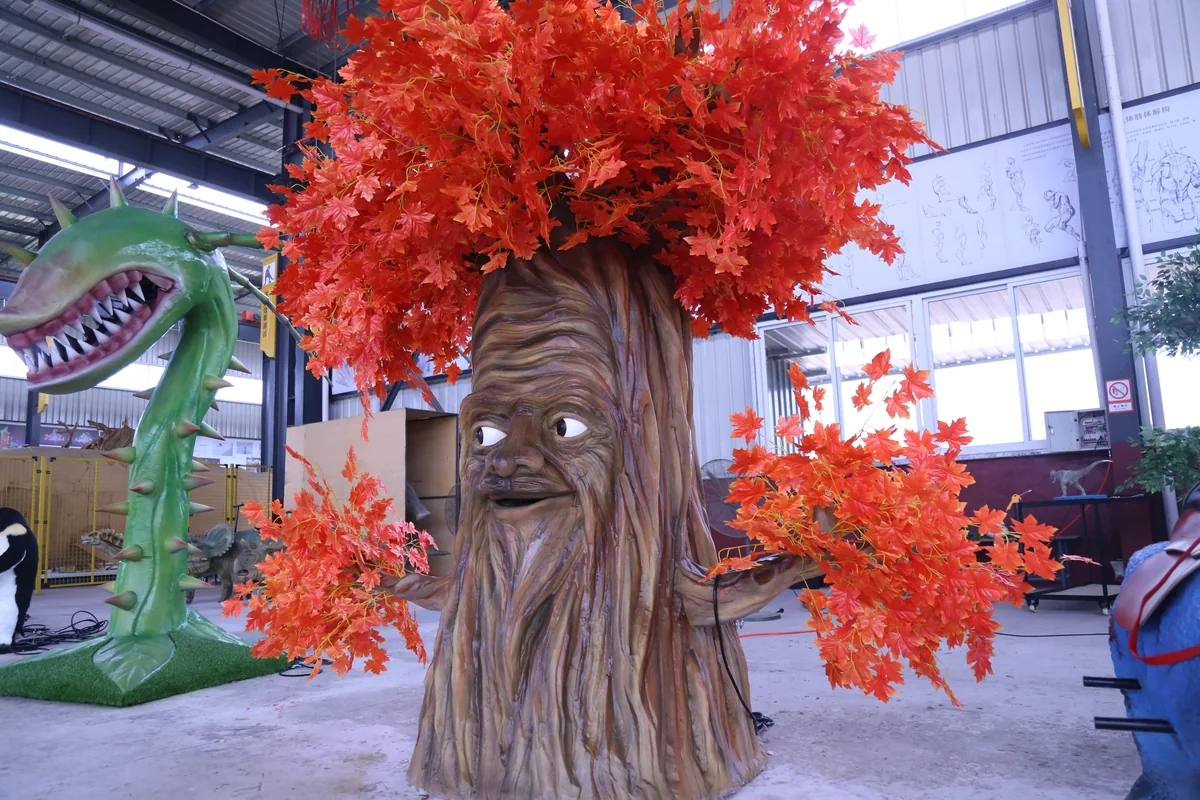
Interactive Animatronic Talking Tree
A talking tree character with a moving face, synced speech and sensor trigger — 2.5 to 6 m tall, built for park entrances, queue lines and family zones.
A talking tree character with a moving face, synced speech and sensor trigger — 2.5 to 6 m tall, built for park entrances, queue lines and family zones.
A talking tree is a character, not a decoration. That difference decides everything about how it gets built. A decorated tree only has to look right in a photograph. A character has to react at the right moment, at the right volume, without frightening the four-year-old standing directly in front of it — and it has to keep doing that after two seasons outdoors.
| Product type | Interactive animatronic character prop |
|---|---|
| Overall height | 2.5–6 m, custom to the site |
| Trunk diameter | 0.6–1.8 m |
| Face | Mechanical eyeballs with LED, servo eyelids, articulated jaw, brow movement |
| Speech | Pre-recorded audio on sensor or button trigger; optional voice recognition |
| Audio output | 85 dB at 1 m, directional speaker; volume programmable by time of day |
| Control | Industrial single-chip controller, content on SD card |
| Power | 110 V / 220 V, 300–1200 W depending on movement count |
| Materials | National-standard steel frame · high-density foam · composite silicone bark · UV-stabilised coating |
| Movements | Eye blink · brow lift · jaw open · head turn · branch sway |
| Weather rating | −20 °C to +60 °C, outdoor rated with sealed electrical enclosure |
| Lead time | 25–40 days after drawing approval |
Three axes decide whether the piece reads as alive: eyes, jaw and brow. Almost everything else on a talking tree can be approximate.
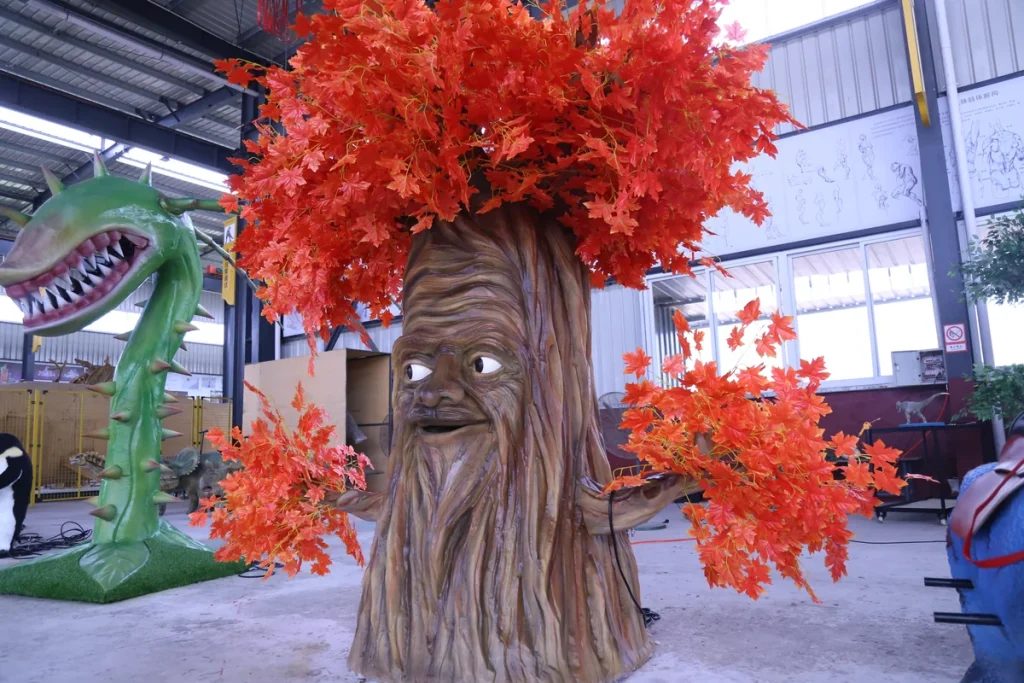
The eyes are where cheap builds give themselves away. A flat LED panel behind a cut-out reads as a sticker from three metres, because a real eye has depth and a highlight that moves when the head turns. We use hemispherical eyes with a servo-driven lid, and the lid closes on a curve rather than a straight drop — a linear drop reads as a blink in a cartoon, not in an animal.
The jaw has to land on the syllable. A jaw that opens on a fixed cycle while the audio runs independently is the single most common reason a talking tree feels wrong; visitors cannot say why, but they stop believing it within about ten seconds. Our controller takes the audio track and drives the jaw from the envelope, so the mouth is closed on the pauses.
The brow is the cheapest expression axis and the one most often left out. A brow that lifts two degrees before the voice starts reads as attention. Without it, the face is a puppet with a fixed expression and the character never lands.
An outdoor family zone runs at 65–75 dB of ambient noise once there are people in it. Speech needs roughly 10 dB above ambient to stay intelligible, which puts the design target at 85 dB at one metre — loud enough to cut through the crowd, quiet enough not to be a nuisance complaint.
The trick is not more power, it is direction. A directional speaker aimed at the standing position keeps the level at the listener and drops it fast behind the tree, so the queue twenty metres away is not subjected to the same programme on repeat. In sites near a residential boundary we programme a second volume curve for after 20:00.
The trigger distance matters as much as the volume. A tree that starts talking the moment someone walks within eight metres catches people mid-step and startles them. Two to four metres, with a short deliberate delay, gives the visitor a beat to look up first — which is the whole point of the prop.
Content is the part that ages fastest. A park that runs a Halloween programme and a Christmas programme needs the tree to say different things eight weeks apart, so the voice cannot be burned into firmware.
Every build ships with content on a removable SD card and a written procedure for replacing it. Three options are available at order stage: a recorded pack we supply and you approve, your own recordings dropped in, or a voice-recognition build where the tree answers a set of scripted questions with a microphone and speaker in the trunk.
The voice-recognition version is worth being honest about. It works well for a fixed set of maybe twenty questions where children ask roughly the same things. It is not a general conversation partner, and a site that expects one will be disappointed. We specify it as a scripted interaction, not as an AI.
Can children touch it? The trunk and roots, yes. The face is not a handling surface — the eyelids and jaw are the only parts that can be damaged by a child pulling at them, so the face sits at 1.8 m and above on standard builds.
Will it scare small children? Volume and trigger distance are the two controls, and both are adjustable on site. We set 78 dB and a three-metre trigger as the default for family zones and raise it only if the site asks.
Does it work in rain? Yes. The electrical enclosure is sealed and the controller sits in the trunk above the waterline. The failure point on any outdoor bark build is the seam, not the electronics, so the bark panels are double-sealed and the seam is vertical rather than horizontal wherever the sculpt allows it.
Can we change the voice ourselves? Yes — SD card and a one-page procedure. No factory visit and no controller software.
What does it stand on? Up to 3.5 m a weighted base plate is usually enough. Above that we specify a concrete footing, typically 600 × 600 × 800 mm, and supply the anchor layout. The structural sign-off for the footing is done locally against your ground conditions.
The tree ships in sections — trunk in two or three pieces depending on height, canopy separately, face protected in its own crate. A four-metre build is typically up in half a day with two people and a small lift, including wiring and an audio test run.
Every project ships with a spare-parts list, a maintenance guide and the wiring diagram. Servo replacement on the eyelids and jaw is a serviceable item rather than a factory return, which is the difference between a prop that runs for years and one that gets switched off in month eight.
Related. the full plants and trees range, the animatronic Venus flytrap, theme park exhibit planning.
Same factory and the same build standard. What changes is size, movement set and how the exhibit is meant to be used on site.
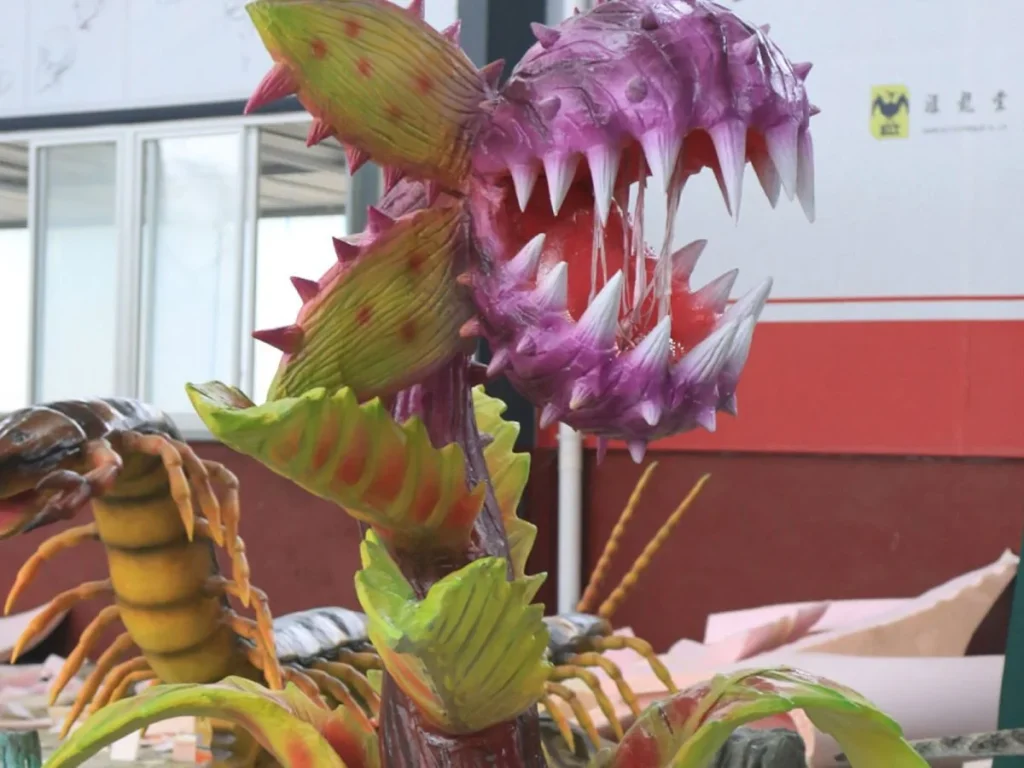
Plants are the hardest sell in an animatronic catalogue, because a plant that moves is either magical or ridiculous and there is not much […]
View Product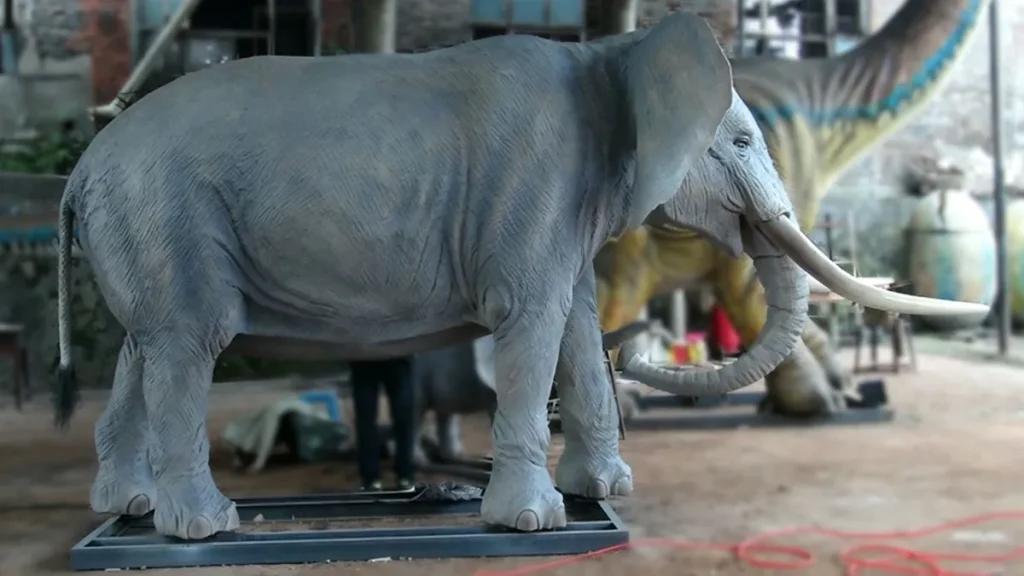
Our animatronic African elephant brings Loxodonta africana to life at full scale — from the deeply wrinkled skin to the independently moving ears and […]
View Product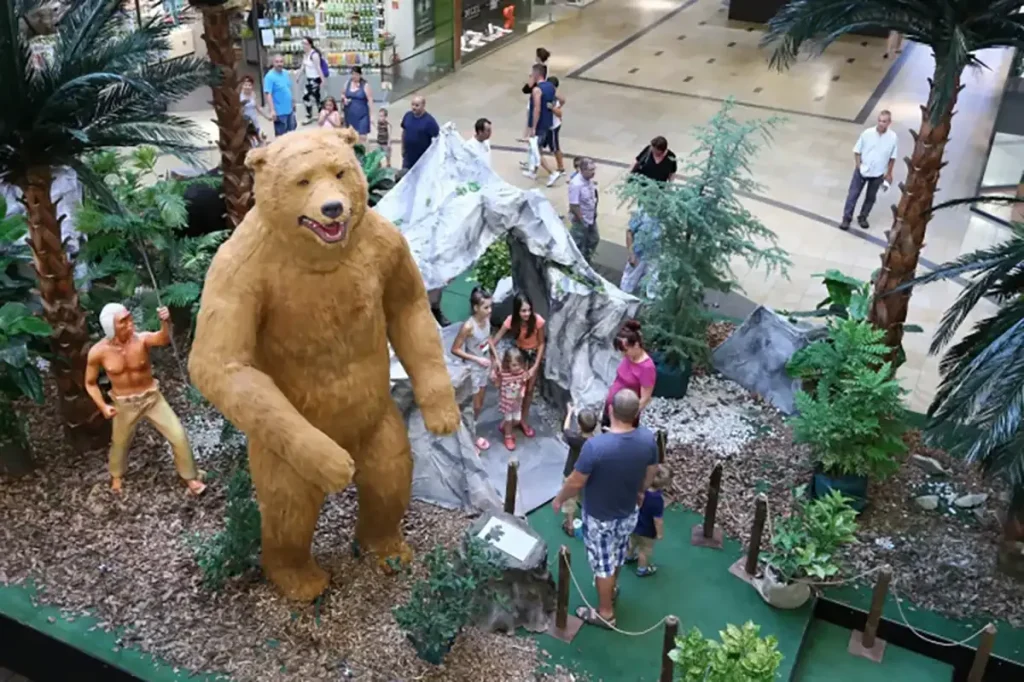
Life-size animatronic cave bear with hand-pasted fur, glass eyes and the heavy Pleistocene stance — for museum dioramas and Ice Age trails.
View ProductThree things buyers usually want settled before they ask for a drawing — what drives the number, how the piece is actually built, and what to check between suppliers.
Extinct and hard-to-keep species, sculpted to anatomy keepers can check — where animatronic animals earn a place beside a living collection.
Read the guide →What Animatronic Products Are Actually Used For Buyers come to animatronic products with one of two jobs in mind, and the job determines almost […]
Read the guide →From fossil reference to finished skin — how proportions, texture, colour and weathering are decided, and what separates a realistic build from a cartoon one.
Read the guide →Send your dimensions, movement requirements and installation site. You get a realistic budget range and a dated build schedule.
Or email info@hltdino.com — we reply within one business day.