Dinosaur Puppets
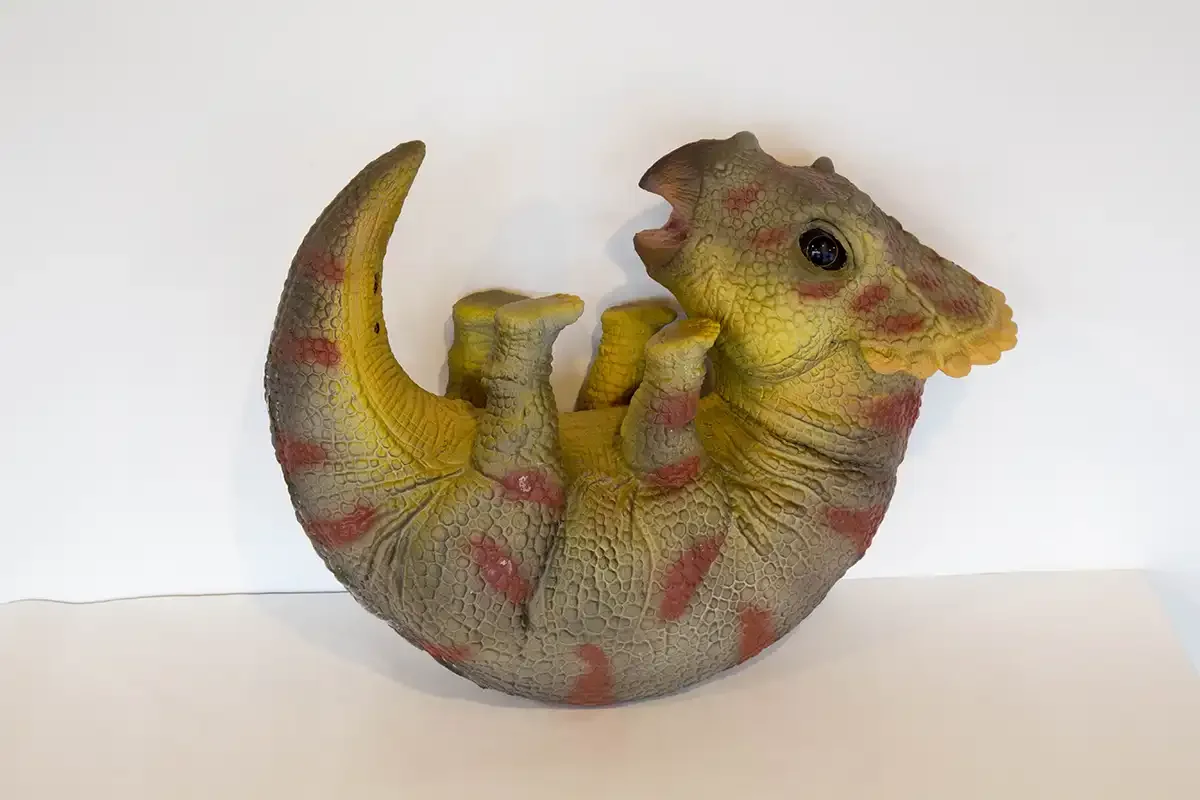
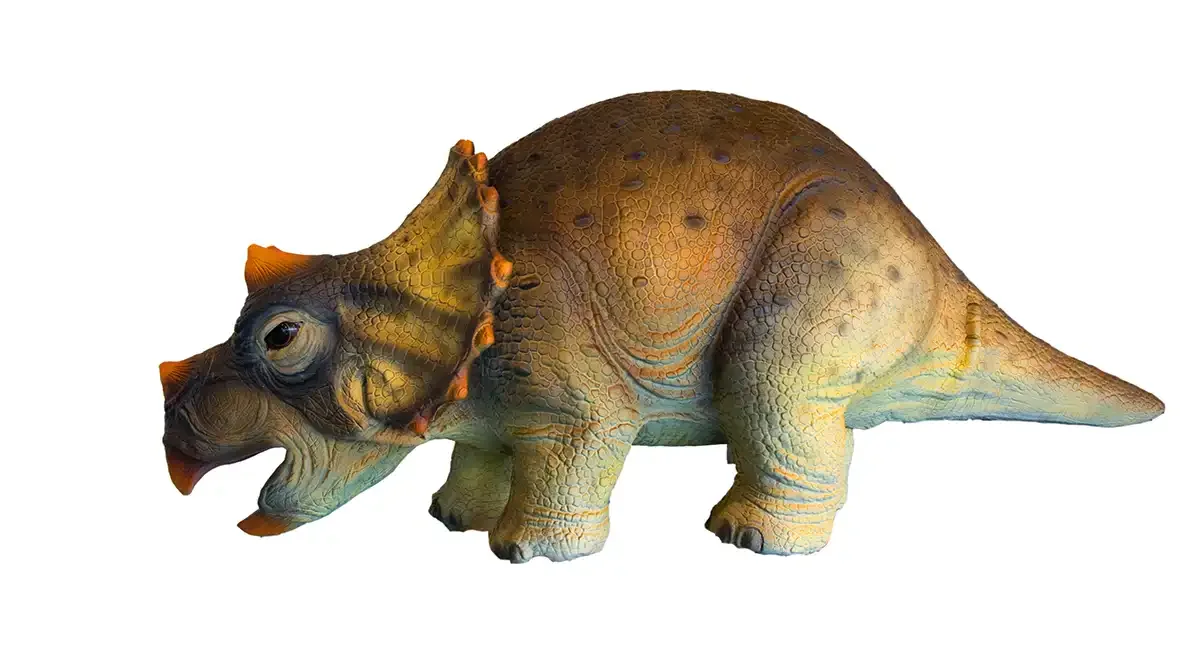
A baby triceratops is a specific shape, and it is not a small adult. The frill is proportionally oversized at this age and still rounded, the horns are short and blunt, the head sits large against a compact body, and the legs are stubby with the joints almost hidden. Get the proportions right and children read it as a baby immediately; get them adult-scaled and it reads as a small dinosaur instead.
This piece is built to be touched. The body is soft over a steel skeleton — foam under a soft-touch silicone surface with no hard edges, no pinch points, and low-voltage DC control circuits inside. A sensor under the skin reacts to a hand within about 1.5 m, and the animal responds with a blink, a head lift and a chirp.
| Species | Triceratops horridus, juvenile — sculpted to hatchling proportions |
| Era | Late Cretaceous, roughly 68–66 million years ago |
| Type | Sensor-triggered animatronic puppet, soft body, floor seated (not rideable) |
| Size | 1.2–1.8 m curled; custom 0.8–2.4 m |
| Material | Internal steel skeleton, soft high-density foam body, patented silicone skin (ZL 2022 1 0224489.5) with soft-touch finish |
| Surface | Hand-painted UV-resistant pigment, child-safe non-toxic paints, rounded frill and three blunt horns |
| Animation | Eye blink, head lift, mouth open and close, tail wag, soft breathing |
| Sound | Internal 30 W speaker, juvenile triceratops chirp library, volume adjustable |
| Power | Rechargeable lithium pack, about 8 hours runtime, or 110/220 V mains |
| Installation | Floor placement on a soft base, no anchoring required, single person repositioning |
| Customisation | Size, colour, frill pattern, horn length, pose, sound library, branding plate |
| Support | 12-month warranty; battery pack and speaker module field-replaceable |
Proximity sensors fire on anything that passes — a buggy, a bag, an adult walking past at a metre. In a children’s zone that produces an animal that is constantly animating whether or not anyone is interacting with it, which stops being interesting within a minute.
This build uses both: an infrared approach zone that wakes the controller, and a soft pressure sensor under the skin that confirms contact. The animal only performs the full sequence on a touch. That distinction is the difference between a piece children queue to touch and a piece they walk past.
The body is soft, the constraints behind it are not. Three things are fixed regardless of how the piece is specified: no hard edges at child height, no pinch points at the joints, and control circuits at low-voltage DC so a damaged cable cannot present a shock risk.
The frill is the part most often got wrong. It is tempting to sharpen the horns for realism, and it is the one change that turns a compliant piece into a liability. Horns stay blunt, the frill edge stays rounded, and the skin holds a soft-touch surface that does not get slippery when wet.
The rechargeable pack gives about eight hours of operation and makes the piece movable — useful where a children’s zone is re-planned seasonally, or where the position has no power. The trade-off is a daily or nightly charge routine, and someone has to own that routine or the animal is dead by mid-morning.
Mains power removes the routine and fixes the piece in place. Where the position is permanent, mains is almost always the better choice; where the piece moves, the battery is what makes that possible. Both options are the same body, so this is a decision at order rather than a different product.
One hatchling is a single interaction point. Two or three at different sizes, facing slightly different directions, turn a corner into a scene — and children move between them rather than queueing at one.
Because the piece is seated and low, spacing matters: about 1.5 m apart at the base is enough for two children to interact without competing for the same sensor, while still reading as one group from a few metres back.
The piece is built for supervised children’s areas: soft surfaces, rounded edges, no pinch points, low-voltage control. It is not a climbing structure and is not load-rated for a child standing on it, so it belongs in a position where staff can see it.
IP54 rated — fine for covered outdoor positions and short exposure, not for permanent open-air installation. If the position is fully exposed, we build the IP65 version instead; that is a different skin and enclosure specification, not an add-on.
About eight hours on a full charge with normal interaction rates. In heavy use, with continuous triggering, expect less. Where the zone runs a full day, mains power is the more practical choice.
Yes. The same puppet body is built as a generic baby dinosaur, and the frill-and-horns version is triceratops. Other juvenile species are built on the same frame with different sculpting, so the build band and the safety specification stay the same.
Same factory and the same build standard. What changes is size, movement set and how the exhibit is meant to be used on site.
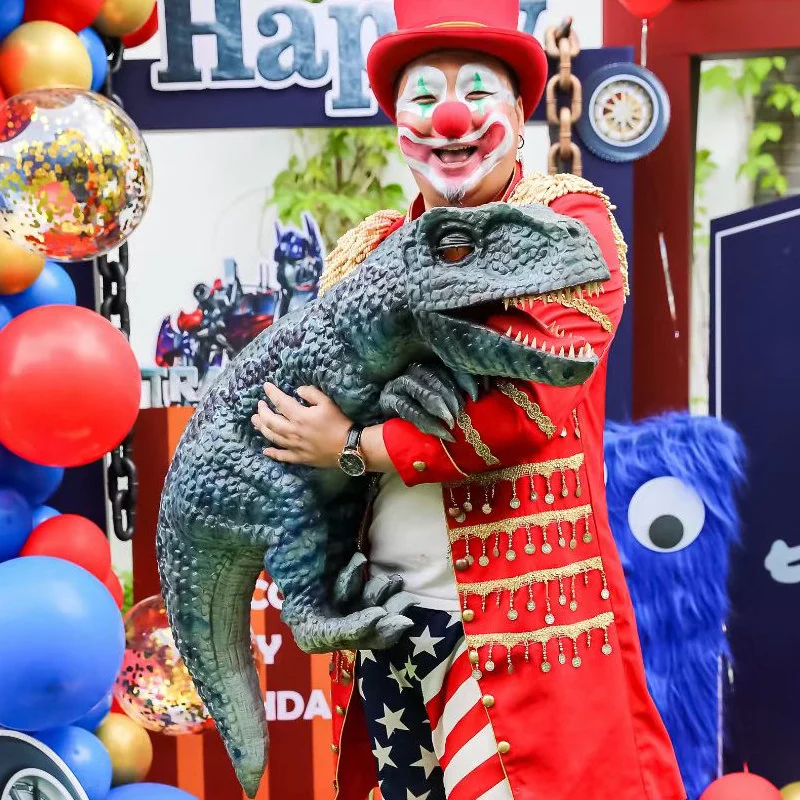
A hairy baby dinosaur is the version children actually want to touch. Not the 8-metre adult with the moving head — the small, fluffy […]
View Product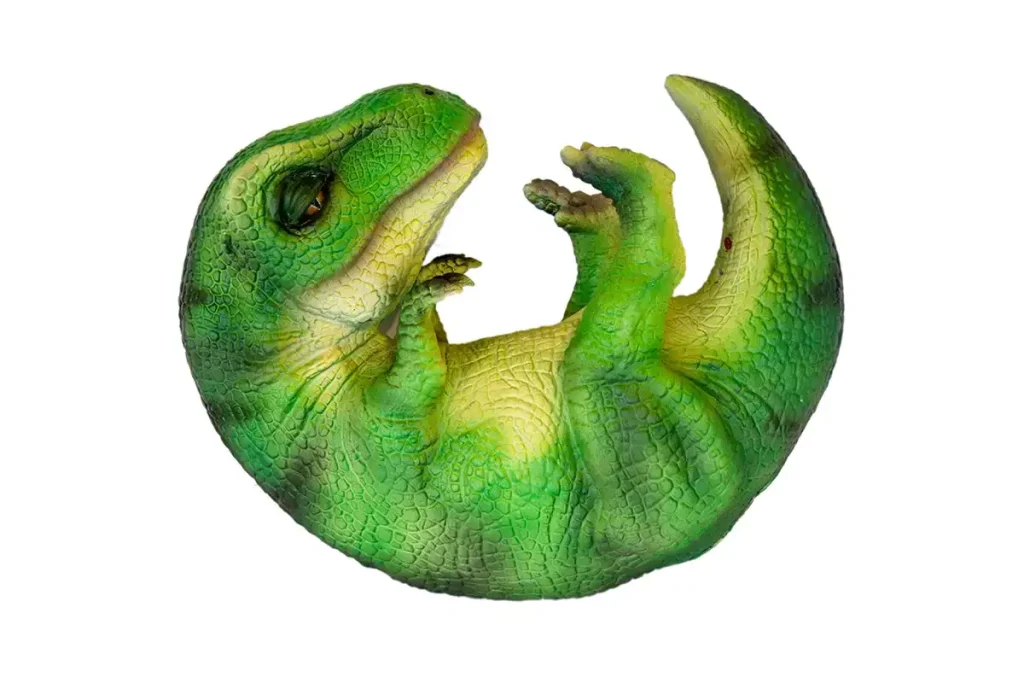
An unidentifiable baby animal is a better interactive piece than a recognisable one, and that is not a design compromise — it is the […]
View Product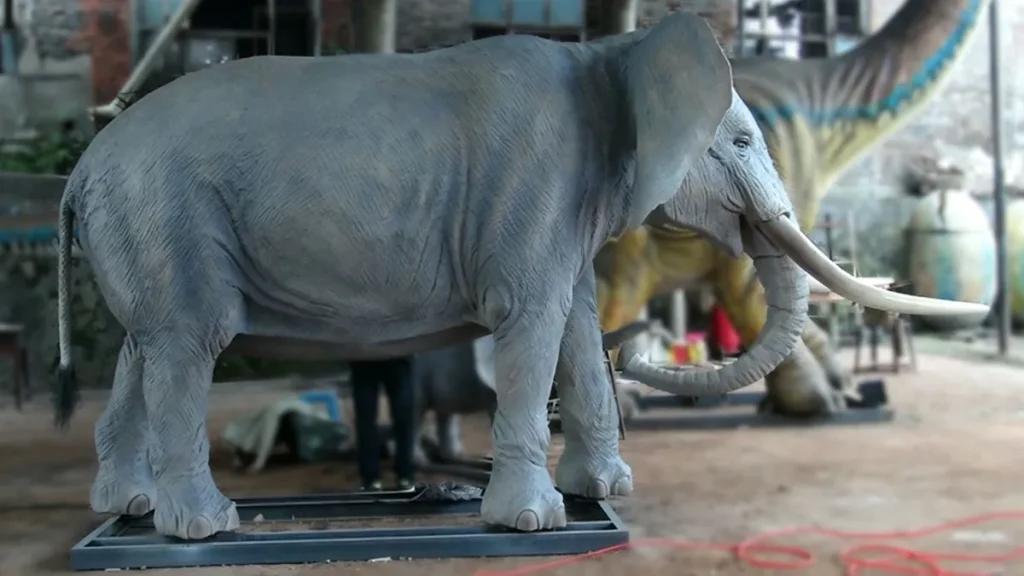
Our animatronic African elephant brings Loxodonta africana to life at full scale — from the deeply wrinkled skin to the independently moving ears and […]
View ProductThree things buyers usually want settled before they ask for a drawing — what drives the number, how the piece is actually built, and what to check between suppliers.
Proximity sensing, touch response and timed shows — what visitors actually do around an interactive exhibit, and how that changes placement and programming.
Read the guide →What Animatronic Products Are Actually Used For Buyers come to animatronic products with one of two jobs in mind, and the job determines almost […]
Read the guide →The procurement process end to end — what you are actually buying, species choice, what moves the price, how to compare factories and what to put in the brief.
Read the guide →Send your dimensions, movement requirements and installation site. You get a realistic budget range and a dated build schedule.
Or email info@hltdino.com — we reply within one business day.