Dinosaur Puppets
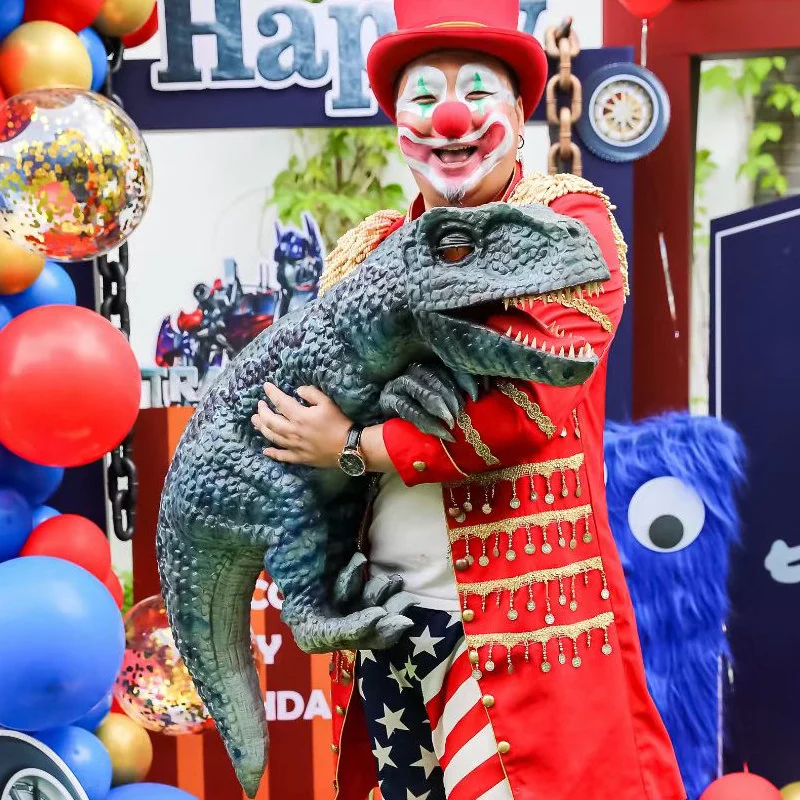
A hairy baby dinosaur is the version children actually want to touch. Not the 8-metre adult with the moving head — the small, fluffy one they can reach. That is what this puppet is, and it is the hardest of our builds to get right because there is no motor to hide behind. There is no motor to hide behind: the jaw has to open convincingly from a hand movement, the eyes have to look where the head is pointed, and the skin has to survive being grabbed by a five-year-old in a queue.
| Type | Baby dinosaur hand puppet, forearm operated |
|---|---|
| Body | Soft body over a foam core — plush hair or moulded skin, specified at order |
| Operation | Manual — one hand drives the jaw, the other steadies the head |
| Jaw | Hinged at the back of the skull, wide gape, holds position without a spring |
| Movement | Jaw open and close; head and neck turn on request |
| Size | Built to order; baby scale, roughly a metre nose to tail |
| Power | None — no battery, no charging, no electrical inspection |
| Age | 3 and up, supervised |
| Duty | Indoor and outdoor |
Everything a puppet does happens at the jaw hinge. If the hinge is at the front of the skull, the mouth opens by a small amount and the whole head looks like it is yawning. Hinged at the back, the same hand movement produces a wide gape that reads as a bite or a roar from across a room.
The second detail is spring tension. A puppet with a strong spring fights the operator — the hand tires after ten minutes and the mouth starts to close on its own. Ours holds position where it is left, so an operator can hold a half-open mouth for a photograph without their arm shaking.
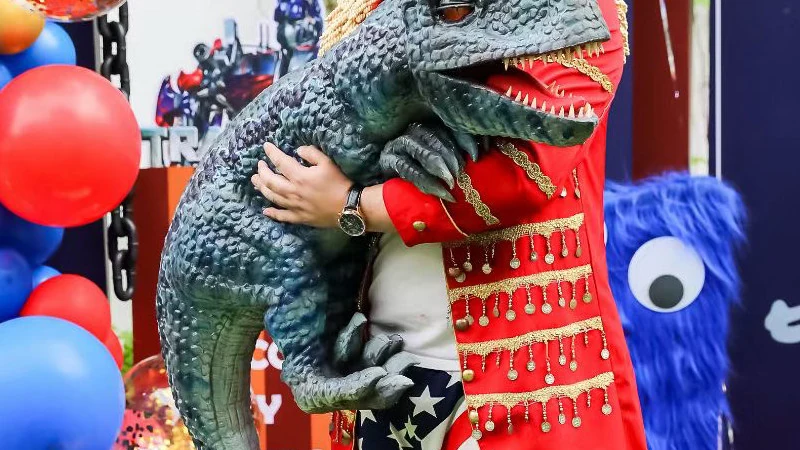
Three situations. A confined space — a shop unit, a hospital visit, a classroom — where a performer in a suit cannot stand up or turn around. A close-up audience, where children are within arm’s reach and a full suit is intimidating rather than fun. And an event where the performer needs to talk, because a puppet’s operator can speak normally while the mouth moves.
The limitation is honest: a puppet is one person’s arm, so the animal is roughly human-torso sized. If the brief needs a 3-metre dinosaur, this is the wrong product and we will say so.
The body takes more abuse than any other product we make, because it is the one children are allowed to touch. The skin is a soft-touch fabric over a foam core, which scuffs rather than cracks — a scuff can be brushed out, a cracked shell cannot.
Cleaning is a damp cloth and a mild soap. Not a washing machine, and not a pressure washer. The foam core holds water and takes days to dry, and a damp core is what makes a puppet smell.
Does it need batteries? No. There is nothing electrical in it, which is why it can be used in schools and hospitals without a PAT test.
Can the operator speak? Yes, and that is the point — the performer’s voice comes from behind the head, in character.
Can it be made in a specific species? Yes. The head sculpt is the cost driver; body and jaw mechanism are shared across species.
How many should an event order? Two is the practical number — one in use, one being cleaned or rested. Operators tire faster than the puppet does.
No power, no site preparation, no commissioning — the reason this product exists is that it works anywhere. A crate, an operator, and a space about the size of a person.
The one site consideration is headroom for the operator’s arm and a place to put the crate between sets. Outdoors, keep it out of direct sun when not in use: the fabric fades before the foam does, and a faded puppet cannot be repainted the way a hard-shell build can.
There is no commissioning visit. What there is, is operator practice, and it matters more than any technical setting: the jaw has to open on the beat of the voice, not before it. An operator who moves the mouth while talking looks like a ventriloquist act; one who moves it slightly ahead of the sound reads as an animal.
We supply a short handling guide with each puppet: how to hold it so the arm does not tire, how to open the jaw without exposing the wrist, and how to clean it between sets.
Materials. Soft-touch fabric skin over a foam core, hinged jaw with position-holding tension, painted mouth interior.
Related. the puppet range, dinosaur costumes, the baby dinosaur puppet, request a quote.
Same factory and the same build standard. What changes is size, movement set and how the exhibit is meant to be used on site.
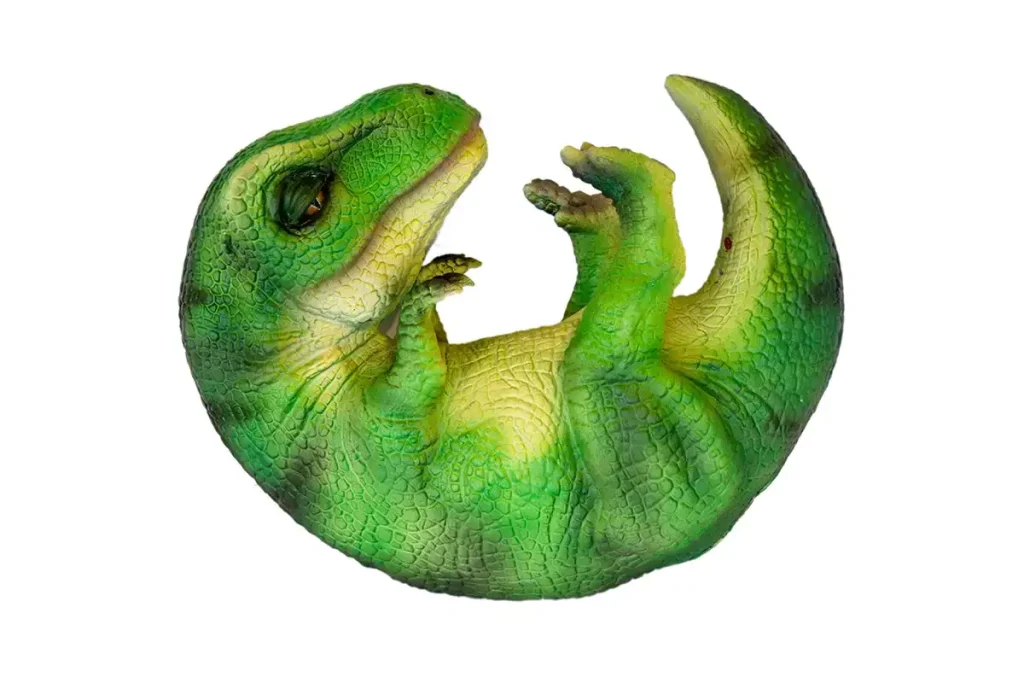
An unidentifiable baby animal is a better interactive piece than a recognisable one, and that is not a design compromise — it is the […]
View Product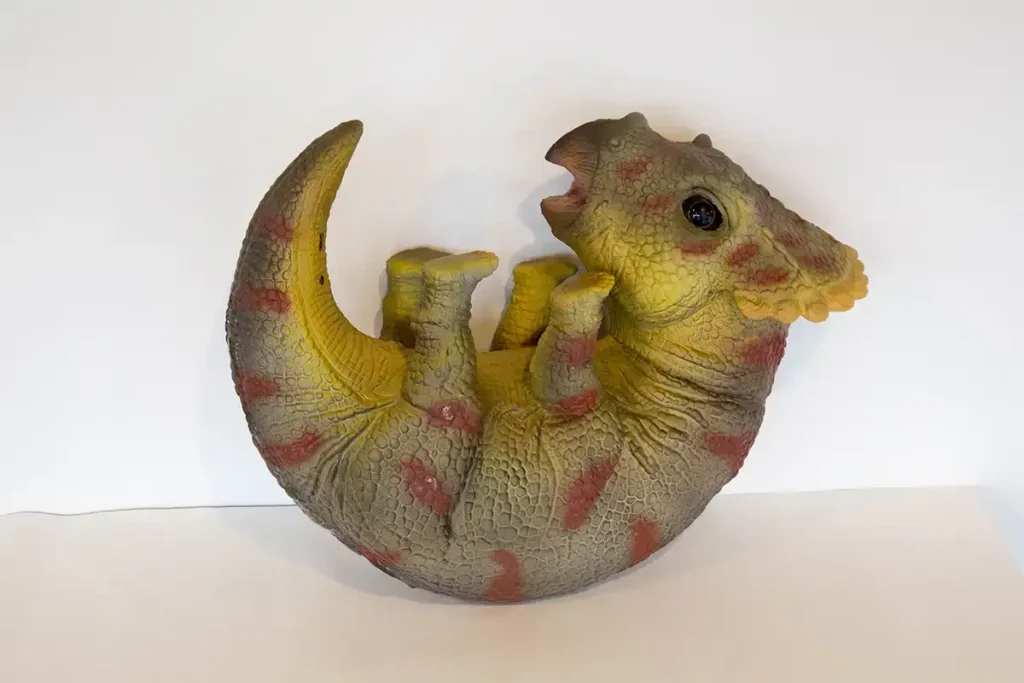
A baby triceratops is a specific shape, and it is not a small adult. The frill is proportionally oversized at this age and still […]
View Product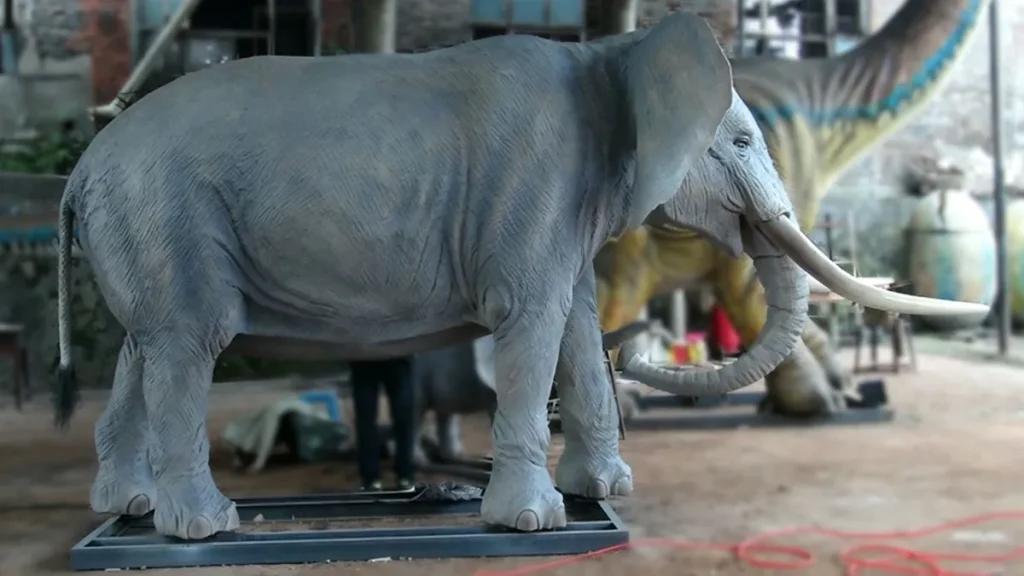
Our animatronic African elephant brings Loxodonta africana to life at full scale — from the deeply wrinkled skin to the independently moving ears and […]
View ProductThree things buyers usually want settled before they ask for a drawing — what drives the number, how the piece is actually built, and what to check between suppliers.
Proximity sensing, touch response and timed shows — what visitors actually do around an interactive exhibit, and how that changes placement and programming.
Read the guide →What Animatronic Products Are Actually Used For Buyers come to animatronic products with one of two jobs in mind, and the job determines almost […]
Read the guide →The procurement process end to end — what you are actually buying, species choice, what moves the price, how to compare factories and what to put in the brief.
Read the guide →Send your dimensions, movement requirements and installation site. You get a realistic budget range and a dated build schedule.
Or email info@hltdino.com — we reply within one business day.