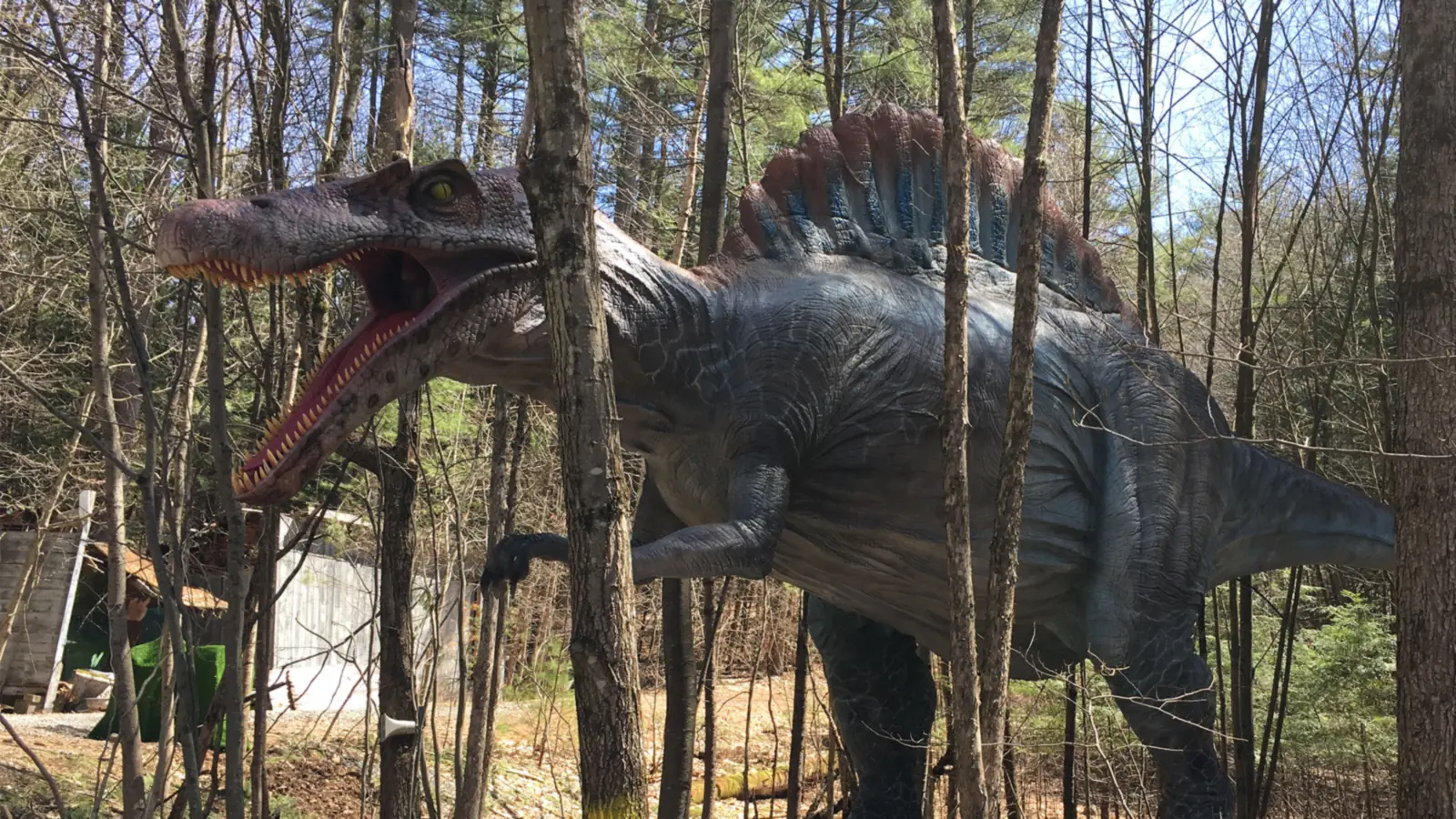
Category · 3 Models
Dinosaur Puppets
Hand and arm puppets with working jaws — manual operation, no power, built for close-up interaction.
3 Models
Custom Size to Order
Indoor & Outdoor Rated
30–45 Day Build
Hand and arm puppets with working jaws — manual operation, no power, built for close-up interaction.
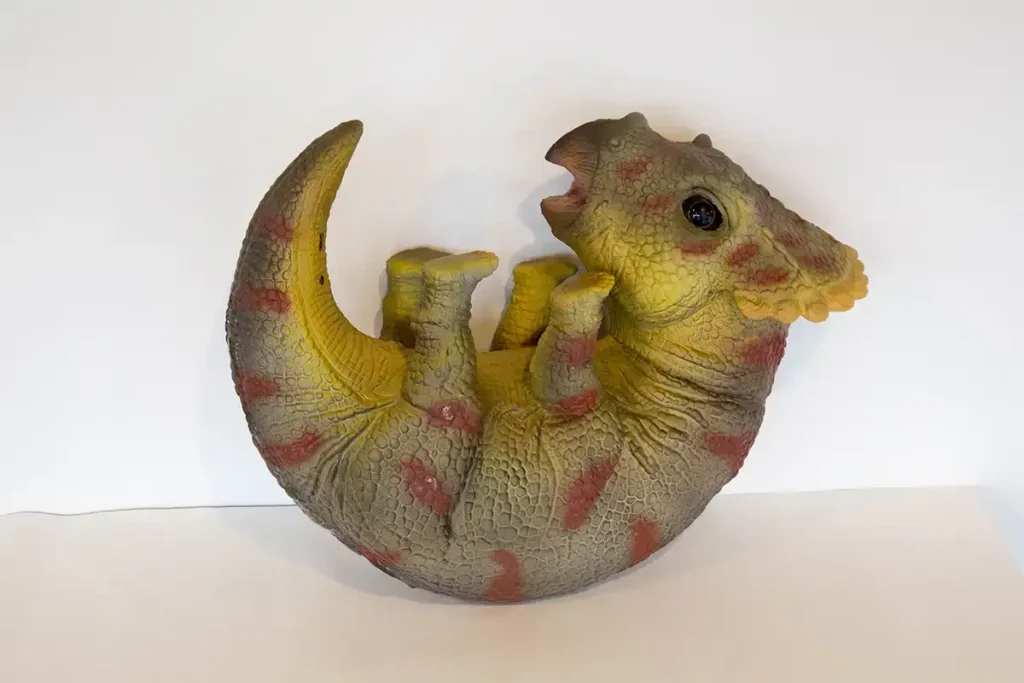
A baby triceratops is a specific shape, and it is not a small adult. The frill is proportionally…
View Product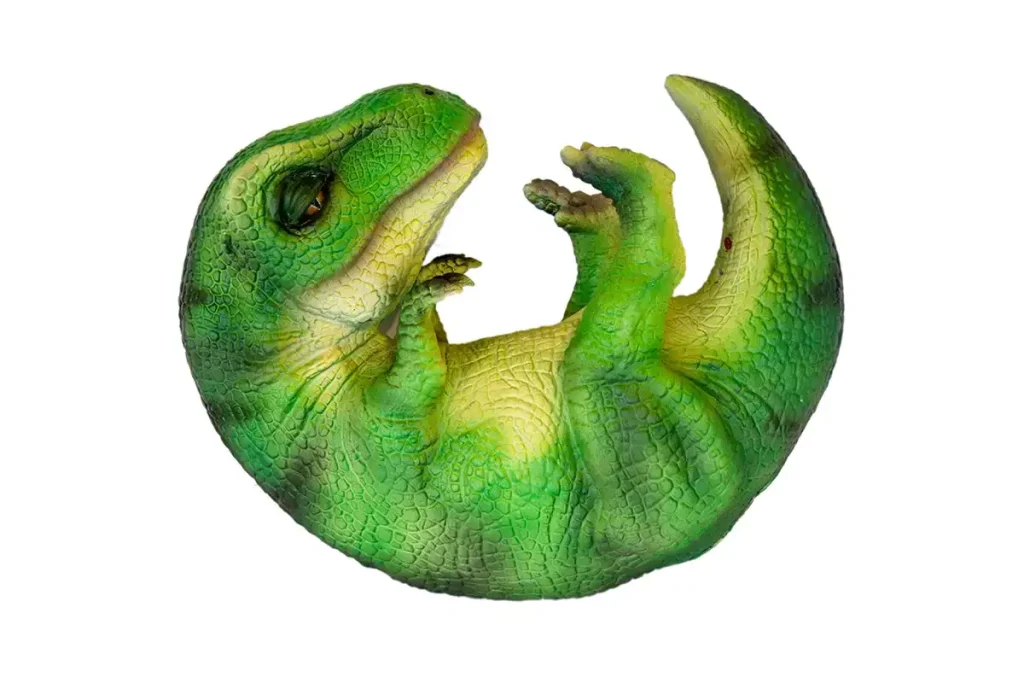
An unidentifiable baby animal is a better interactive piece than a recognisable one, and that is not a…
View Product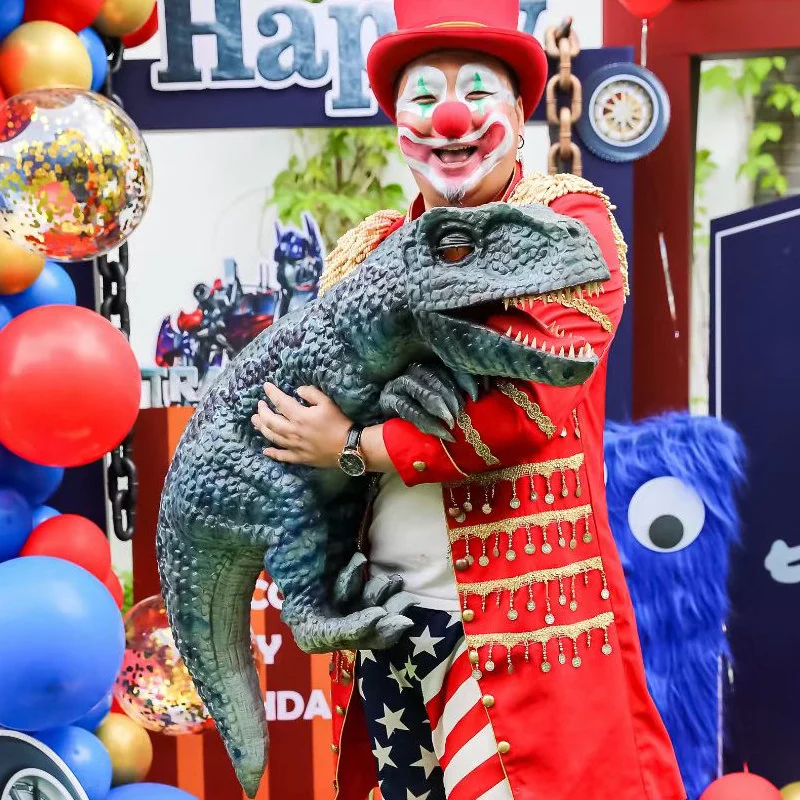
A hairy baby dinosaur is the version children actually want to touch. Not the 8-metre adult with the…
View ProductA baby dinosaur hand puppet is the closest our work gets to a child. No plinth, no barrier, no sensor — the animal is held, and it opens its mouth when the person holding it opens theirs. It is also the cheapest way to put a dinosaur into a school hall, a hospital ward or a shop unit where an 8-metre build would never fit.
The construction is plush hair over a foam core, with the jaw hinged at the back of the skull so a single hand movement produces a wide gape. Teeth are soft-moulded rather than rigid, because the puppet ends up near faces. The eyes are set under a brow, which is what stops a plush animal reading as a toy.
Five settings come up again and again: school science programmes and dinosaur weeks, children's parties where the performer needs to speak as well as perform, retail launches and product promotions, museum touch carts and education tables, and street or festival events where a full costume is too hot or too large to wear for an hour.
Species is the main choice — Triceratops, Stegosaurus, Ankylosaurus, Carnotaurus, Velociraptor, or a custom sculpt. Beyond that: overall size, hair length and colour, eye style, jaw tension, and whether the mouth interior is painted realistically or left plain for retail handling.
Nothing here is electrical. That is deliberate — a puppet with no battery can be used in schools and hospitals without a test certificate, and there is nothing to fail in the middle of a show.
The same questions we answer in email, published openly — sizing, cost drivers, technology and lead times.
The four parts that fail first, the weekly to annual service schedule, the spare kit that prevents closures, and what really sets service life.
Read Article
Planning ranges for power by figure size, what changes when actions are pneumatic, compressor and generator sizing, and the eight numbers worth specifying.
Read Article
Which details actually fail on an outdoor animatronic dinosaur, the IP ratings to specify by zone, and how wind, snow and cabinet placement decide whether it survives year five.
Read ArticleSend us the floor plan and ceiling or canopy clearance. As a rule of thumb, allow 1.5× the model's length as clear space so the movement reads properly and visitors can step back. We model the footprint in 3D before you commit.
30–45 days for the build itself, once drawings and material samples are approved. Add crating, ocean or air freight and on-site installation — you get a dated schedule before the deposit, not after.
Yes, if it is specified for it. Outdoor builds get corrosion-protected Q235 frames and sealed electrical enclosures, rated from −20°C to +60°C. Indoor-only models are cheaper — we will tell you when you do not need the outdoor spec.
An installation manual, wiring diagrams, a spare-parts list and a maintenance guide — plus a 12-month warranty with maintenance support and remote troubleshooting for control and drive issues.
Send us your venue, species list and rough dimensions. You'll get a realistic feasibility read and a ballpark lead time — no pressure, no template replies.
Or email info@hltdino.com — we reply within one business day.