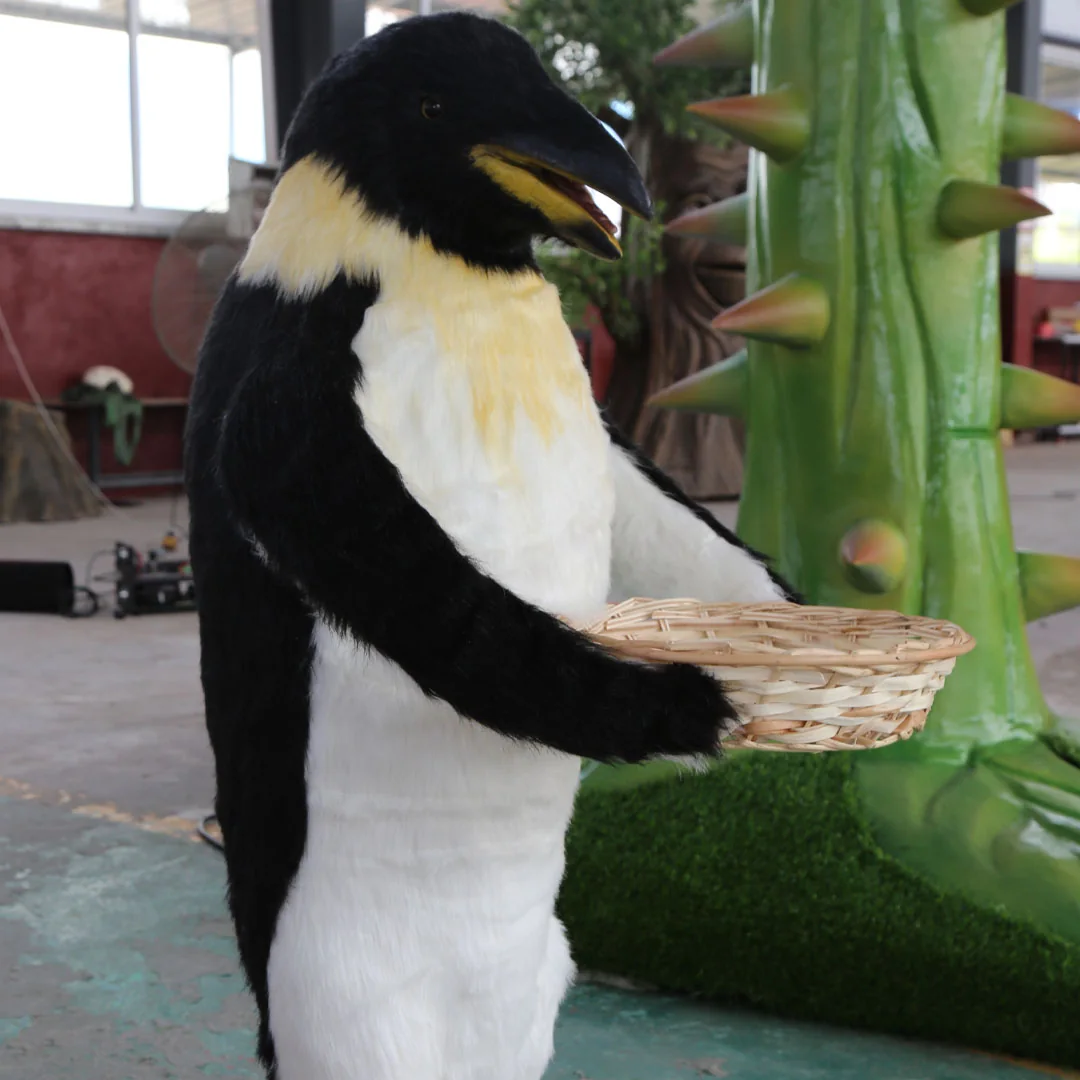
Animatronic Animals
One penguin reads as a toy. Five, at different heights, with one bent over and one mid-waddle, read as a colony — and a colony is what makes an arctic zone feel inhabited rather than decorated. That is the single most useful thing to know before ordering.
| Height | 80 cm to 150 cm, built to order |
|---|---|
| Frame | Weatherproof internal frame |
| Surface | Medical-grade hand-finished plumage |
| Power | 110 V / 220 V AC, 200 W average |
| Installation | Plug-and-play — no commissioning session required |
| Motion | Head turn, flipper, body sway |
| Props | Basket, rocks and nesting material available |
| Duty | Indoor and outdoor |
Eighty centimetres is a small species; 150 centimetres is an emperor. Mixing the two in one display is a mistake — visitors who know penguins will spot it immediately, and the whole group stops reading as a colony.
Pick one species and build the group at that scale, varying the pose rather than the height. Five emperor-height birds with different postures read correctly; a mix of heights reads as a display of models.
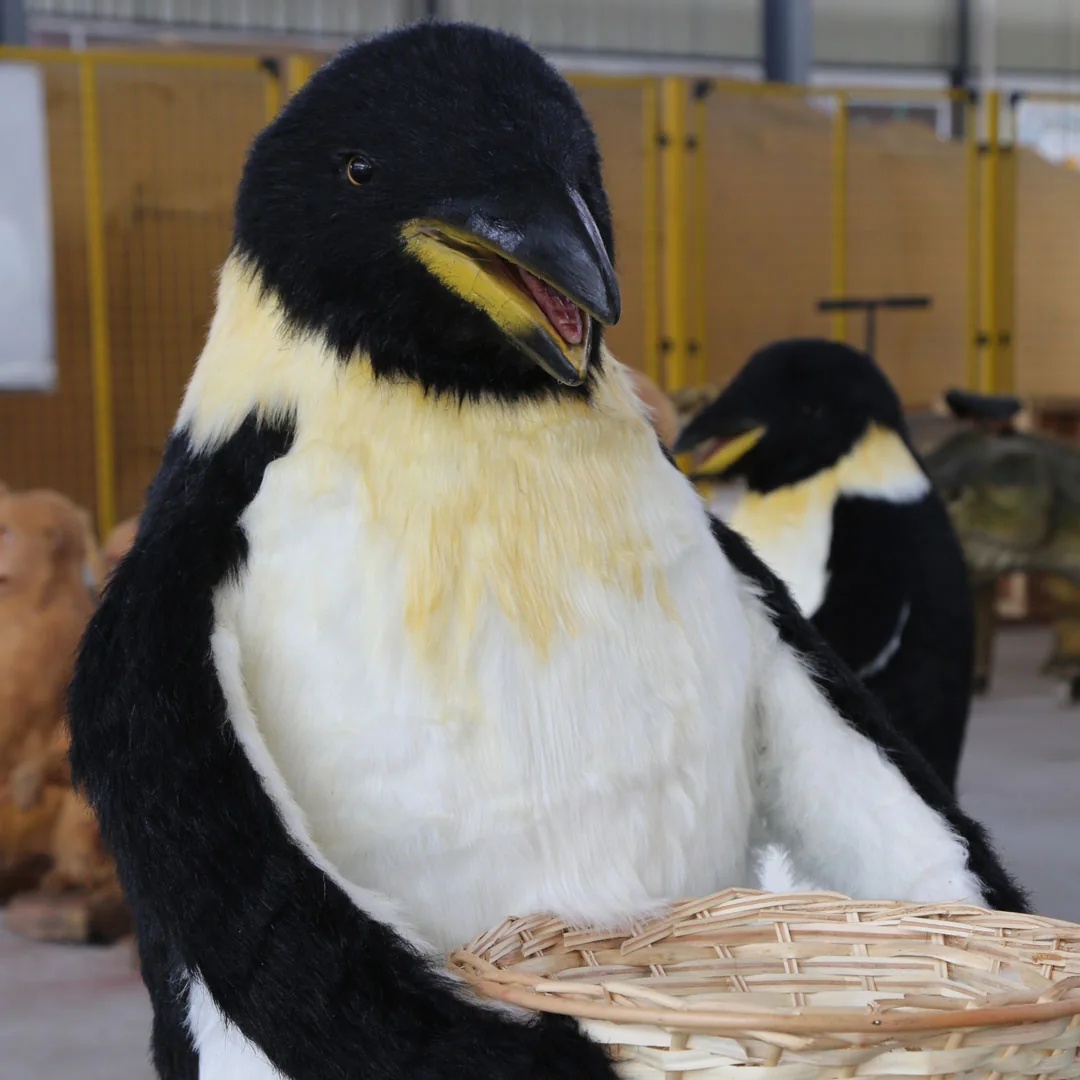
The animation on a penguin is limited — head turn, flipper lift, body sway. What carries the display is the posture: upright, bent forward, mid-waddle, or crouched over a nest. A group where every bird stands upright looks like a row of statues no matter how much the heads move.
Posture is set at production, not on site. Send a reference image of the scene you want and the poses are assigned against it.
The build is weatherproof, and it is used both ways. Indoors it usually sits in a themed zone with artificial ice; outdoors it works on a rock feature or at the edge of a real pool.
One caution on real water: a penguin at the edge of a pool will get splashed, and the salt or chlorine in the water is what ages a finish. The poolside version gets a different surface treatment, so say so at order rather than discovering it a season later.
How many for a display? Five is the minimum that reads as a colony. Three reads as a small group, which is fine for a corner feature.
Can they share one controller? Yes, and they should for a group. Staggered cycles from one controller are what stop the group moving in unison.
Does it need commissioning? No. It is plug-and-play, which is why it is a common choice for smaller zoos without technical staff.
Can the prop be changed? Yes — basket, rock or nest are interchangeable at production. Changing later means a new prop, not a new bird.
200 W each and plug-and-play, so the site work is mostly cable management rather than electrical design. A group of five is one kilowatt, which a single circuit carries comfortably.
The real site question is how the birds are fixed down. At 80 to 150 centimetres they are light enough to be knocked over, and an outdoor display on a rock feature needs each bird anchored rather than simply stood on the surface.
There is not much to it. Each unit is plugged in, the motion level is set, and the group cycles are staggered so no two birds move together.
If the group is going into a themed zone with sound, the audio is set low and against the room. A colony of five birds all calling is the fastest way to make a good display annoying.
Materials. Weatherproof internal frame, medical-grade hand-finished plumage, interchangeable props.
Related. the animatronic animal range, the giant panda, zoo installations, request a quote.
Same factory and the same build standard. What changes is size, movement set and how the exhibit is meant to be used on site.
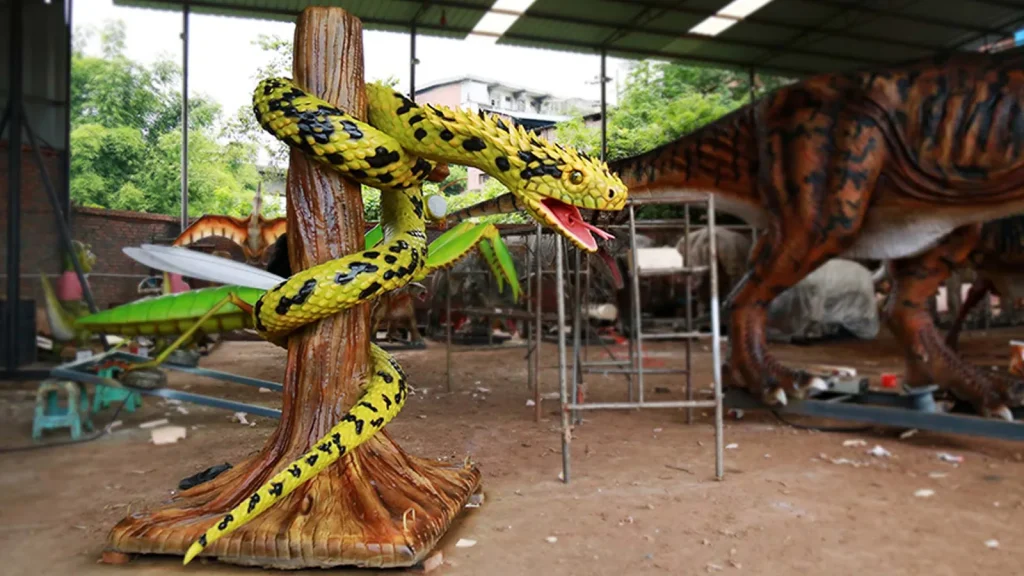
Animatronic python coiled on a branch — individually sculpted scales, flicking forked tongue, coiling motion and hissing audio for biology exhibits.
View Product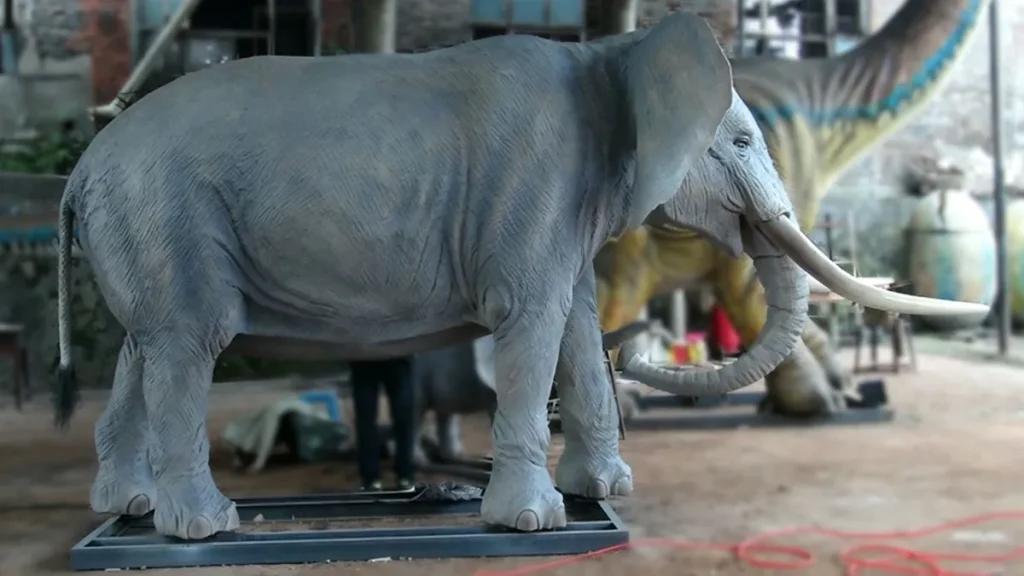
Our animatronic African elephant brings Loxodonta africana to life at full scale — from the deeply wrinkled skin to the independently moving ears and […]
View Product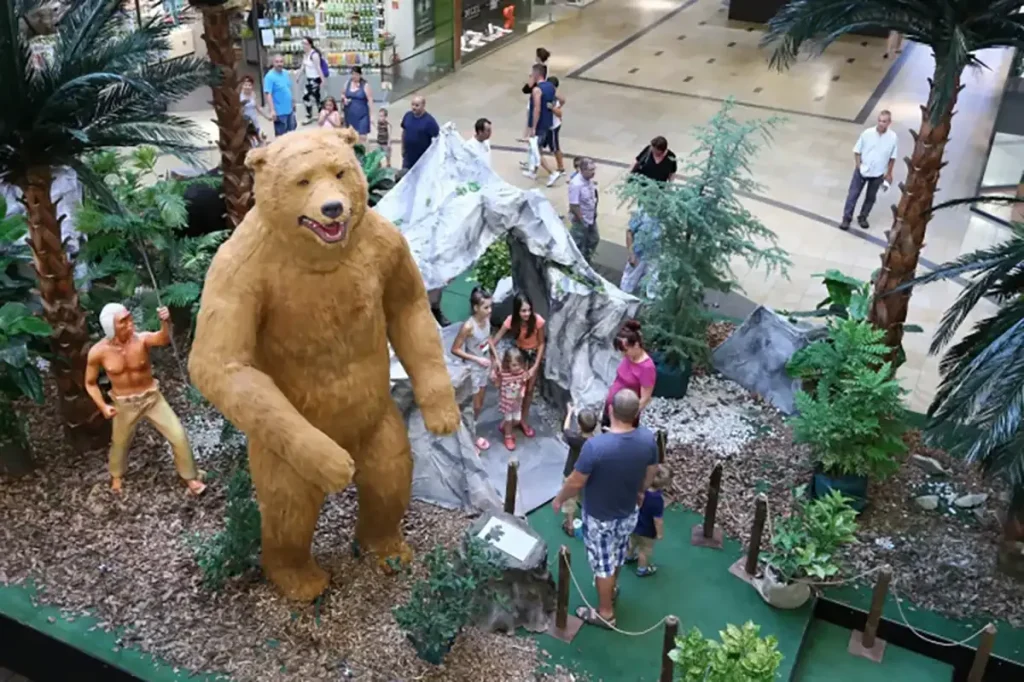
Life-size animatronic cave bear with hand-pasted fur, glass eyes and the heavy Pleistocene stance — for museum dioramas and Ice Age trails.
View ProductThree things buyers usually want settled before they ask for a drawing — what drives the number, how the piece is actually built, and what to check between suppliers.
Extinct and hard-to-keep species, sculpted to anatomy keepers can check — where animatronic animals earn a place beside a living collection.
Read the guide →From fossil reference to finished skin — how proportions, texture, colour and weathering are decided, and what separates a realistic build from a cartoon one.
Read the guide →How Much Does an Animatronic Dinosaur Cost? Understanding the Key Cost Factors If you are planning a museum exhibition, theme park attraction, or promotional […]
Read the guide →Send your dimensions, movement requirements and installation site. You get a realistic budget range and a dated build schedule.
Or email info@hltdino.com — we reply within one business day.