Dinosaur Skeletons & Fossils
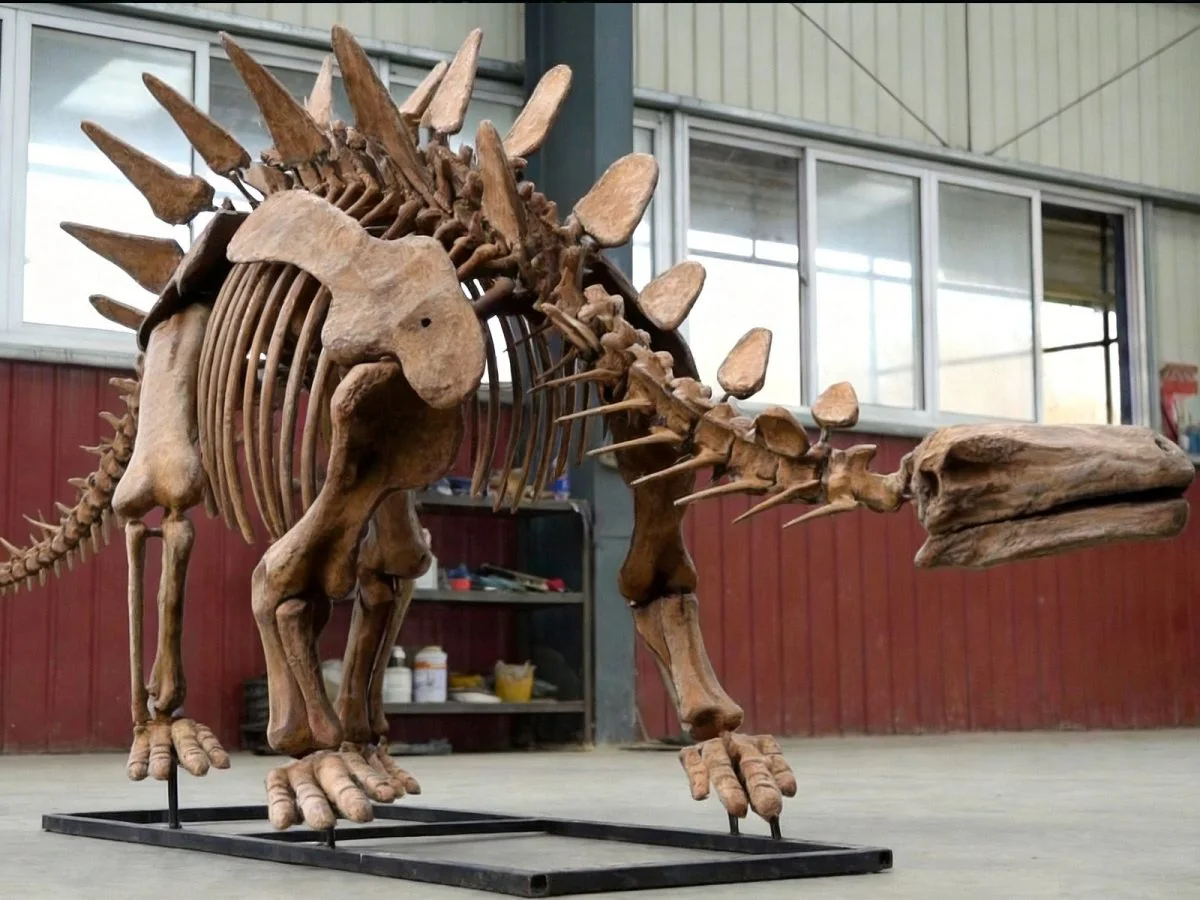
A skeleton is easier to read than a living reconstruction, and harder to get right. With no skin to hide behind, every proportion is on show: a hip that sits too high, a tail that droops, a plate row that reads flat from the side. A Stegosaurus mount has one further problem — the plates are the silhouette, and the silhouette is what visitors recognise from across a hall.
| Length | 9 m |
|---|---|
| Height | 4 m at the tallest plate |
| Bone material | Fibreglass composite |
| Frame | Internal metal support frame carrying the full load |
| Plate line | Offset double row, taken from the fossil arrangement |
| Power | 110 V / 220 V AC, 50/60 Hz |
| Mount options | Floor-mounted as standard; wall or suspended on request |
| Duty | Indoor standard; outdoor specification available |
The length is the easy number to plan around; the height is the one that catches people. Four metres at the tallest plate means the mount needs a hall with five metres of clear height at the position, plus room for the lighting rig above it. A hall that takes a 4-metre mount but has services at 4.2 metres will end up with the plates in shadow, which is the second thing that goes wrong on these builds.
Nine metres also means the animal cannot be viewed from one point. Plan the position so the plate line is seen from the entrance at a slight angle rather than end-on. End-on, a Stegosaurus reads as a wall.
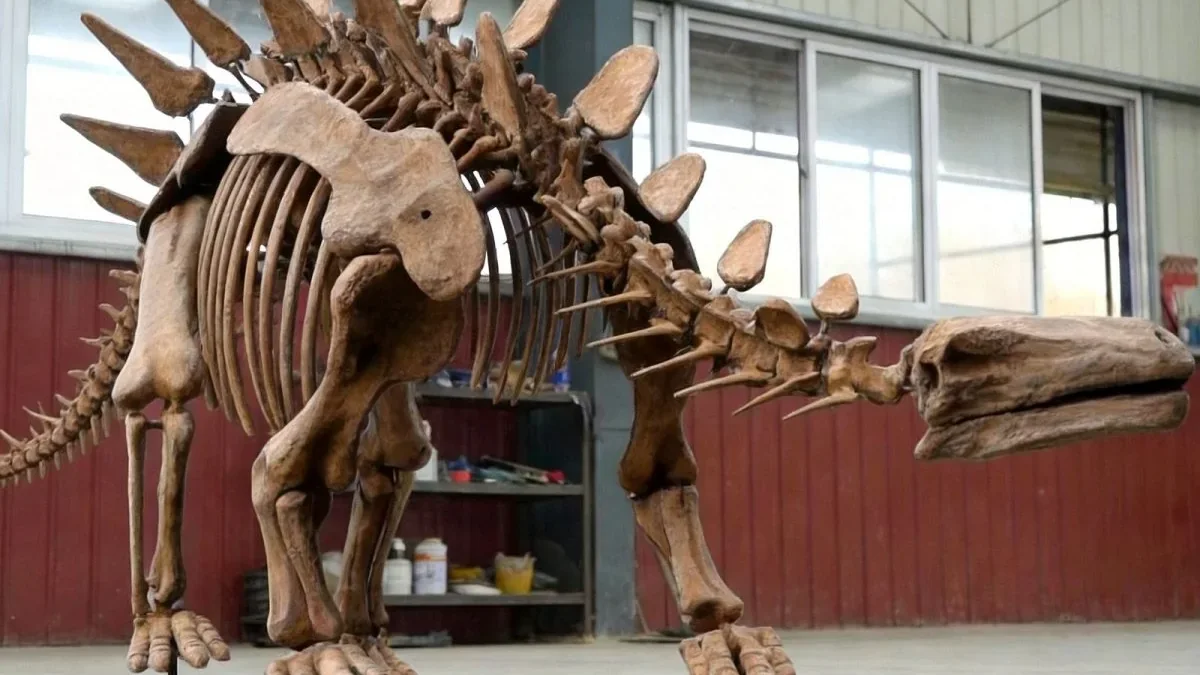
Every bone is fibreglass composite, and none of them carry load. The internal steel frame carries the animal; the castings are shells fixed to brackets. That is what makes a 9-metre mount stable without making it impossibly heavy, and it is also why the frame design is signed off before production starts.
The plate line is the part that needs the most care in transit. Plates are removed for shipping and refitted on site, numbered, with a sequence. On a mount this size the fitting sequence takes a day on its own.
A living reconstruction is lit to show form; a skeleton is lit to show separation. Two lights from opposite sides at a shallow angle give every bone its own edge; a single frontal flood flattens the ribcage into a panel and the mount stops reading as three-dimensional.
If the hall has track lighting, position the mount first and design the track afterwards. Retrofitting a track to a hall that was laid out before the mount arrived is the most common reason a good skeleton looks dull.
Is it a cast of a real specimen? No. It is a reconstruction built from published proportions. We say that plainly because a museum buyer will ask, and the answer matters for how the piece is labelled.
Can it go outdoors? Yes, with the outdoor specification and a different frame treatment. Most orders are indoor because the sun flattens the plate shadows that make the mount work.
How is it assembled? In sections on the steel frame, with numbered joints. A 9-metre mount is normally two to three days on site with a small crew.
Can the pose be changed? The stance is fixed at design. A raised or lowered head changes the frame, so it has to be decided before production.
The electrical load is small — this is lighting and, where fitted, a small head or tail movement. The requirement is a supply at the mount position for the lighting, not a heavy circuit.
The floor is the real constraint. A 9-metre mount on four or six feet puts concentrated loads at each foot, and a raised floor or a mezzanine needs those loads checked before the position is agreed. This is a structural question for the building, not for us, and it is the one that delays installations when it is left until delivery week.
Assembly is the bulk of the visit. The frame goes up first and is checked for level, then the sections are hung and the plate line is fitted against the drawing.
Two things are adjusted at the end: the tail height and the head angle. Both are set by eye against the viewing distance that matters most — if visitors arrive from a doorway twenty metres away, that is the view the mount is tuned for, not the close-up.
Materials. Fibreglass composite bone castings on an internal metal support frame, offset double plate row.
Related. the skeleton and fossil range, the living Stegosaurus build, museum exhibit layout, request a quote.
Same factory and the same build standard. What changes is size, movement set and how the exhibit is meant to be used on site.
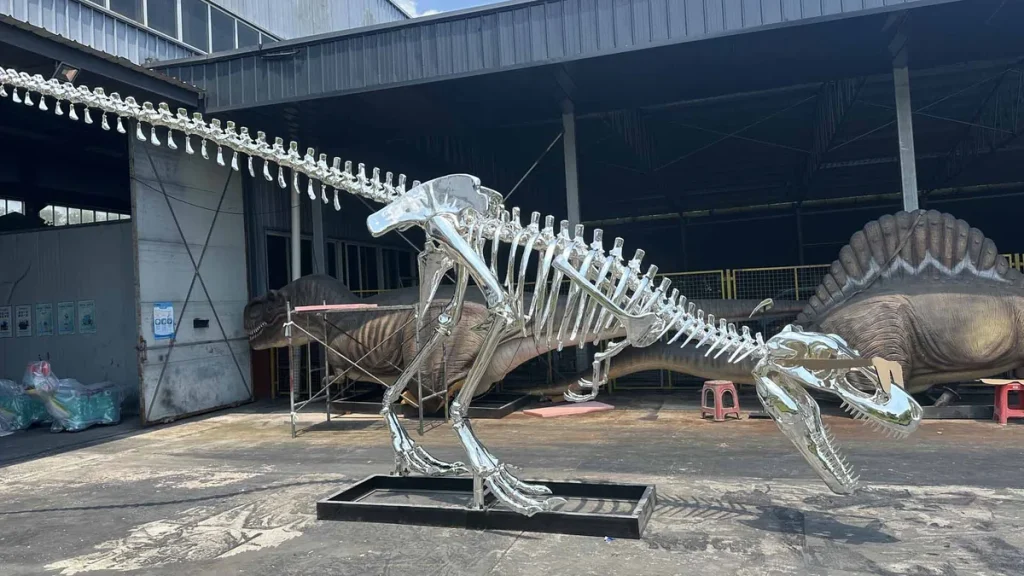
A dinosaur skeleton replica is not a model of bones. It is a steel structure that happens to be dressed in bones, and every […]
View Product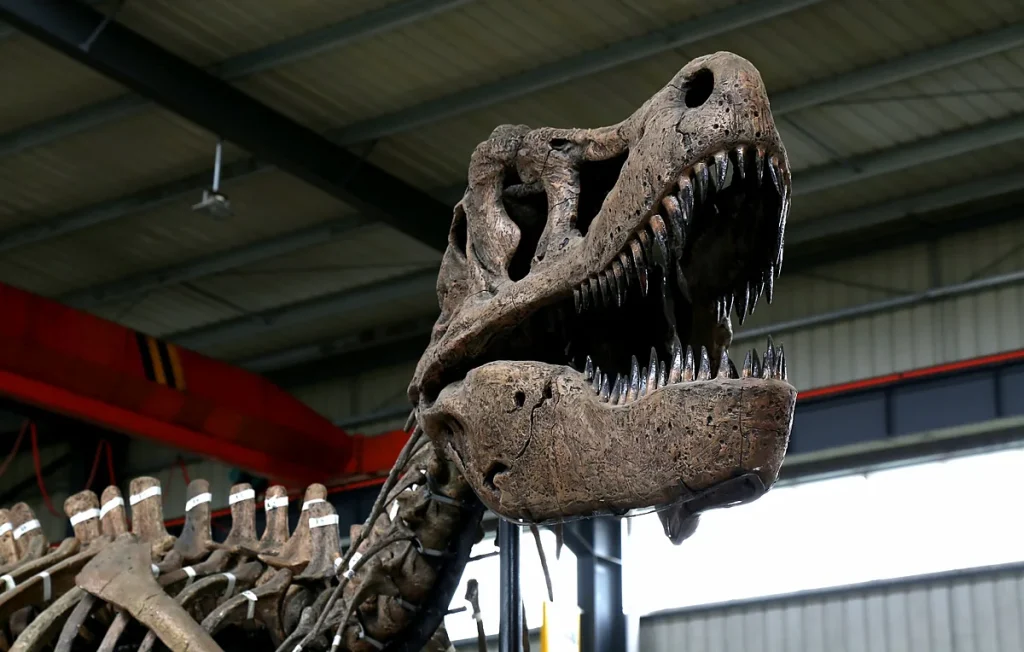
A skull is where most buyers start. It is the cheapest way to own a piece of a T-Rex, it survives a change of […]
View Product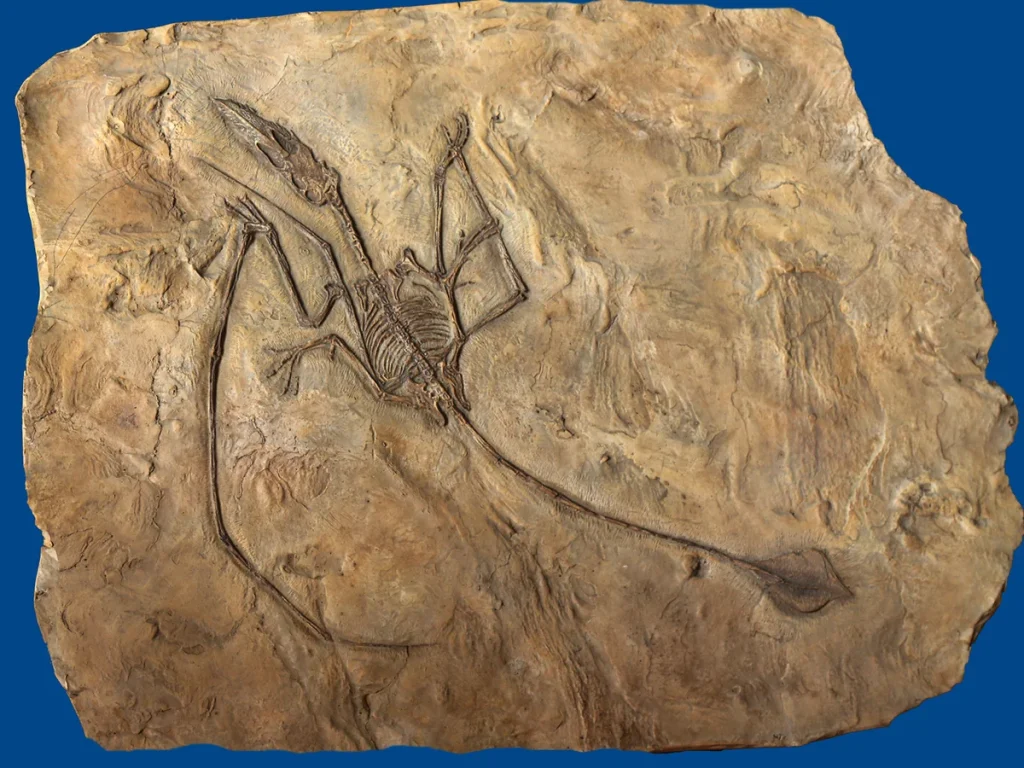
The long-tailed pterosaurs are the ones that look like the drawings everybody remembers: a diamond-shaped tail vane at the end of a long stiffened […]
View ProductThree things buyers usually want settled before they ask for a drawing — what drives the number, how the piece is actually built, and what to check between suppliers.
From fossil reference to finished skin — how proportions, texture, colour and weathering are decided, and what separates a realistic build from a cartoon one.
Read the guide →Frame, drives, skin, sensors, sound and weatherproofing — the six systems behind every animatronic dinosaur, and how each one changes cost and behaviour.
Read the guide →Choosing the right animatronic dinosaurs for your venue is not just about picking the most famous species — it is about matching each dinosaur […]
Read the guide →Send your dimensions, movement requirements and installation site. You get a realistic budget range and a dated build schedule.
Or email info@hltdino.com — we reply within one business day.