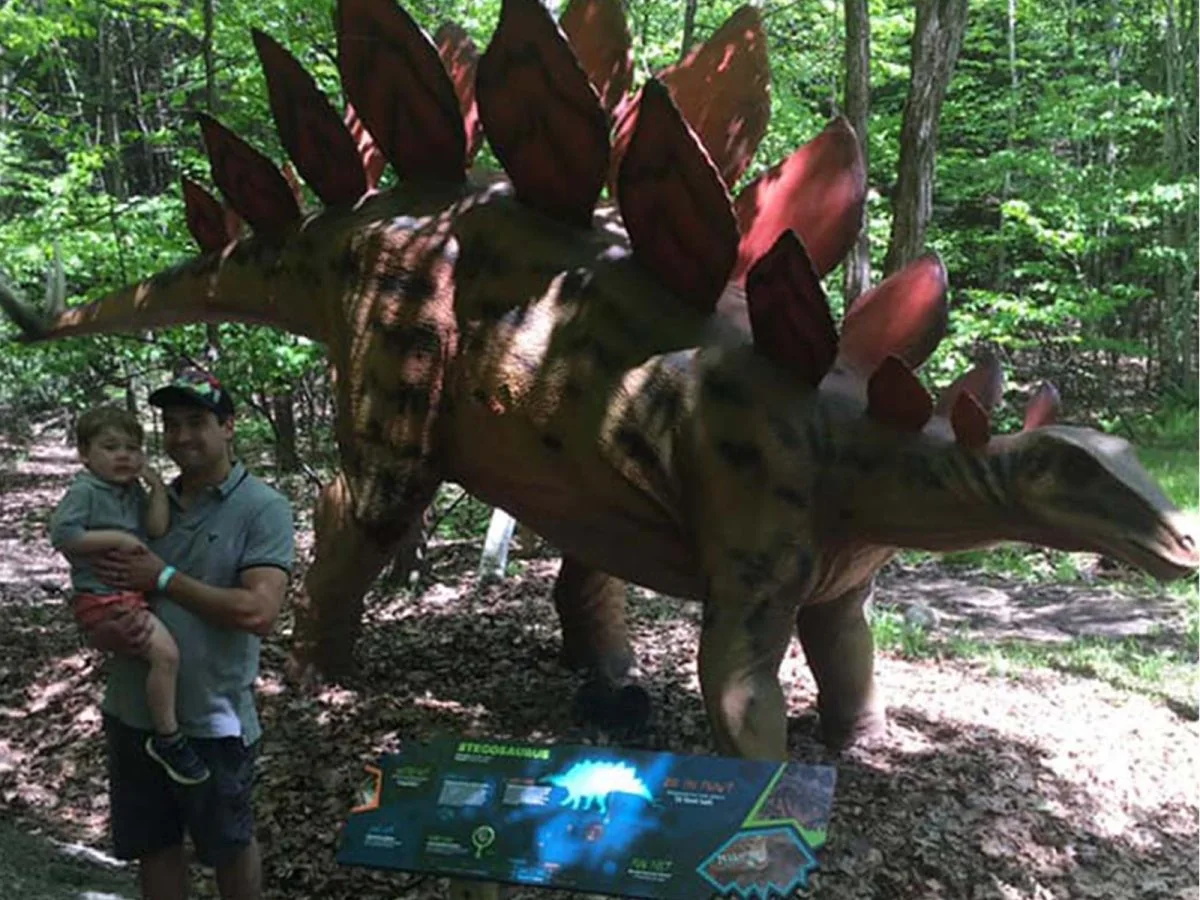
Animatronic Dinosaurs
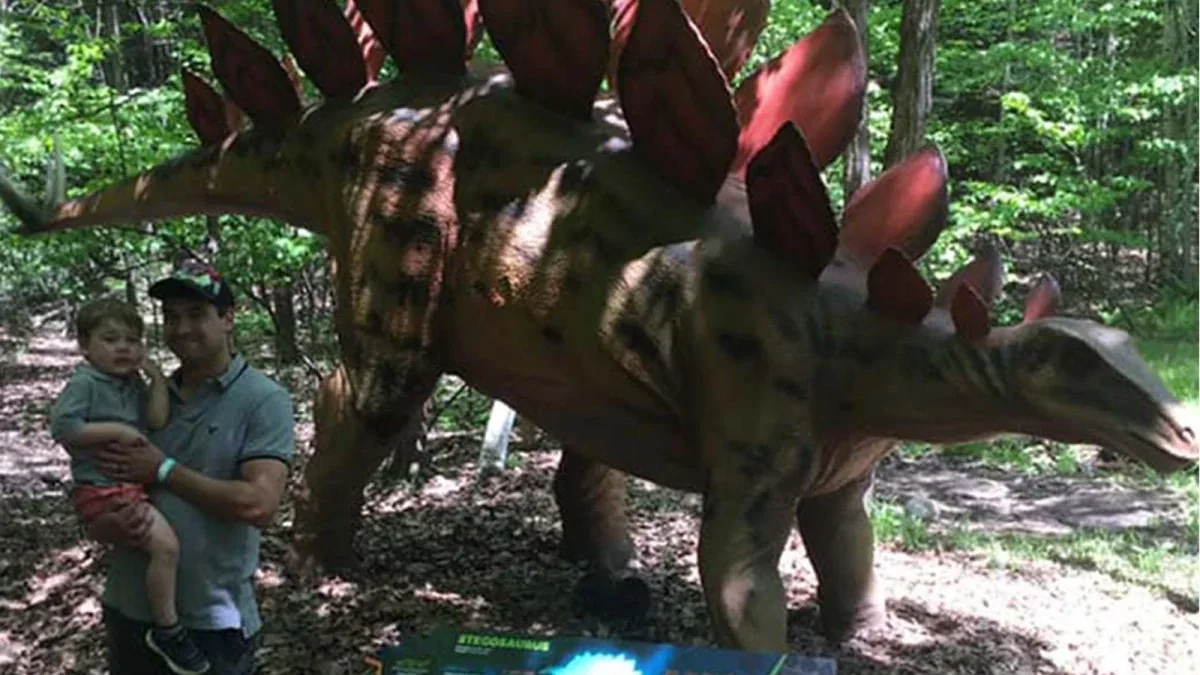
A Stegosaurus is the easiest dinosaur to recognise and one of the harder ones to build. The plates are the reason: a 7-metre animal with a 3-metre plate line has a silhouette that has to read correctly from every angle, and that silhouette is also what makes the animal awkward to ship and awkward to place.
| Dimensions | 7 m long × 3 m high at the tallest plate × 2.2 m wide |
|---|---|
| Weight | 900 kg |
| Surface | High-density hand-finished skin, weatherproof finish |
| Power | 110–240 V AC, 1200 W average / 2000 W peak |
| Plate line | Double row, offset — the arrangement used on the fossil mounts |
| Tail | Thagomizer sweep on its own drive stage |
| Duty | Outdoor exhibit |
| Size | Custom lengths available on the same frame design |
A 7-metre animal does not fit a standard container as one piece, and the plate line is what forces the split. The plates are removed for transit and refitted on site, which means the fixings are the part to specify carefully — a plate that attaches with two bolts and no keyway will be fitted upside down on a wet Tuesday.
We number every plate and supply a fitting sequence with the crate. On a 7-metre build it is a two-day assembly with a small crew and a telehandler, and the sequence is what keeps it to two days.
The average figure is what the animal draws running its normal cycle. The peak is what it draws at the moment the tail sweep and the neck movement start together, and that peak is what the supply has to carry.
On a shared circuit feeding three or four animals, the peaks do not stack in a predictable way. Specify a dedicated circuit per animal, or ask us to stagger the cycle timings so the peaks never coincide. The second option is free at commissioning and is usually the right answer for a trail.
The tail sweep is on its own drive stage and it is the part that decides the clear zone. The animal is 7 metres long, and the tail arc adds roughly a metre and a half behind the body at full extension.
Before the position is fixed, measure the distance from the tail to the nearest walkway, rail or planting. A Stegosaurus placed with the tail over a path will be moved after the first week, and moving it means moving the power drop and possibly the anchors as well.
Is the 900 kg figure the shipping weight? It is the installed weight. Crating adds to it, and the crate split is what the delivery plan is built around.
Can the plates be made lighter? Yes, at a cost to how they read in strong sunlight. The standard build is specified for outdoor exhibition rather than for handling.
Does the tail need a guard? On a public trail, yes — a low rail at the rear arc keeps visitors out of the sweep without hiding the animal.
Can it be supplied at a smaller size? Yes, and 5 to 6 metres is common for indoor halls where 3 metres of plate line will not clear the ceiling services.
The site requirement is a dedicated 110–240 V circuit at the animal with capacity for the 2000 W peak, plus drainage at the base. A 900 kg body sitting on a paved surface holds water underneath it, and standing water at the base is what shortens the life of a supposedly outdoor build.
If the animal is going onto grass or soil, the base needs a hard standing rather than direct ground contact. This is the single most common site mistake on large outdoor pieces and it is invisible until the second season.
The plate line is fitted first and checked against the drawing, then the animation is run through a full cycle with the tail sweep measured to its furthest point. The clear zone is marked on the ground while the animal is running, not from a drawing.
Two settings are made on site: the cycle timing, and whether the sensor is active. A Stegosaurus on a trail is usually set to run on a fixed cycle rather than on a trigger, because the animal is large enough that visitors approach slowly and a trigger adds nothing.
Materials. High-density hand-finished skin with weatherproof finish, internal steel frame, thagomizer on a dedicated drive stage.
Related. the animatronic dinosaur range, the Stegosaurus skeleton replica, theme park installations, request a quote.
Same factory and the same build standard. What changes is size, movement set and how the exhibit is meant to be used on site.
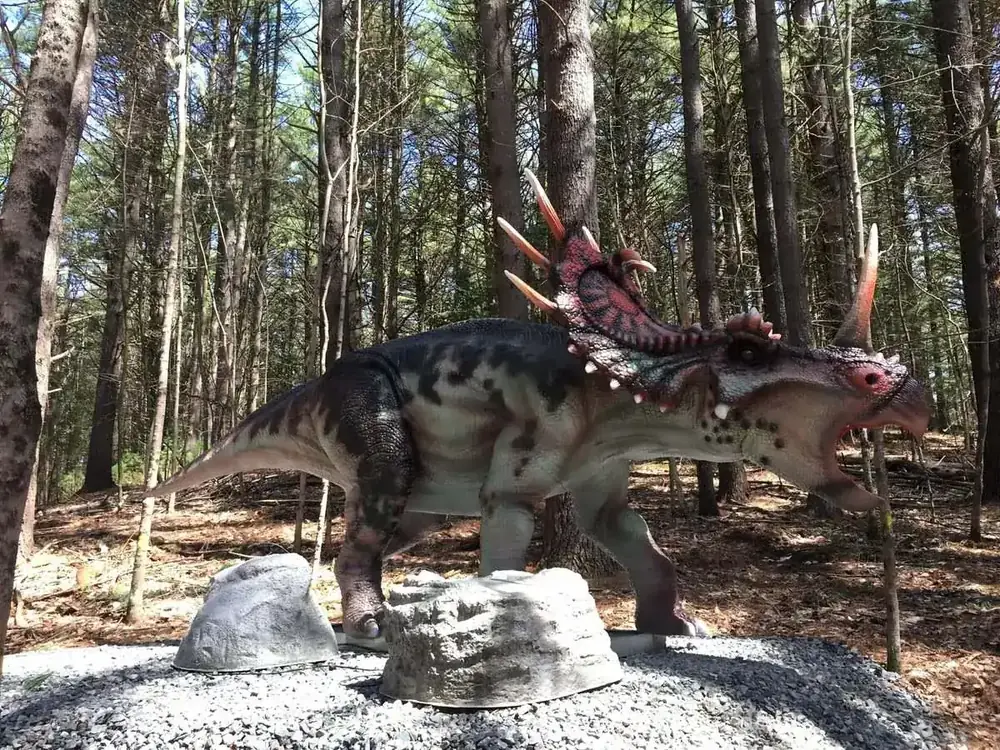
Styracosaurus gets mistaken for a Triceratops more than any other animal in the catalogue, and the mistake is worth correcting because it is the […]
View Product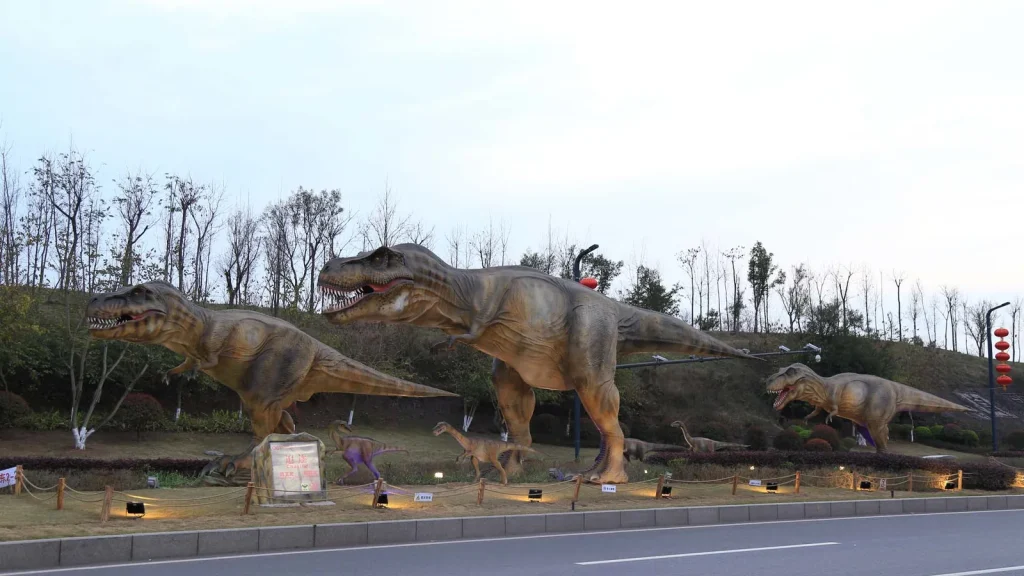
A life-size animatronic T-Rex built to your dimensions — 4–12 m body length, six to twelve motion axes, sensor or remote control.
View Product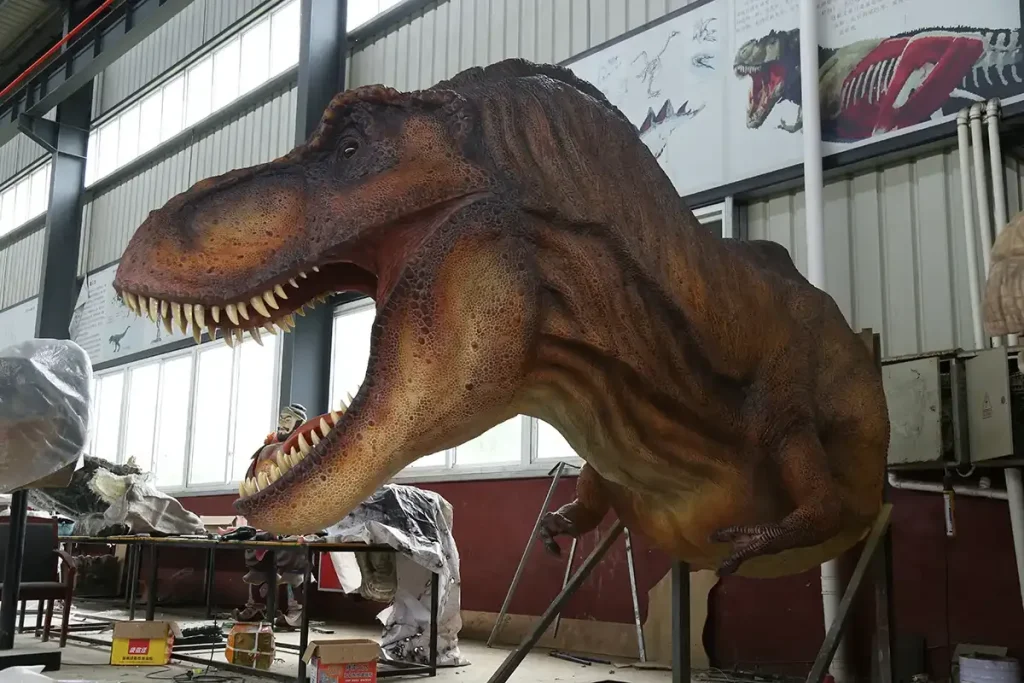
Gesture-responsive T-Rex that reads hand movement and approach speed — every visitor gets a different reaction. Indoor or outdoor, built to order.
View ProductThree things buyers usually want settled before they ask for a drawing — what drives the number, how the piece is actually built, and what to check between suppliers.
Animatronic Dinosaur Buying Guide for Museums & Theme Parks Choosing the right animatronic dinosaur for your museum, theme park, or zoo is one of […]
Read the guide →From fossil reference to finished skin — how proportions, texture, colour and weathering are decided, and what separates a realistic build from a cartoon one.
Read the guide →Why Motor Choice Matters More Than Buyers Expect Motor selection is usually treated as a manufacturing detail. It is not. It is the decision […]
Read the guide →Send your dimensions, movement requirements and installation site. You get a realistic budget range and a dated build schedule.
Or email info@hltdino.com — we reply within one business day.