Dinosaur Rides
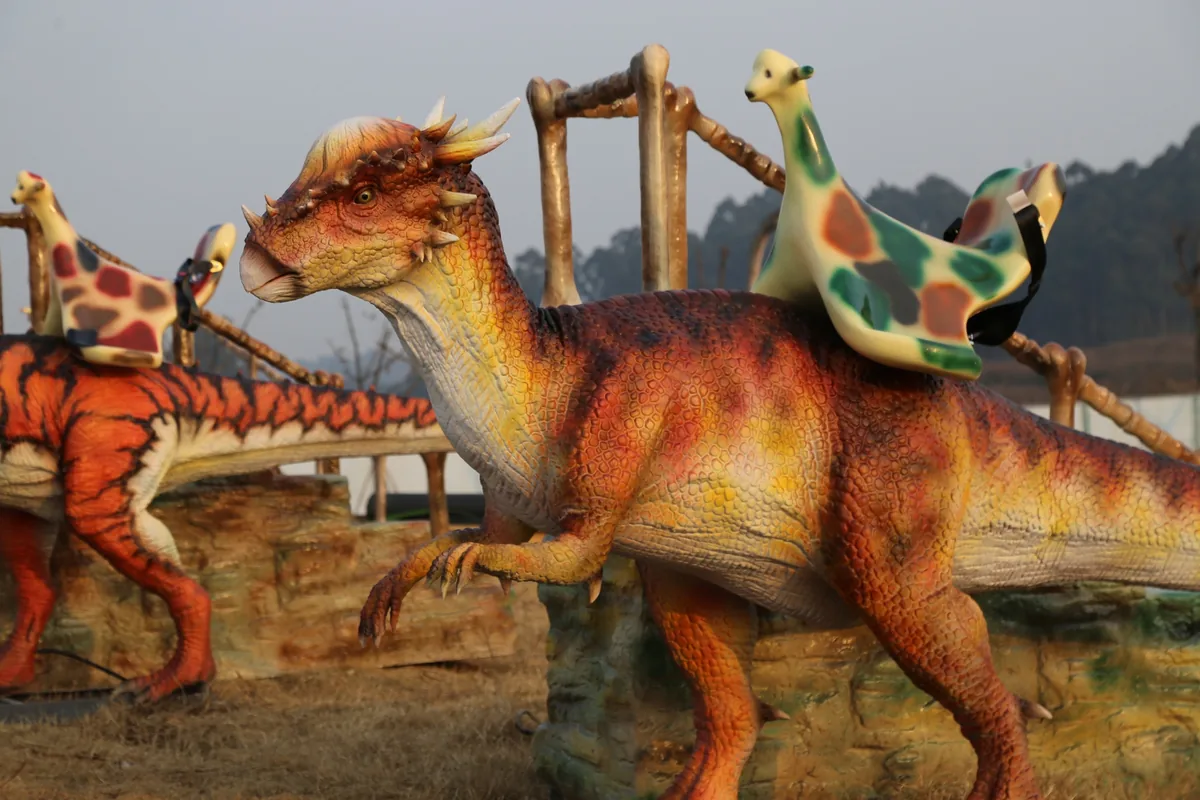
The Pachycephalosaurus is the quiet one. A low-noise drive, a soft-skinned body and a motion set that rocks rather than swings — this is the build for a shopping centre with flats above it, where a noise complaint is a lease problem rather than an irritation.
| Overall size | 3.5 m long × 1.2 m wide × 2.2 m high, saddle included |
|---|---|
| Rider weight | Up to 80 kg |
| Rider age | 3 to 12 years |
| Motion | Low-noise electric drive — forward/back rock and rise/fall |
| Audio | Pachycephalosaurus call plus ambient sound bed |
| Trigger | Infrared sensor — head shake and tail swing on approach |
| Safety | Overload cut-out, emergency stop button, foam-wrapped skin |
| Control | Remote or automatic cycle |
| Body | High-density foam with silicone skin over glass fibre |
Most ride mechanisms are quiet at the motor and loud at the mechanism: the noise comes from the gear train and from the body panels moving against each other. On this build the drive is a low-noise unit and the motion is a rock rather than a swing, which keeps the panel movement small.
If the ride is going into a mall with offices or flats above, ask for the quiet specification in writing at order. It is a different drive and a different motion programme, and it cannot be retrofitted by turning the volume down.
The domed skull is the identifying feature and also the part children reach for. The dome is moulded with the head and the spikes around the eye and neck are part of the same casting, so there are no small pieces to work loose.
Spikes are the first thing to design out on a ride that small children will touch. Ours are blunt-tipped and flexible at the tip, which is a deliberate departure from the fossil-accurate profile — the animal is not going into a museum.
The saddle is a non-slip textured surface with a handhold on each side, and the edges are radiused rather than cut. That detail matters more than it sounds: a sharp saddle edge and a child in shorts is how a ride gets closed for a week.
Overload cut-out and an emergency stop are standard on this build rather than options, because the rider age band starts at three.
How quiet is it in practice? Quieter than the ambient level of a trading mall. If the site has a specific decibel limit, send it and we will confirm against the drive spec before quoting.
Can the motion be reduced further? Yes. The rock amplitude is a programme setting and can be lowered at commissioning.
Does it need a dedicated operator? No. The automatic cycle runs unattended; the parent supervises.
Can it go outdoors? Yes, but the quiet drive is wasted there. Outdoors, order the standard drive and put the money into the coat instead.
This is a fixed 220 V build with no battery option, so the power point is part of the site plan rather than an afterthought. A single supply at the ride position is enough; the draw is modest because the motion is a rock rather than a swing.
The floor matters more than the supply on this unit. A rock on an uneven floor translates into a wobble, which riders notice and which loads the base unevenly. If the site is a tiled mall floor, check for hollow tiles under the ride position before installation — a tile that compresses under the base will produce a knocking noise that sounds like a fault.
If the ride is going above a tenanted floor, confirm the noise requirement in writing at order. The quiet drive is a different specification, and it is the difference between running a full day and being asked to close at eight.
The unit arrives assembled and the commissioning visit is short. The rock amplitude is set first — lowered for sites with very young riders, and left at standard where the audience is mixed.
The infrared sensor is then aimed and ranged against the actual approach. On this build the sensor triggers a head shake and a tail swing rather than a call, so the aim is set to catch visitors at the point where they look at the ride rather than the point where they reach it.
The safety chain is tested in front of the operator: overload cut-out, emergency stop, and the manual reset after a cut-out. The reset is the part that gets forgotten in training and is the reason a ride sits dead for an afternoon when it could be running.
Materials. High-density foam body with silicone skin over glass fibre, non-slip saddle, low-noise electric drive.
Related. the full ride range, mall installations, the Dilophosaurus ride, request a quote.
Same factory and the same build standard. What changes is size, movement set and how the exhibit is meant to be used on site.
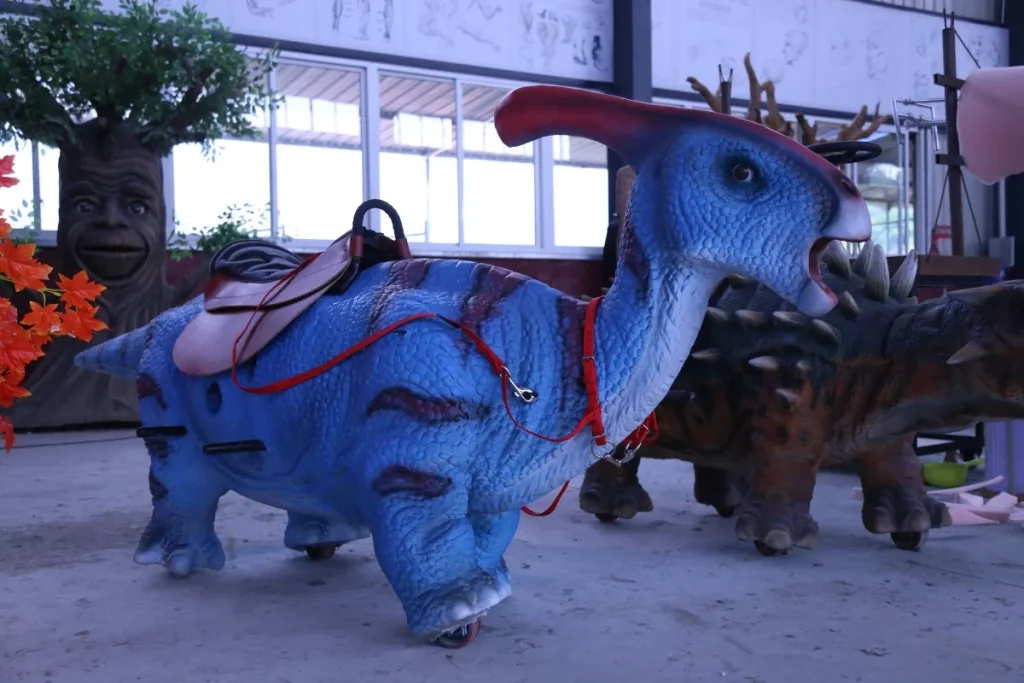
This is the small one in the fleet, and in a shopping mall it is usually the unit that earns. A 1.6-metre Parasaurolophus on […]
View Product
Most children’s rides in a park are the same three things: a horse on a pole, a car on a track, a rocker. They […]
View Product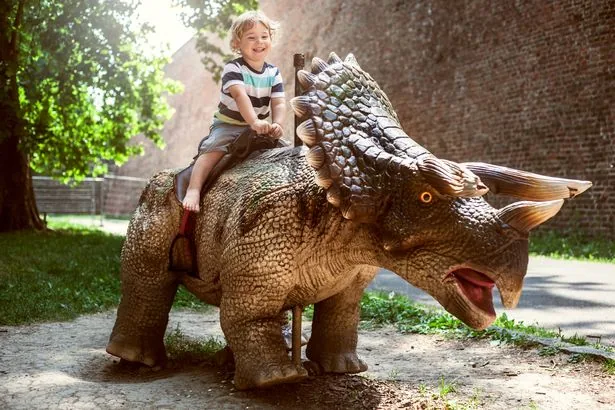
Every child recognises a Triceratops before they can name one. Three horns and a neck frill is the most legible silhouette in the dinosaur […]
View ProductThree things buyers usually want settled before they ask for a drawing — what drives the number, how the piece is actually built, and what to check between suppliers.
What Animatronic Products Are Actually Used For Buyers come to animatronic products with one of two jobs in mind, and the job determines almost […]
Read the guide →Which drive system actually suits an animatronic dinosaur? A factory-side comparison of force, precision, noise, maintenance and weather.
Read the guide →If you are planning a museum exhibition, theme park attraction, or shopping mall event, you have probably asked this question: How much does a life […]
Read the guide →Send your dimensions, movement requirements and installation site. You get a realistic budget range and a dated build schedule.
Or email info@hltdino.com — we reply within one business day.