Dinosaur Rides
Most children’s rides in a park are the same three things: a horse on a pole, a car on a track, a rocker. They work, and children outgrow them in about ninety seconds. An animal that children already recognise — and that reacts to them — holds attention longer, and that dwell time is the whole commercial argument.
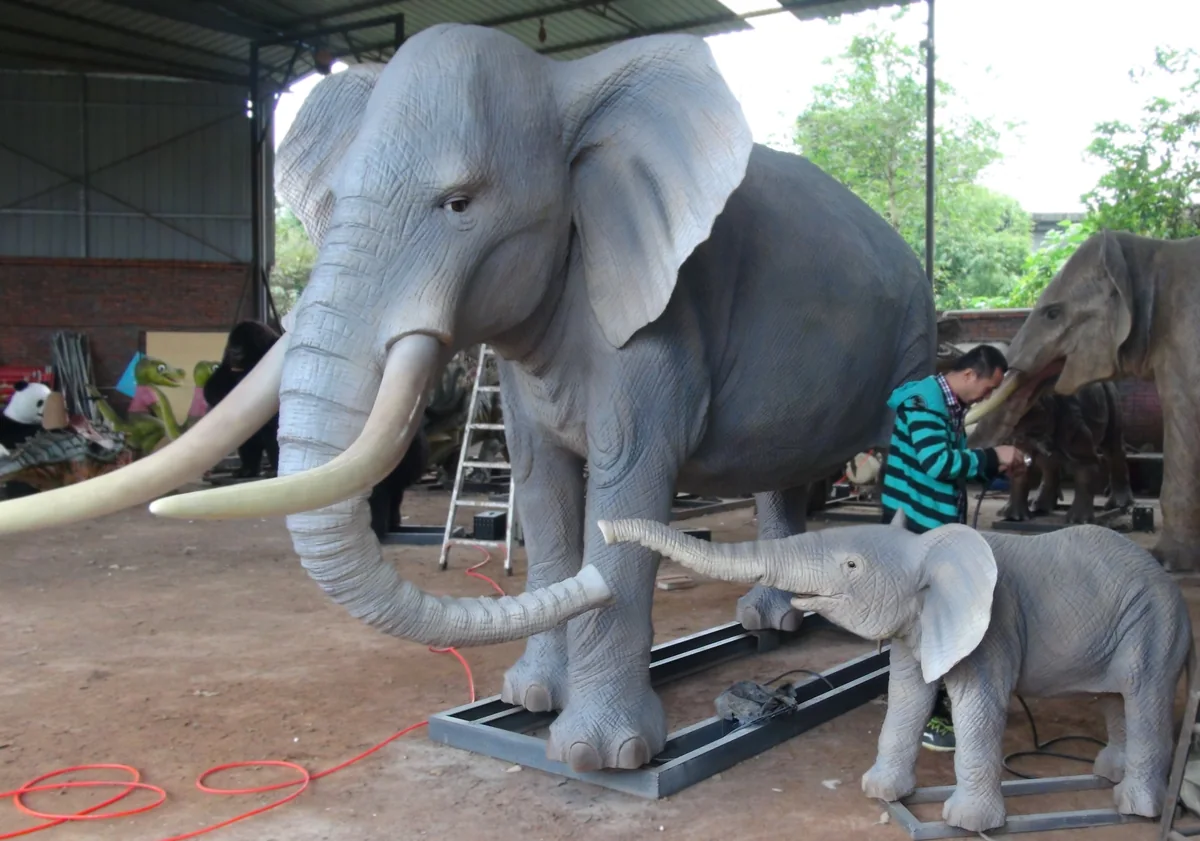
This is a ride-on baby elephant, sized for children, with a steel frame rated to 80 kg at the saddle position, articulated head, ears and trunk, and a control mode that suits either an attendant or a coin mechanism.
| Species | Elephas maximus — juvenile Asian elephant |
| Era | Modern, extant species |
| Type | Ride-on animatronic, single saddle, attendant or coin operated |
| Size | 1.6–1.9 m at the shoulder, 2.0–2.4 m long; saddle height 0.9–1.1 m |
| Material | Reinforced steel frame, high-density foam body, patented silicone skin (ZL 2022 1 0224489.5) |
| Surface | Hand-painted UV-resistant pigment, child-safe non-toxic finish |
| Animation | Head turn, ear flap, trunk lift and curl, jaw, tail sway |
| Sound | Juvenile elephant trumpet and rumble, volume capped at commissioning |
| Power | 110/220 V AC; optional coin mechanism or attendant remote |
| Installation | Level surface, no anchoring needed for supervised use; 2 technicians, half a day |
| Customisation | Body colour, saddle style, ride duration, coin or free play, branding plate |
| Support | 12-month warranty; saddle pad and footrests field-replaceable |
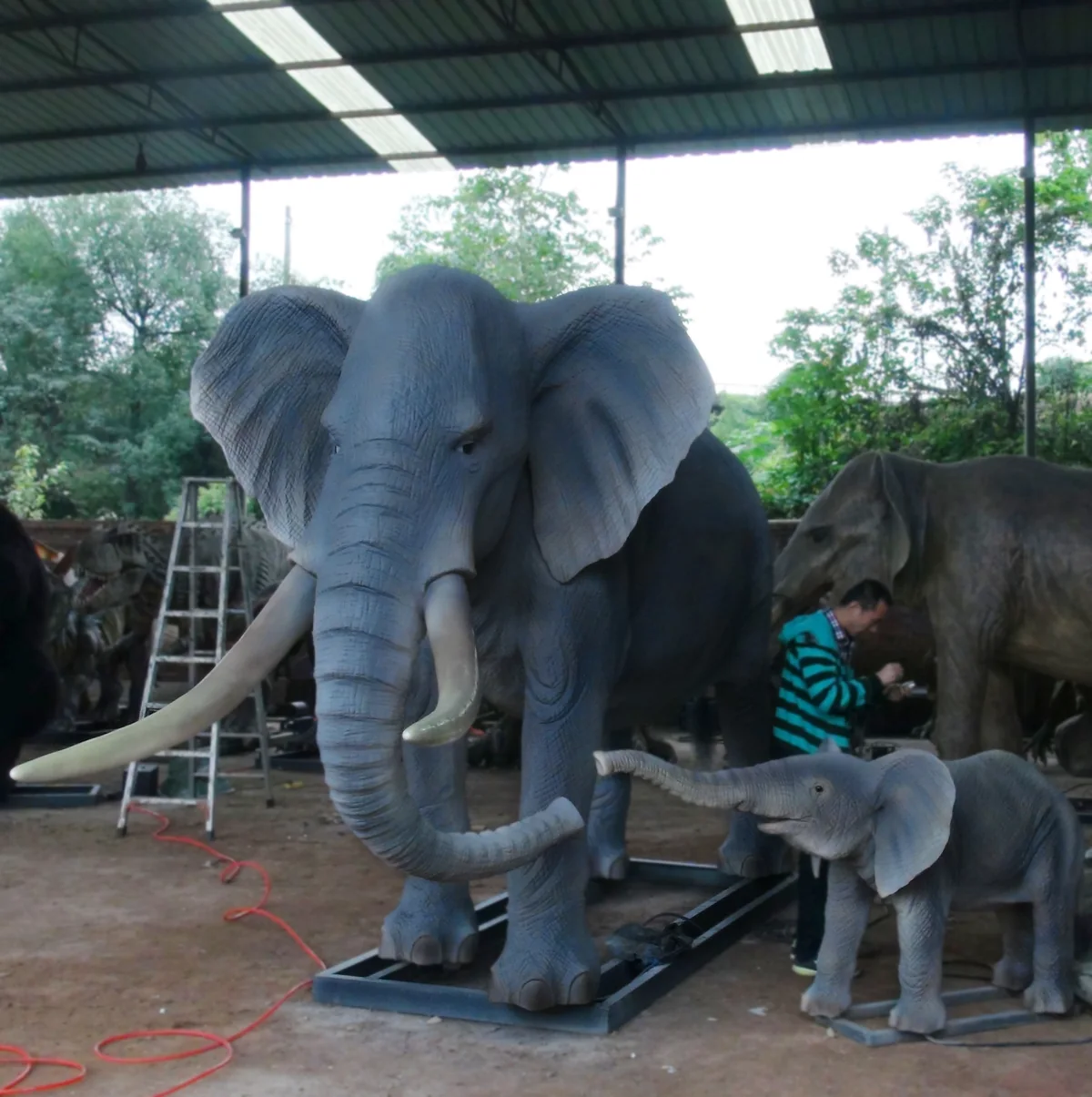
A 1.6–1.9 m elephant at child scale is still carrying a rider plus the dynamic load of a child swinging on and off. The saddle load path runs down through the spine to the legs and into the floor, and that path is a welded steel subframe inside the foam — not the body shell itself.
This is what separates a ride-on from a display piece. A display animal of the same size has no load case at the saddle; a ride-on has one every ninety seconds for a whole season. The frame is heavier and the base is wider, and neither of those is visible once the skin is on.
Children get on because it is an elephant, but they remember the trunk. Ours lifts and curls on a separate axis, so it can reach toward the child’s hand rather than only swinging. That one movement is what produces the photograph and the second ride.
The trunk is also the part that takes the most accidental load — children grab it. It is built on a sprung steel core rather than a rigid arm, so it deflects under a pull and returns, instead of setting into a bent position after a season of being used as a handle.
Attendant operation means a member of staff controls duration and can stop the ride instantly. For a supervised children’s zone that is usually the right choice, and it removes the coin mechanism as a maintenance item entirely.
Coin operation removes the staff requirement and adds a mechanism that has to be emptied, cleared and repaired. On a high-traffic site the revenue case is straightforward; on a quiet site the mechanism spends more time jammed than earning. Most operators know which of those their site is.
Four things are fixed regardless of specification: a saddle with a raised front lip and footrests that a child’s foot cannot slide past, no pinch points at the joint covers, low-voltage DC control circuits, and a speed and travel limit set at commissioning and capped inside the controller.
The surface is finished in child-safe non-toxic paint over sealed silicone, which also means it wipes clean — worth specifying on any piece that small hands will be on all day.
It suits a covered or indoor position in a children’s zone, a family queue area, or a retail entrance where parents are stopping anyway. It does not suit a fully exposed outdoor position unless specified for it — the standard build is for covered use, and the outdoor version is a different skin and enclosure specification.
Siting it near seating is the small decision that changes the numbers. A ride piece with nowhere for a parent to stand and wait gets one ride; the same piece beside a bench gets three.
Roughly three to eight years, with the 80 kg saddle rating being the practical limit. Above that age children tend to want a larger ride with more movement, which is a different product.
Yes, as a separate specification with a sealed skin and a weatherproof control enclosure. The standard build is for covered positions; putting a covered-use piece outdoors shortens its life and is not covered by the 12-month warranty.
The sealed silicone surface wipes with a mild detergent and water. Avoid solvent cleaners on the painted areas, and keep water out of the joint covers — the head and trunk joints are the two places that matter.
Yes, at the controller. Coin mechanisms usually run a fixed cycle set by the mechanism, while attendant operation allows any duration. Decide the operating model first, because it determines which controller is fitted.
Same factory and the same build standard. What changes is size, movement set and how the exhibit is meant to be used on site.

Every child recognises a Triceratops before they can name one. Three horns and a neck frill is the most legible silhouette in the dinosaur […]
View Product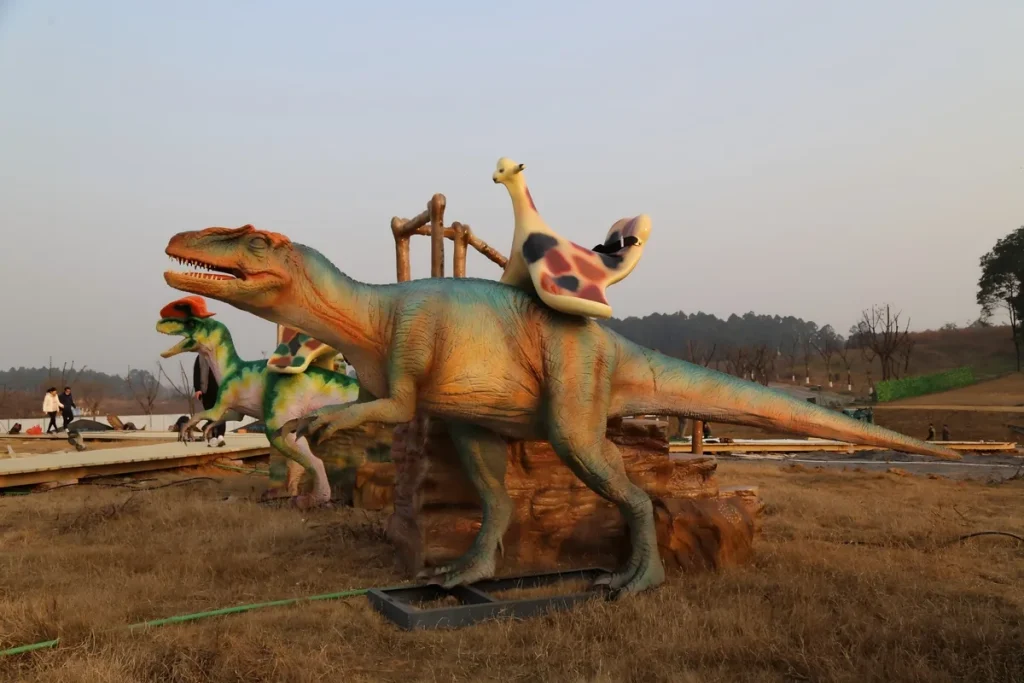
The Allosaurus is the only unit in this range rated for a rider over 100 kg, and that single number changes who can sit […]
View Product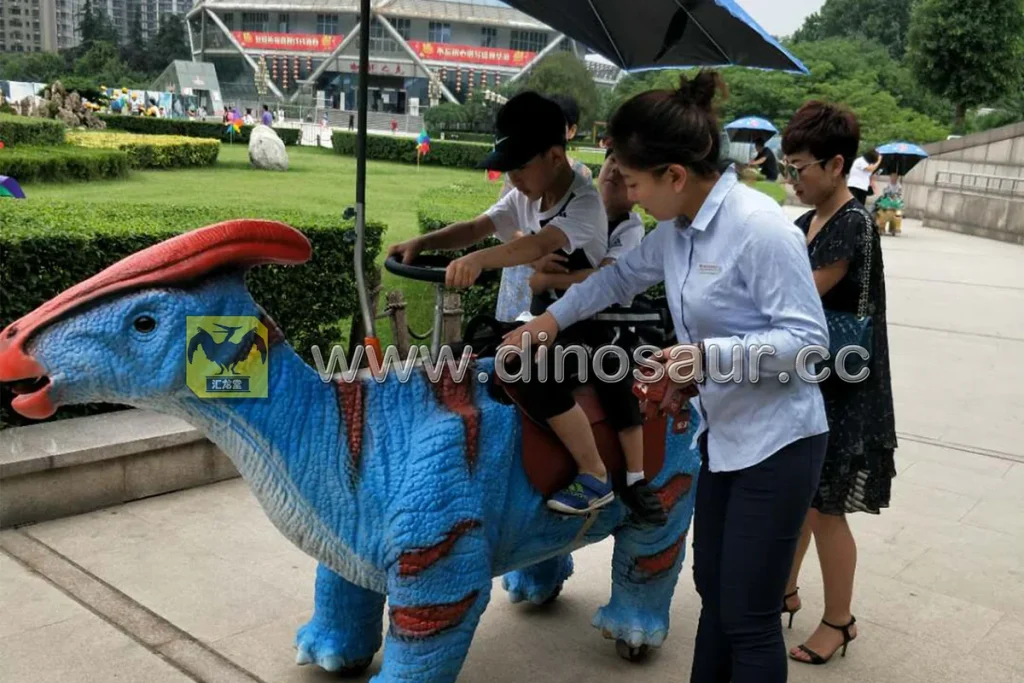
A kiddie ride has about forty seconds to justify itself. A child gets on, the machine runs, the child gets off — and whether […]
View ProductThree things buyers usually want settled before they ask for a drawing — what drives the number, how the piece is actually built, and what to check between suppliers.
What Animatronic Products Are Actually Used For Buyers come to animatronic products with one of two jobs in mind, and the job determines almost […]
Read the guide →Which drive system actually suits an animatronic dinosaur? A factory-side comparison of force, precision, noise, maintenance and weather.
Read the guide →If you are planning a museum exhibition, theme park attraction, or shopping mall event, you have probably asked this question: How much does a life […]
Read the guide →Send your dimensions, movement requirements and installation site. You get a realistic budget range and a dated build schedule.
Or email info@hltdino.com — we reply within one business day.