Dinosaur Rides
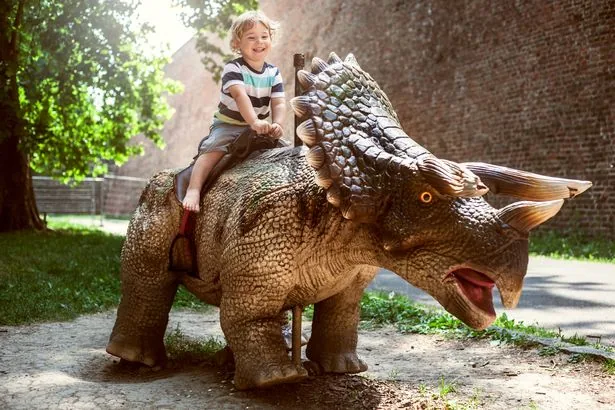
Every child recognises a Triceratops before they can name one. Three horns and a neck frill is the most legible silhouette in the dinosaur catalogue, which is why this is the ride that gets chosen when a site has one shot at a family audience.
| Rider weight | Up to 60 kg |
|---|---|
| Rider age | 3 to 12 years |
| Power | 220 V or 110 V, specified at order |
| Motion | Head swing as standard; sound optional |
| Seat | Non-slip saddle with handholds on both sides |
| Colour | Natural brown-green as standard; custom colours available |
| Edges | Radiused on all rider contact surfaces |
| Body | High-density foam with silicone skin over glass fibre |
This is the unit most often bought for the North American market, where the supply is 110 V. It is worth settling at order rather than at delivery: the drive and the control box are specified for one voltage, and a transformer on site adds a component that can fail in a public space.
Both are made on the same line. There is no cost penalty for choosing one over the other; there is a cost penalty for deciding late.
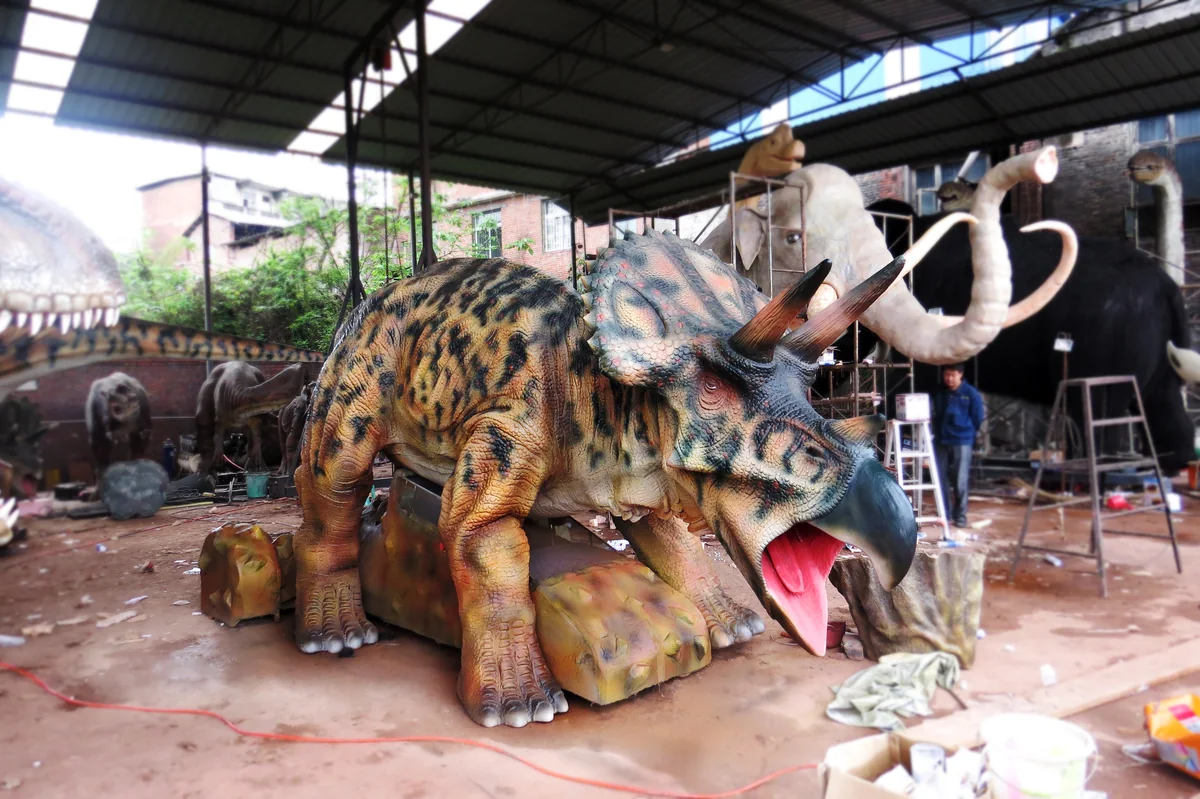
A rider sitting on a Triceratops faces the frill. If the body rocks and the head is fixed, the rider is looking at a static wall of horn for the whole cycle. Moving the head instead means the animal turns toward the queue and toward the parent with the phone, which is the frame that gets shared.
The head swing is a single axis as standard. Multi-axis head motion is available and mostly wasted on a rider this size, because the saddle is low and the head is out of the rider’s line of sight when it moves sideways.
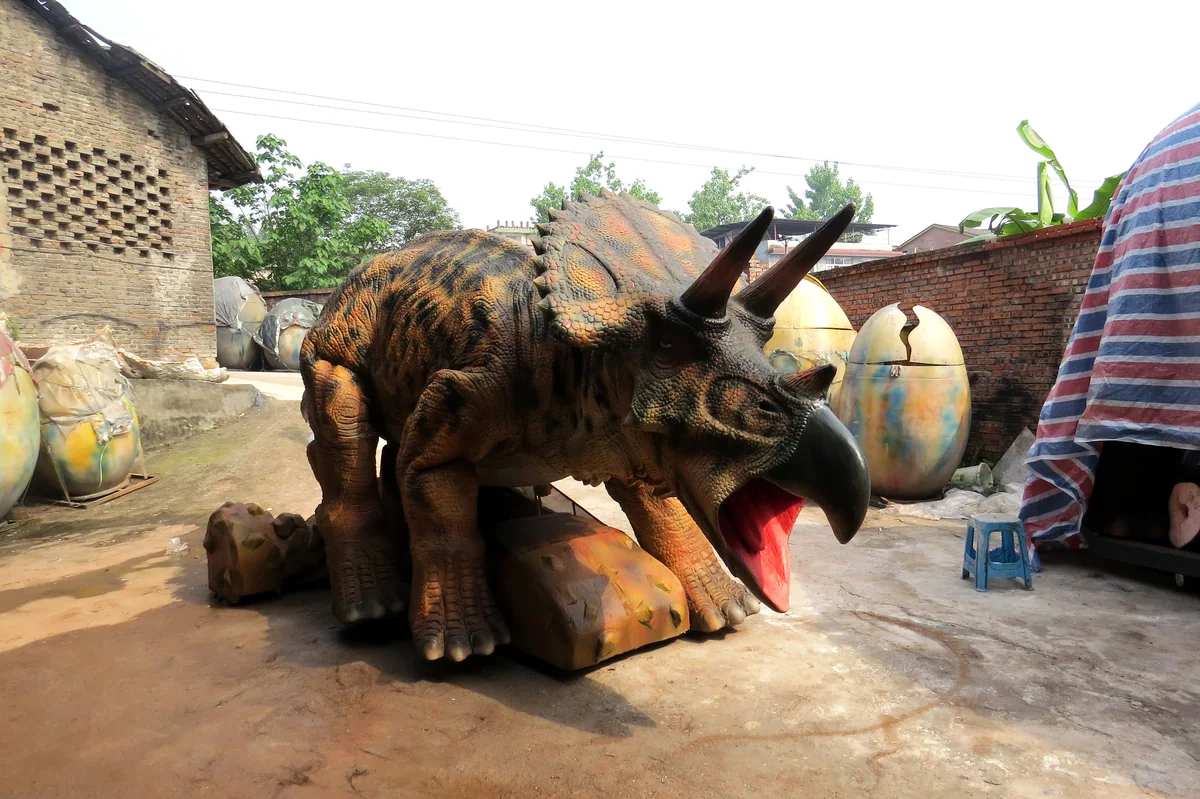
Radiused edges, a non-slip saddle and a handhold on each side are not features, they are the difference between a ride that runs a full season and one that gets a safety complaint in week two.
The frill is the part that takes knocks, because it is the widest point and the part adults lean on when they reach for a child. It is reinforced at the back, where the load transfers into the neck.
Can it carry an adult? The rating is 60 kg. Adult riders exceed it and we will not rate the frame for one.
Is the sound worth adding? Indoors, yes, and it should be set low. Outdoors, the call gets lost in ambient noise and the motion does the work.
How long does the head mechanism last? The wear item is the pivot bush, which is replaceable without removing the head. Ask for a spare with the unit.
Can the colour be matched to a brand? Yes. Send a reference and we will match the body colour, with the caveat that silicone takes colour differently from paint.
This is the unit where the voltage has to be settled at order. 110 V and 220 V are different control boxes, and a site that plans to run on a transformer has added a component that can fail in a public space and that nobody on site will know how to bypass.
The other site question is the frill. It is the widest part of the animal and it is at child height on the approach side, so the position has to leave a walking route that clears it rather than one that squeezes past. In a shop unit with a narrow frontage, that usually means the ride sits parallel to the glass rather than facing it.
Indoors, keep the unit out of direct sunlight through glazing. Silicone takes UV well over a season, but a south-facing window in summer is not a season, and a fade line across the frill cannot be corrected without repainting the head.
The unit arrives assembled. The head drive is the only mechanism with a setting worth taking time over: the swing is single-axis, and the amplitude is tuned so the head turns toward the approach rather than sweeping past it.
Where the sound option is fitted, the volume is set low. This is a ride for three-year-olds, and a Triceratops call at the volume that works on a park trail is genuinely frightening at arm’s length in a shop unit.
Operator training covers the head pivot: how to check for play, how to swap the bush, and how to tell a worn bush from a slipping drive. Those two sound alike and the wrong diagnosis leads to replacing the wrong part.
Materials. High-density foam body with silicone skin over glass fibre, non-slip saddle, single-axis head drive.
Related. the full ride range, theme park installations, the Allosaurus ride, request a quote.
Same factory and the same build standard. What changes is size, movement set and how the exhibit is meant to be used on site.
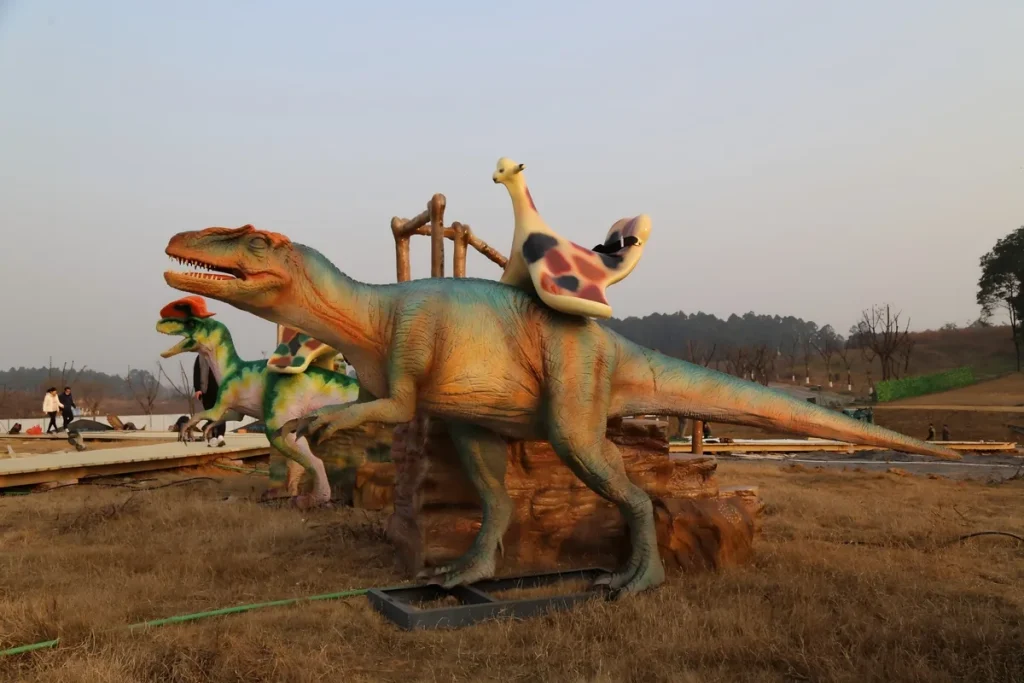
The Allosaurus is the only unit in this range rated for a rider over 100 kg, and that single number changes who can sit […]
View Product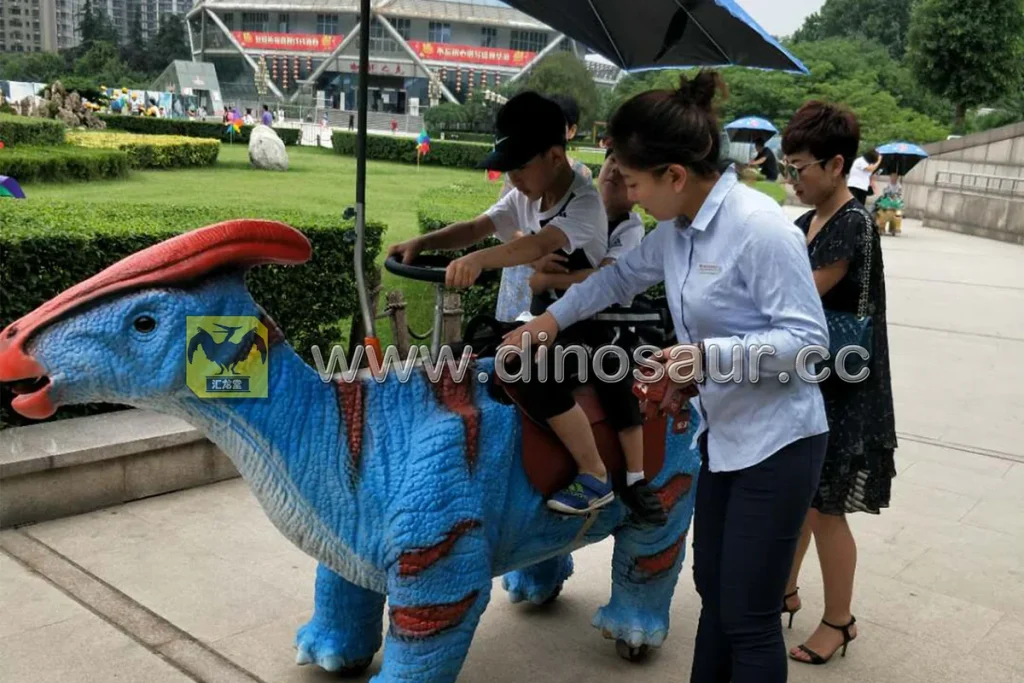
A kiddie ride has about forty seconds to justify itself. A child gets on, the machine runs, the child gets off — and whether […]
View Product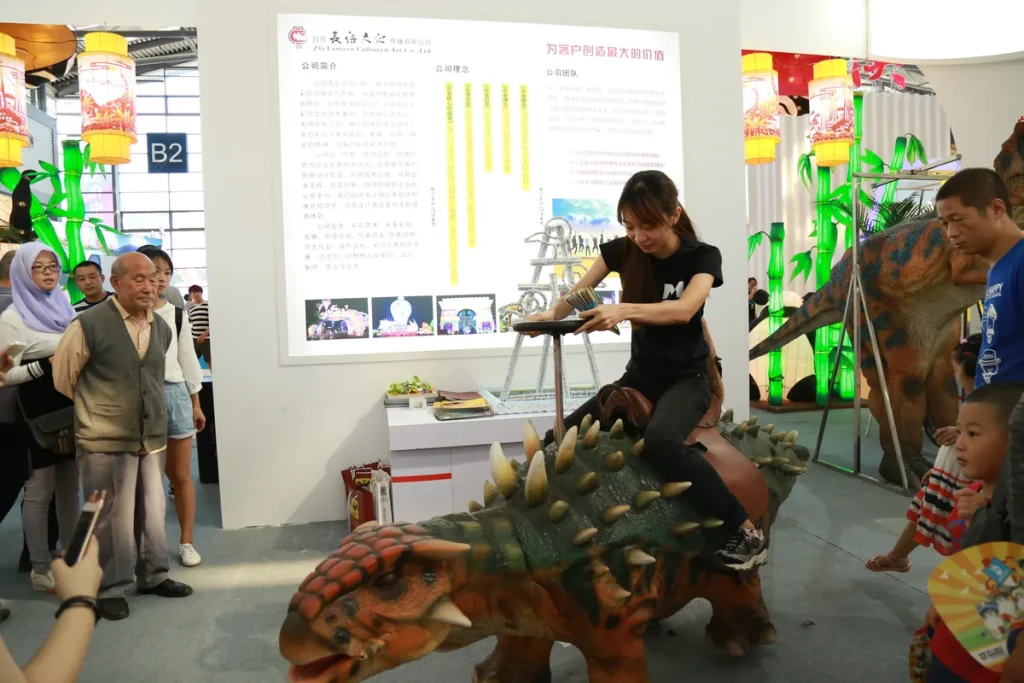
The Ankylosaurus is the smallest build in this range and the one that fits where nothing else does. At 1.8 metres it works in […]
View ProductThree things buyers usually want settled before they ask for a drawing — what drives the number, how the piece is actually built, and what to check between suppliers.
What Animatronic Products Are Actually Used For Buyers come to animatronic products with one of two jobs in mind, and the job determines almost […]
Read the guide →Which drive system actually suits an animatronic dinosaur? A factory-side comparison of force, precision, noise, maintenance and weather.
Read the guide →If you are planning a museum exhibition, theme park attraction, or shopping mall event, you have probably asked this question: How much does a life […]
Read the guide →Send your dimensions, movement requirements and installation site. You get a realistic budget range and a dated build schedule.
Or email info@hltdino.com — we reply within one business day.