Animatronic Animals
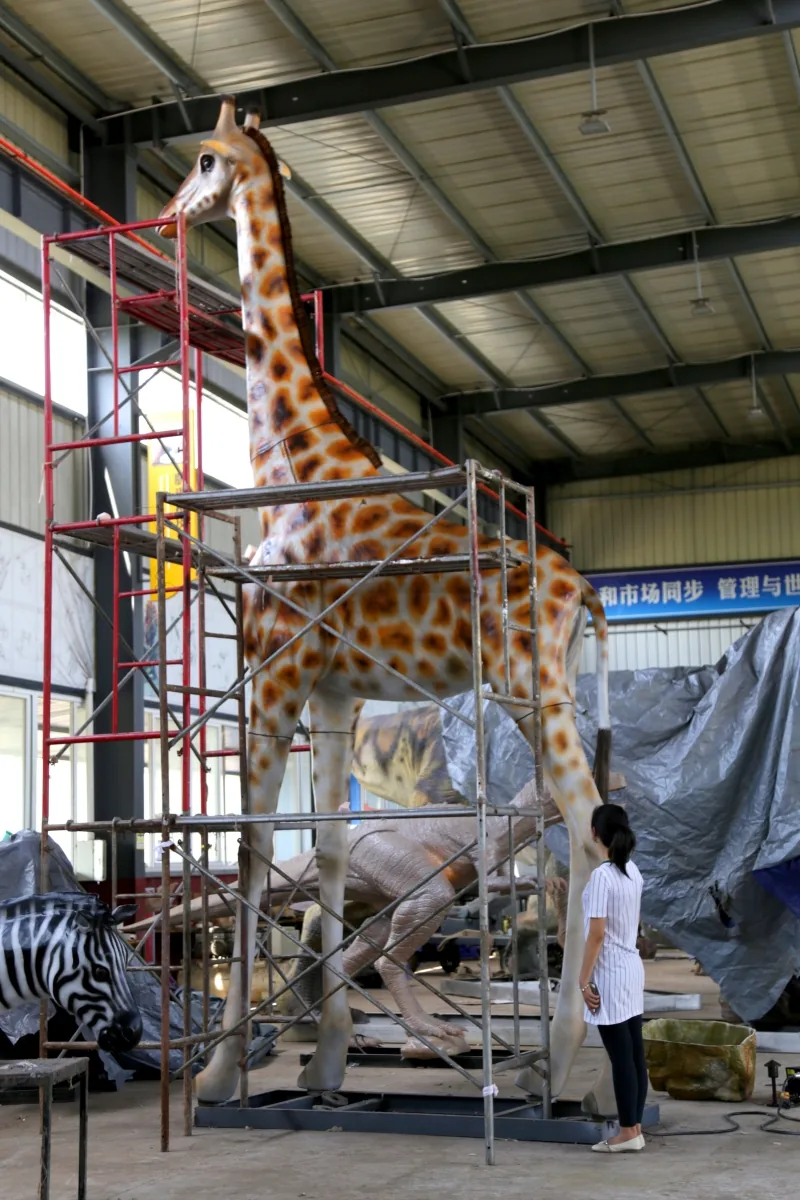
Life-Size Animatronic Giraffe
Life-size animatronic giraffe from 2 to 6 m, with a multi-section neck, hand-painted pattern and optional browsing pose. For zoo zones, malls and parks.
Life-size animatronic giraffe from 2 to 6 m, with a multi-section neck, hand-painted pattern and optional browsing pose. For zoo zones, malls and parks.
A giraffe is the easiest animal in this catalogue to get wrong and the easiest to get right. Wrong looks like a camel with a long neck. Right depends on four things: the slope of the back, the length of the leg relative to the body, the shape of the head, and the pattern.
We build the animatronic giraffe from 2 m to 6 m overall height, in a standing or browsing pose, with a multi-section neck and a hand-painted coat matched to a subspecies.
| Product type | Animatronic giraffe (Giraffa camelopardalis) |
|---|---|
| Overall height | 2.0–6.0 m, built to the site |
| Body length | 2.2–3.2 m depending on height |
| Neck | Multi-section articulated, 3 driven axes |
| Head | Ossicones, articulated jaw, moving eyes, ear movement |
| Coat | Composite silicone with cast hair texture; pattern hand-painted per animal |
| Mane | Cast and fibre-blended along the neck ridge |
| Frame | Galvanised steel; leg sections carry load to a bolted base plate |
| Movements | Neck swing, neck dip and browse, head turn, jaw, blink, ear flick, tail swish, breathing |
| Control | Sensor trigger, timed loop, handheld remote |
| Audio | Low bleat and snort, 65–80 dB at 1 m |
| Power | 110 V / 220 V, 400–900 W |
| Weather | Indoor standard; outdoor build adds wind-load bracing and sealed enclosure |
| Lead time | 25–40 days depending on height |
A giraffe neck has seven cervical vertebrae, the same count as a human. Each one is enormously elongated. That is why the neck does not bend like a snake: it pivots in a few places and stays mostly straight between them.
We build the neck in three driven sections with fixed geometry between them, which reproduces that stiffness. A model whose neck flexes evenly along its length reads as a floating tube, and that single error is the most common reason a giraffe prop looks wrong.
The browsing pose drops the neck to about 45 degrees with the head turned slightly, as if taking leaves from a branch. It is the pose that photographs best and the one most zoos choose, because it matches what visitors actually see in a living enclosure.
Every giraffe coat is unique, and the pattern type varies by subspecies. Three are worth knowing: reticulated, with clean polygonal patches separated by thin white lines; Masai, with jagged leaf-shaped patches; and Rothschild’s, with pale, shadowy patches and no marking on the lower legs.
We paint to the client’s reference photographs rather than to a generic pattern. Where a group is ordered, each animal gets a different arrangement, because three identical giraffes in one enclosure is the clearest possible signal that they came out of one mould.
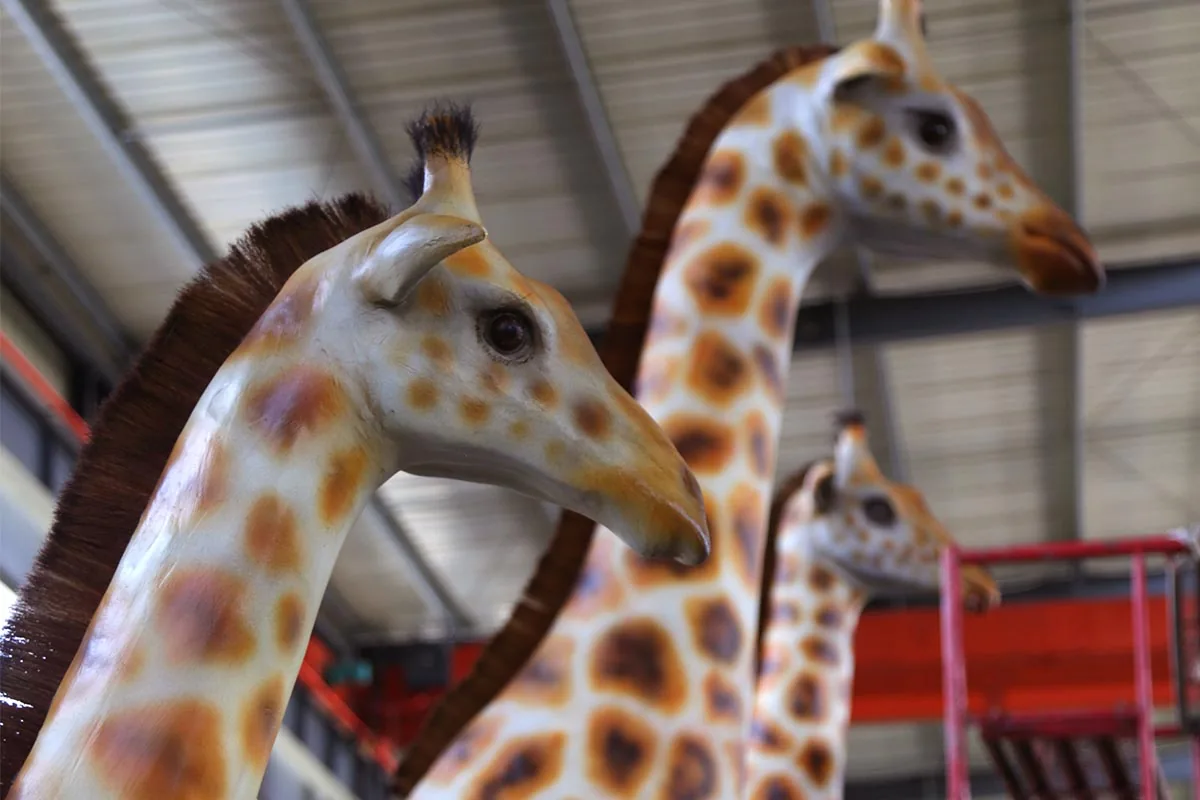
Two details that lift the finish: the pale line down the front of the face, and the dark inner ear. Both are small, both are visible from twenty metres, and both are routinely left out.
Three site numbers decide the specification.
Ceiling. A 5 m animal with a raised neck reaches 6.2 m. Malls with low bulkheads usually take a 3–4 m model instead, and at that height the proportions still hold because the leg-to-body ratio is adjusted rather than scaled.
Wind. A 5 m giraffe outdoors presents a large sail area at the neck. The outdoor build adds a braced leg frame and a heavier base plate, and we ask for the site’s design wind speed. A unit specified for indoor use and installed outdoors will lean within a season.
Access. The neck section is the longest piece, up to 3.5 m. Anything shorter than a standard 2.4 m door means the neck ships in two halves with a joint that has to be dressed on site.
Zoos use it as the landmark piece for an African section, usually with an elephant and a zebra pair at matched scale. Malls use the 3–4 m version in an atrium, where height is the point and the animal is visible from the floor above.
Parks and garden shows use a standing and a browsing animal as a pair at a trail entrance. Two poses at different heights explain the animal’s reach better than one model in a heroic pose, and it costs less than commissioning a larger single build. Our animatronic animal range covers the rest of the African group at the same scale.
Sculpture over a galvanised frame, moulded in sections, skin cast and painted after assembly so the pattern runs continuously across joins. The neck is separate from the body and the head is separate from the neck.
A 5 m unit ships in five pieces, roughly 280 kg total. Two people install in one day with a small lift for the neck. The base plate is bolted to a concrete pad, and for outdoor sites we supply an anchor drawing for the client’s contractor.
Around 2.5 m for a calf-sized animal, or 3 m for an adult. Below 2.5 m the leg segments get short enough that the proportions stop reading as a giraffe, whatever the head does.
Yes, and it is the most common order. A 5 m adult with a 2.5 m calf reads as a family group and fills a footprint about the same as one large animal.
The neck swing covers about 25 degrees each way from rest and the dip reaches the browsing position in around four seconds. Faster than that and the movement reads as mechanical at this length.
Yes, from photographs. Send side, front and rear views at consistent distance and we will work from those. Partial references produce a plausible animal rather than a specific one, which is usually fine for a mall and not fine for a zoo with a named individual.
The model is anchored, but the legs are not designed as a climbing structure. We specify a 1 m standoff at a mall and a knee-height barrier where the animal is reachable, and we do not build versions intended for physical interaction.
Same factory and the same build standard. What changes is size, movement set and how the exhibit is meant to be used on site.
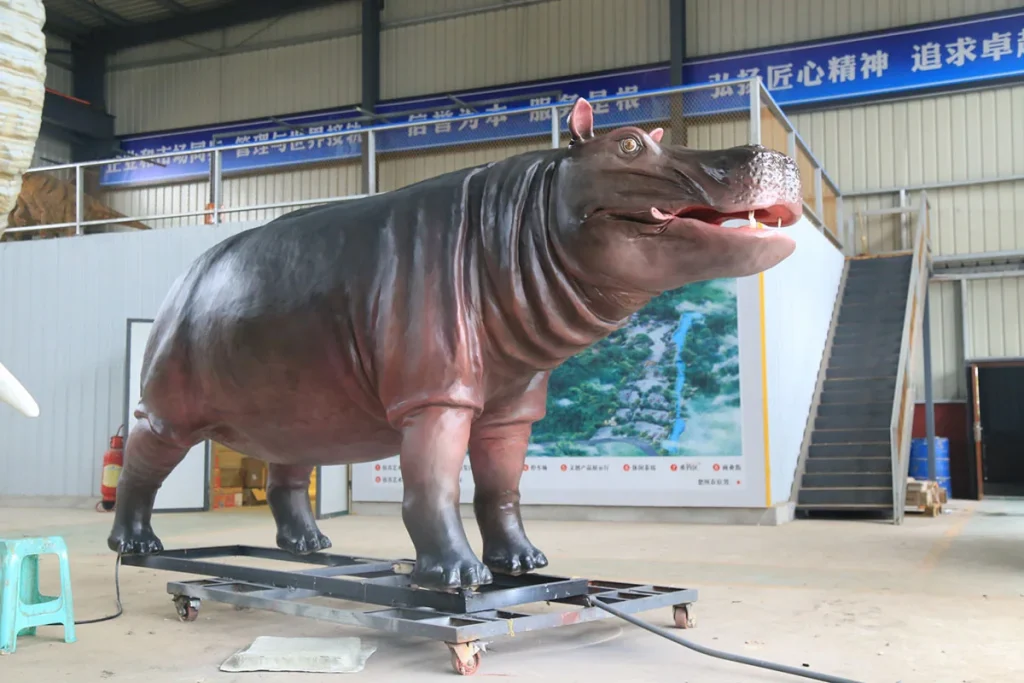
A hippopotamus is the one animal where the motion design is mostly about restraint. Real hippos stand still for long stretches, and a build […]
View Product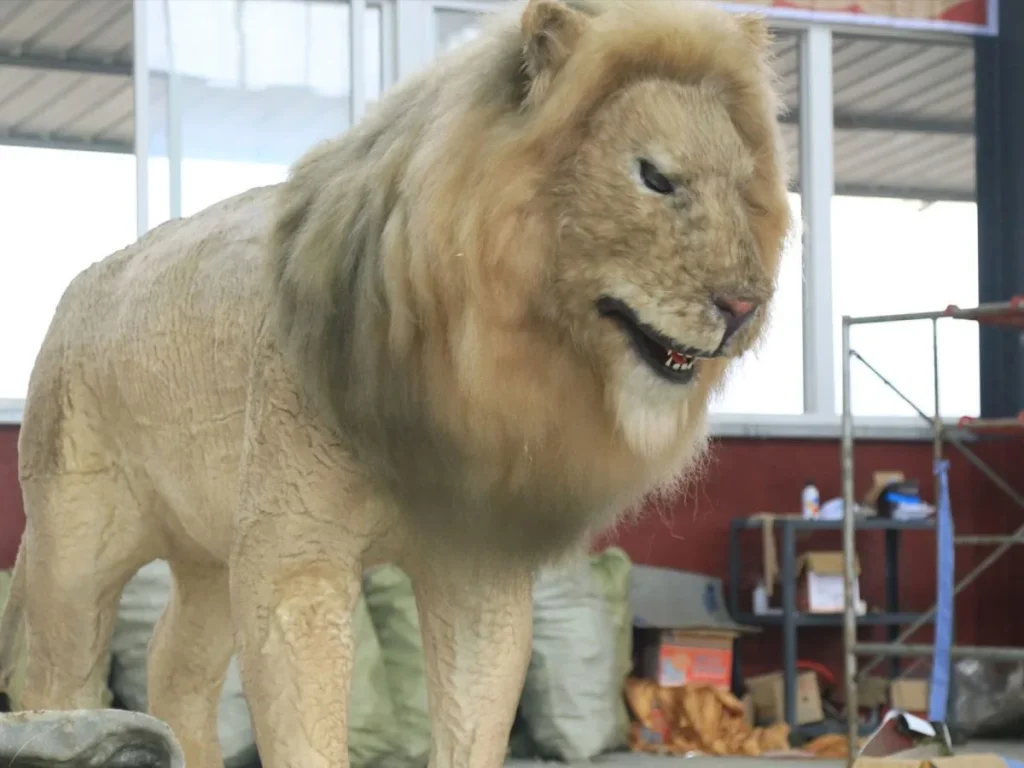
A lion is the easiest animal in the catalogue to get wrong. Everyone knows what a lion looks like, and the failure mode is […]
View Product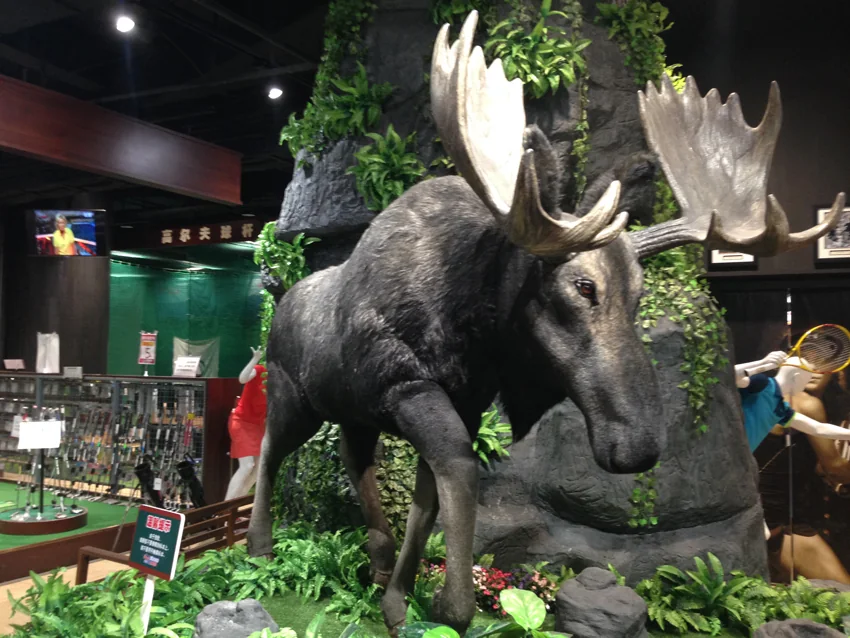
A moose is recognised by three things and nothing else: the palmate antlers, the hanging dewlap under the throat, and the shoulder hump that […]
View ProductThree things buyers usually want settled before they ask for a drawing — what drives the number, how the piece is actually built, and what to check between suppliers.
Extinct and hard-to-keep species, sculpted to anatomy keepers can check — where animatronic animals earn a place beside a living collection.
Read the guide →From fossil reference to finished skin — how proportions, texture, colour and weathering are decided, and what separates a realistic build from a cartoon one.
Read the guide →How Much Does an Animatronic Dinosaur Cost? Understanding the Key Cost Factors If you are planning a museum exhibition, theme park attraction, or promotional […]
Read the guide →Send your dimensions, movement requirements and installation site. You get a realistic budget range and a dated build schedule.
Or email info@hltdino.com — we reply within one business day.