Ice Age Animals
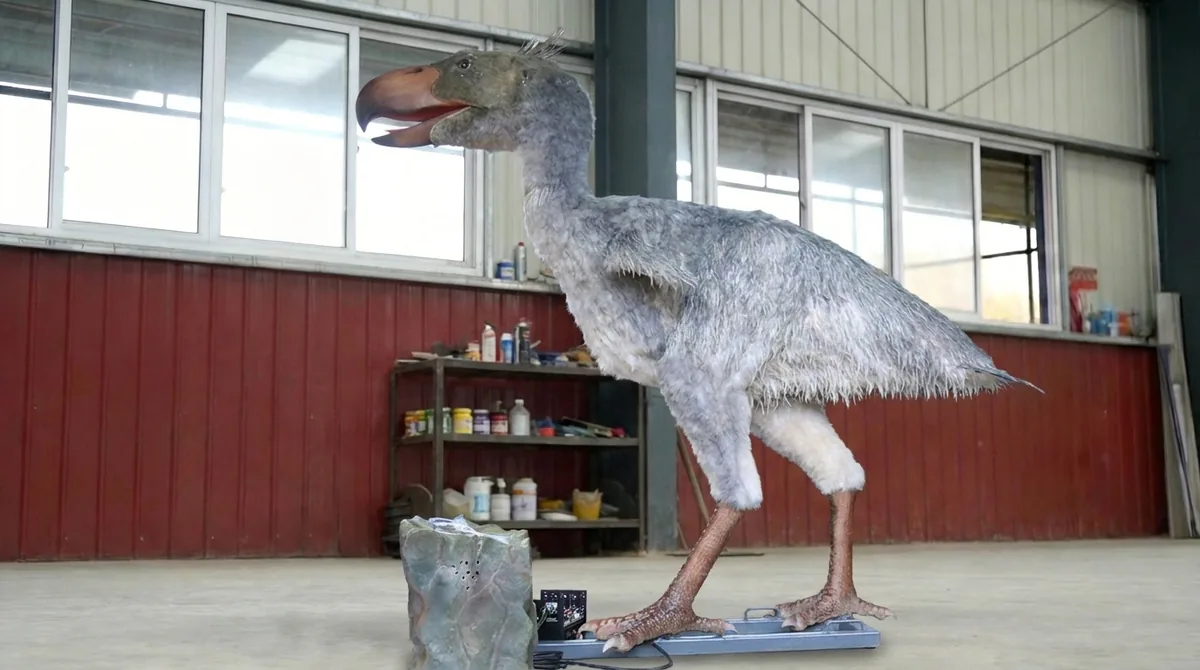
Animatronic Terror Bird (Phorusrhacos)
Life-size animatronic terror bird with a 65 cm hooked skull, bare legs and a striking cycle. A flightless South American predator for fossil halls.
Life-size animatronic terror bird with a 65 cm hooked skull, bare legs and a striking cycle. A flightless South American predator for fossil halls.
A terror bird is not an ostrich with teeth. It is a flightless predator built around a skull the size of a horse’s, on legs that were made for a short burst rather than a long run. Most models in the market get the legs right and the head wrong, which produces something that looks like a large emu and reads as harmless.
We build Phorusrhacos longissimus at life size, with a working head and neck, and a striking cycle that uses the beak the way the animal did. This page sets out the proportions, the mechanics and where the model fits.
| Product type | Animatronic terror bird (Phorusrhacos longissimus) |
|---|---|
| Standing height | 2.2–2.6 m to the crown |
| Skull length | 58–65 cm, hooked, cast in a reinforced compound |
| Body | Compact torso, reduced wings, long bare tarsus |
| Plumage | Hand-set fibre, 25–60 mm on the body, bare skin on the legs and neck base |
| Skin | Composite silicone, cast scale texture on the tarsus and toes |
| Frame | Galvanised steel, weighted base for balance |
| Movements | Neck extend and retract, head turn and strike, jaw open, blink, wing lift, body bob |
| Control | Sensor trigger, timed loop, handheld remote |
| Audio | 3–5 calls plus a bill-clap, 75–90 dB at 1 m |
| Power | 110 V / 220 V, 350–700 W |
| Weather | Indoor standard; outdoor build adds sealed enclosure and UV-stable plumage coat |
| Lead time | 30–40 days after drawing approval |
Phorusrhacos carried a skull around 60 cm long with a deep, hooked beak and a jaw joint placed to deliver a downward blow. That geometry is what made the animal a predator. A model with a slender beak is a model of a different bird.
We cast the skull in three parts so the beak can be a harder compound than the cranium. The hook is the part that takes knocks in a public gallery, and a soft beak chips at the tip within a season. At full size the head weighs enough that we counterweight the back of the cranium, the same approach we use on the Baryonyx for the same reason.
The most effective movement is a short forward strike with the neck extended and the jaw open, held for half a second, then a slow retract. It costs one axis and it changes the whole reading of the model. A terror bird that only turns its head looks like a display. One that strikes looks like an animal deciding about you.
A 2.5 m bird on two legs has a balance problem that a four-legged model does not. The centre of mass sits over the hips, and any head movement several metres up moves it. We solve it with a weighted base and a steel spine that carries load down the tarsus rather than through the ankles.
The standard base is a plate roughly 900 mm by 700 mm with cast rock dressing over it. On sites where the base has to disappear, we build an in-ground version with the plate below floor level and a rubber collar at the leg entry, which is what museums usually specify.
This is the fastest way to spot a bad terror bird model. Feathers lie in tracts with bare skin between them, and the small contour feathers over the head and neck read as a smooth surface, not a shaggy one. A coat built like mammal fur gives the animal a poodle silhouette.
We set the fibre in overlapping rows following the tract layout, keep the head and upper neck short at 25–35 mm, and leave the tarsus and toes bare with cast scales. Colour runs from a grey base through a warm brown mantle to a pale throat, with a darker crown. The bare facial skin around the eye is picked out separately, because that is where the eye reads as predatory rather than blank.
Terror birds are South American, which is why they sit oddly in a North American ice age hall. The placements that work are fossil galleries building a Cenozoic predator sequence, natural history museums with a South America section, and mixed prehistoric zones where the animal’s size does the work.
Pair it with a dire wolf and the contrast in hunting style is the exhibit. Pair it with the ice age herbivores and it becomes the reason they are large. Both work; the first is the more interesting story.
Maquette first, then full-size sculpture over a galvanised spine. The legs are cast separately in a harder skin compound than the torso, because they take abrasion from floor cleaning and from visitors reaching over a low barrier.
The bird ships in two pieces with the head attached, on its weighted base. Crating is straightforward. Installation is one day for a static unit, and the in-ground version adds half a day for the floor collar.
No. Phorusrhacos is the best known at around 2.5 m; Kelenken was larger and is the species usually quoted when people say three metres. We build both, and the Kelenken skull is noticeably deeper. If the exhibit is a size comparison, build Kelenken.
The wings are reduced and cannot flap. We fit a small lift and settle movement, which is what the animal could do, rather than a flap that would look wrong to anyone who knows birds.
The strike movement brings the beak forward about 400 mm. We recommend a 600 mm standoff so the movement is not reachable, and the sensor range is set to trigger at 1.5 m rather than at the barrier.
Around 90 kg with the base for the standard version. The in-ground version is heavier because the plate is larger, but nothing on it needs a crane.
Yes, at roughly 60% height, and it is a good option for a small gallery. Juvenile terror birds are usually reconstructed with softer plumage and a shorter beak, which makes the model read as a different animal rather than a small copy.
Same factory and the same build standard. What changes is size, movement set and how the exhibit is meant to be used on site.
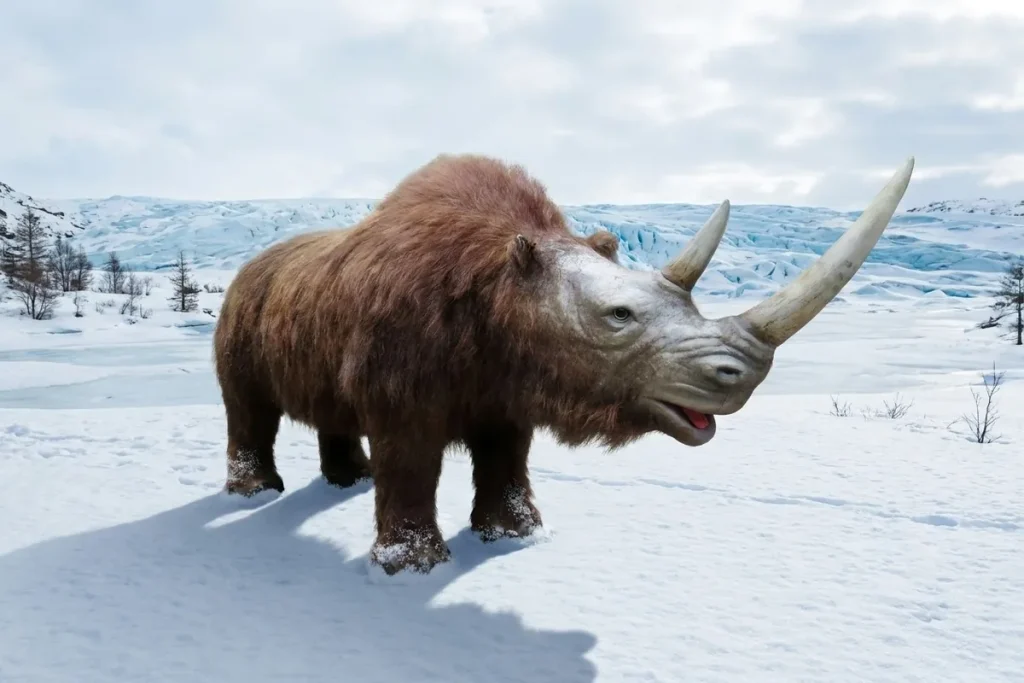
Life-size animatronic woolly rhino with a two-horn head, hand-layered coat and a slow walking cycle. Built for ice age halls, zoo zones and museum dioramas.
View Product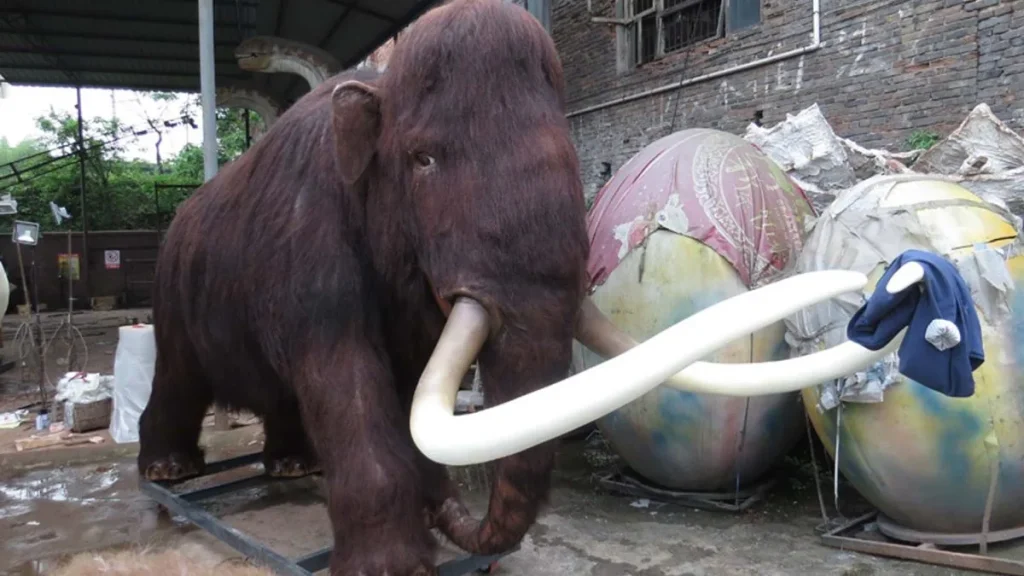
Life-size animatronic woolly mammoth — 4 m at the shoulder, 3 m tusks, articulating trunk and proximity triggers for Ice Age halls.
View Product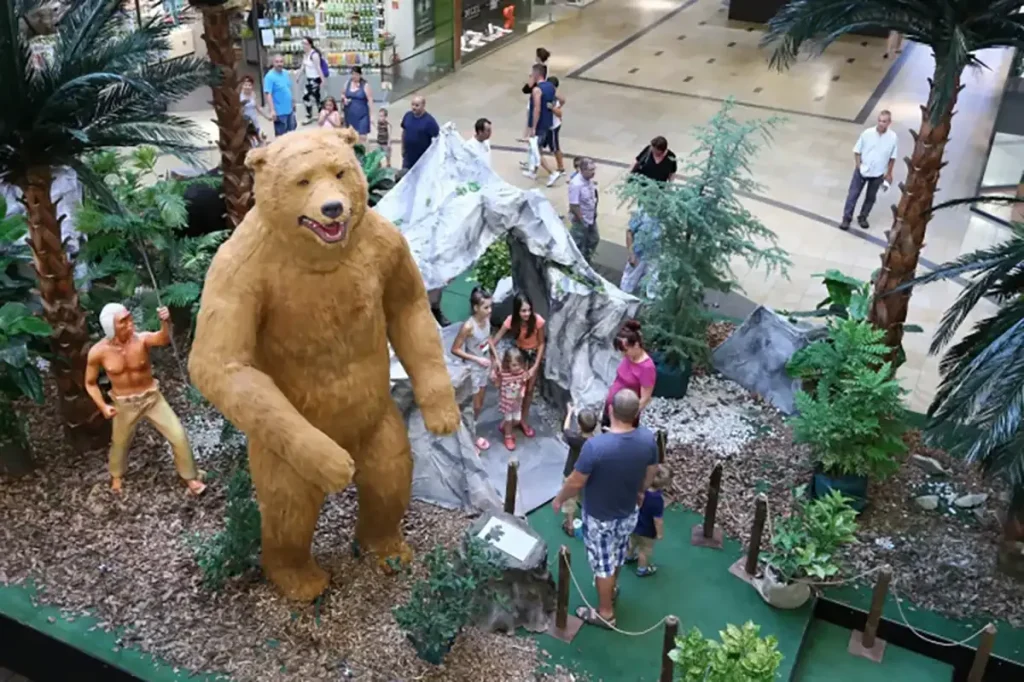
Life-size animatronic cave bear with hand-pasted fur, glass eyes and the heavy Pleistocene stance — for museum dioramas and Ice Age trails.
View ProductThree things buyers usually want settled before they ask for a drawing — what drives the number, how the piece is actually built, and what to check between suppliers.
Extinct and hard-to-keep species, sculpted to anatomy keepers can check — where animatronic animals earn a place beside a living collection.
Read the guide →From fossil reference to finished skin — how proportions, texture, colour and weathering are decided, and what separates a realistic build from a cartoon one.
Read the guide →If you are planning a museum exhibition, theme park attraction, or shopping mall event, you have probably asked this question: How much does a life […]
Read the guide →Send your dimensions, movement requirements and installation site. You get a realistic budget range and a dated build schedule.
Or email info@hltdino.com — we reply within one business day.