Ice Age Animals
Animatronic Woolly Rhino
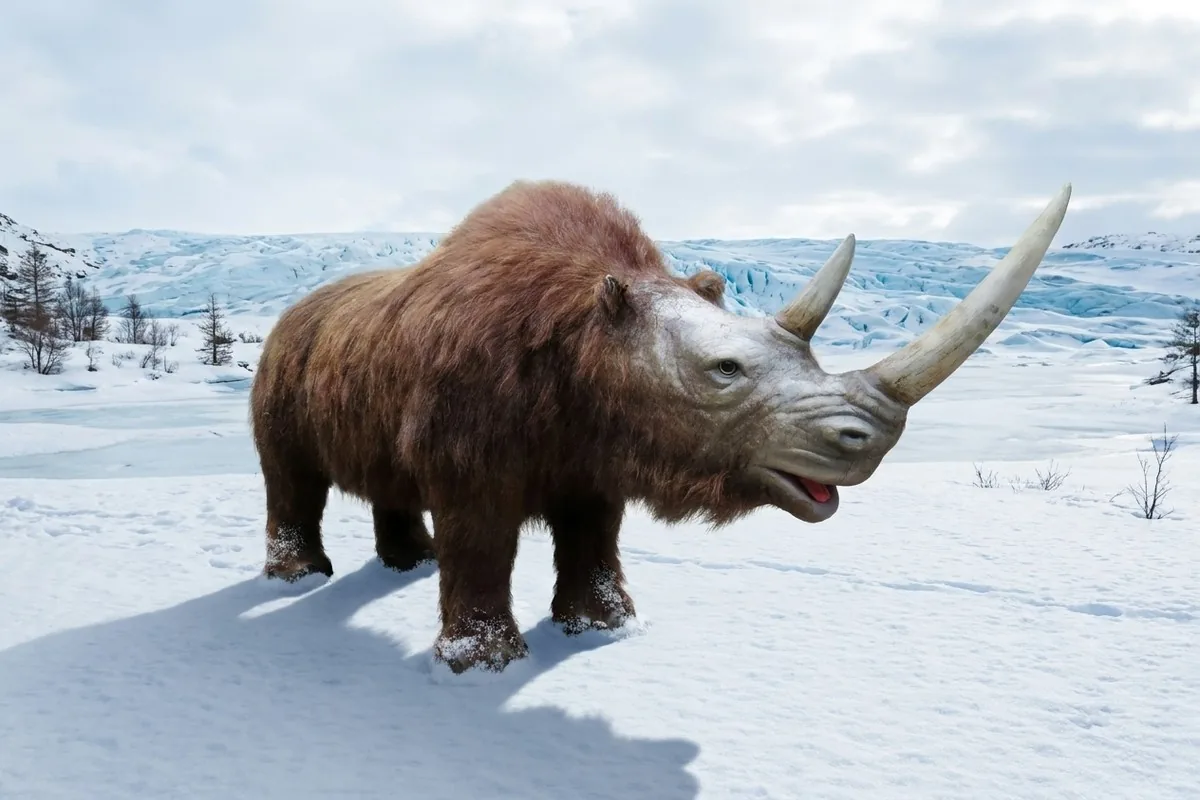
Life-size animatronic woolly rhino with a two-horn head, hand-layered coat and a slow walking cycle. Built for ice age halls, zoo zones and museum dioramas.
Life-size animatronic woolly rhino with a two-horn head, hand-layered coat and a slow walking cycle. Built for ice age halls, zoo zones and museum dioramas.
A woolly rhino is not a rhino with hair glued on. The animal carried a shoulder hump, a flattened head held low, a front horn that could pass a metre, and a coat that changed length across the body. Get those four things right and the model reads as Coelodonta. Miss any one of them and it reads as a costume.
We build the animatronic woolly rhino at 1:1, with a working head, a slow walking cycle and a coat laid by hand. This page covers what is adjustable, what the mechanics actually do, and where the model tends to be installed.
| Product type | Animatronic woolly rhino (Coelodonta antiquitatis) |
|---|---|
| Overall length | 3.4–4.0 m |
| Shoulder height | 1.7–2.0 m |
| Head | Two horns cast with growth rings; front horn 0.6–1.0 m; articulated jaw; moving eyes |
| Coat | Hand-layered, three fibre lengths, 35–90 mm depending on body zone |
| Skin base | Composite silicone over high-density foam, with cast folds at the shoulder and flank |
| Frame | National-standard steel, hot-dip galvanised, bolted base plate |
| Movements | Head lift and turn, jaw open, eye blink, tail swing, breathing, optional walking cycle |
| Control | Industrial controller; sensor trigger, timed loop or handheld remote |
| Sensing | Infrared or ultrasonic, 0.5–4 m adjustable |
| Audio | Internal speaker, 2–4 calls, volume programmable by time of day |
| Power | 110 V / 220 V, 400–900 W depending on movement count |
| Weather | Indoor standard; outdoor build adds sealed enclosure, UV coat and drainage base |
| Lead time | 30–45 days after drawing approval |
The woolly rhino skull is long and low, and the nasal horn sits far forward on it. That forward position matters mechanically. A horn that length on a moving head is a lever, and every kilogram at the tip multiplies back at the neck joint. We cast the horn hollow in a glass-reinforced compound, then weight the counter side of the skull so the head balances at rest. Without that, the head droops between movements and the whole thing looks tired.
Two details we do not skip: the horn gets cast growth rings rather than a smooth surface, and the second horn behind it is short and blunt, sitting between the eyes. Most cheap builds merge the two into one cone. Visitors who know the animal notice immediately.
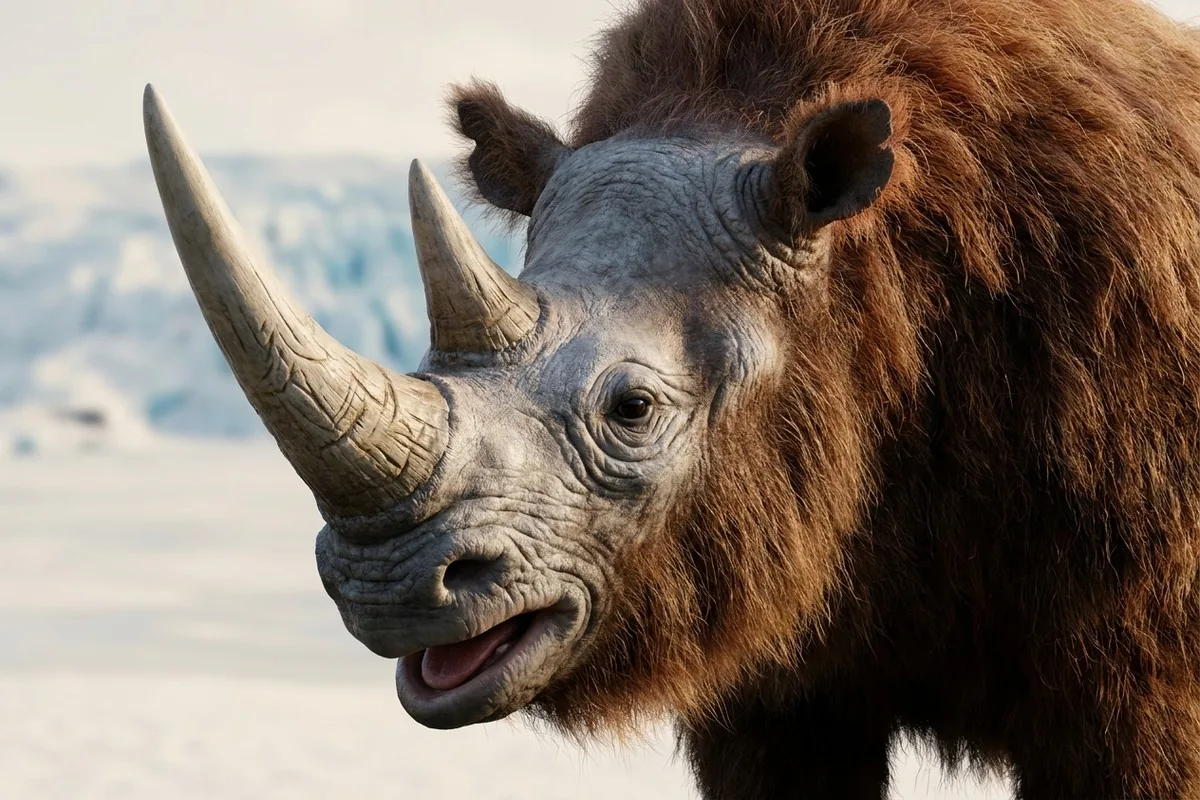
Coelodonta had a dense underwool close to the skin and longer guard hair over it, with the longest growth along the neck and shoulders. We reproduce that as three fibre lengths on one body: 35 mm on the legs and muzzle, 55–65 mm along the flank, up to 90 mm over the shoulder hump.
Colour is graded in four passes, from a grey base through reddish brown to a pale buff on the underside and around the mouth. The mouth stays pale in almost every reconstruction, and it is the detail that stops the animal reading as uniformly brown. Two of these passes are done after the fibre is set, so the tint sits in the coat rather than on top of it.
A rhino does not move like a predator. It walks slowly, the head swings a little with each step, and the body barely pitches. If you give it a fast cycle or a deep head dip it stops being a rhino.
The standard build runs head lift and turn, jaw, blink, tail and a breathing swell in the flank. A walking cycle is available as an option: four legs on separate servo groups, 0.9–1.4 km/h, with the base plate carrying the load rather than the legs. On the walking version we add current monitoring to every axis, so the controller cuts motion when something blocks a limb instead of stripping a gear.
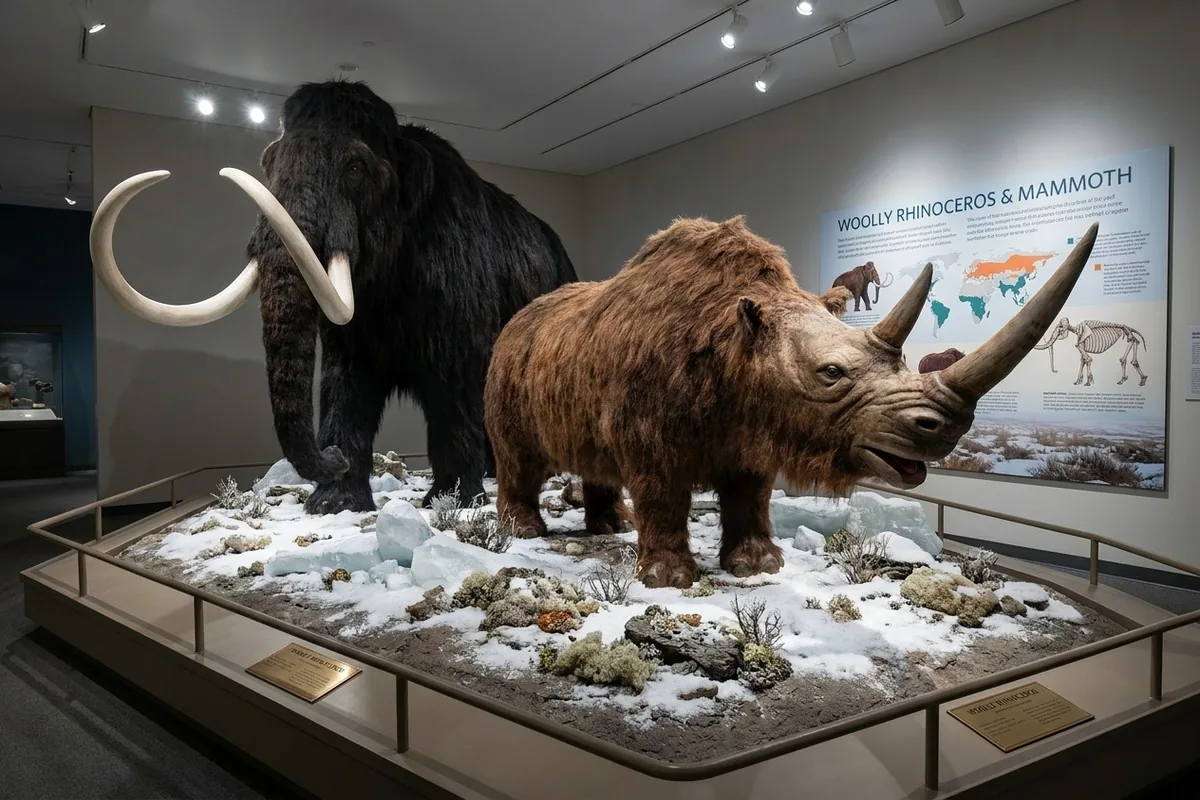
The obvious buyer is an ice age hall, and the obvious companion piece is a woolly mammoth. Rhino plus mammoth on one platform is the pairing most halls are built around, with a cave bear filling the predator slot. Our ice age animal range is built to be staged this way, at matched scale.
The second buyer is a zoo adding a Pleistocene zone next to living species. That works better than most operators expect, because the size comparison does the interpretation for you: a white rhino standing thirty metres from an animatronic woolly rhino explains the coat, the hump and the horn without a single label.
We start with a scaled drawing at the client’s site dimensions, then a clay maquette at roughly one-sixth size for proportion sign-off. The full-size sculpture is built in foam over the steel frame, moulded in sections, and the skin is cast from those moulds. Fibre, paint and movement testing come last, and we send video of the finished animal running its full cycle before it is packed.
The body ships in two sections with the head separate, on a bolted base plate. Two people install a static unit in a day. The walking version needs a level pad and a dedicated circuit, and we send a commissioning sheet with the crate.
Yes. At 70–80% of life size the animal still reads correctly and fits halls with low ceilings, which is the usual reason clients ask. Below about 60% the head starts to look oversized no matter how carefully it is adjusted, so we advise against going smaller than that.
A 12 m by 6 m level pad covers the walk and the turn. The pad has to be flat to within 5 mm over that distance, because the legs follow the ground the base plate sits on.
The fibre is synthetic and UV-stabilised, so cold is not the problem. Ice is. We specify a drainage base and a raised plinth so meltwater does not sit in the belly, and the outdoor build uses a sealed electrical enclosure rated for the temperature range on the drawing.
Yes. The rest position is set during commissioning, and the sensor can be aimed so the animal turns toward the approach path. That reads far better than a head that constantly swings through its full arc.
Always. The horn is a removable casting, which means it can be replaced if it is damaged and it lets us change horn length between individuals without remoulding the skull.
Same factory and the same build standard. What changes is size, movement set and how the exhibit is meant to be used on site.
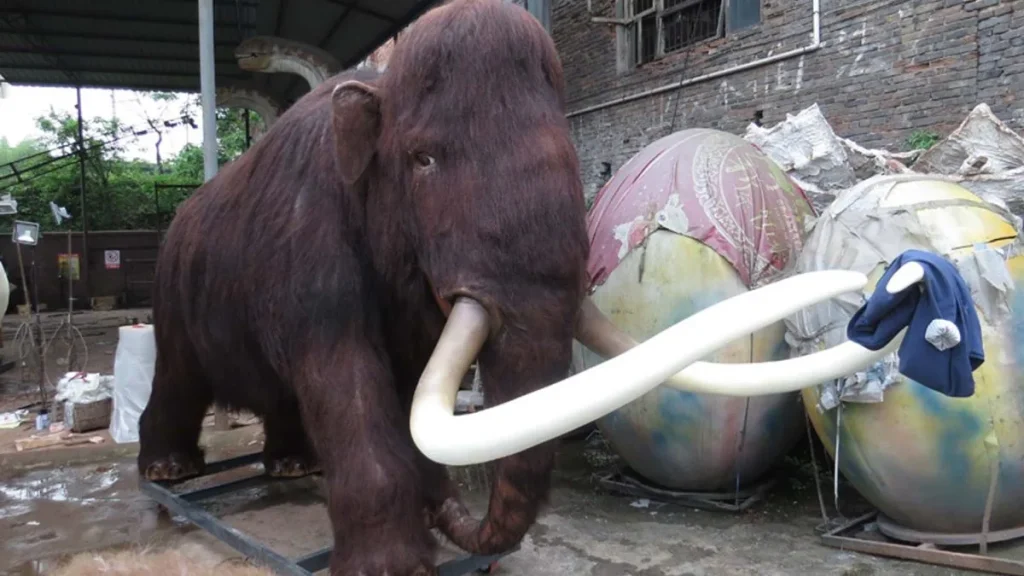
Life-size animatronic woolly mammoth — 4 m at the shoulder, 3 m tusks, articulating trunk and proximity triggers for Ice Age halls.
View Product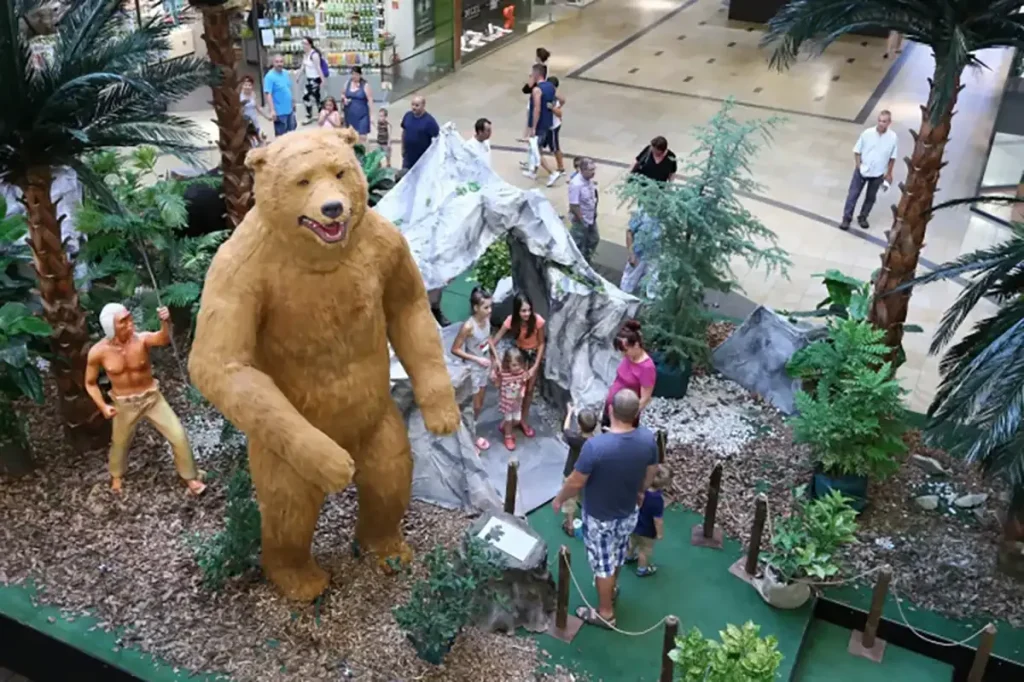
Life-size animatronic cave bear with hand-pasted fur, glass eyes and the heavy Pleistocene stance — for museum dioramas and Ice Age trails.
View Product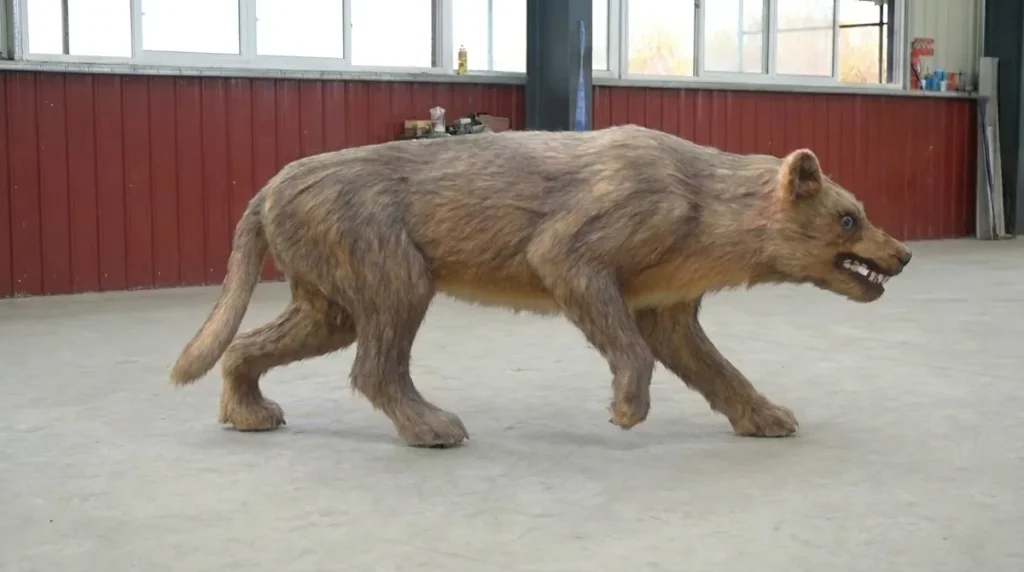
Life-size animatronic dire wolf built on the Aenocyon skeleton: heavy skull, short legs, deep chest. Single animal or pack staging for ice age halls.
View ProductThree things buyers usually want settled before they ask for a drawing — what drives the number, how the piece is actually built, and what to check between suppliers.
Extinct and hard-to-keep species, sculpted to anatomy keepers can check — where animatronic animals earn a place beside a living collection.
Read the guide →From fossil reference to finished skin — how proportions, texture, colour and weathering are decided, and what separates a realistic build from a cartoon one.
Read the guide →If you are planning a museum exhibition, theme park attraction, or shopping mall event, you have probably asked this question: How much does a life […]
Read the guide →Send your dimensions, movement requirements and installation site. You get a realistic budget range and a dated build schedule.
Or email info@hltdino.com — we reply within one business day.