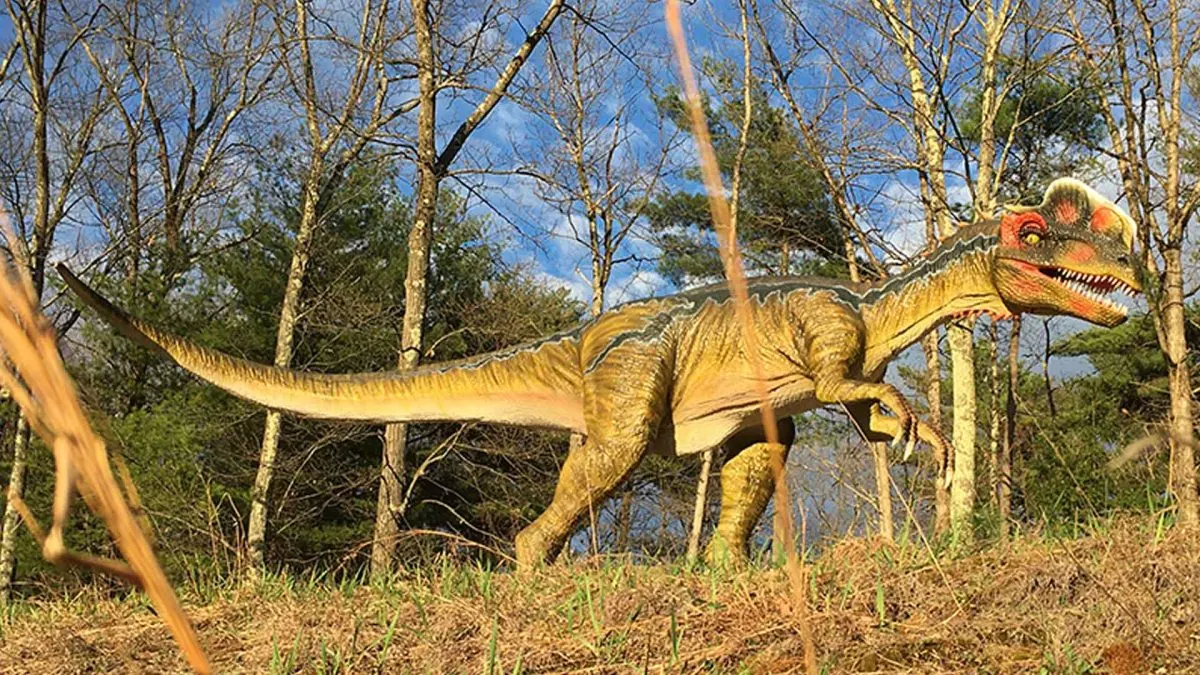
Animatronic Dinosaurs
This is the exhibit build of the Dilophosaurus, not the ride. Same animal, same silhouette, different job: it stands on a trail or in a hall and performs to visitors walking past, rather than carrying one.
| Length | 4.5 m standard; custom from 3 m to 6 m |
|---|---|
| Skeleton | Weatherproof metal internal skeleton |
| Body core | High-density core, hand-finished skin |
| Power | 110 V / 220 V AC |
| Motion | Head turn, jaw, neck, tail, body sway, breathing |
| Sound | Optional |
| Trigger | Motion sensor or fixed cycle |
| Duty | Outdoor standard, indoor on request |
The difference is what the frame has to do. A ride carries a rider, so the frame is rated for load and the drive is tuned for a walk cycle. An exhibit carries only itself, which means the motion set can be richer: neck, head, jaw, tail and body all move independently, and the animal can react to visitors rather than plodding a line.
It also means the exhibit version is the one that belongs on a trail. A ride needs an operator and a path; an exhibit needs a plinth and a sensor.
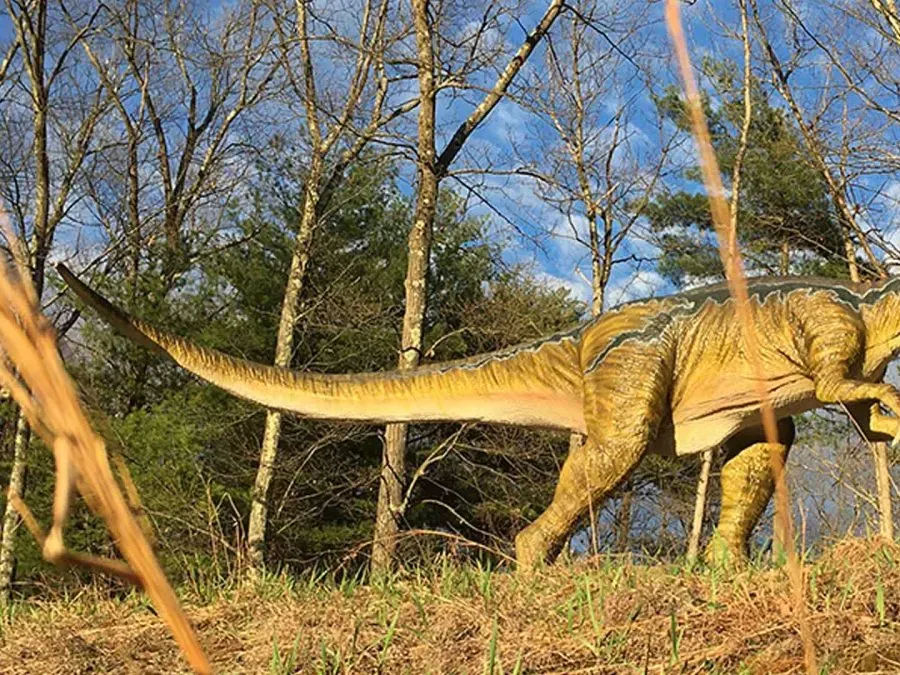
Two half-moon plates on a moving head is where cheap builds fail. If the crests are separate pieces bolted to the skull, the seam at the root opens as the head turns, and after a season there is a visible gap that catches dirt.
On this build the crests are moulded with the skull as one piece. The trade-off is a more expensive mould; the benefit is that there is nothing at the root to work loose, and the crest reads as bone covered in skin rather than as a plate stuck on.
The animal is small enough that fast motion does not look wrong, which is why this build carries a fuller animation set than the long-necks. Head turn, jaw snap and tail counter-swing can all run without the frame complaining.
Where it still pays to slow things down is the idle. A Dilophosaurus that only performs when triggered looks dead between visitors; a slow idle cycle with an occasional head turn keeps it alive in the gaps.
Is this the ride version? No. The ride build is a separate product with a saddle and a rated frame. This one is for display.
Can it be built smaller? Yes, from 3 metres. Below that the crests start to dominate the proportions and the animal reads as a juvenile.
Does it spray? Only if specified. The ride build offers an atomiser; on an exhibit it is usually unnecessary and adds a water source to maintain.
Can the crests be lit? Yes, LED inside the crest is an available option and works well for evening trails.
Standard 110/220 V supply at the animal. The load is modest — this is a mid-size build with a full motion set, not a heavy drive.
The site question is the base and the sightline. On a trail, place the animal so it is seen from the side at an angle rather than head-on: a theropod seen front-on from a distance reads as a narrow shape, and the crest silhouette is lost.
The motion set is tuned in two passes. First the individual movements are slowed to the range where they read as an animal. Then the trigger is set — range, delay and which movements fire together.
The pairing that matters: head turn with a jaw opening reads as a threat display; jaw alone reads as a mechanism. Getting that pair right is most of what makes the animal feel alive.
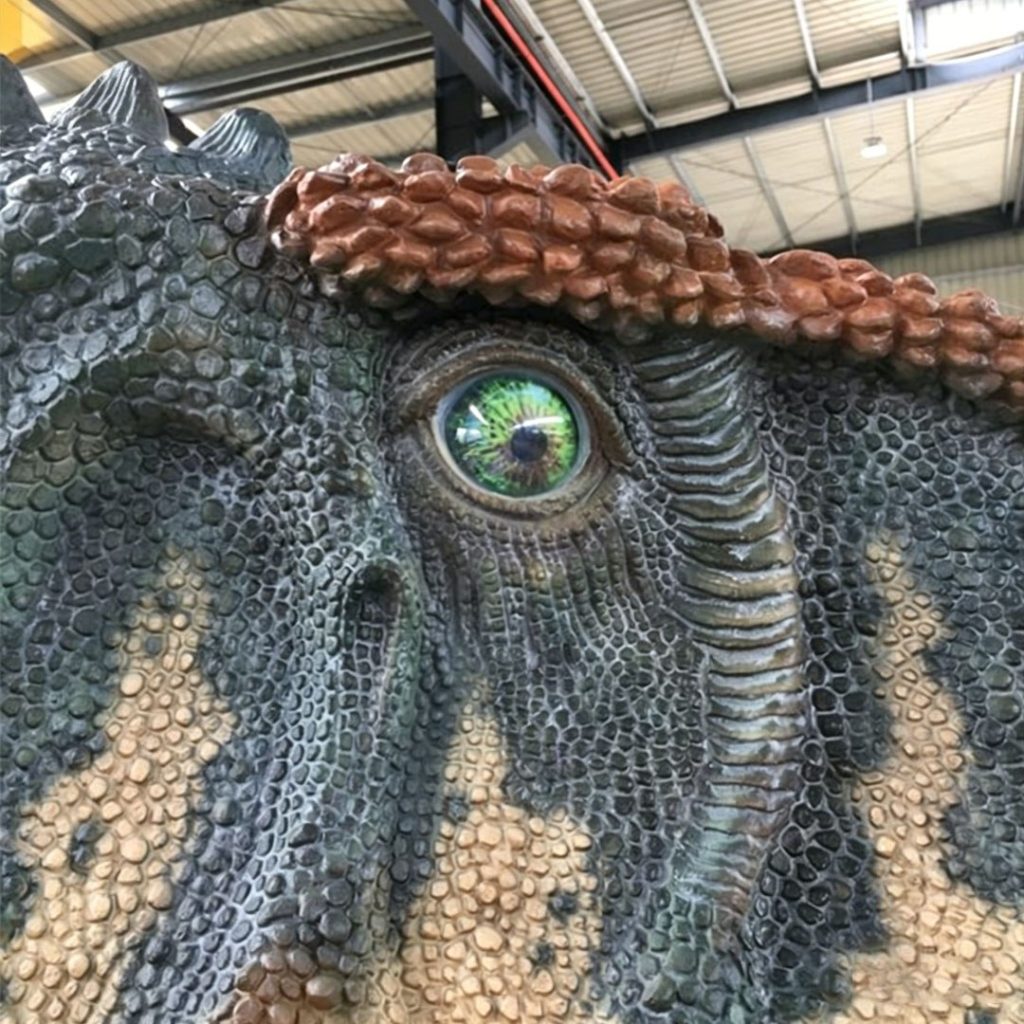
Materials. Weatherproof metal internal skeleton, high-density body core, hand-finished skin, crests moulded with the skull.
Related. the animatronic dinosaur range, the Dilophosaurus ride, the ride range, request a quote.
Same factory and the same build standard. What changes is size, movement set and how the exhibit is meant to be used on site.
A Megalosaurus is built around the jaw. The skull is long and heavy, the gape is wide, and the teeth are large and slightly […]
View Product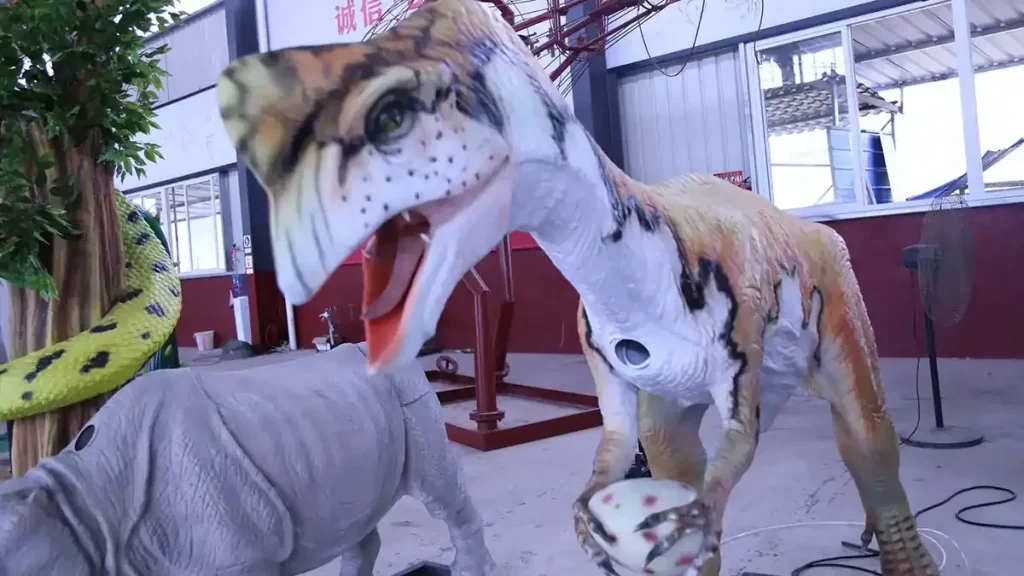
A 1.6–2 m crested, feathered exhibit built for close viewing — fast, bird-like motion on sensor trigger.
View Product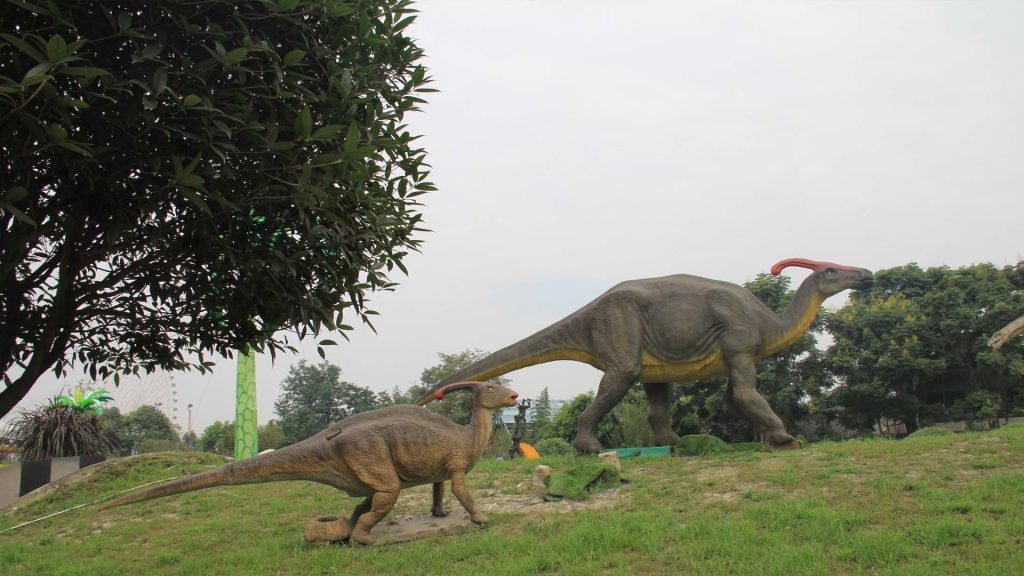
The crest is the reason a Parasaurolophus is worth building. It is a sound instrument as much as a display — the hollow tube […]
View ProductThree things buyers usually want settled before they ask for a drawing — what drives the number, how the piece is actually built, and what to check between suppliers.
Animatronic Dinosaur Buying Guide for Museums & Theme Parks Choosing the right animatronic dinosaur for your museum, theme park, or zoo is one of […]
Read the guide →From fossil reference to finished skin — how proportions, texture, colour and weathering are decided, and what separates a realistic build from a cartoon one.
Read the guide →Why Motor Choice Matters More Than Buyers Expect Motor selection is usually treated as a manufacturing detail. It is not. It is the decision […]
Read the guide →Send your dimensions, movement requirements and installation site. You get a realistic budget range and a dated build schedule.
Or email info@hltdino.com — we reply within one business day.