Animatronic Dinosaurs
Animatronic Oviraptor
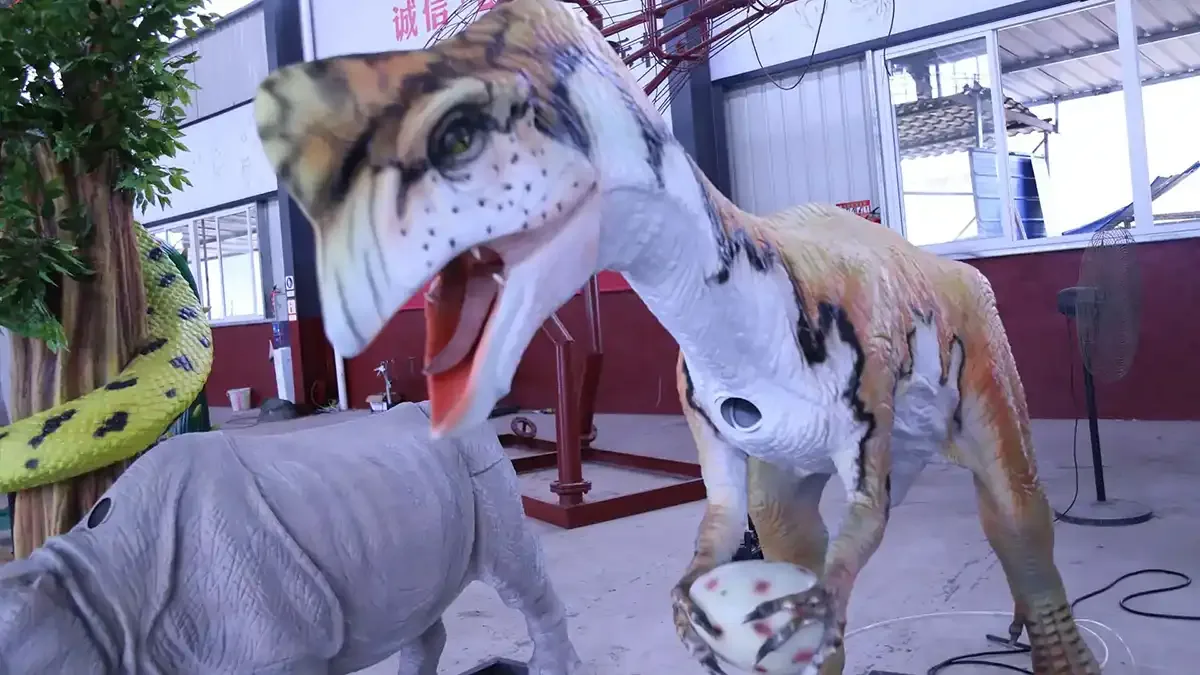
A 1.6–2 m crested, feathered exhibit built for close viewing — fast, bird-like motion on sensor trigger.
A 1.6–2 m crested, feathered exhibit built for close viewing — fast, bird-like motion on sensor trigger.
The name means egg thief, and the name is wrong. Oviraptor was named in 1924 for a specimen found on a nest and assumed to be raiding it. Fifty years later the same nests were found with embryos inside — the animal was brooding. That reversal is why this build exists in a brooding pose, and it is the best story in the catalogue.
| Species | Oviraptor philoceratops |
|---|---|
| Era | Late Cretaceous, about 75 million years ago |
| Type | Full animatronic with synchronised movement |
| Size | Up to 2.5 m long × 1.7 m high at the head; custom |
| Material | Weatherproof internal frame, high-density foam core, patented hand-finished surface |
| Surface | Hand-painted UV-resistant finish with realistic scale texture |
| Pose | Standing bipedal, front claws cradling a spotted egg |
| Animation | Head turn and tilt, jaw, eye blink, tail sway, breathing |
| Sound | Synchronised vocalisation and breathing, motion-activated |
| Power | 110 / 220 V AC, about 300 W average, outdoor-rated control box |
| Installation | Modular assembly; 2 to 3 technicians, one day |
| Support | On-site technician option, remote commissioning, crated shipping |
Standing bipedal with the front claws cradling a spotted egg, the animal is doing something. Every other theropod in the range is standing or stalking; this one is on a nest, which reads differently to a visitor and photographs differently.
The pose also solves a display problem. A 2.5-metre theropod is easily overlooked on a trail. Crouched over a nest, the same animal becomes a reason to stop, because visitors lean in to see what it is holding.
At 2.5 metres the frame carries a richer movement set than the large builds: head turn and tilt, jaw, eye blink, tail sway and breathing all run without loading the structure. The blink is worth specifying — on a small animal the face is what people look at, and a blink is the cheapest way to make it read as alive.
About 300 W average, a single standard supply. Installation is modular and takes two to three technicians one day, which makes this one of the few builds a venue can install without us on site.
Three poses: brooding, foraging with the head down, and alert with the head raised. Museums usually take brooding for a gallery and alert for a trail entrance. Coloration and scale detailing are specified at order along with the pose.
Does the egg come with it? Yes — the spotted egg is part of the brooding pose and is included in that configuration.
Can it be a different pose? Yes: brooding, foraging or alert. Pose is a production decision, not an on-site adjustment.
Is it too small for an outdoor trail? No, but place it where visitors pass close. At 2.5 metres it needs proximity to work.
How long to install? One day with two or three technicians, on a modular assembly.
110 / 220 V AC at about 300 W average with an outdoor-rated control box; a single supply covers it.
Outdoors the position needs a hard standing and drainage. A 2.5-metre animal is light enough that a soft base settles unevenly, and an uneven base shows at the feet — exactly where a crouching animal gets inspected.
Assembly, then the movement set is paced: head tilt slowed, blink interval randomised, tail sway reduced to a range that reads as balance rather than wagging.
The trigger is ranged against the path. On a brooding animal it should fire when visitors lean in, not when they walk past — the point is that they stop.
Materials. Weatherproof internal frame, high-density foam core, patented hand-finished surface, hand-painted scale texture.
Related. the animatronic dinosaur range, the Dilophosaurus, museum exhibit layout, request a quote.
Same factory and the same build standard. What changes is size, movement set and how the exhibit is meant to be used on site.
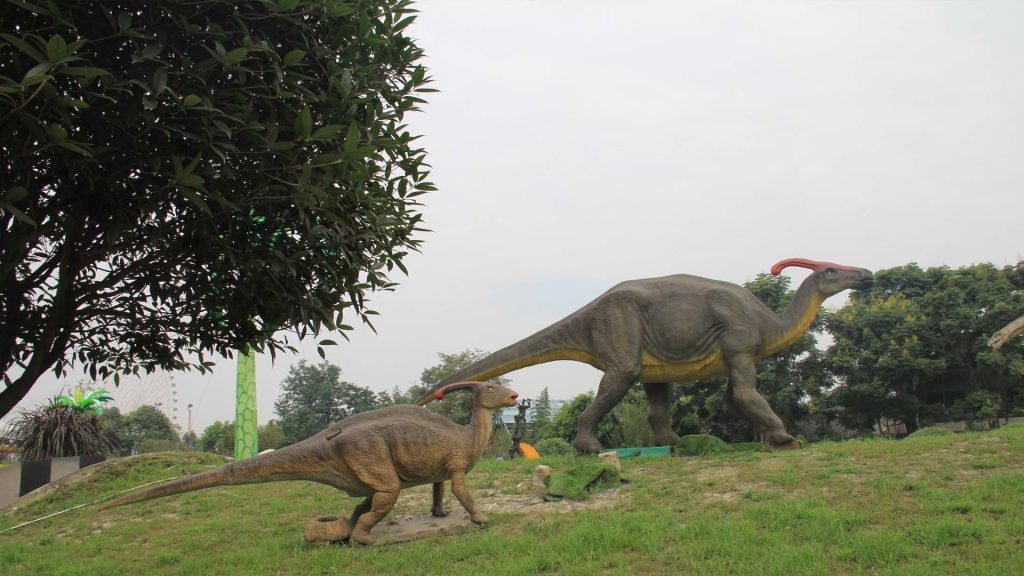
The crest is the reason a Parasaurolophus is worth building. It is a sound instrument as much as a display — the hollow tube […]
View Product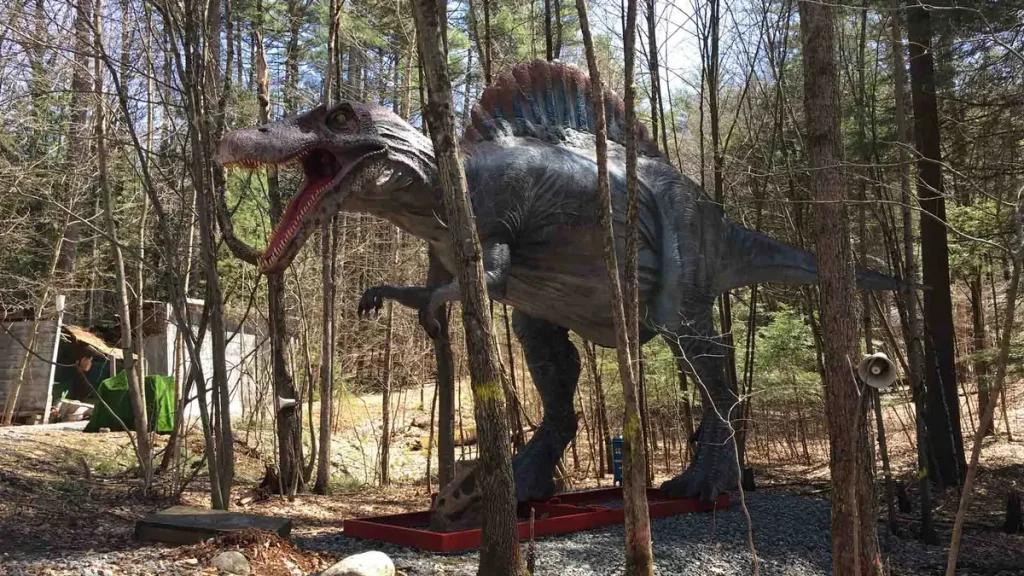
Life-size animatronic Spinosaurus with its signature sail, crocodile-like snout and jaw, neck and tail motion — built to order, outdoor rated.
View Product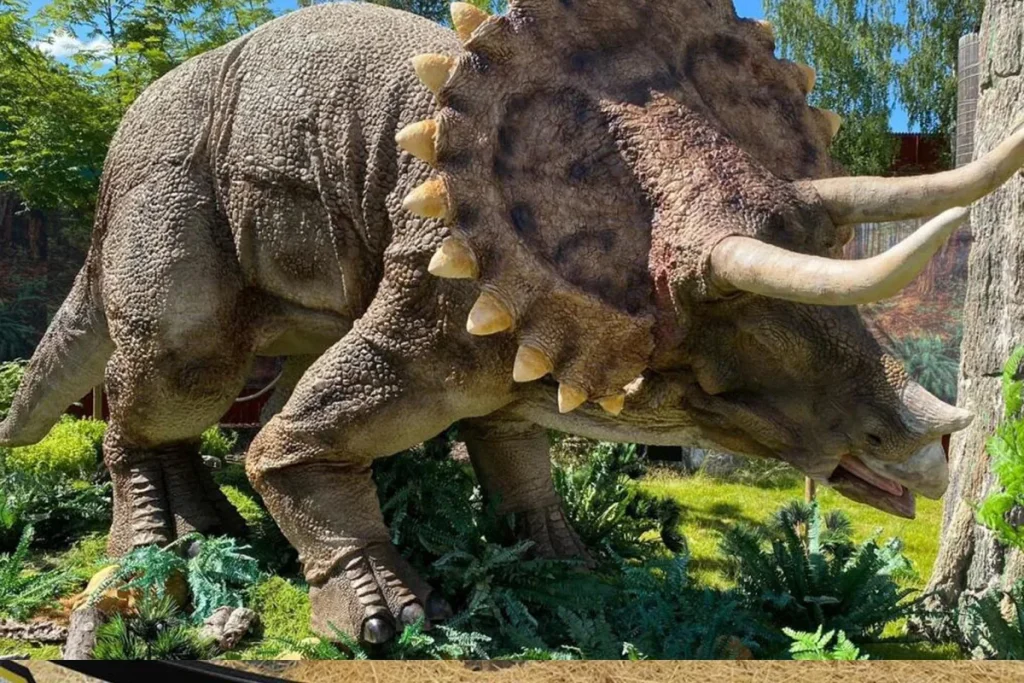
A 7–9 m three-horned exhibit — the family photo piece with steel-cored horns and a wind-rated frill.
View ProductThree things buyers usually want settled before they ask for a drawing — what drives the number, how the piece is actually built, and what to check between suppliers.
Animatronic Dinosaur Buying Guide for Museums & Theme Parks Choosing the right animatronic dinosaur for your museum, theme park, or zoo is one of […]
Read the guide →From fossil reference to finished skin — how proportions, texture, colour and weathering are decided, and what separates a realistic build from a cartoon one.
Read the guide →Why Motor Choice Matters More Than Buyers Expect Motor selection is usually treated as a manufacturing detail. It is not. It is the decision […]
Read the guide →Send your dimensions, movement requirements and installation site. You get a realistic budget range and a dated build schedule.
Or email info@hltdino.com — we reply within one business day.