Animatronic Dinosaurs
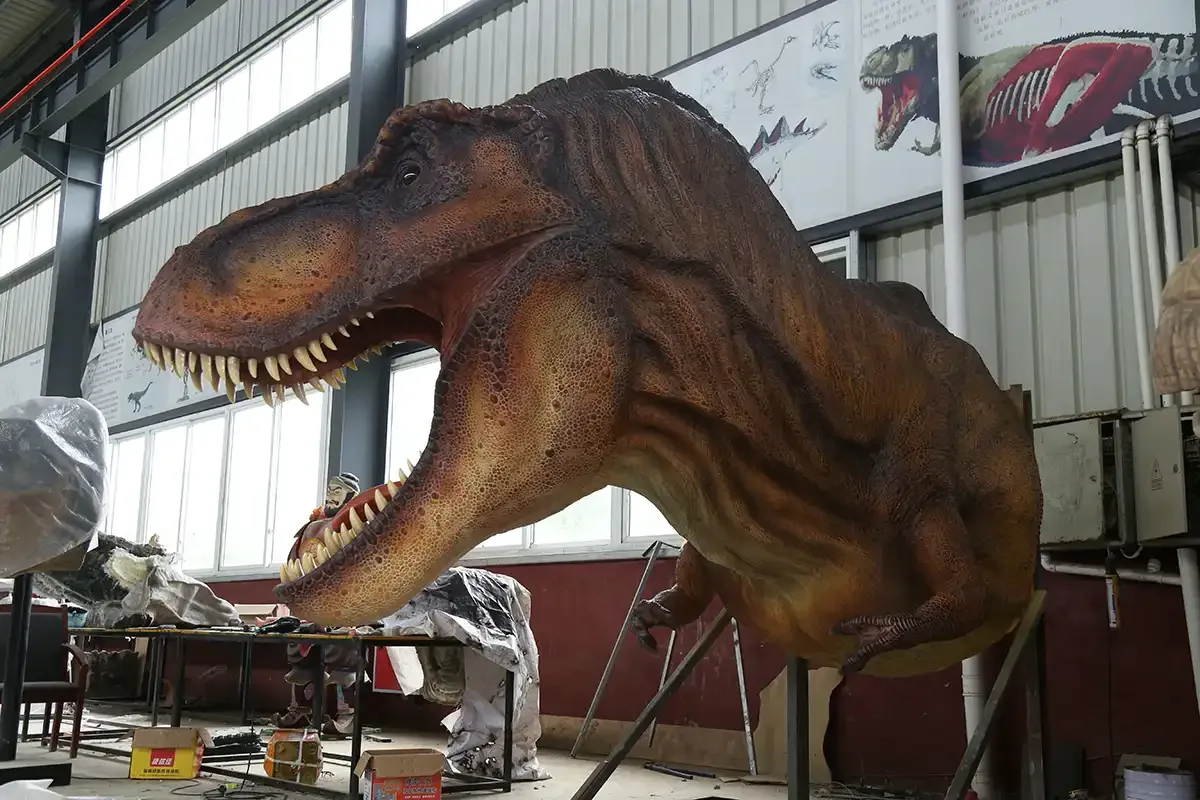
Motion-Activated T-Rex Animatronic
Gesture-responsive T-Rex that reads hand movement and approach speed — every visitor gets a different reaction. Indoor or outdoor, built to order.
Gesture-responsive T-Rex that reads hand movement and approach speed — every visitor gets a different reaction. Indoor or outdoor, built to order.
A gesture-triggered T-Rex is a sensor product, not a sculpture product. The animal can be identical to a static build; what visitors remember is that it answered them. That shifts most of the design work onto two questions: what the sensors can actually detect, and how the reaction is timed.
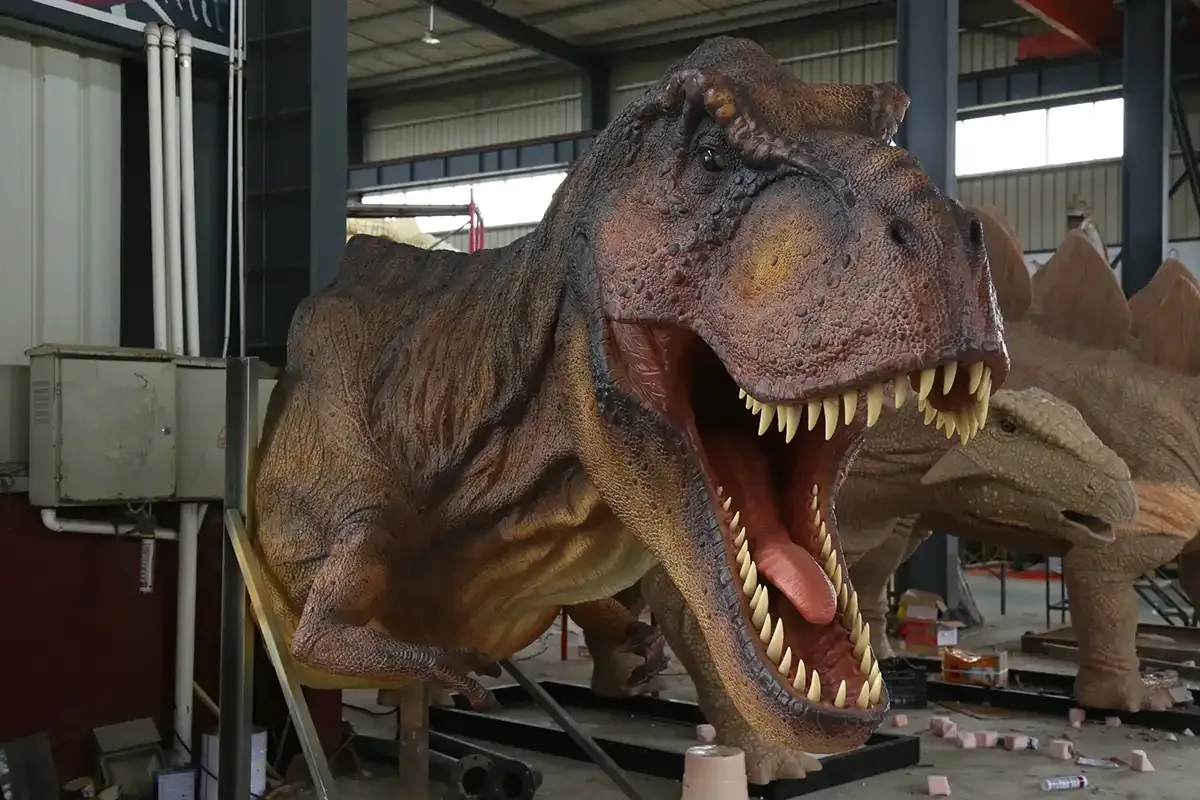
Standard set is infrared presence plus ultrasonic motion tracking. Infrared tells the controller something is there. Ultrasonic tells it something is moving, and roughly how fast. That combination is enough to distinguish three cases, which is what makes the interaction feel personal.
A sensor that triggers instantly looks mechanical. A sensor that triggers 400 to 700 milliseconds after the movement looks attentive. We tune that delay on site, because it depends on the viewing distance: at three metres the visitor sees the reaction start almost immediately, at fifteen metres the same delay reads as the animal noticing.
Reset time matters just as much. Too fast and the animal fires repeatedly at the same group. Too slow and the next visitor arrives at a dead exhibit. A 12 to 20 second cooldown, set to your traffic pattern, is the usual answer.
Outdoor installations produce false triggers from moving branches, passing vehicles and reflective surfaces. Three measures handle most of it: a narrow detection cone aimed at the visitor zone rather than at the path, a minimum object size threshold, and a two-sensor confirmation so a single stray reflection does not fire the show. Where a path passes close to the animal, we aim the sensors across the path rather than along it.
The controller sits in the base cabinet with the audio. Reaction library is a configuration file rather than hard-coded motion, so the animal can be retuned after opening once you know how visitors actually behave around it. Sensor heads are replaceable without removing the skin.
Can different visitors get different reactions? Yes. Approach speed and motion type map to different behaviours, and we set the mapping at commissioning rather than shipping a single trigger.
Will it work in a crowd? Up to a point. With a group, the nearest moving shape dominates. If the exhibit sits at a busy junction, we widen the cone and lengthen the cooldown so a queue does not cause constant firing.
Does the sensor need maintenance? Lenses need cleaning on the same schedule as the skin. Dust and pollen on the lens is the most common cause of a unit that stops reacting.
Materials. National-standard steel skeleton, moulded silicone skin, acrylic paint colour finish.
Related. the standard T-Rex build, museum placement, the interactive range.
Same factory and the same build standard. What changes is size, movement set and how the exhibit is meant to be used on site.
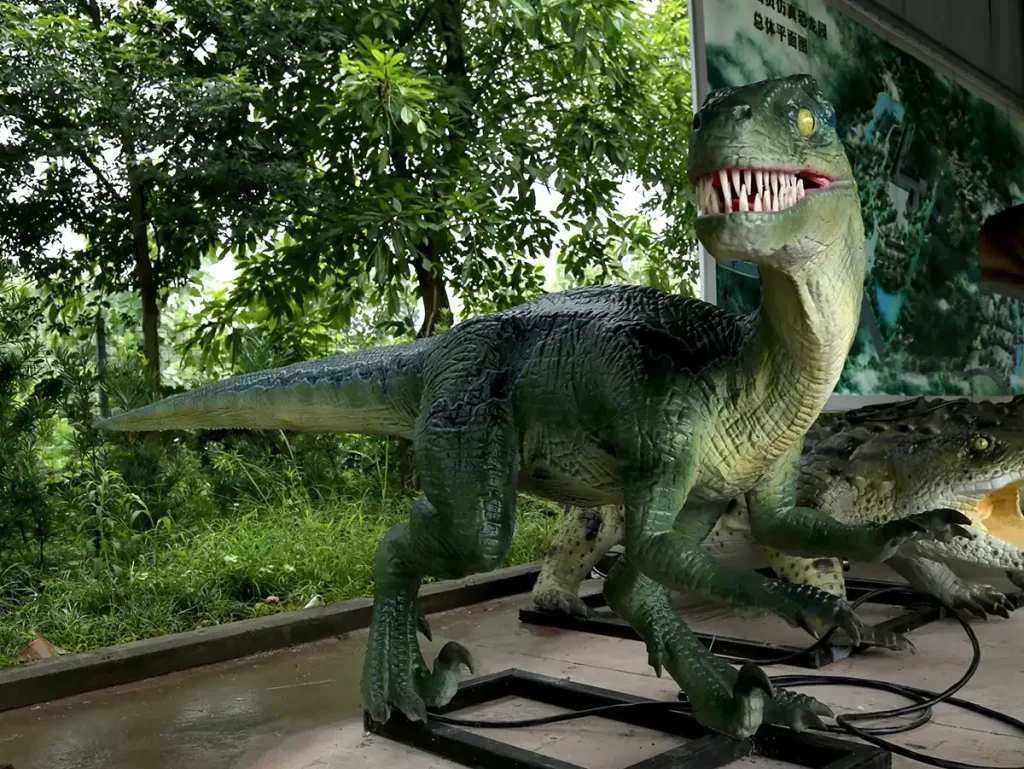
A velociraptor is read from the feet up. The sickle claw on the second toe, the stiff counterbalancing tail, the forward-leaning line from hip […]
View Product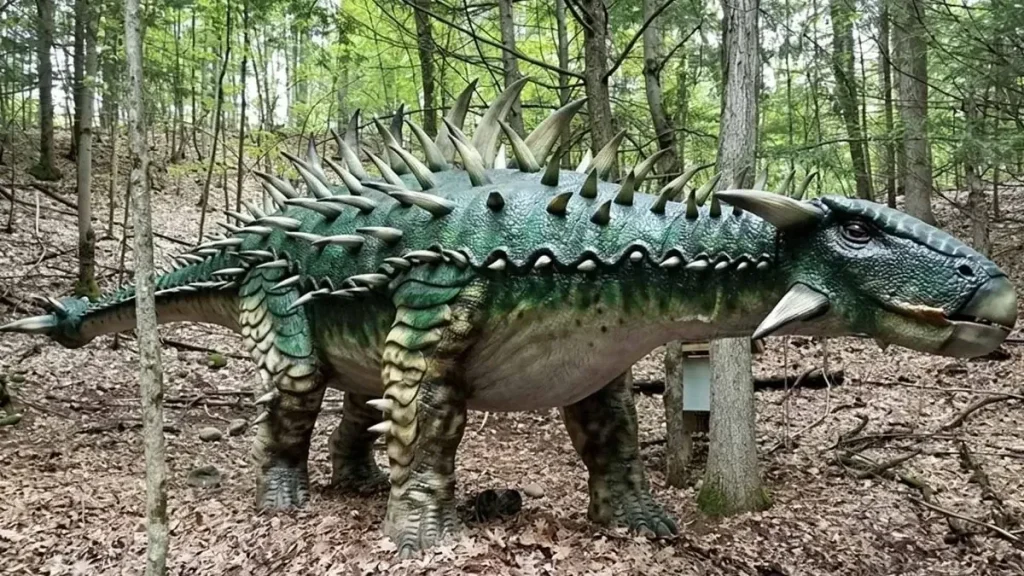
Custom animatronic ankylosaurus with sculpted osteoderms and a 90° tail-club swing — 4–8 m, built to order for parks and museums.
View Product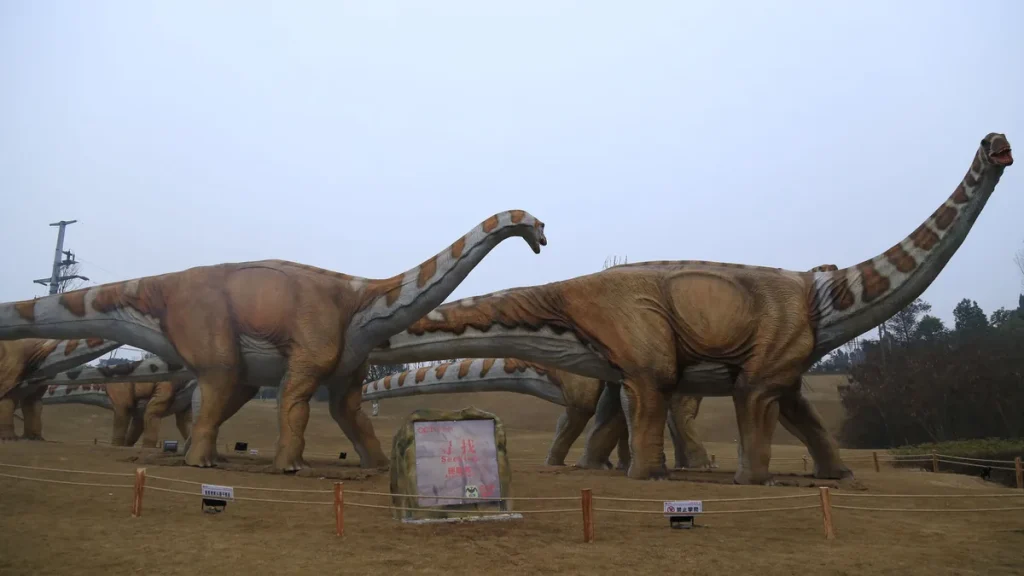
A long-neck dinosaur is the piece that makes a park look like a park from a distance. It is also the build where the […]
View ProductThree things buyers usually want settled before they ask for a drawing — what drives the number, how the piece is actually built, and what to check between suppliers.
Animatronic Dinosaur Buying Guide for Museums & Theme Parks Choosing the right animatronic dinosaur for your museum, theme park, or zoo is one of […]
Read the guide →From fossil reference to finished skin — how proportions, texture, colour and weathering are decided, and what separates a realistic build from a cartoon one.
Read the guide →Why Motor Choice Matters More Than Buyers Expect Motor selection is usually treated as a manufacturing detail. It is not. It is the decision […]
Read the guide →Send your dimensions, movement requirements and installation site. You get a realistic budget range and a dated build schedule.
Or email info@hltdino.com — we reply within one business day.