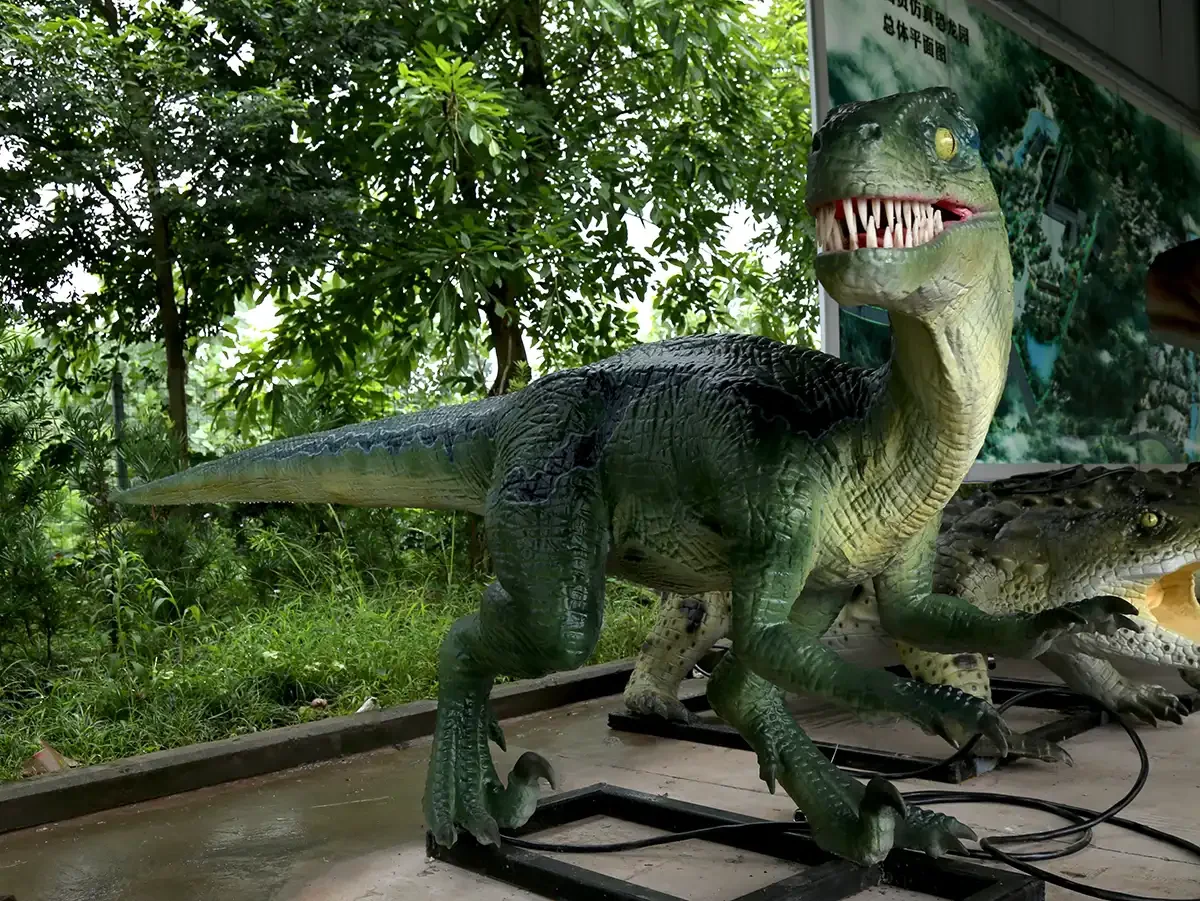
Animatronic Dinosaurs
A velociraptor is read from the feet up. The sickle claw on the second toe, the stiff counterbalancing tail, the forward-leaning line from hip to skull — miss any of those three and what you have built is a generic theropod with a long head. Most park statues fail on the tail: it droops, because a drooping tail is easier to mould and easier to crate.
This build is a single static piece with no mechanism inside. That is deliberate — a statue that does not move has no servos to service, no control box to house, and nothing to fail in year three. Where a trail wants a dinosaur that visitors walk past rather than wait for, a static piece usually lasts longer and needs less attention.
| Species | Velociraptor (dromaeosaurid theropod), Late Cretaceous |
| Era | Campanian, roughly 75–71 million years ago |
| Type | Single-piece static outdoor display — no internal mechanism |
| Size | 2.5–4 m long, 1.4–2.0 m at the hip; custom 1.8–5 m |
| Material | Welded galvanised steel skeleton, high-density foam sculpt, patented silicone skin (ZL 2022 1 0224489.5) |
| Surface | Hand-painted UV-resistant pigment, weatherproof clear coat, feather-tract detailing |
| Animation | None — static pose. Optional head or tail servo on request |
| Sound | Optional external weatherproof speaker with snarl module |
| Power | Only if sound is added — 110/220 V AC at the speaker, statue itself draws nothing |
| Installation | Pre-drilled steel base plate, ground anchoring, 2–3 technicians, 4–6 hours |
| Customisation | Size, facing direction, pose, paint scheme, base plate, sound option |
| Support | 12-month warranty on structure and finish; crated shipment, on-site technician available |
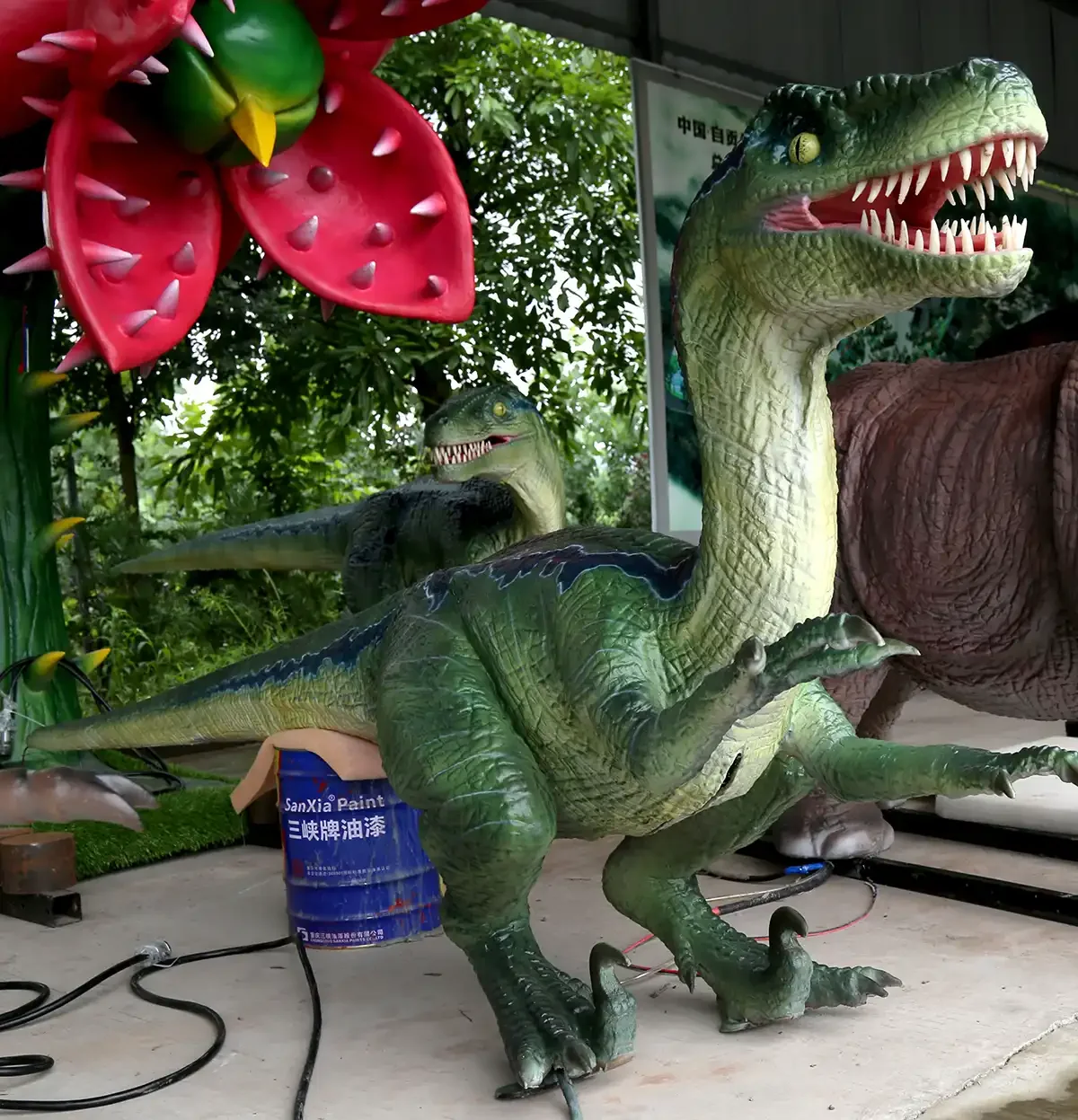
This piece is built in an alert-hunting stance: head raised, jaws open, one sickle claw lifted, tail extended straight back as a counterweight. That pose works because it reads as arrested motion from any angle a visitor is likely to approach from — front, side, and the three-quarter view people actually get on a winding trail.
A crouching or lunging pose reads better in a photograph and worse on site. Photographs are taken from a chosen angle; trails are walked from every angle. If the piece is going to be passed at close range on both sides, a pose with a clear silhouette from the widest arc of approach wins, and that usually means upright over dramatic.
On a piece this length, the tail carries roughly a third of the visual weight and almost none of the structural support. It still has to hold a straight line for years of sun and frost, so it is built on a continuation of the steel skeleton rather than as a foam shape hung off the hips.
This is also the part that fails first on low-specification builds. A tail formed over a foam block with no steel inside sags within a season or two, and once it sags the whole animal reads as tired. The fix is inside the mould, which means it cannot be added later — worth asking about before an order is placed rather than after.
A static piece needs no electrical supply at the position. On a long park trail that is a real advantage: no trenching, no outdoor socket, no control box to weatherproof, no annual inspection of the electrics. The only electrical item is the optional speaker, and if sound is left off the install is purely mechanical.
Where sound is wanted, the sensible arrangement is a speaker module at the base with the trigger facing the path, so visitors hear the animal before they see it. That adds a 110/220 V supply point at the position — one cable, but it does change the site preparation, so it should be decided at order rather than at install.
It suits the middle of a trail rather than the entrance. Entrances want scale — a piece that signals the whole exhibit; a velociraptor at 2.5–4 m is a mid-trail encounter, sized for the moment a visitor rounds a corner and finds something at eye level.
It also suits positions where a group of statues is planned. One raptor alone reads as a single prop; three at slightly different angles and sizes read as a pack, and three small pieces usually use less material than one large centrepiece. Where the trail has a clearing, that grouping is usually the better spend.
Yes — the same body can be built with head, jaw and tail movement on servos, with a motion sensor. It becomes a different product with a different service profile: more impact, but it needs power at the position and periodic mechanical attention. Decide which one you want before quoting, because the frame differs.
The base plate is pre-drilled for ground anchoring. On soil it takes ground anchors; on paving or concrete it takes expansion bolts, and the plate footprint has to be sized to the surface. Tell us the surface type at order so the plate is made for it rather than adapted on site.
The build is IP65 rated and specified for permanent outdoor positions. The variables that shorten life are coastal salt air and standing water at the base, not sun or rain. Both are handled by a different surface specification rather than by a different product.
Up to about 4 m the body ships as one piece. Above that the tail sections off for crating and joins on site, which is a mechanical joint rather than a repair. Sectioning is planned at build, so the maximum length is agreed before fabrication starts.
Same factory and the same build standard. What changes is size, movement set and how the exhibit is meant to be used on site.
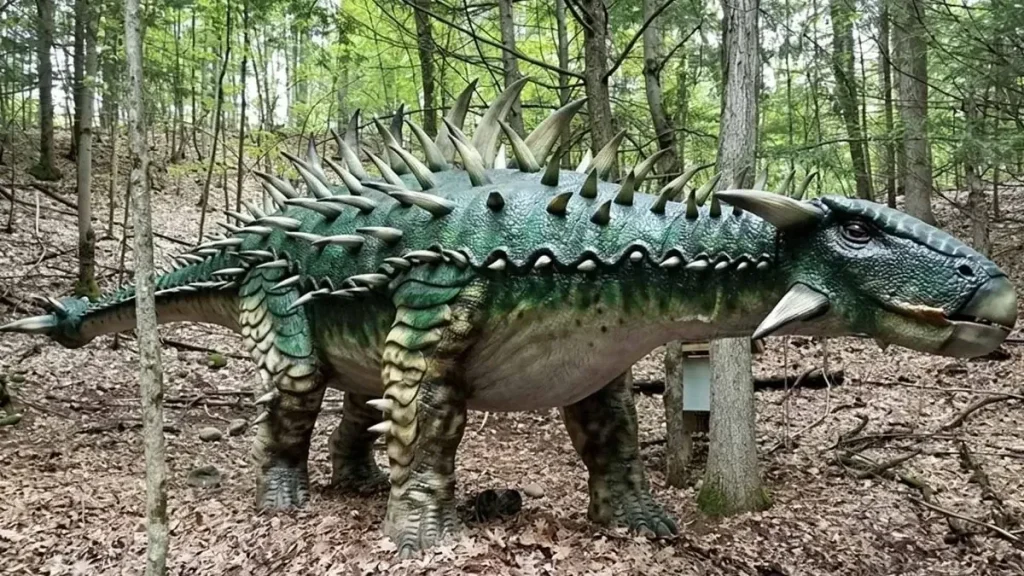
Custom animatronic ankylosaurus with sculpted osteoderms and a 90° tail-club swing — 4–8 m, built to order for parks and museums.
View Product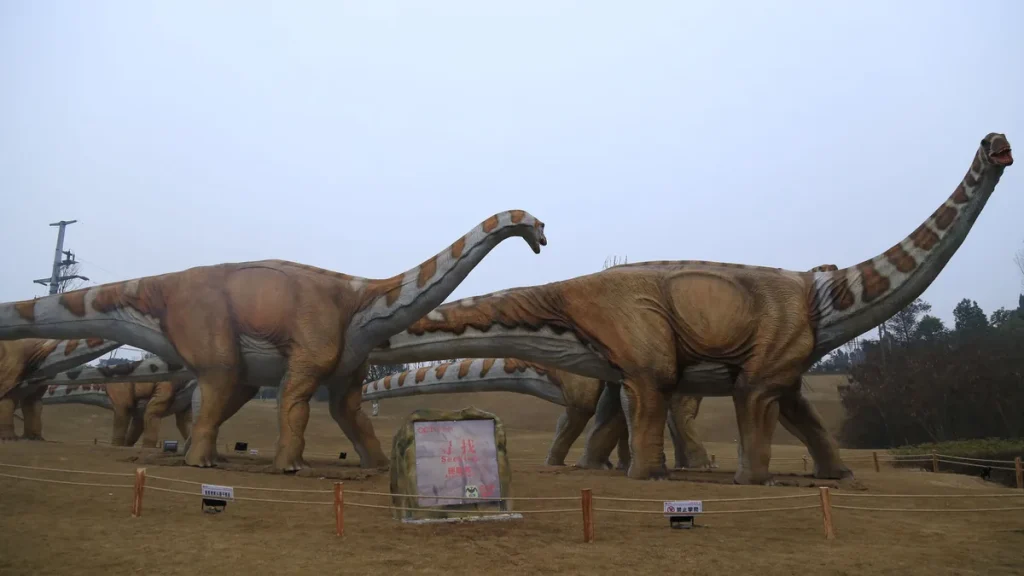
A long-neck dinosaur is the piece that makes a park look like a park from a distance. It is also the build where the […]
View Product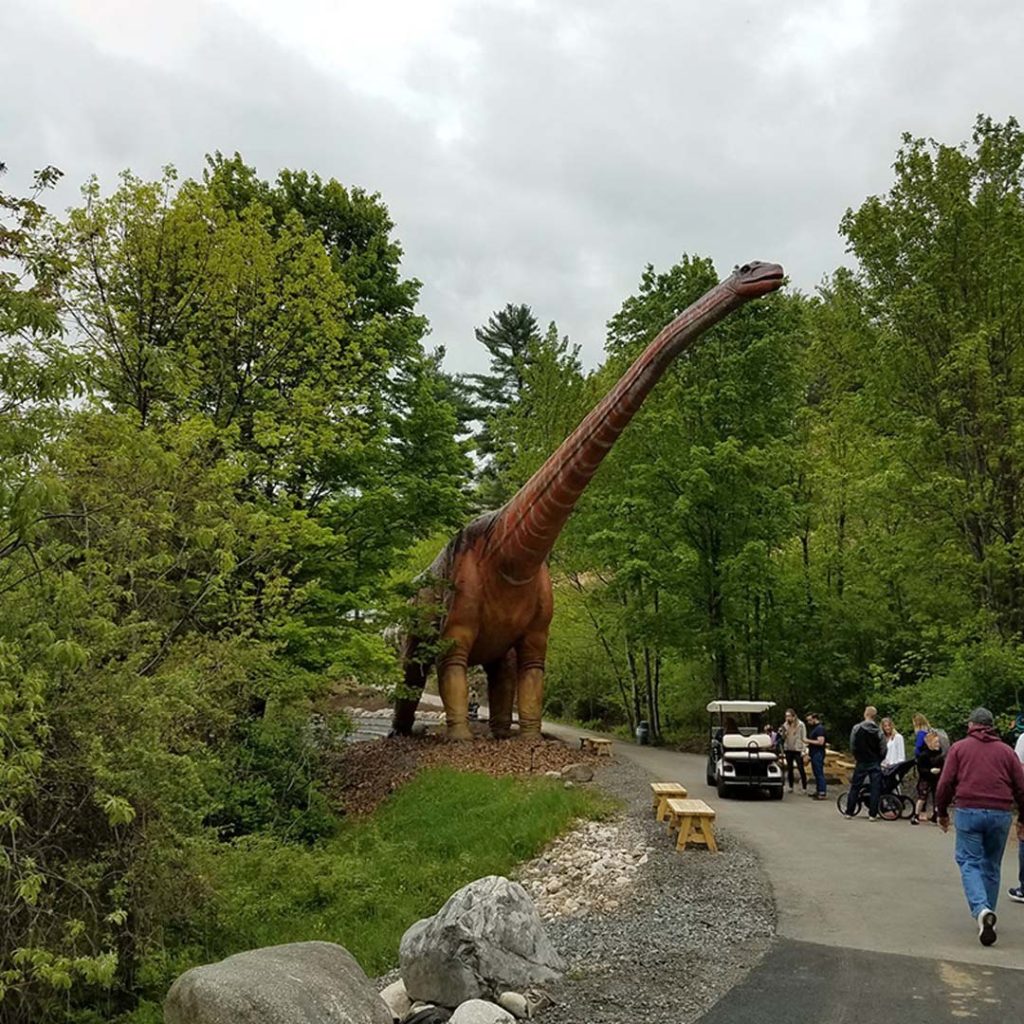
A sauropod changes the scale of everything around it. An Argentinosaurus stands with its neck up and its head above the treeline of a […]
View ProductThree things buyers usually want settled before they ask for a drawing — what drives the number, how the piece is actually built, and what to check between suppliers.
Animatronic Dinosaur Buying Guide for Museums & Theme Parks Choosing the right animatronic dinosaur for your museum, theme park, or zoo is one of […]
Read the guide →From fossil reference to finished skin — how proportions, texture, colour and weathering are decided, and what separates a realistic build from a cartoon one.
Read the guide →Why Motor Choice Matters More Than Buyers Expect Motor selection is usually treated as a manufacturing detail. It is not. It is the decision […]
Read the guide →Send your dimensions, movement requirements and installation site. You get a realistic budget range and a dated build schedule.
Or email info@hltdino.com — we reply within one business day.