Animatronic Dinosaurs
Life-Size Animatronic T-Rex
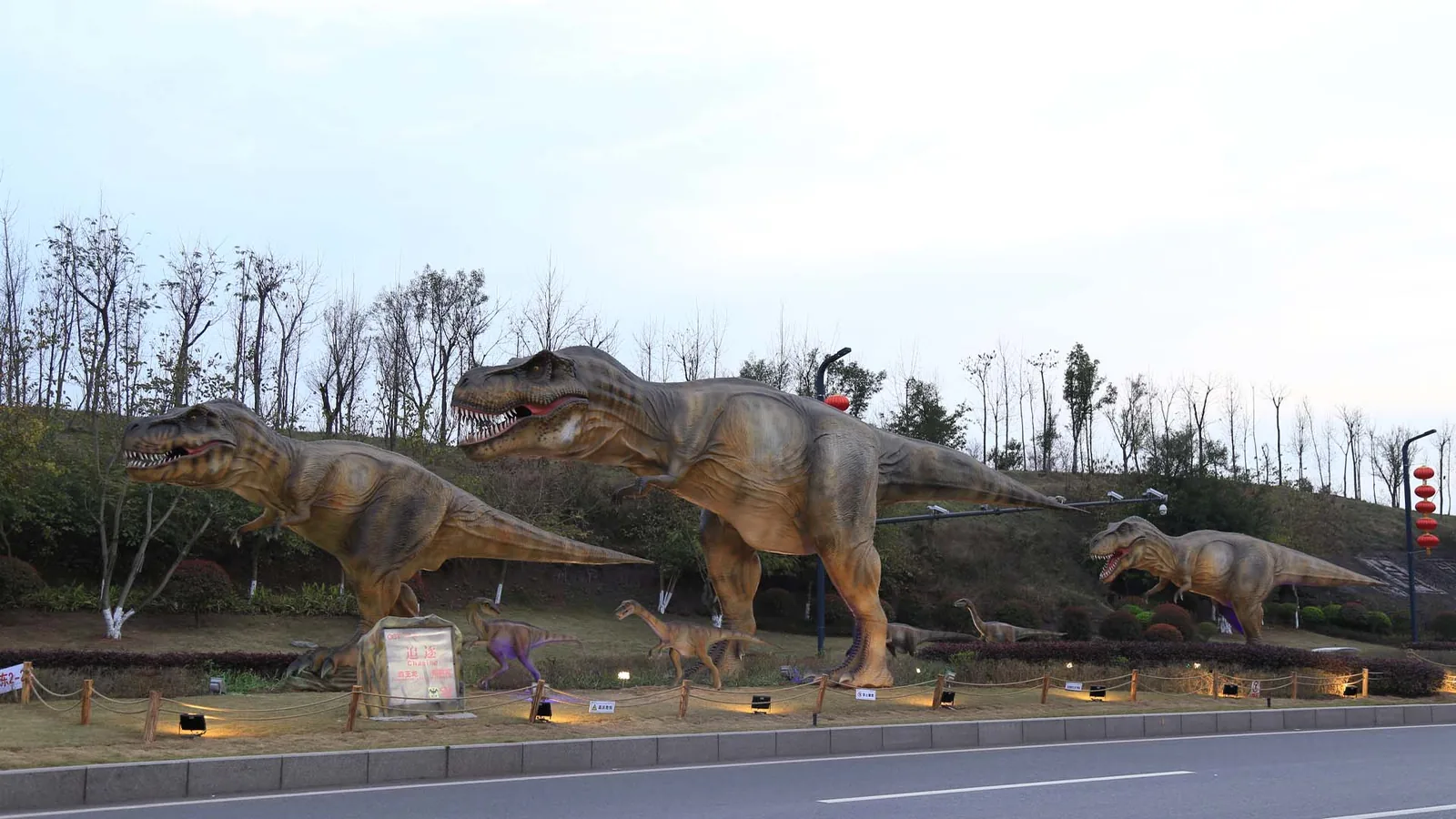
A life-size animatronic T-Rex built to your dimensions — 4–12 m body length, six to twelve motion axes, sensor or remote control.
A life-size animatronic T-Rex built to your dimensions — 4–12 m body length, six to twelve motion axes, sensor or remote control.
Every animatronic manufacturer makes a T-Rex and most of them are wrong in the same way: the head is too big for the body, or the body is too upright. A Tyrannosaurus at rest carries its spine near horizontal with the head forward, and that posture is what separates a reconstruction from a movie monster.
| Species | Tyrannosaurus rex |
|---|---|
| Era | Late Cretaceous, about 68 to 66 million years ago |
| Type | Full animatronic with synchronised movement |
| Size | Up to 13 m long × 5 m high; custom |
| Material | Weatherproof internal frame, high-density foam, hand-finished surface |
| Surface | Hand-painted UV-resistant finish, museum-grade texture |
| Animation | Two-axis head, jaw, eye blink, tail sway (4 to 6 servo groups) |
| Sound | Synchronised roar and breathing, motion-activated |
| Power | 110 / 220 V AC, 400 W average, outdoor-rated control box |
| Installation | Modular assembly, indoor or outdoor; 3 to 5 technicians, 1 to 2 days |
| Customisation | Size, pose (hunting / roaring / stalking), coloration, base design |
| Pose | Horizontal spine, head carried forward — the fossil posture |
| Support | 2 years mechanical / 1 year electronics and skin |
At 13 metres with a 5-metre height, the animal reads from the spine line first. Horizontal spine, head carried forward and slightly low, tail counterbalancing — that is the pose that matches the fossil evidence and the one that photographs correctly from the side.
An upright pose, head high like a kangaroo, is the 1970s reconstruction. It is also the version most cheap builds ship, because it is easier to balance. We build the horizontal pose on a frame designed for it.
The head runs on two axes — turn and tilt — with jaw, eye blink and tail sway on separate drives. Two axes matters because a T-Rex that only turns its head sideways looks mechanical; the tilt is what makes it look down at a visitor.
Four hundred watts average, 110 / 220 V, outdoor-rated control box. The roar and breathing are motion-activated and synchronised to the jaw, which is the difference between an animal that reacts and a speaker that fires.
Three poses: hunting with the head low and forward, roaring with the jaw open and the neck extended, and stalking with the body angled. Installation is modular across three to five technicians and one to two days, indoors or out.
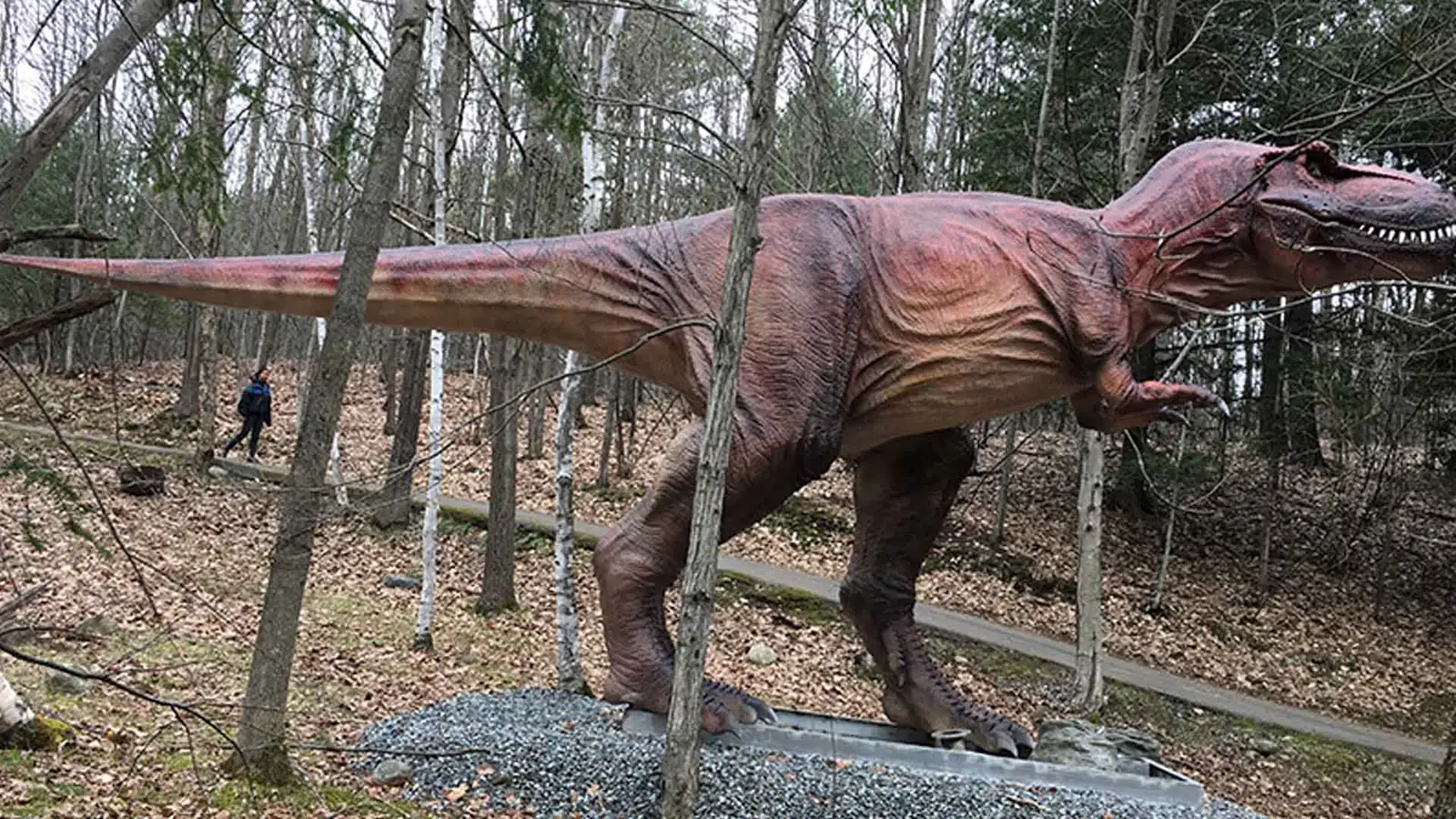
Why does the pose matter so much? A horizontal spine with the head forward matches the fossil evidence. An upright head-high pose is the 1970s reconstruction and reads as a movie monster.
Is the head two-axis? Yes — turn and tilt. The tilt is what lets it look down at a visitor rather than sweeping past.
Can it be smaller than 13 metres? Yes, custom sizes are built on the same design. Below about 8 metres the proportions start reading as a juvenile.
What is the warranty? Two years mechanical, one year electronics and skin — the skin is the part with wear exposure.
110 / 220 V AC at 400 W average with an outdoor-rated control box. The load is moderate; the cable route is the practical constraint on a trail, because the animal usually sits at the end of a path rather than beside a building.
Outdoors the base needs a hard standing and drainage. A 13-metre animal on soil settles unevenly, and an uneven T-Rex shows at the hip line — the first place anyone looks.
Assembly across three to five technicians over one to two days, then the motion is tuned: head turn reduced, tilt range set so it looks down rather than over, jaw slowed, and the roar timed to fire on the tilt rather than after it.
The sound timing is the setting that most changes how the animal comes across. A roar that arrives on the head movement reads as an animal; a roar that arrives a second later reads as a speaker.
Materials. Weatherproof internal frame, high-density foam, hand-finished surface with UV-resistant museum-grade finish, two-axis head drive, motion-activated audio.
Related. the animatronic dinosaur range, the T-Rex ride, the T-Rex skeleton, request a quote.
Same factory and the same build standard. What changes is size, movement set and how the exhibit is meant to be used on site.
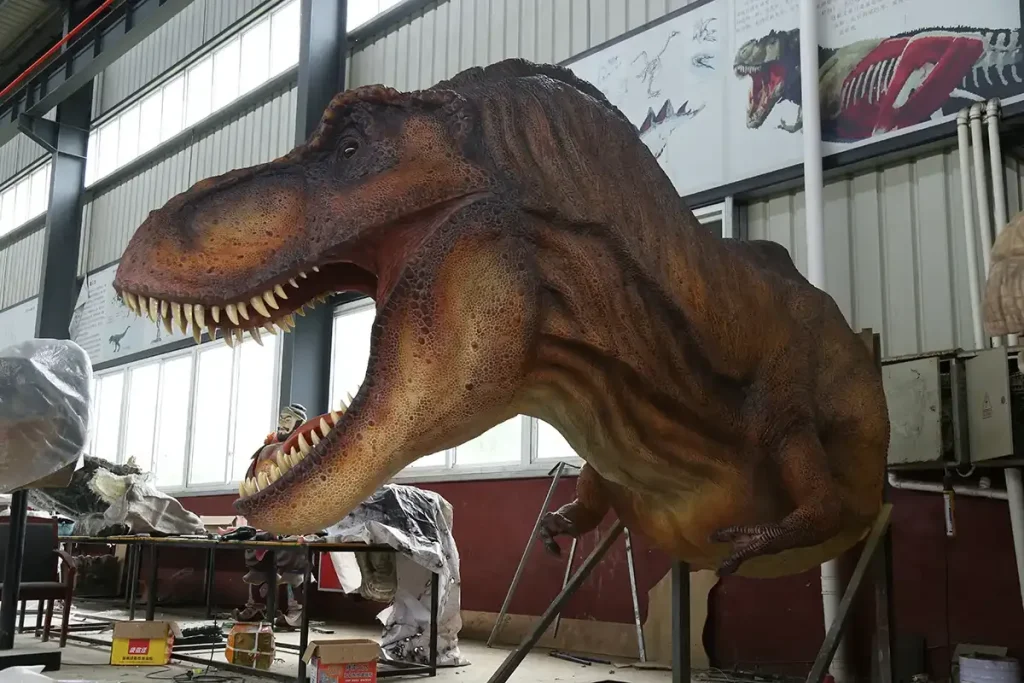
Gesture-responsive T-Rex that reads hand movement and approach speed — every visitor gets a different reaction. Indoor or outdoor, built to order.
View Product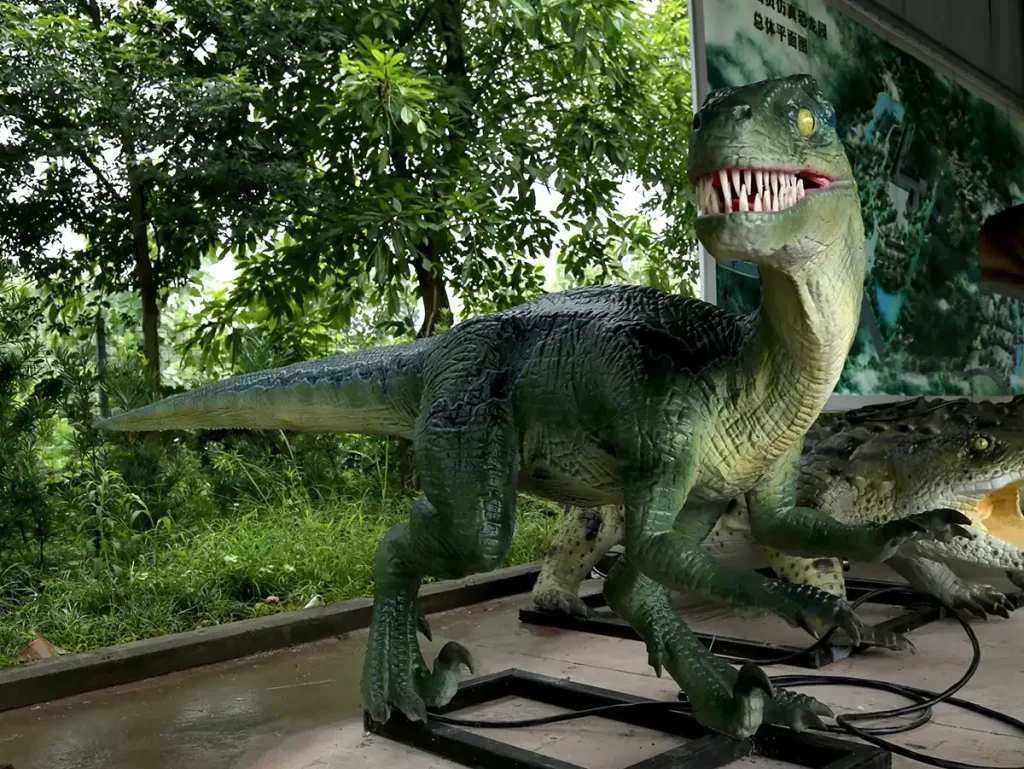
A velociraptor is read from the feet up. The sickle claw on the second toe, the stiff counterbalancing tail, the forward-leaning line from hip […]
View Product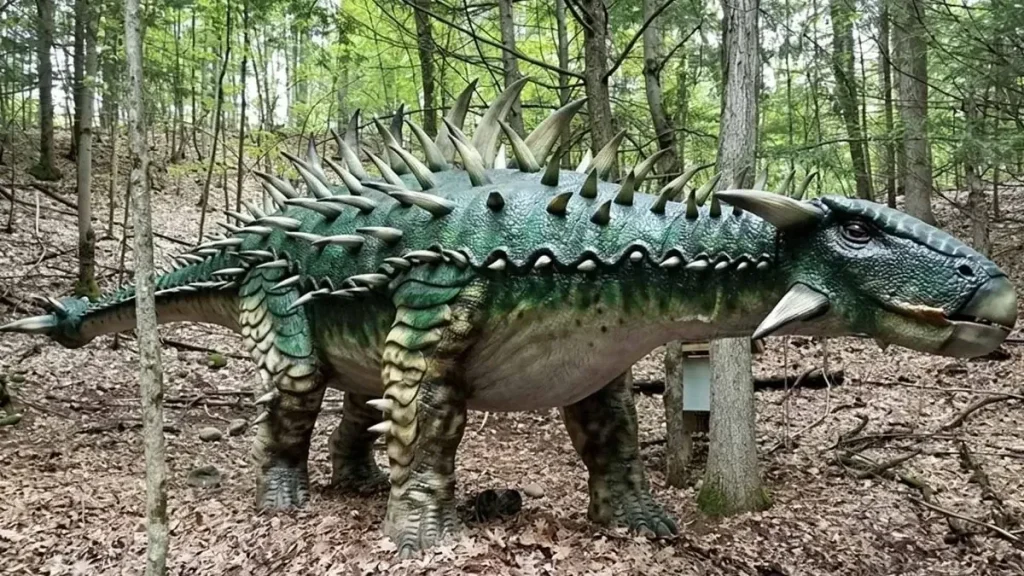
Custom animatronic ankylosaurus with sculpted osteoderms and a 90° tail-club swing — 4–8 m, built to order for parks and museums.
View ProductThree things buyers usually want settled before they ask for a drawing — what drives the number, how the piece is actually built, and what to check between suppliers.
Animatronic Dinosaur Buying Guide for Museums & Theme Parks Choosing the right animatronic dinosaur for your museum, theme park, or zoo is one of […]
Read the guide →From fossil reference to finished skin — how proportions, texture, colour and weathering are decided, and what separates a realistic build from a cartoon one.
Read the guide →Why Motor Choice Matters More Than Buyers Expect Motor selection is usually treated as a manufacturing detail. It is not. It is the decision […]
Read the guide →Send your dimensions, movement requirements and installation site. You get a realistic budget range and a dated build schedule.
Or email info@hltdino.com — we reply within one business day.