Dinosaur Rides
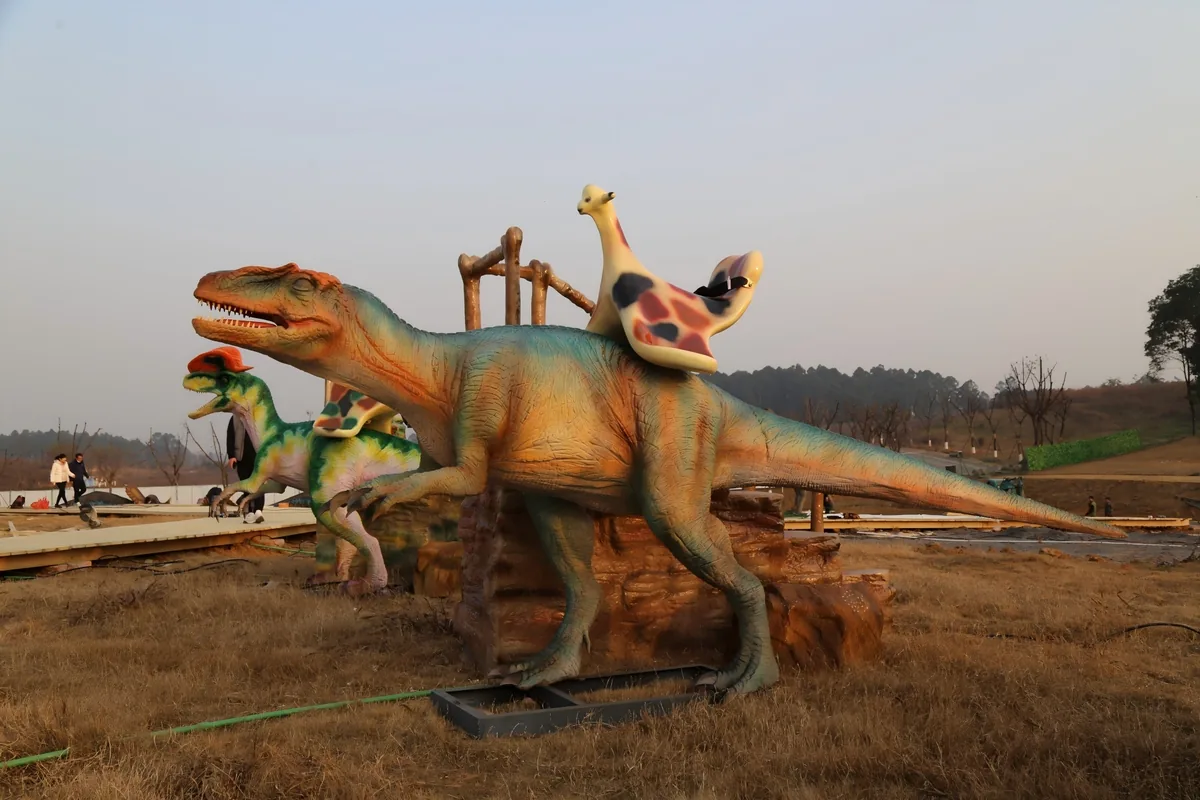
The Allosaurus is the only unit in this range rated for a rider over 100 kg, and that single number changes who can sit on it. It is the build for parks with teenage visitors, family rides where a parent rides behind a child, and operators who are tired of turning people away at the gate.
| Overall size | 4.2 m long × 1.4 m wide × 2.5 m high, saddle included |
|---|---|
| Rider weight | Up to 100 kg |
| Rider age | 5 to 14 years, plus adult supervision |
| Motion | High-torque servo drive — body rise and fall, head swing, tail sweep |
| Audio | Multi-channel audio — roar, bite and low growl layers |
| Lighting | LED eyes, red at night |
| Trigger | Body-heat infrared plus sound trigger, dual mode |
| Control | Timed cycle, remote, or coin-operated |
| Body | High-density foam with silicone skin over glass fibre |
Most animatronic rides are rated around 60 to 80 kg, which is a child and nothing else. At 100 kg the frame and the drive are a different order of build: heavier bearings at the pivot points, a wider saddle plate, and a servo that does not slow visibly under load.
In practice this is what lets a parent sit behind a younger child on a two-seat layout, and it is what stops the queue turning into an argument at the gate when a twelve-year-old turns up.
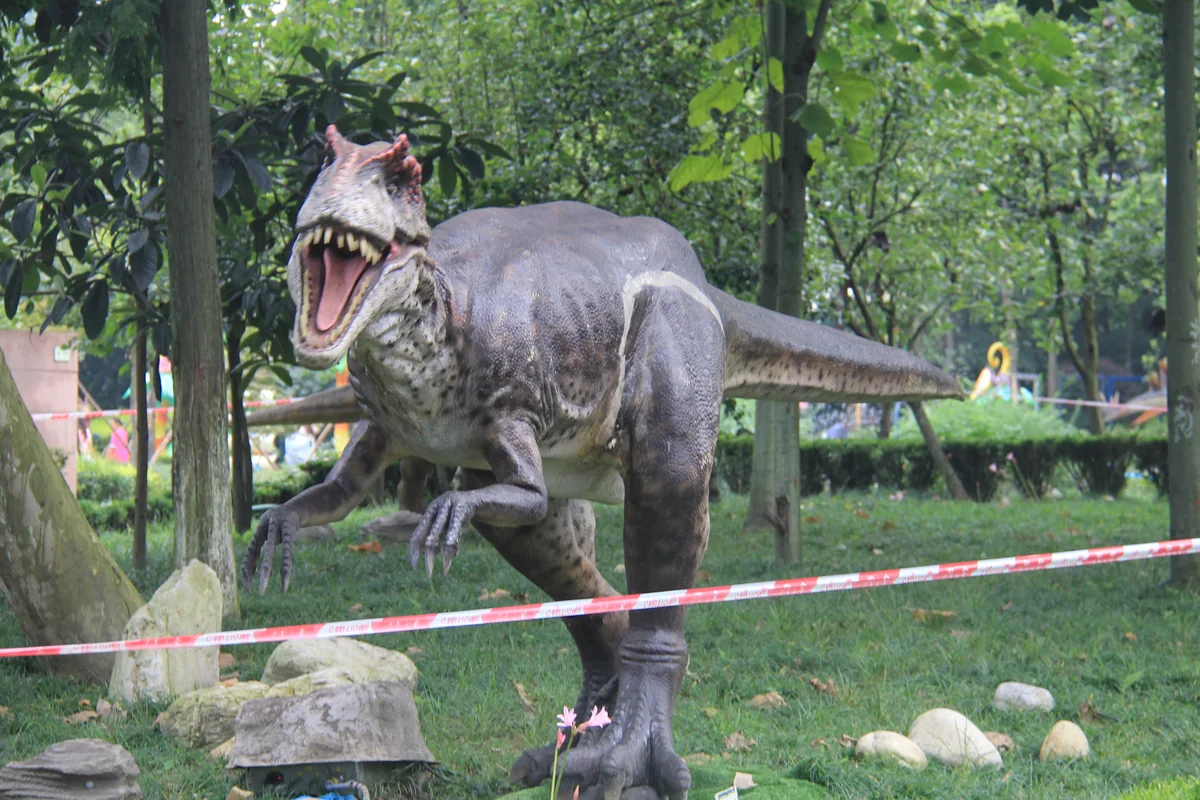
A 4.2-metre body swinging through its full arc needs the base to be heavier than the animal, or the whole build rocks. The drive is on the body and the base is ballasted, which is why this unit is delivered as a single crated assembly rather than in sections.
The tail sweep is deliberately slower than the head. A long tail moving at head speed reads as a whip and clears the floor by too little; slowing it down is what makes the motion read as an animal rather than a mechanism.
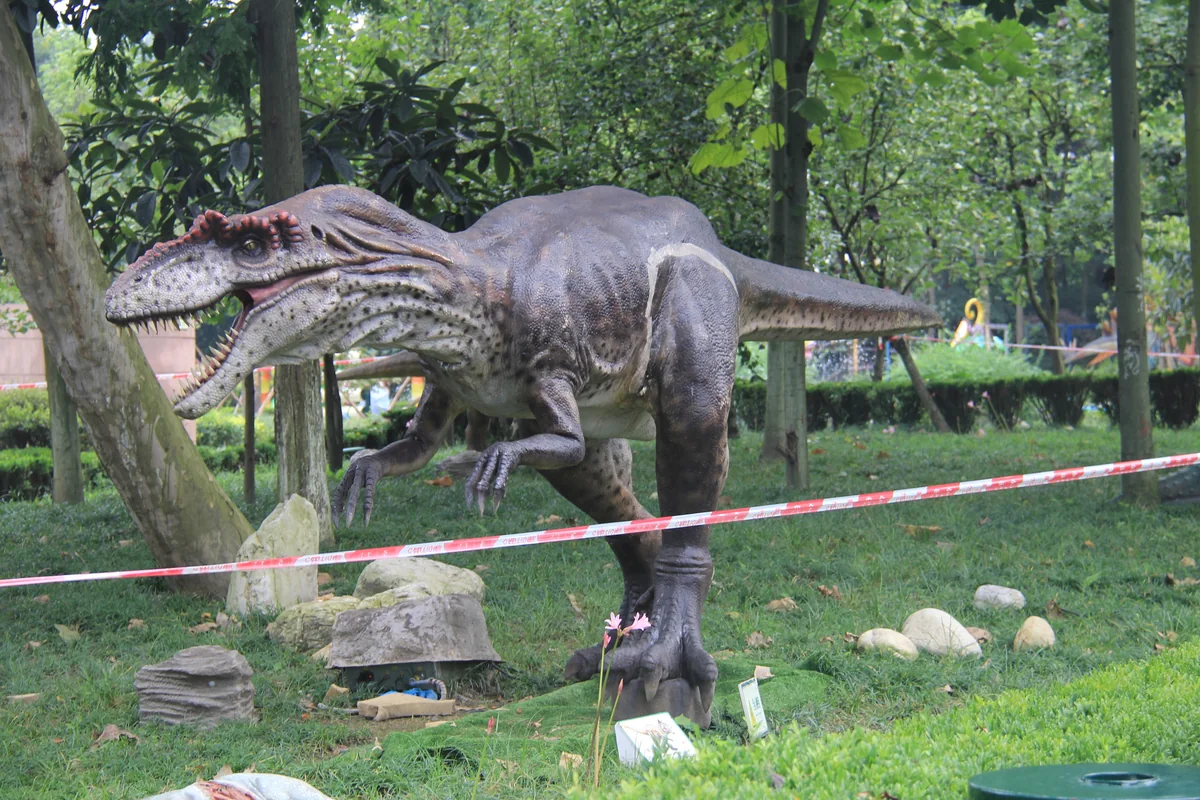
The audio is layered rather than a single loop: a low growl bed, a roar that fires on trigger, and a bite accent that only plays when the head is at the front of its swing. Firing the bite sound at the wrong point in the cycle is the most common reason a build feels cheap, and it is a programming question, not a speaker question.
Dual triggers matter outdoors. Body-heat infrared is accurate but blind at distance in warm weather; a sound trigger covers the case where a group approaches loudly. Running both means the unit greets visitors in either condition.
Can adults ride it? Up to 100 kg. Above that, the frame rating is exceeded and we will not rate it.
Does it need an operator? On timed cycle, no. On coin-op, no. On remote, yes.
Can the roar be replaced? Yes, within the available sound set. A custom roar needs a clean reference recording.
What is the footprint with the tail swing? The body is 4.2 m, and the tail arc adds clearance behind. Send the site plan and the arc is marked on the drawing.
A 100 kg rated build draws more than the smaller units in this range, and the servo drive pulls its peak on the rise rather than on the hold. That peak is what the supply has to carry: a shared circuit with other rides on the same spur will trip on the first full cycle of the day.
The site requirement is a dedicated supply at the ride position. Where the unit is going into a park with a distribution board nearby, this is a single cable run and a breaker. Where the ride is going onto a paved area with no services, the cable route has to be planned before the base position is fixed — running power afterwards across a pedestrian route is the mistake that delays an opening.
The tail sweep adds clearance behind the animal. Confirm the arc against the nearest fixed object before the position is agreed, because moving the ride after installation means moving the supply as well.
This unit is delivered crated as one assembly rather than in sections, because the base is ballasted and the body is tuned to it. Position it, connect the supply, and the first run is done with our technician and the operator in the same place.
Three things are set on site. The rise amplitude, which is reduced for a park that wants a gentler ride and increased for one that wants the motion visible from the gate. The audio trigger point, which has to fire the bite accent at the front of the head swing rather than on the return. And the tail speed, which is slowed until the arc clears the ground by a visible margin.
The dual trigger is calibrated against the actual entrance. Body-heat infrared and sound trigger are both active, and their balance is set by walking the approach path and watching which one fires first.
Materials. High-density foam body with silicone skin over glass fibre, high-torque servo drive, leather-textured saddle.
Related. the full ride range, theme park installations, the Pachycephalosaurus ride, request a quote.
Same factory and the same build standard. What changes is size, movement set and how the exhibit is meant to be used on site.
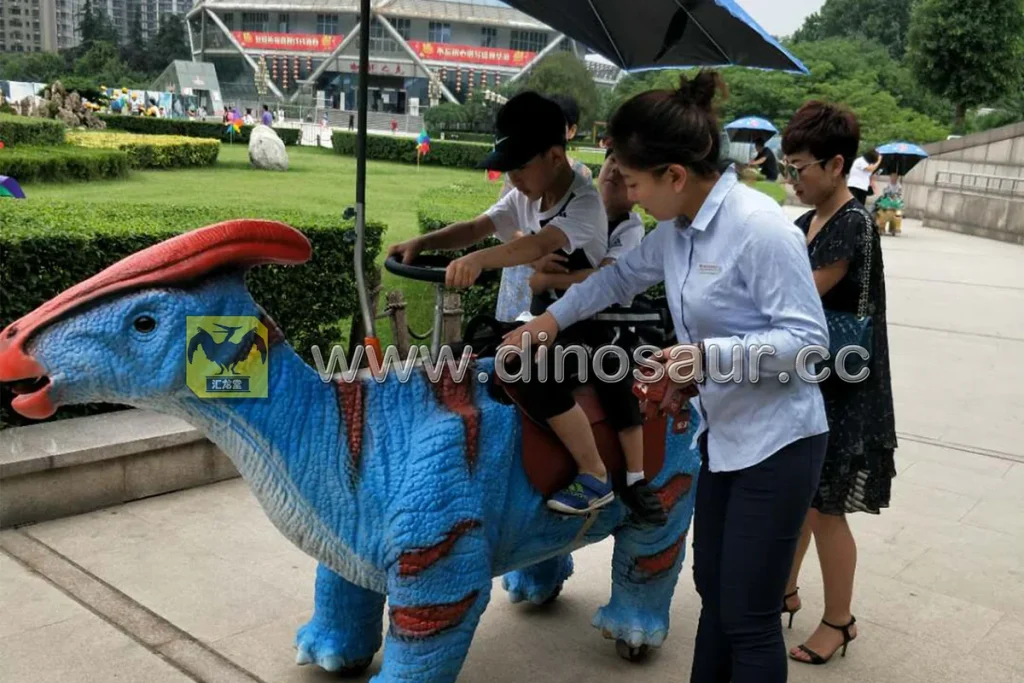
A kiddie ride has about forty seconds to justify itself. A child gets on, the machine runs, the child gets off — and whether […]
View Product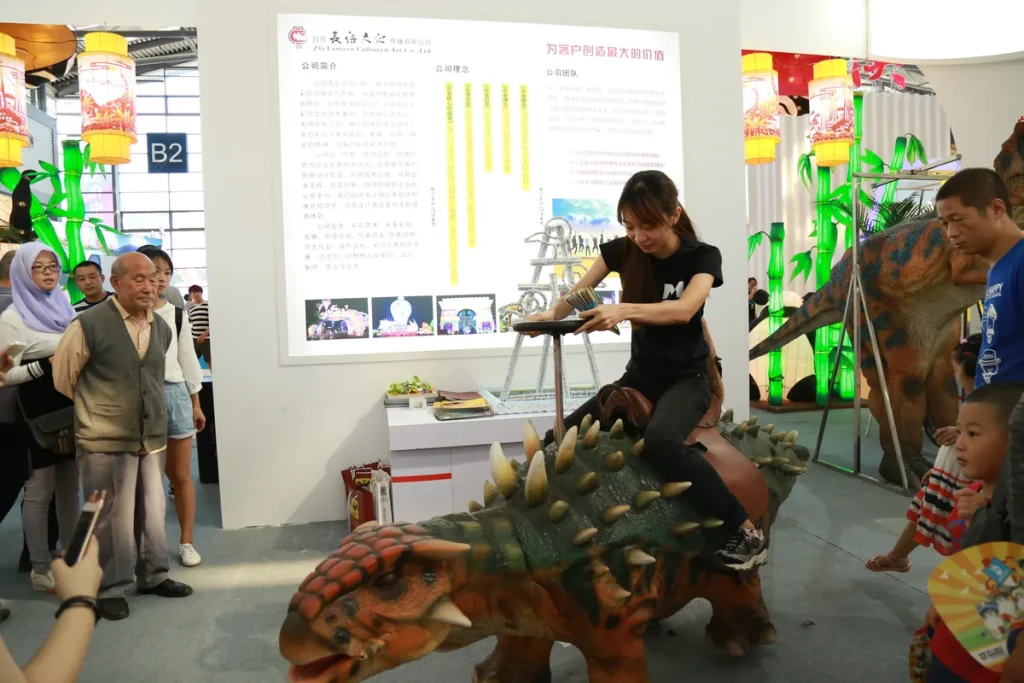
The Ankylosaurus is the smallest build in this range and the one that fits where nothing else does. At 1.8 metres it works in […]
View Product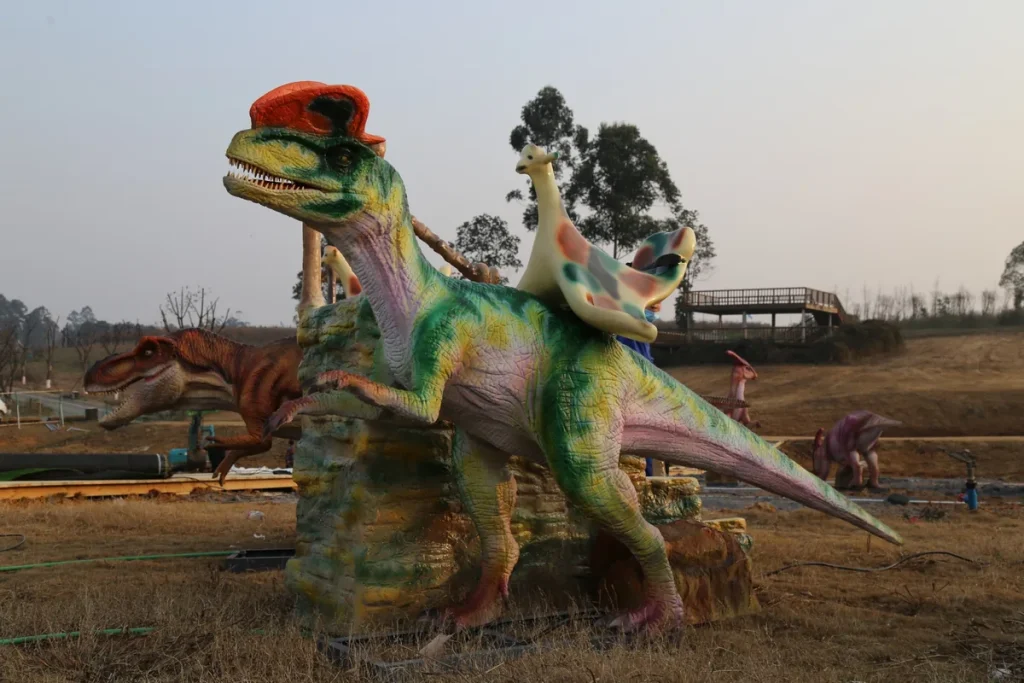
The Dilophosaurus is the unit that gets filmed, and not because of the twin crest. It is the spray. A mouth-level atomiser that puffs […]
View ProductThree things buyers usually want settled before they ask for a drawing — what drives the number, how the piece is actually built, and what to check between suppliers.
What Animatronic Products Are Actually Used For Buyers come to animatronic products with one of two jobs in mind, and the job determines almost […]
Read the guide →Which drive system actually suits an animatronic dinosaur? A factory-side comparison of force, precision, noise, maintenance and weather.
Read the guide →If you are planning a museum exhibition, theme park attraction, or shopping mall event, you have probably asked this question: How much does a life […]
Read the guide →Send your dimensions, movement requirements and installation site. You get a realistic budget range and a dated build schedule.
Or email info@hltdino.com — we reply within one business day.