Animatronic Dinosaurs
Life-Size Animatronic Carnotaurus
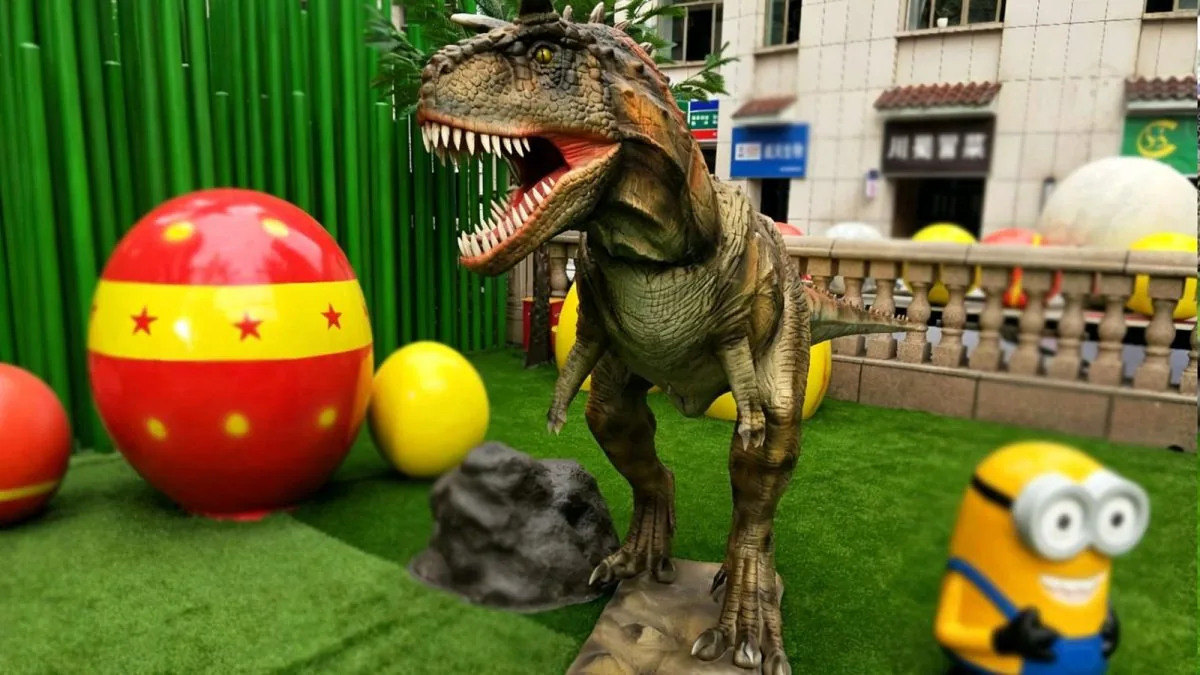
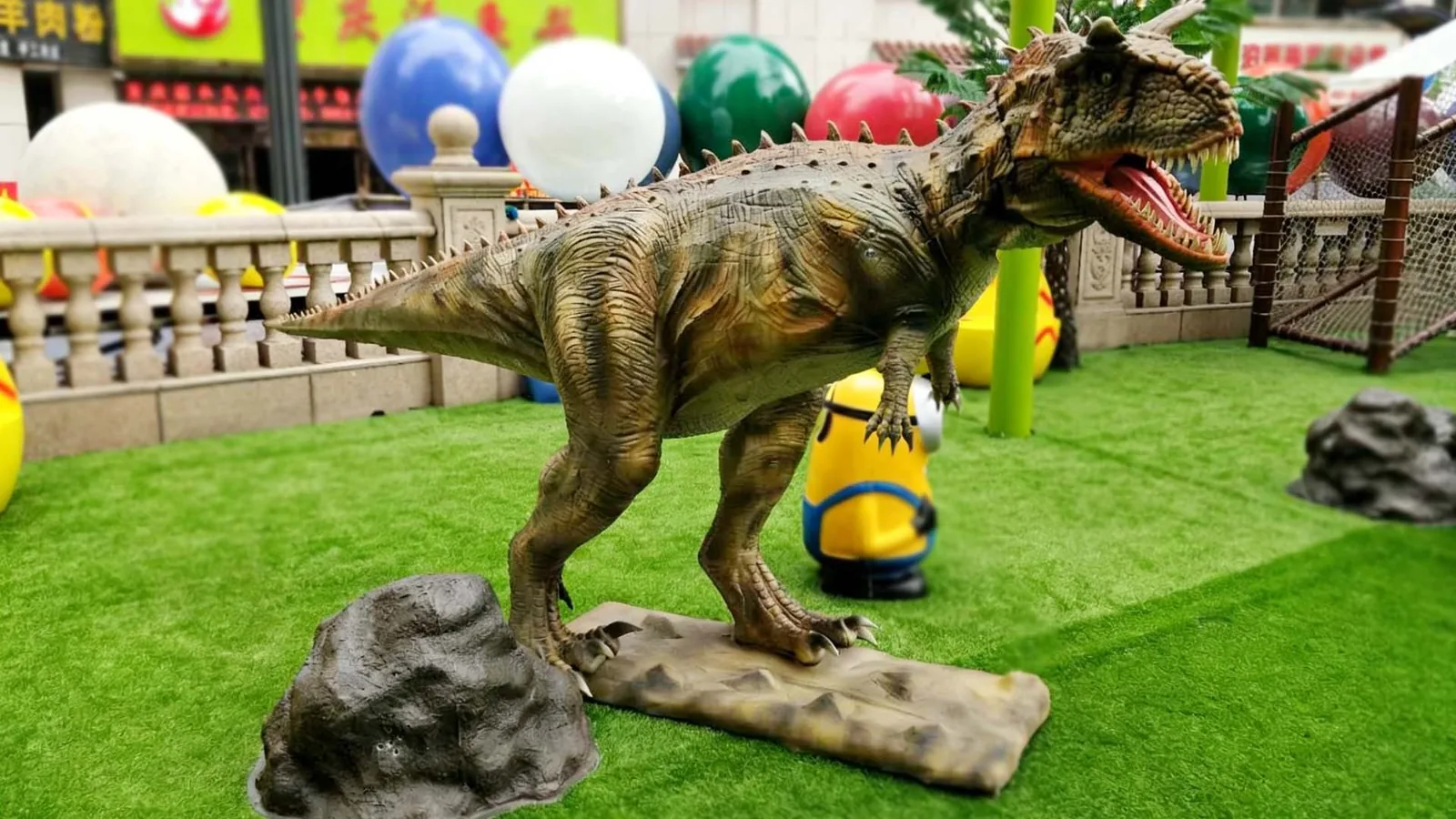
Life-size animatronic Carnotaurus in a roaring pose — articulated jaw, forward-set horns and roar audio on a rock base for outdoor display.
Life-size animatronic Carnotaurus in a roaring pose — articulated jaw, forward-set horns and roar audio on a rock base for outdoor display.
Carnotaurus had two horns above the eyes and almost no arms. That combination is what makes the animal recognisable from forty metres, and it is also what makes it easy to get wrong: build the horns as surface decoration and the head reads as a small T-Rex with bumps. On our build the horns are part of the cranial sculpt, tied into the head structure before skinning, so they carry the shape of the skull rather than sitting on top of it. Standard length runs 6 to 8 metres, with the head positioned at 2.6 to 3.2 metres above ground depending on the pose you choose.
Most of the specification conversation is about two things, and neither is the paint colour.
Pose follows from those two answers. Roaring stance for a gate, lunging stance for a trail bend, and a fixed static pose if the piece is going into a gallery where movement would compete with a specimen case.
Jaw articulation is the base movement, and it is tuned to the pose: on a roaring stance the jaw travels further and slower, on a lunging stance it snaps. Head and neck sweep across the approximate viewing arc so the animal follows a group rather than staring past it. Blink is optional and worth having indoors, where visitors stand close enough to notice a dry eye.
The jaw drive sits in the neck cavity, reachable by removing one access panel behind the frill. We do that deliberately: jaw mechanisms are the part that needs attention first, and a panel behind the head means service without lowering the animal off its base.
Best placements are gate plazas, trail bends and museum halls that already have a theropod story to tell. It is a compact animal for its presence: 6–8 metres fits a space where a 12-metre T-Rex would not, which is usually the reason a client asks for Carnotaurus in the first place.
It is a poor fit for a ride queue or a touch exhibit. The horns and the jaw make it a look-at piece, not an interactive one; if visitor contact is the goal, an interactive build is the right order.
Frame is welded Q235 steel, corrosion-protected, shaped for a deep skull and a heavy tail. Skin is moulded and hand-finished over our silicone system (patent ZL 2022 1 0224489.5), then painted in layers. For shipping, the head separates from the body at the neck joint and the tail breaks into two sections, so the largest crate on a 8-metre build stays within standard container dimensions.
How long from drawing approval to shipping? 30 to 45 days for a standard animated build, longer if the pose is new and needs a fresh sculpt.
Can the horns be made longer or shorter? Yes, within the range the skull supports. Beyond that the head proportions stop reading as Carnotaurus, and we will say so rather than build it.
Can it run from a coin mechanism? Yes. Sensor, remote, coin-op or single operator are all the same control platform, and we set the trigger type at commissioning.
Materials. National-standard steel skeleton, moulded silicone skin, acrylic paint colour finish.
Related. the T-Rex build, theme park placement, the full dinosaur range.
Same factory and the same build standard. What changes is size, movement set and how the exhibit is meant to be used on site.
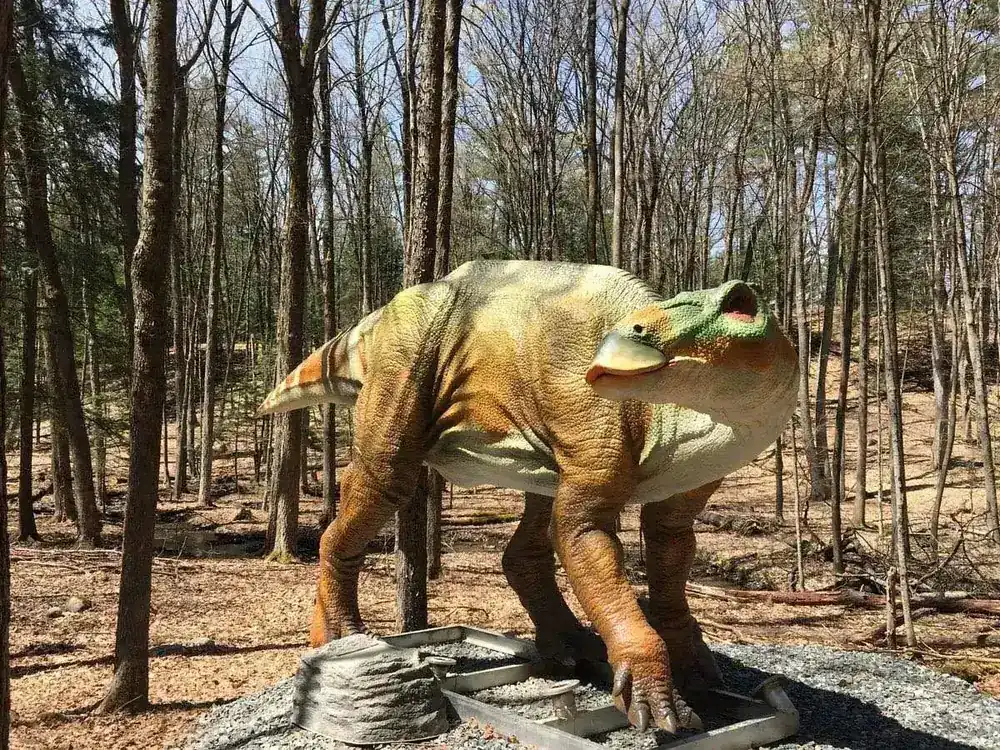
The duck-billed dinosaurs are the least dramatic animals in the catalogue and the ones that read most like real animals. That is the appeal: […]
View Product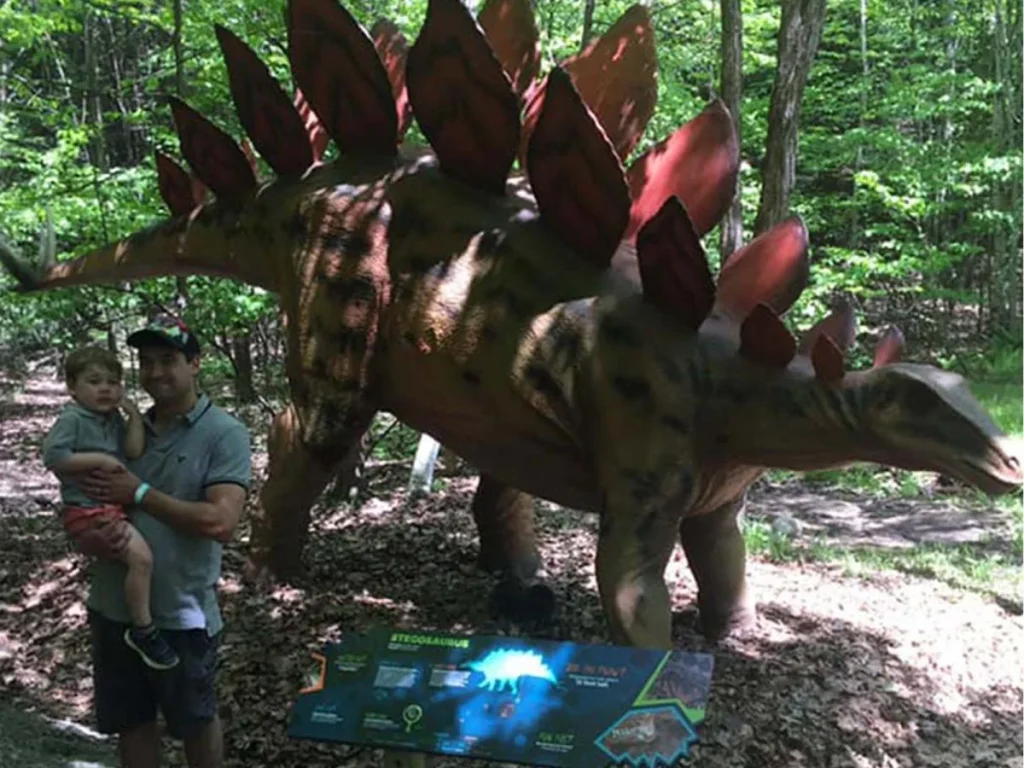
A Stegosaurus is the easiest dinosaur to recognise and one of the harder ones to build. The plates are the reason: a 7-metre animal […]
View Product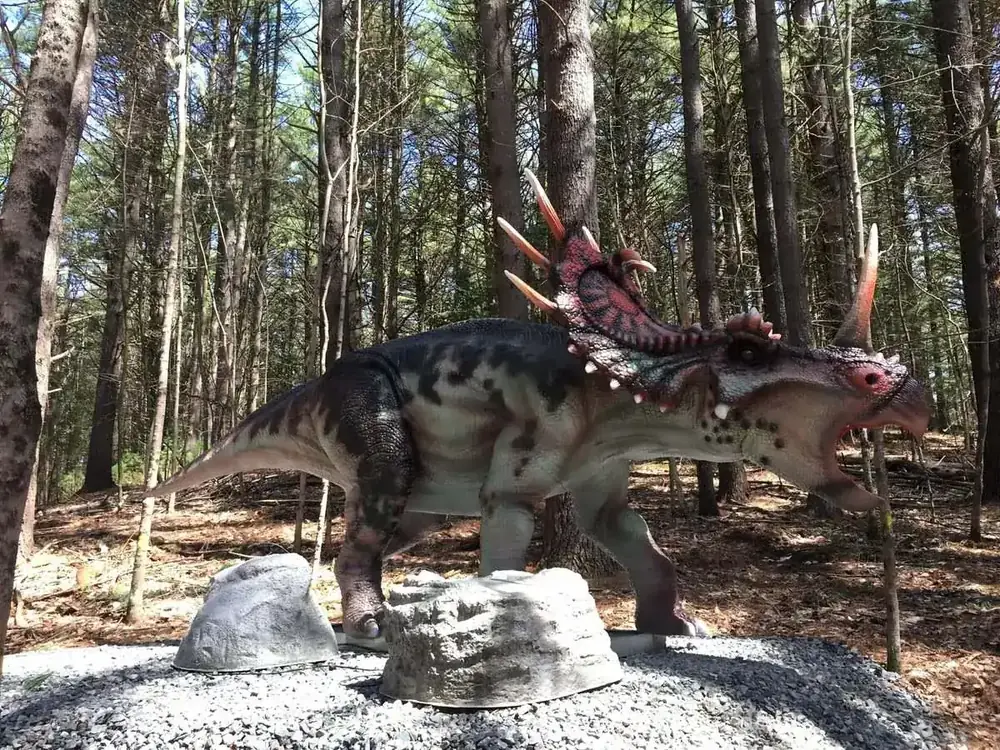
Styracosaurus gets mistaken for a Triceratops more than any other animal in the catalogue, and the mistake is worth correcting because it is the […]
View ProductThree things buyers usually want settled before they ask for a drawing — what drives the number, how the piece is actually built, and what to check between suppliers.
Animatronic Dinosaur Buying Guide for Museums & Theme Parks Choosing the right animatronic dinosaur for your museum, theme park, or zoo is one of […]
Read the guide →From fossil reference to finished skin — how proportions, texture, colour and weathering are decided, and what separates a realistic build from a cartoon one.
Read the guide →Why Motor Choice Matters More Than Buyers Expect Motor selection is usually treated as a manufacturing detail. It is not. It is the decision […]
Read the guide →Send your dimensions, movement requirements and installation site. You get a realistic budget range and a dated build schedule.
Or email info@hltdino.com — we reply within one business day.