Animatronic Dinosaurs
Animatronic Triceratops
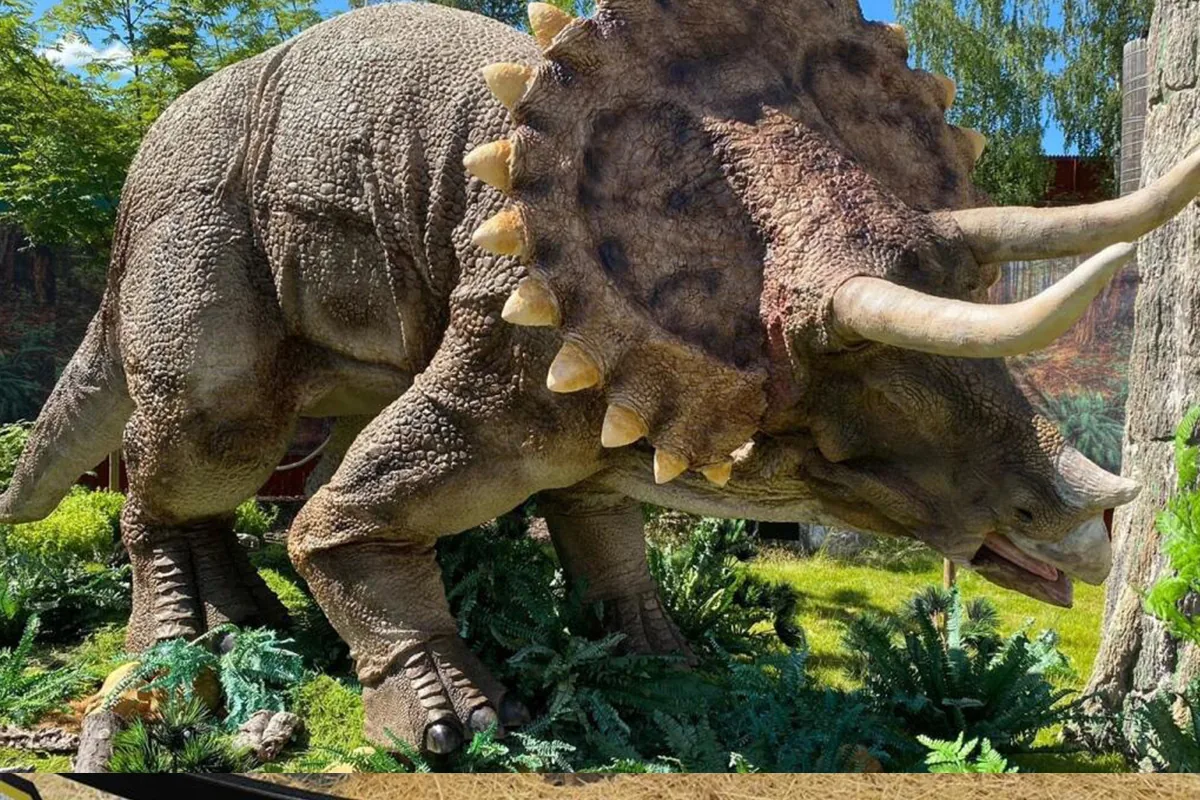
A 7–9 m three-horned exhibit — the family photo piece with steel-cored horns and a wind-rated frill.
A 7–9 m three-horned exhibit — the family photo piece with steel-cored horns and a wind-rated frill.
Triceratops is the dinosaur everyone can name and the one most often built as a cartoon. The frill is the problem: it is not a shield with a scalloped edge, it is a display structure — and how it sits on the skull, how the horns relate to it, and how heavy the whole head looks decide whether the animal reads as a fossil reconstruction or a mascot.
| Species | Triceratops horridus |
|---|---|
| Size options | 3 m / 4 m / 5 m / 6 m / 8 m; custom available |
| Height | 1.8 m to 3.5 m at the frill |
| Frame | Internal frame with high-density foam core |
| Skin | Premium hand-finished surface (patent ZL 2022 1 0224489.5) |
| Animation | Basic / Standard / Premium movement sets |
| Power | About 150 W per 5 m unit |
| Eyes | Optional LED |
| Duty | Outdoor rated |
| Lead time | 30 to 45 days |
| Frill | Single sculpt with the skull; horns emerge from the same surface |
| Transport | Sectional; frill removed for shipping and refitted on site |
The frill is bone grown out of the skull roof, not armour bolted on. On a build that means the frill and the skull are one sculpt, with the horns emerging from the same surface rather than being fixed into it. A two-piece head shows a seam at the brow, and the brow is where visitors look.
The frill is also the height reference: on a five-metre animal the tallest point is the top of the frill, not the horns. That number decides ceiling clearance indoors and sightlines outdoors.
Three to eight metres on the same design, with height running 1.8 to 3.5 metres at the frill. A five-metre build draws about 150 W — this is a head, jaw and tail animal, not a walking machine.
Placement matters more than on most builds because the frill hides the face from certain angles. Seen head-on at a distance, a Triceratops is a shield with two horns; seen at three-quarters, it is a face. Trail positions should be set for the three-quarter view.
Basic covers head, jaw and tail. Standard adds neck and body sway. Premium adds independent limb motion and layered audio. On a ceratopsian the return on premium is lower than on a theropod — the head does the work, and the head is in every level.
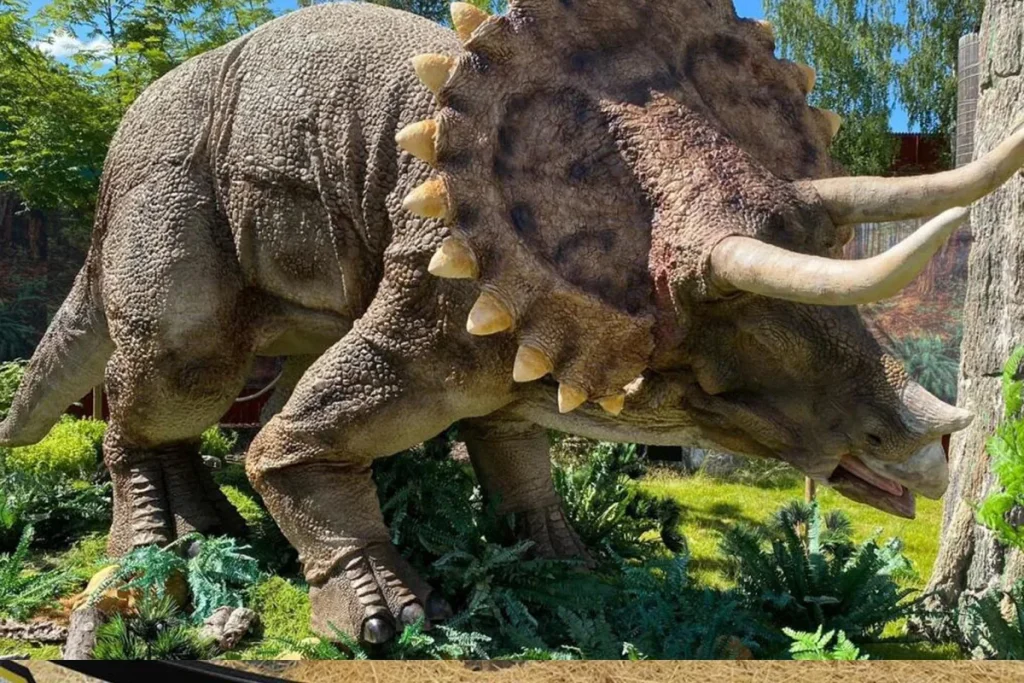
Is the frill separate from the head? No — one sculpt. A two-piece head leaves a seam at the brow, which is exactly where visitors look.
Why does the frill matter for ceiling height? On a five-metre animal the top of the frill is the highest point, above the horns. That is the number to check indoors.
Which movement level? Standard. Head, jaw, neck and tail cover what a ceratopsian needs; premium adds cost with little visible gain.
How is it shipped? Sectional, with the frill removed and numbered for refitting on site.
110–240 V AC at the animal, about 150 W per five-metre unit — a modest load that a single circuit covers comfortably.
Indoors the constraint is the frill: check the ceiling services against the frill height before the position is fixed, not after. Outdoors, the base needs a hard standing and drainage, because a ceratopsian stands in one place for years.
The frill is checked against the drawing before any motion is run — a frill that leans shows from every angle. Then the head turn is set to a short, slow arc, the jaw is slowed to match, and the tail is limited to its narrowest useful sweep.
The head turn amplitude is the setting that matters. Too wide and the animal looks like it is scanning; a short turn with a pause reads as an animal looking at the visitor.
Materials. Internal frame, high-density foam core, premium hand-finished silicone surface (patent ZL 2022 1 0224489.5), single-sculpt frill with integral horns.
Related. the animatronic dinosaur range, the Styracosaurus, the Triceratops ride, request a quote.
Same factory and the same build standard. What changes is size, movement set and how the exhibit is meant to be used on site.
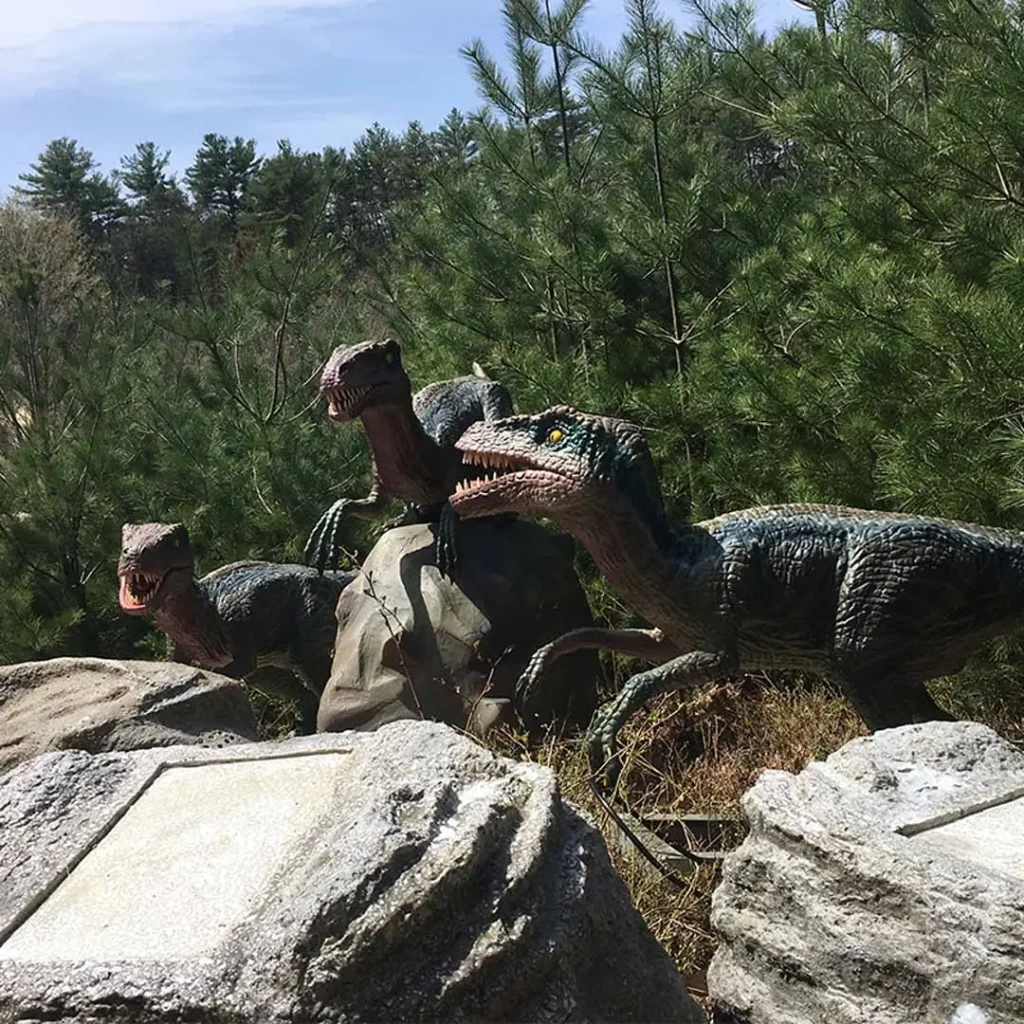
A single Velociraptor in a hall reads as a large bird. Three of them, in different stances, facing different directions, read as a hunt […]
View Product
Museum-grade interactive animatronic dinosaur with 3 m proximity sensing, touch response and dual behaviour modes for science centers and parks.
View Product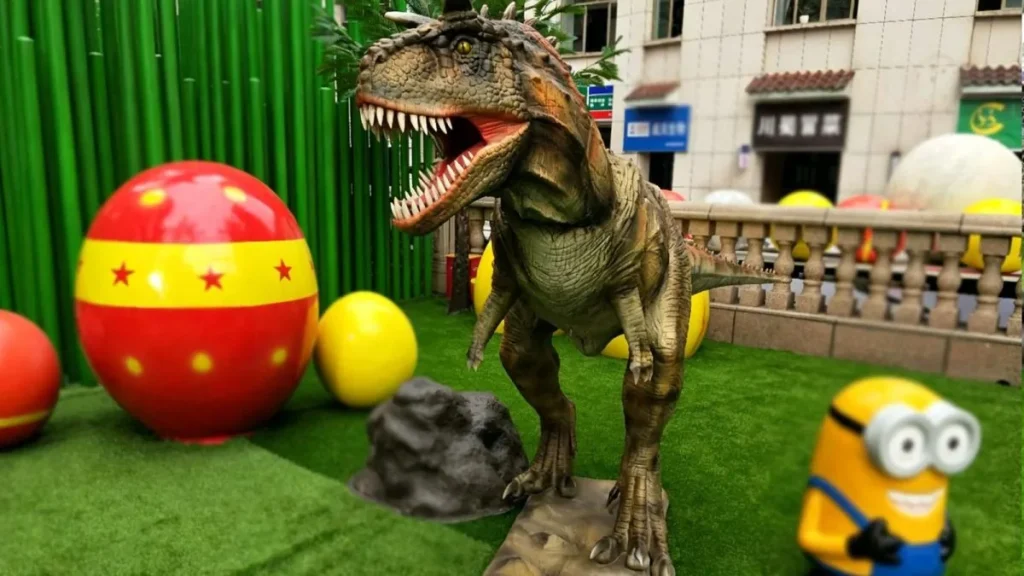
Life-size animatronic Carnotaurus in a roaring pose — articulated jaw, forward-set horns and roar audio on a rock base for outdoor display.
View ProductThree things buyers usually want settled before they ask for a drawing — what drives the number, how the piece is actually built, and what to check between suppliers.
Animatronic Dinosaur Buying Guide for Museums & Theme Parks Choosing the right animatronic dinosaur for your museum, theme park, or zoo is one of […]
Read the guide →From fossil reference to finished skin — how proportions, texture, colour and weathering are decided, and what separates a realistic build from a cartoon one.
Read the guide →Why Motor Choice Matters More Than Buyers Expect Motor selection is usually treated as a manufacturing detail. It is not. It is the decision […]
Read the guide →Send your dimensions, movement requirements and installation site. You get a realistic budget range and a dated build schedule.
Or email info@hltdino.com — we reply within one business day.