Animatronic Animals
Animatronic Silverback Gorilla
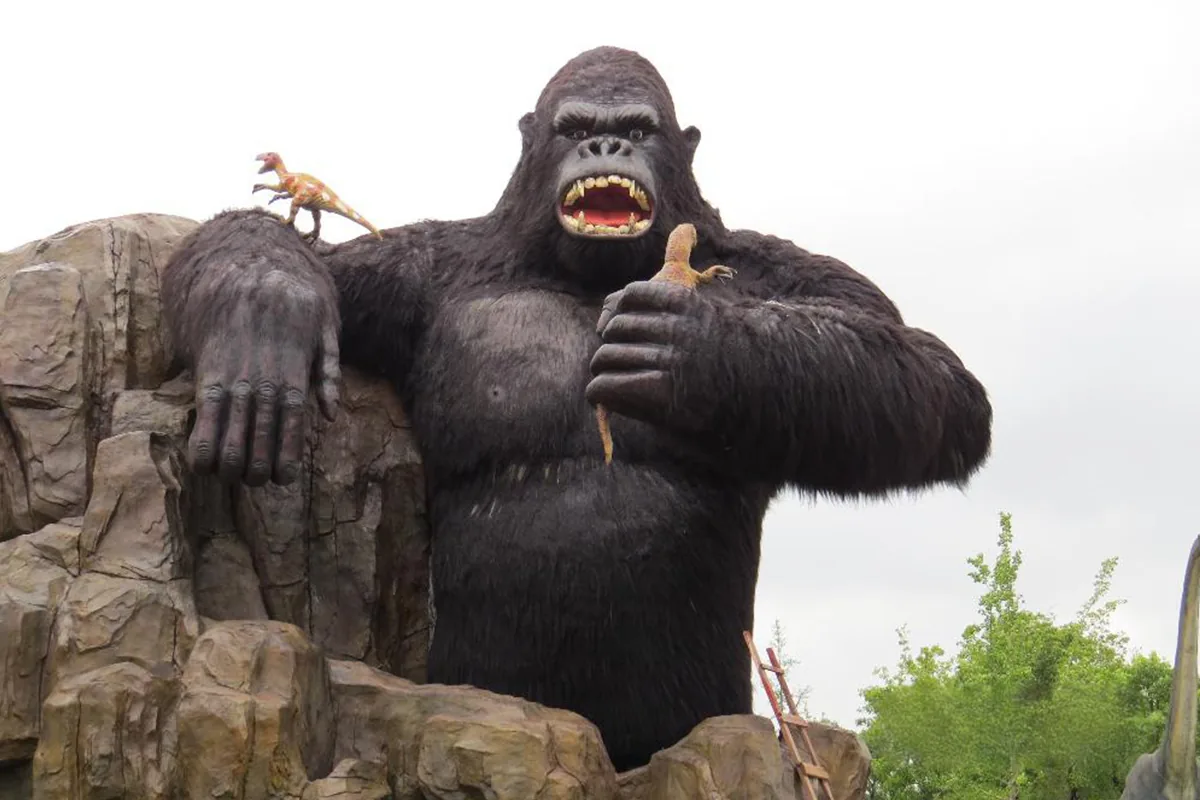
Life-size animatronic silverback gorilla with hand-rooted hair, twelve motion points and a calm sensor response. For zoo zones, museums and scenic builds.
Life-size animatronic silverback gorilla with hand-rooted hair, twelve motion points and a calm sensor response. For zoo zones, museums and scenic builds.
A gorilla model has one job that no other product in this catalogue has: it must not frighten children. Everything else on this page is downstream of that. A silverback is a 160 kg animal with a stare, and a model that gets the stare right in a museum can be the reason a family turns around in a zoo.
We build the animatronic silverback at life size with hand-rooted hair, twelve motion points and a sensor response that is deliberately calm. It is also available as an oversized scenic build on a rock formation, which is what most parks actually order.
| Product type | Animatronic silverback gorilla (Gorilla gorilla) |
|---|---|
| Standard size | 1.2 m deep x 1.0 m wide x 1.6 m high, life size for an adult male |
| Scenic build | Oversized version on cast rock, typically 2.5–6 m overall with the base |
| Skin | Composite silicone over foam, cast muscle groups across the chest and arms |
| Hair | Hand-rooted, four tones, 60–120 mm on the arms and back |
| Head | Articulated jaw, moving eyes, brow ridge, sagittal crest |
| Frame | Galvanised steel; rock build uses a separate structural sub-frame |
| Movements | 12 points: head turn, eye movement, jaw, chest breathing, both arms, finger grip, body lean |
| Sensing | Infrared, 0.5–3 m adjustable |
| Sensor behaviour | Calm head lift and gaze, or chest beat and hoot; selectable per site |
| Audio | Hoot, grumble, chest beat, breathing; 70–85 dB at 1 m |
| Power | 110 V / 220 V, 400–900 W |
| Weather | Indoor standard; outdoor build adds sealed enclosure and drainage base |
| Lead time | 30–45 days including hair work |
Only mature males turn silver, and only after roughly twelve years, when they take over a group. The silver runs across the back and saddle in a band, not over the whole animal, and it fades into black at the flanks and shoulders.
This matters for the build because the hair work has to change at the band. We root a darker, denser fibre on the arms and flanks and a paler, slightly coarser fibre across the saddle, then blend the transition over about 200 mm. A model with silver hair sprayed over the whole back reads as a gorilla costume, which is the wrong reference.
Gorilla hair lies in flat clumps, not an even coat. On the arms it is longest and runs down toward the wrist. On the chest it is short. On the head it is short and tight.
We root by hand in three passes: a base layer at high density, a mid layer following the clump direction, and a top layer of longer strands at the shoulders and forearms. Four tones are used across the body, and the whole job adds seven to ten days to the build. It is also the single largest difference between a model that photographs well and one that looks like a mascot.
The default sensor response is a slow head lift and a gaze toward the visitor, held for about three seconds, then a settle. That is what a relaxed gorilla does when something enters its space. It is also the response that keeps a four-year-old from crying.
The chest beat and hoot are available and we recommend them only for scheduled show windows, not for every approach. A gorilla that performs a threat display at every visitor is exhausting to be near and, more importantly, it teaches the wrong thing about the animal.
Volume follows the same logic. We set two levels: a daytime level around 70 dB and a show level around 85 dB, with the show level on a timer that the client controls.
The oversized version is a different product from the life-size one, and it is the one most parks want. The gorilla is cast at two to three times life size, seated on a cast rock formation, with the forearms resting on the rock and the head at four to six metres. At that scale the model is a photo point, and the anatomy matters less than the silhouette.
The sub-frame is the engineering: the rock and the animal share a steel structure, and the animal’s weight is carried down through the rock rather than bolted to a separate foundation. We design the rock and the animal together for this reason, and we ask for the site’s service road width before drawing, because a finished rock build does not fit through most gates.
Props work better than most clients expect at this scale. A cast tree trunk, a fallen log, or a small companion animal in the hand gives visitors something to photograph the model against, and it makes the size legible without a label.
Zoos running an African section use the life-size build next to a elephant and a zebra pair. Museums use it where the exhibit needs an ape that is not in a diorama case. Parks use the oversized scenic build at a junction or a trail entrance, where it has to be visible from a distance and photograph well.
Our animatronic animal range is built at consistent scale for grouping, and the zoo display page covers how these pieces are usually arranged on site.
Both. Seated is the more common order and the cheaper build, because the arms rest on the ground or rock and the frame does not need to carry a standing pose. Standing builds use a weighted base and cost more.
The fibre is UV-stabilised, so the hair itself holds up. The risk is mechanical: visitors pulling at it through a low barrier. We specify a standoff of at least 800 mm and can add a clear guard panel where the model is reachable.
The eyes move as a pair on a fixed track, so they turn with the head rather than tracking individuals. Real tracking needs a camera and a control system, and in practice the head turn plus eye movement reads as attention without it.
Yes. Scaling a finished life-size sculpture up produces distorted proportions, so the scenic build is sculpted at its own size. That is why it carries a different lead time.
Yes, and it works well. A smaller companion piece at the same scale turns a single model into a group, and it is the cheapest way to make a scenic build look like a habitat rather than a statue.
Same factory and the same build standard. What changes is size, movement set and how the exhibit is meant to be used on site.
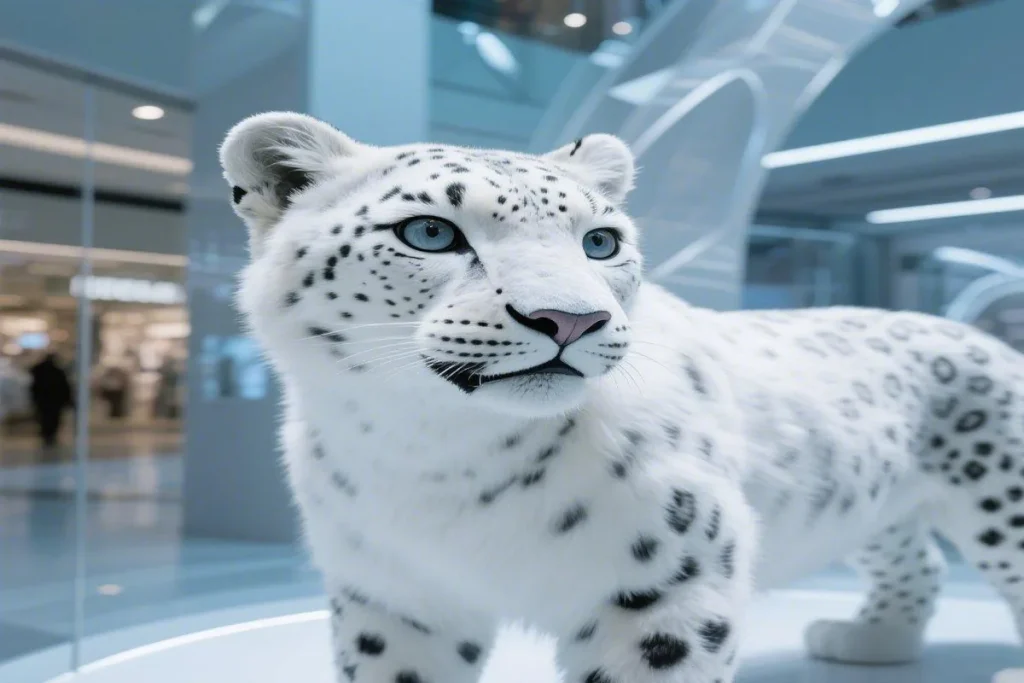
Life-size animatronic snow leopard with a full-length balancing tail, rosette-painted coat and chuff call. Built for mountain zoo zones and highland halls.
View Product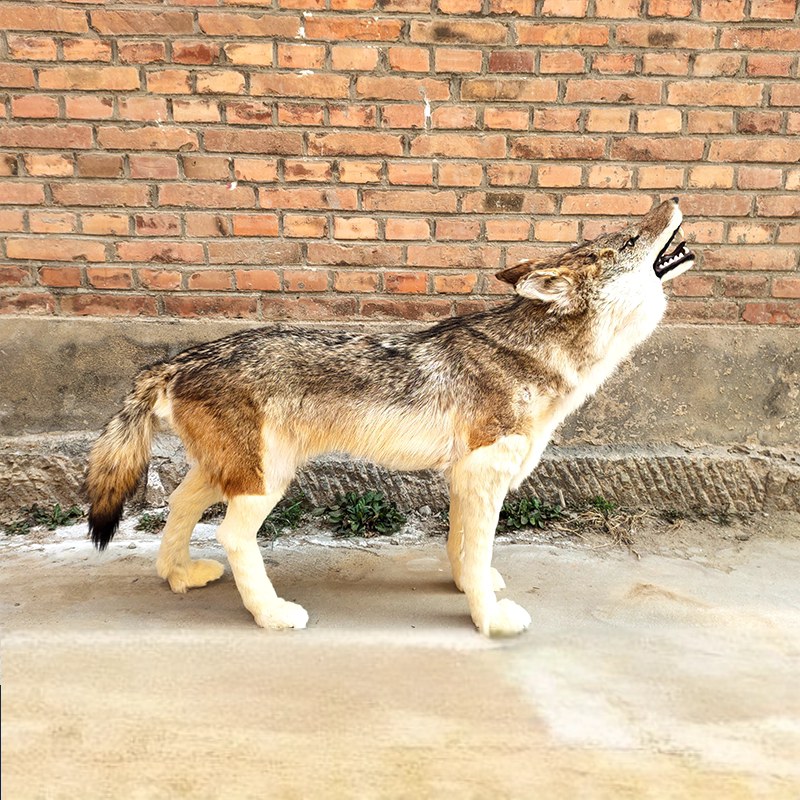
A wolf is read from the head and the coat — the upright ears, the long muzzle and the thick layered fur are what […]
View Product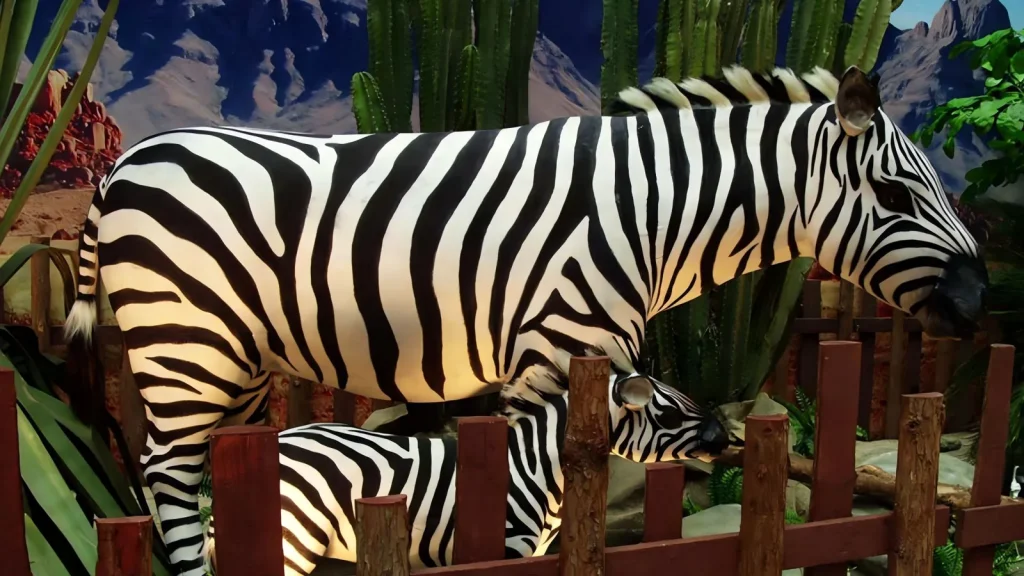
Life-size animatronic zebra mare and foal with individually painted stripes and coordinated mother-and-offspring behaviour for savanna exhibits.
View ProductThree things buyers usually want settled before they ask for a drawing — what drives the number, how the piece is actually built, and what to check between suppliers.
Extinct and hard-to-keep species, sculpted to anatomy keepers can check — where animatronic animals earn a place beside a living collection.
Read the guide →From fossil reference to finished skin — how proportions, texture, colour and weathering are decided, and what separates a realistic build from a cartoon one.
Read the guide →How Much Does an Animatronic Dinosaur Cost? Understanding the Key Cost Factors If you are planning a museum exhibition, theme park attraction, or promotional […]
Read the guide →Send your dimensions, movement requirements and installation site. You get a realistic budget range and a dated build schedule.
Or email info@hltdino.com — we reply within one business day.