Animatronic Dinosaurs
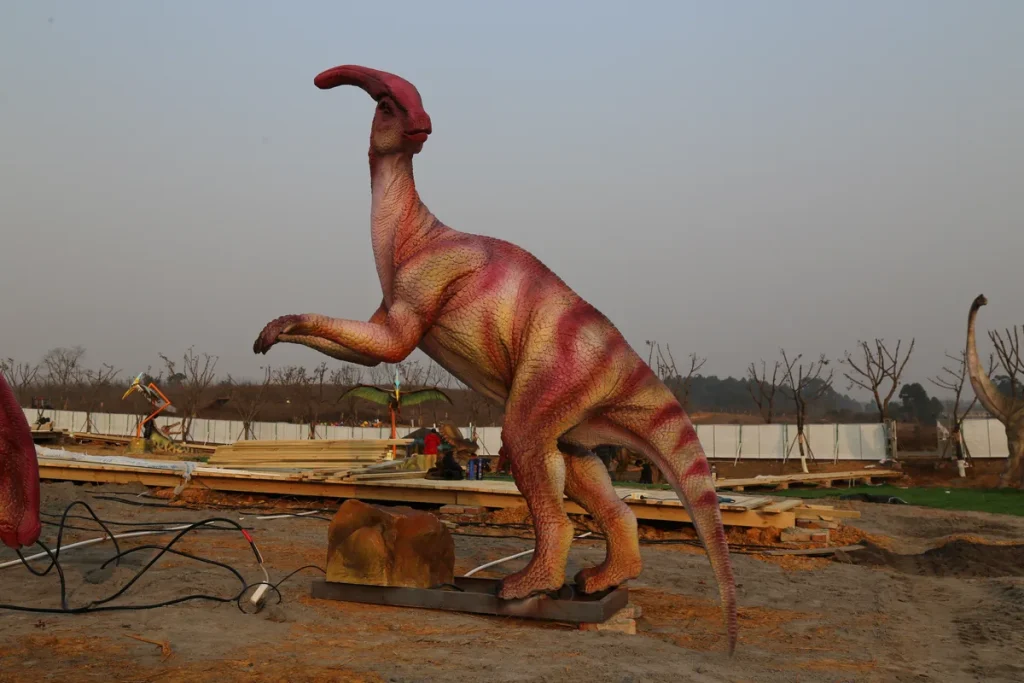
A life-size animatronic Parasaurolophus is the dinosaur that reads as both a dinosaur and a character — the long backward-curving crest makes it instantly recognisable, and the two poses in this build let one exhibit tell two stories. Supplied as a standing alert animal or a head-down grazer, it works as a trail exhibit, a park entrance pair, or a museum gallery piece beside other hadrosaurs. Q235 steel frame, patented silicone skin, sensor or remote control.
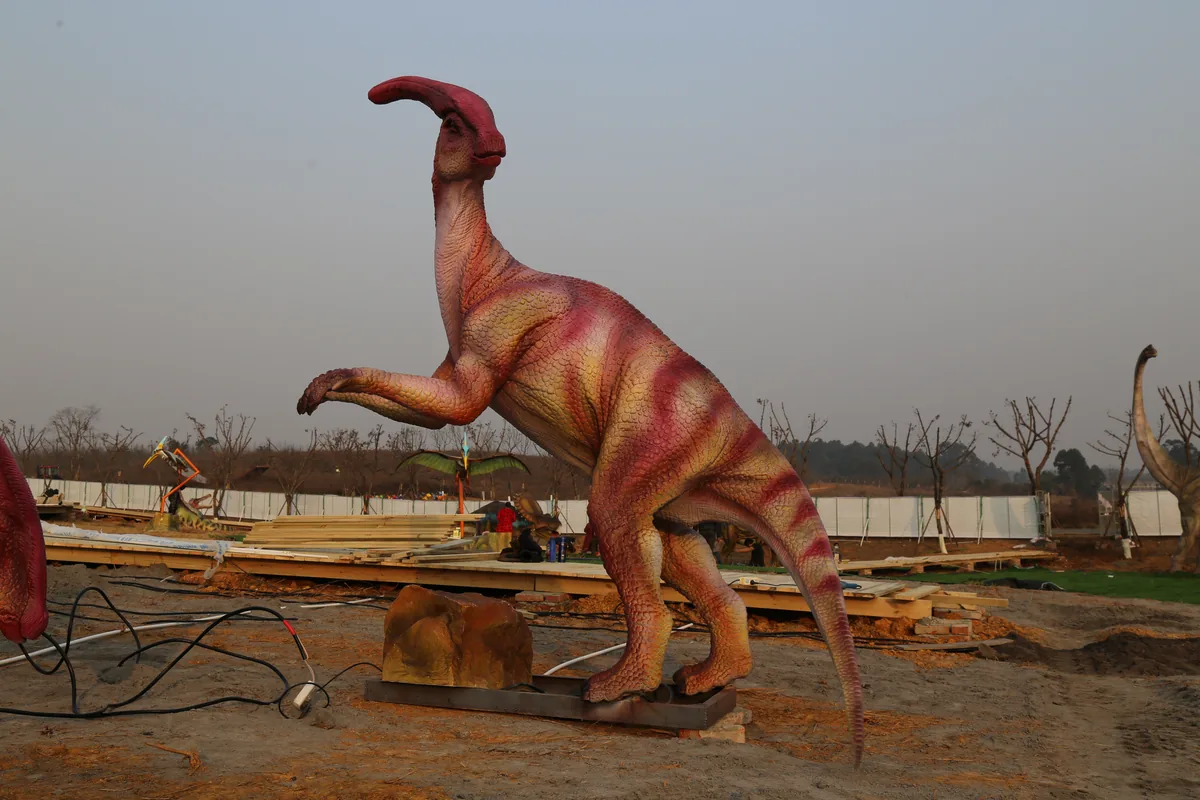
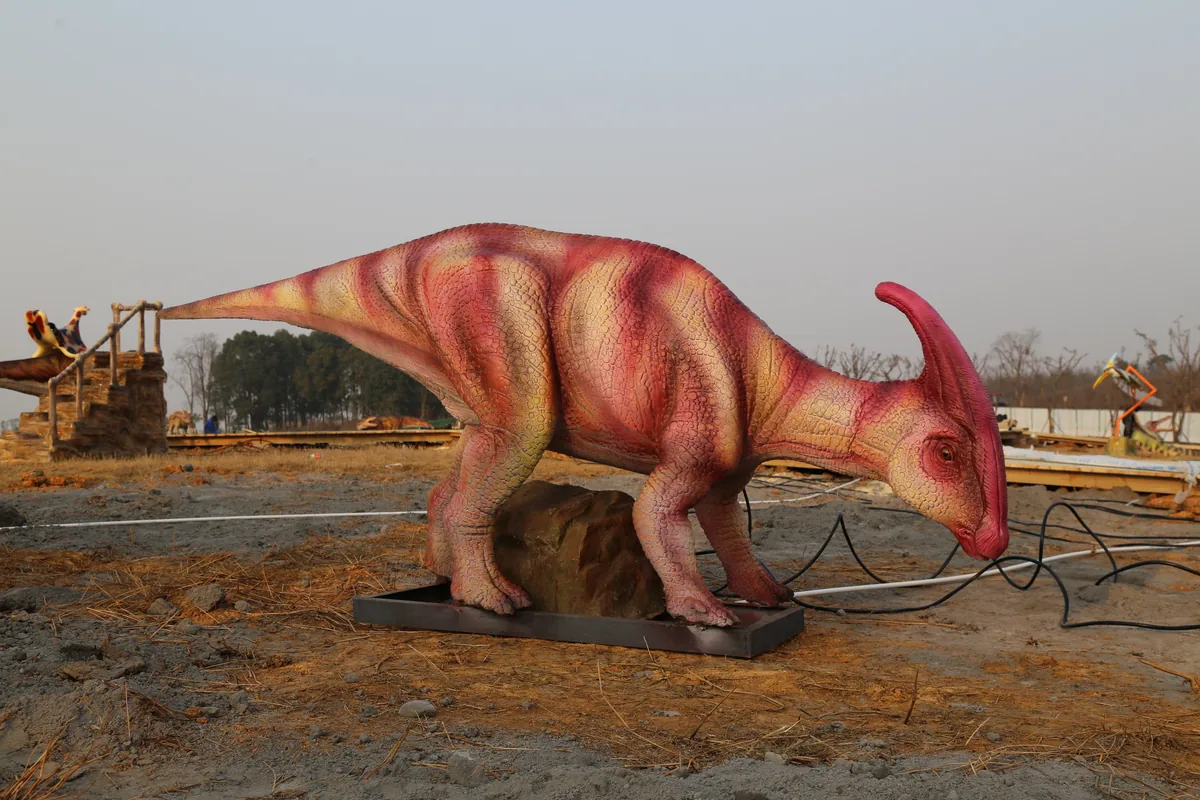
The Parasaurolophus crest is a long, hollow-looking tube that curves back over the head. On a real animal it was a resonating chamber; on an animatronic it is the part most likely to be got wrong. We build the crest as a reinforced silicone shell over a shaped steel former, anchored into the skull frame rather than glued to the skin. That matters outdoors, where wind loads on a projecting crest are real, and in public areas, where visitors inevitably reach for it.
The head-and-neck motion is tuned slow. A fast head snap looks wrong on a hadrosaur and stresses the neck joint; a slow rise and turn reads as a living animal and survives years of duty.
Frame in Q235 structural steel, welded in-house. Drives are servo with sealed control cabinets, configured for sensor, remote or coin-op input to suit the site. Skin from our patented silicone system (ZL 2022 1 0224489.5), painted with the mottled reddish pattern you approve. Full motion and electrical test on our outdoor ground before crating; most builds ship assembled in one crate.
Yes. Crest length and curve are built to your approved drawing. A longer crest needs a stronger internal former, so we confirm the final profile before the frame is cut.
Yes. A smaller build keeps the crest proportion and skin detail at a reduced frame weight, which suits indoor galleries and children’s zones.
Yes. A sensor triggers the head to rise or turn and the body to breathe, then the unit returns to rest. Staff can override the trigger from a remote.
Both. Outdoor builds add sealed drives, rain-protected cabinets and UV-stable skin; tell us the site and duty cycle and we will specify accordingly.
Building a herd scene? See the dinosaur range or the outdoor Brachiosaurus pair. Send your site details for sizing and a dated schedule.
Same factory and the same build standard. What changes is size, movement set and how the exhibit is meant to be used on site.
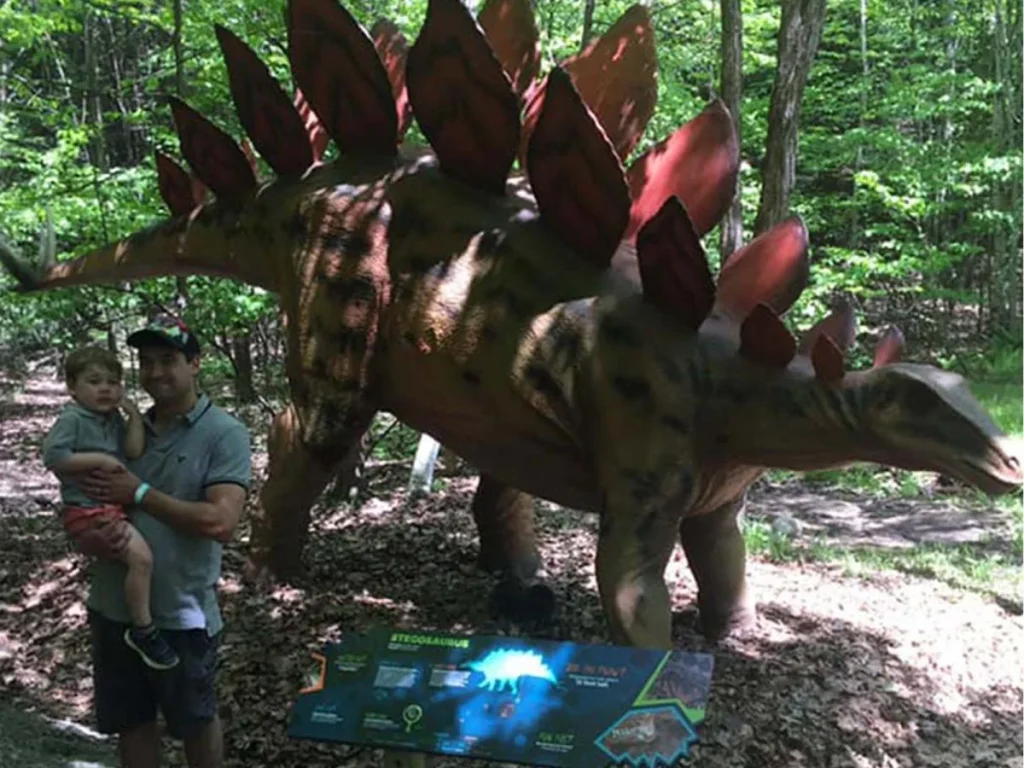
A Stegosaurus is the easiest dinosaur to recognise and one of the harder ones to build. The plates are the reason: a 7-metre animal […]
View Product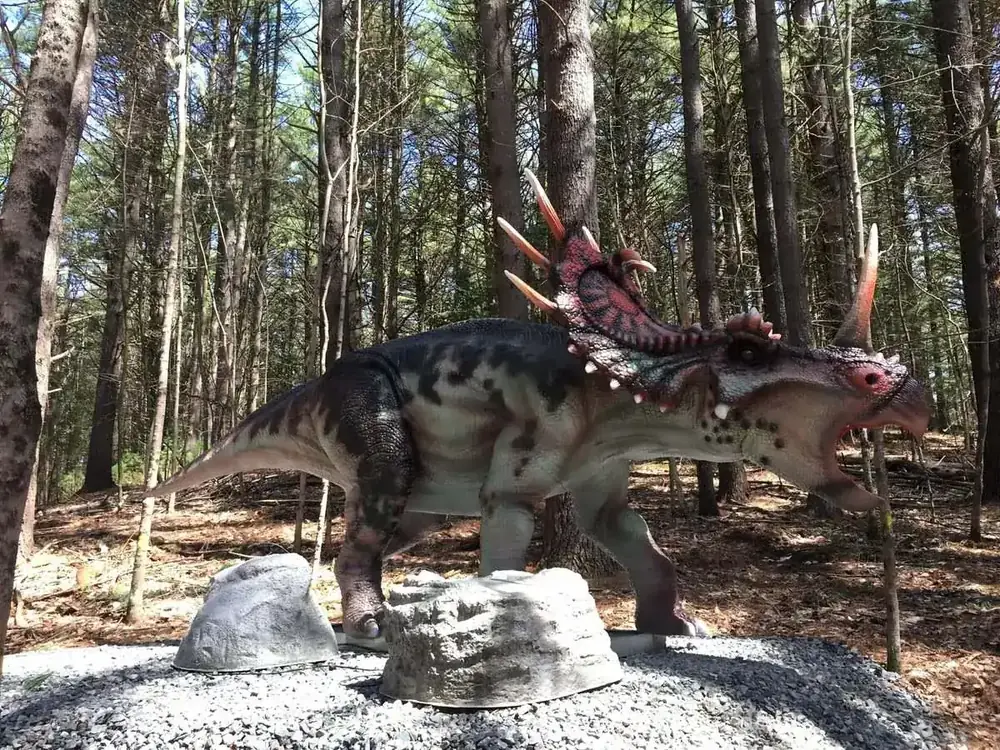
Styracosaurus gets mistaken for a Triceratops more than any other animal in the catalogue, and the mistake is worth correcting because it is the […]
View Product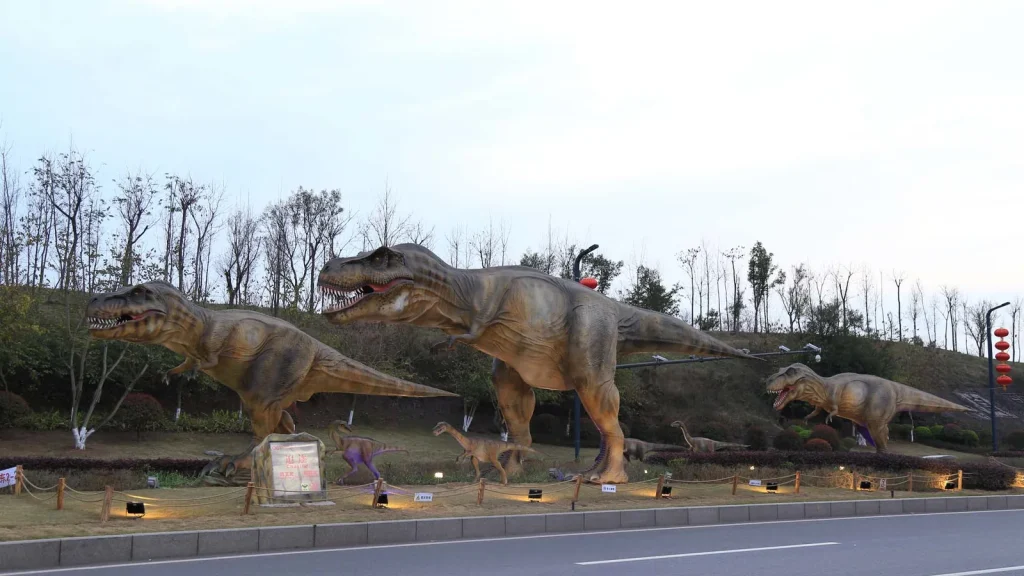
A life-size animatronic T-Rex built to your dimensions — 4–12 m body length, six to twelve motion axes, sensor or remote control.
View ProductThree things buyers usually want settled before they ask for a drawing — what drives the number, how the piece is actually built, and what to check between suppliers.
Animatronic Dinosaur Buying Guide for Museums & Theme Parks Choosing the right animatronic dinosaur for your museum, theme park, or zoo is one of […]
Read the guide →From fossil reference to finished skin — how proportions, texture, colour and weathering are decided, and what separates a realistic build from a cartoon one.
Read the guide →Why Motor Choice Matters More Than Buyers Expect Motor selection is usually treated as a manufacturing detail. It is not. It is the decision […]
Read the guide →Send your dimensions, movement requirements and installation site. You get a realistic budget range and a dated build schedule.
Or email info@hltdino.com — we reply within one business day.