Animatronic Dinosaurs
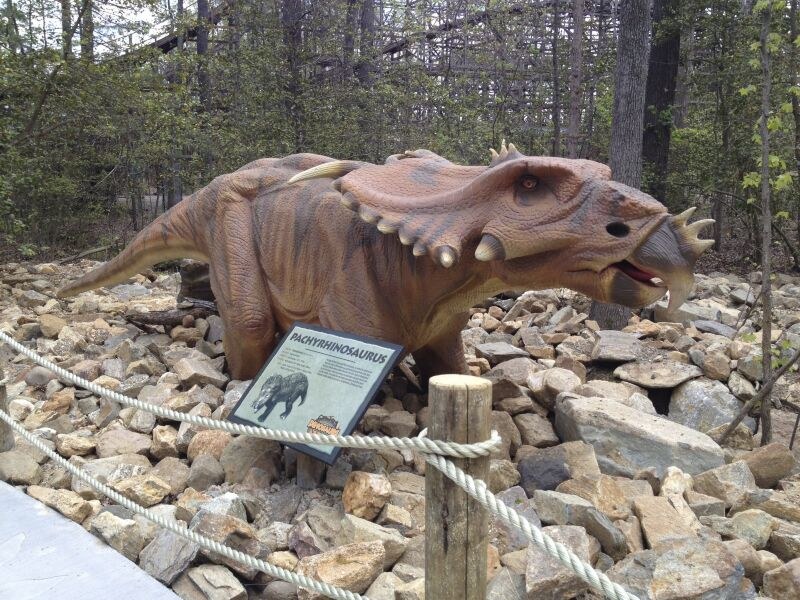
A Pachyrhinosaurus reads from the nose — that thick, bony, bossed snout is the whole silhouette, and a model that gives it the long horns of a Triceratops reads as the wrong animal. This one carries the solid nasal boss and the scalloped frill edge on the same frame and movement system as the rest of the range, so the head reads correctly from fifty metres and still holds detail up close.
| Product type | Large electric animatronic dinosaur model |
|---|---|
| Overall size | Length 1–30 m, height 1–15 m — full custom sizing |
| Power | 110 V / 220 V, specified per site |
| Power draw | 150 W to 8000 W, depending on size and movement count |
| Control | Industrial single-chip controller |
| Materials | National-standard steel · first-tier servo motors · high-density foam · composite silicone · elastic fibre mesh reinforcement |
| Movements | Jaw open and roar · eye blink with LED eyeballs · head nod · forelimb grip · breathing torso · tail sway · walking stance |
| Trigger options | Infrared proximity sensor · radar · pre-programmed sequence · remote control · voice interaction |
| Suits | Scenic parks, theme parks, malls, public squares, amusement parks, exhibition halls |
| Warranty | 12 months on the complete unit |
The frill and the nose boss are where the budget goes, and it shows. Each scallop of the frill edge is finished by hand, and the animal is built to the size and the site it is going into rather than pulled from a standard.
Instead of horns this animal carries a solid bony pad over the nostrils and a thick boss above the eyes — the defining feature of a Pachyrhinosaurus. The frill behind carries a row of scalloped, serrated edges rather than the smooth rim of a Triceratops, and both are set against reference so the head reads as the right ceratopsian.
Below the head the body is the standard four-legged tank: a broad chest, a heavy tail and a beaked jaw. A Pachyrhinosaurus built with long brow horns or a plain frill reads as the wrong animal immediately, so the proportions here follow the skeleton, not the display habit.
This is an outdoor animal. The frame is hot-dip galvanised steel, the skin is anti-UV composite silicone over an elastic fibre mesh, and the servo drive is rated to IP65, so it runs through a wet season on a rock outcrop without the paint going chalky. Colour is laid down in multiple gradient layers under a UV topcoat, which keeps the mottled hide reading as stone and hide rather than as grey plastic after a summer outside.
The unit arrives in bolted sections and assembles on site without welding. It ships with a base sized to the rock it is mounted on, so the animal reads as part of the landscape rather than as a prop dropped on top of it.
Park rock gardens, museum grounds, themed streets and mall atriums. The heavy frill and the blunt nose read from a long way off, so it works as a landmark in a landscape and as a character in a ceratopsian enclosure. It is supplied with the dinosaur information board as a separate element — the display works harder when the animal and its interpretation arrive together.
What sizes can be built? Anything from 1 m to 30 m long and up to 15 m tall. The size is set by the site, the sight lines and the transport route, not by a fixed catalogue.
How is it triggered? Four ways: infrared or radar sensing, a pre-programmed sequence set before dispatch, handheld remote, or voice interaction. Most sites run the sensor as the default and keep the remote for staff.
What does it need on site? A 110 V or 220 V supply and a solid fixing point. The unit arrives in modules and bolts together — no on-site welding.
Can it run outdoors? Yes. The standard specification is an outdoor one, with anti-UV silicone skin, a water-resistant servo drive rated to IP65, and a hot-dip galvanised frame that tolerates salt spray.
How is it fixed? Four options: concrete foundation with pre-embedded anchor bolts, a weighted base that can be moved as one piece, expansion bolts on a hard indoor floor, or a sealed and buoyancy-rated base for water features.
How long does production take? Custom builds run on a lead time confirmed against the drawing. Send the requirement and the site plan, and the proposal comes back with the timing and the drawings marked up.
Materials. National-standard steel frame, first-tier servo motors, high-density foam core, composite silicone skin over elastic fibre mesh, hand-sprayed colour finish.
Related.the animatronic dinosaur range, mall installations, costumes and puppets.
The model ships in modules on a reinforced timber crate, with the frame sections, skin panels and hardware packed and labelled for assembly. Nothing on site is welded; the sections bolt together and the base is fixed to a concrete foundation, a weighted base or expansion bolts depending on the surface.
Assembly is a two-day job for a crew, and our technician joins the first run so the movement settings are dialled against the actual ground and light. The most fragile modules are checked in place last, because a part that has shifted in transit is a quick fix on day one and a return visit if it is not.
The information board, the lighting and the surrounding landscape are quoted separately and can be drawn at the same time, so the animal and its interpretation arrive as one project rather than two.
| Frame | Hot-dip galvanised or lightweight aluminium welded structure, module sections bolted for transport |
|---|---|
| Skin | Composite silicone over elastic fibre mesh, multi-layer gradient PU paint with UV topcoat |
| Movements | Jaw, blink, head nod, forelimb grip, breathing torso, tail sway, walking stance |
| Control | Industrial microcontroller · infrared / radar trigger · remote · pre-programmed sequence · voice interaction |
| Weather | Outdoor specification standard; servo drive rated IP65, −20 °C to +60 °C |
| Size | Custom — length 1–30 m, height 1–15 m, built to your drawings |
| Lead Time | 30–45 days after drawing approval |
| Warranty | 12 months with maintenance support |
Same factory and the same build standard. What changes is size, movement set and how the exhibit is meant to be used on site.
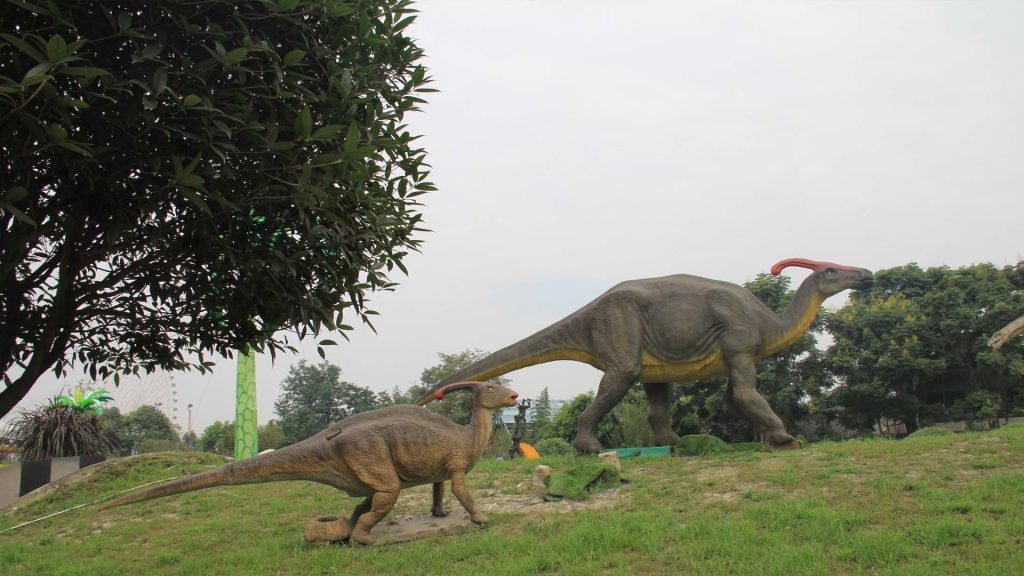
The crest is the reason a Parasaurolophus is worth building. It is a sound instrument as much as a display — the hollow tube […]
View Product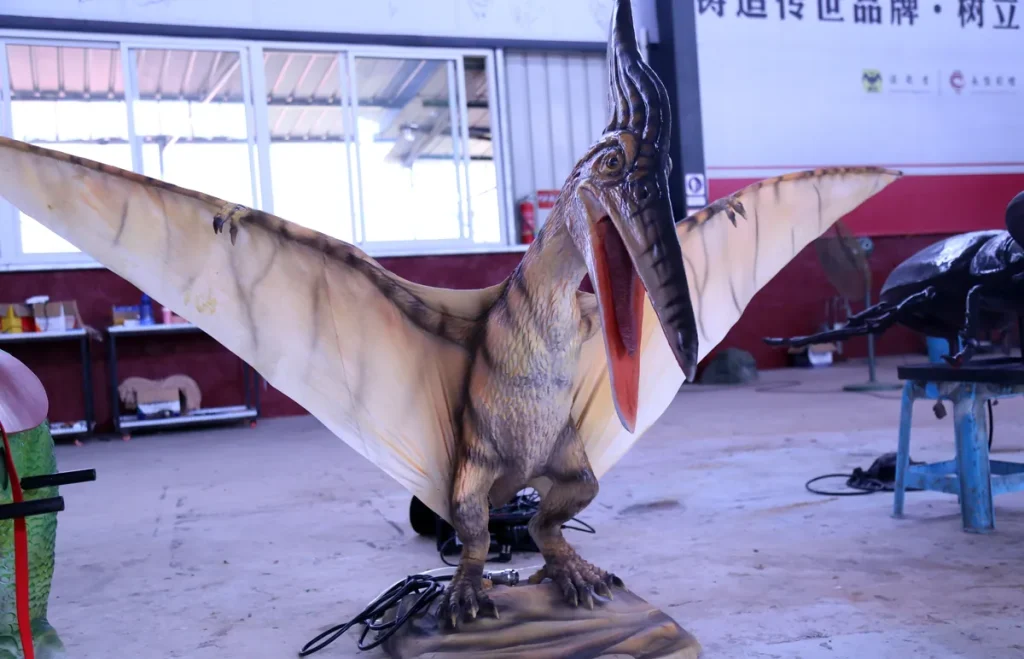
Life-size animatronic pteranodon with the long backward crest, a toothless beak and a 3-8 m wing span, standing on a moulded rock base for park entrances, plazas and museum floors.
View Product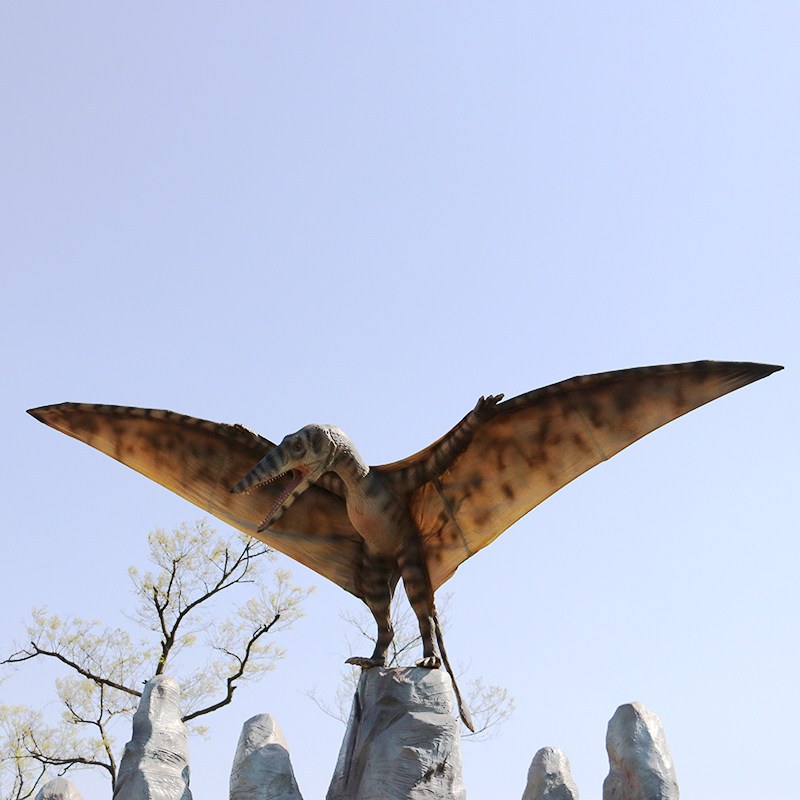
A pterosaur is read from the wings — the spread span is the whole animal, and a model that hangs flat or folds the […]
View ProductThree things buyers usually want settled before they ask for a drawing — what drives the number, how the piece is actually built, and what to check between suppliers.
Animatronic Dinosaur Buying Guide for Museums & Theme Parks Choosing the right animatronic dinosaur for your museum, theme park, or zoo is one of […]
Read the guide →From fossil reference to finished skin — how proportions, texture, colour and weathering are decided, and what separates a realistic build from a cartoon one.
Read the guide →Why Motor Choice Matters More Than Buyers Expect Motor selection is usually treated as a manufacturing detail. It is not. It is the decision […]
Read the guide →Send your dimensions, movement requirements and installation site. You get a realistic budget range and a dated build schedule.
Or email info@hltdino.com — we reply within one business day.