Animatronic Dinosaurs
Animatronic Pteranodon Model
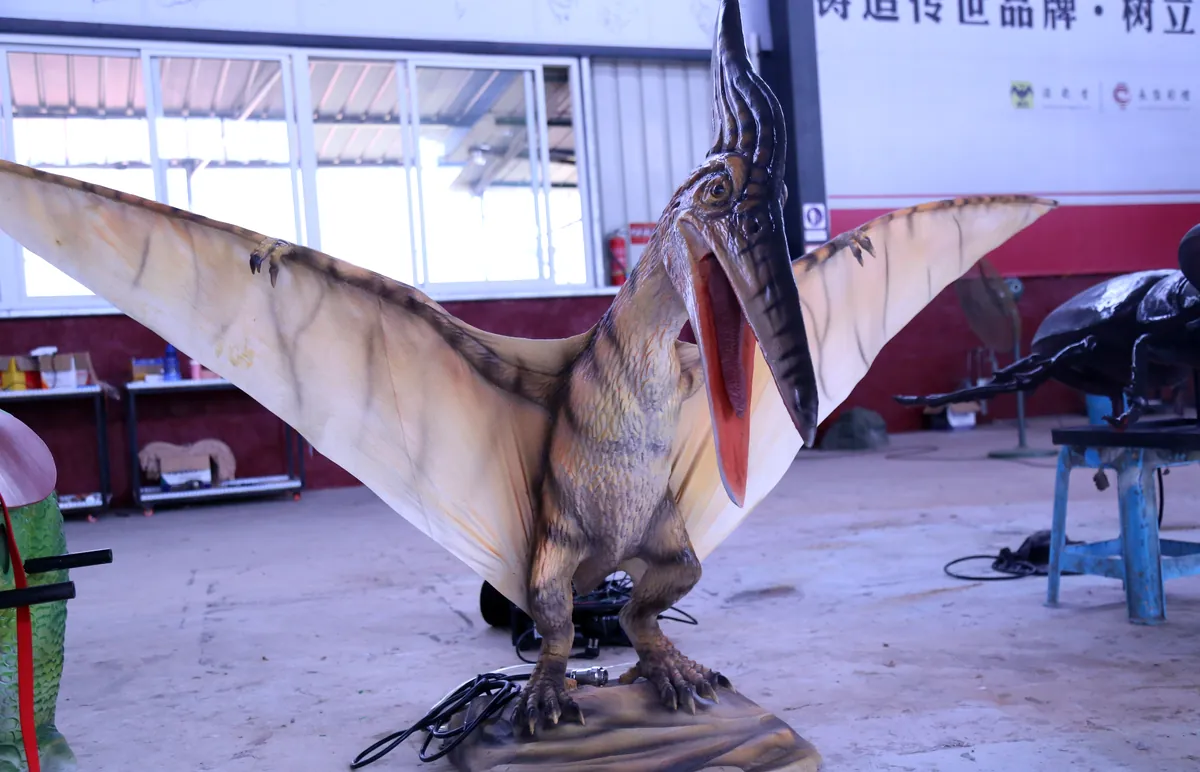
Life-size animatronic pteranodon with the long backward crest, a toothless beak and a 3-8 m wing span, standing on a moulded rock base for park entrances, plazas and museum floors.
Life-size animatronic pteranodon with the long backward crest, a toothless beak and a 3-8 m wing span, standing on a moulded rock base for park entrances, plazas and museum floors.
A Pteranodon is the flying reptile most visitors can already name, and they name it by the crest — the long blade sweeping back off the skull. Miss the crest and the animal reads as a generic pterosaur. Miss the beak and it reads as a large bird. This animatronic pteranodon is built as a ground display: the span held high in a V, both feet planted on a moulded rock base, the head turning and the jaw working as people walk up to it.
| Product type | Large electric animatronic pteranodon model |
|---|---|
| Wing span | 3–8 m, set by the clear space on site |
| Standing height | 2.2–3.8 m to the crest tip, base included |
| Base footprint | 1.2–2.4 m moulded rock base, weighted or anchored |
| Power | 110 V / 220 V, specified per site |
| Power draw | 300 W to 1,500 W, depending on span and movement count |
| Control | Industrial single-chip controller |
| Materials | National-standard steel · first-tier servo motors · high-density foam · composite silicone · elastic fibre mesh reinforcement |
| Movements | Jaw open and close · head turn · head nod · neck twist · wing flap · wing hold at rest · body rise and settle · standing shift |
| Trigger options | Infrared proximity sensor · radar · pre-programmed sequence · remote control · voice interaction |
| Suits | Park entrances, plazas, museum floors, family zones, mini golf, mall atriums, walkway junctions |
| Warranty | 12 months on the complete unit |
The crest, the beak and the span are where the budget goes, and it shows at three metres as plainly as at eight. Every unit is built to the site it stands in — the span is fixed by the clear space around it, the base by the ground underneath it.
A Pteranodon carries one feature no other flying reptile in a park does: a crest rising off the back of the skull and sweeping up and back like a blade, longer than the skull itself on a mature animal. That crest is not ornament. In the fossil beds it separates the sexes — the long-bladed skulls come with the bigger frame and a span near six metres, the short-crested ones run about two thirds of that. On a model, crest length is the single measurement that decides whether a visitor says “pteranodon” or just “dinosaur with wings”.
We set the crest against reference material rather than against the last model we built. The rear edge is left thin so daylight through it reads at twenty paces, the way it does on the mounted skeletons. Cast it thick and blunt and the whole animal goes generic, whatever the rest of the body is doing.
Half the people who stop in front of it will call it a pterodactyl. That is the word in general use, and at a park it is not worth correcting out loud — but the two animals are not the same. Pterodactylus was a small Jurassic form with a short crest and a span measured in centimetres to a metre. Pteranodon is Late Cretaceous, out of the Western Interior Seaway that once split North America in two, with a span that reached six metres and a beak built for fish.
That difference is worth putting on the board next to the model. Interpretation that names the animal, its period and the water it fished over turns a photo stop into a two-minute read, and the information board is quoted with the unit.
Most pterosaur models are sold as suspensions — a frame bolted to a wall or a ceiling, wings spread flat, the animal pretending to be in flight. This one does the opposite. It stands. The legs and wing joints carry the load, the frame runs down through the feet into the rock base, and the wings hold a V above the body instead of lying flat.
The V is the reason to build it this way. A flat span seen head-on from ground level collapses into a line; the V keeps the silhouette open from every approach angle, which is what matters on a plaza or a walkway where people come at it from the side rather than the front. It also puts the head between 2.2 and 3.5 m — above a child’s eye line, below an adult’s, close enough to watch the jaw work.
A real Pteranodon walked. The wing finger that carried the membrane in flight folded back, and the animal moved on all fours with its weight on the wrists. The stance on this base is built closer to that than to a hanging pose, which is why it reads right standing up and wrong when you suspend it.
The name means “toothless wing”, and there are no teeth in the jaw. The beak is a long narrow pair of blades that closed on fish taken off the surface of the seaway. On the model the upper and lower jaw drive on separate servos, and the throat carries the red interior that reads from the far side of a plaza.
It is a beak, not a mouth. Give it teeth and the animal turns into a small theropod with wings bolted on; build it shut and the whole head goes static. Jaw travel on this unit is set so the beak opens wide without the lower mandible dropping past the angle where it starts to look dislocated.
A life-size animatronic pteranodon is measured by its span before anything else is decided, so measure the space first. A three-metre span fits a shop window, a lobby corner or a family zone. Six metres needs open floor and about four metres of clear height. Eight metres is a plaza animal, and it needs road access for a crate that long plus a lift on site.
Wind is the other half of it. A standing model presents its span broadside to the wind in a way a suspended one never does, so anything above five metres outdoors goes onto a foundation rather than a weighted base. We ask for the site plan and the prevailing wind direction before the drawing is fixed, because the answer changes the base, not the animal.
Park entrances, where it stands as the first animal in and the last one photographed. Plaza edges and walkway junctions, because the V holds its shape from the side. Museum floors and fossil halls, standing in front of the cases it belongs with. Family zones and mini-golf at three metres, where the head sits just above a child. Mall atriums on the ground floor rather than overhead, so visitors can walk the full circle.
It pairs with a suspended unit rather than replacing one — this on the ground at eye level, the hanging pterosaur overhead in the atrium above it. Two placements, one animal, and the visitor reads them as two exhibits rather than a repeat.
It also sits well beside the skeleton and fossil range, since the cast skull gives visitors the size comparison the model alone cannot: the crest on the bone is the same crest on the silicone.
What wing span can be built? Three to eight metres. The span is the first number settled, because it decides the base, the crate and the transport. Height follows the span rather than being set on its own.
Is this Pteranodon or Pterodactylus? Pteranodon — Late Cretaceous, long backward crest, no teeth, span up to six metres at full size. We do not build Pterodactylus, and we do not label one as the other.
Can it stand outdoors? Yes, on a foundation above five metres span and on a weighted base below it. The skin is anti-UV composite silicone over fibre mesh, the servo drive is rated IP65, and the frame is hot-dip galvanised for salt air.
How is it fixed down? Four ways: a concrete foundation with pre-embedded anchor bolts, a weighted rock base that moves as one piece, expansion bolts into a hard indoor floor, or a sealed buoyancy-rated base for a water feature.
Do the wings move? Yes — flap, and a rest position where they hold the V without cycling so the silhouette stays correct between shows. Wing servos can be run on the sensor with the head, or held still while only the head and jaw work.
How long does production take? 30 to 45 days after the drawing is approved. Send the site plan, the span and the delivery address, and the proposal comes back with the timing and the base marked up on your own drawing.
Materials. National-standard steel frame, first-tier servo motors, high-density foam core, composite silicone skin over elastic fibre mesh, hand-sprayed colour finish with UV topcoat.
Related. the animatronic dinosaur range, the six most-ordered species, all product families.
The model ships in a reinforced timber crate with the wings folded against the body and the crest in its own sleeve, frame sections and hardware packed and labelled for assembly. Nothing on site is welded. It lifts onto the base, the feet bolt down through the rock, and the wings deploy last — the part that takes damage in transit is the part that is quickest to swap.
Installation runs a single day for a crew with a lift, and our technician joins the first power-up so the wing level and the jaw travel are dialled against the space it is standing in. Wing level is checked last, because a span that has shifted in transit is a ten-minute correction on day one and a return visit if nobody looks.
The rock base, the information board and any lighting are quoted as separate line items and can be drawn at the same time, so the animal, its base and its interpretation arrive as one project instead of three shipments that do not fit together.
| Frame | Hot-dip galvanised or lightweight aluminium welded structure, module sections bolted for transport |
|---|---|
| Skin | Composite silicone over elastic fibre mesh, multi-layer gradient PU paint with UV topcoat |
| Wing span | 3–8 m, built to the clear space on site |
| Head | Long swept-back crest set against reference, toothless beak, independent upper and lower jaw drive |
| Movements | Jaw, head turn, head nod, neck twist, wing flap, wing hold at rest, body rise and settle |
| Control | Industrial microcontroller · infrared / radar trigger · remote · pre-programmed sequence · voice interaction |
| Weather | Outdoor specification standard; servo drive rated IP65, −20 °C to +60 °C |
| Base | Moulded rock base, weighted or foundation-anchored according to span and wind load |
| Lead Time | 30–45 days after drawing approval |
| Warranty | 12 months with maintenance support |
Same factory and the same build standard. What changes is size, movement set and how the exhibit is meant to be used on site.
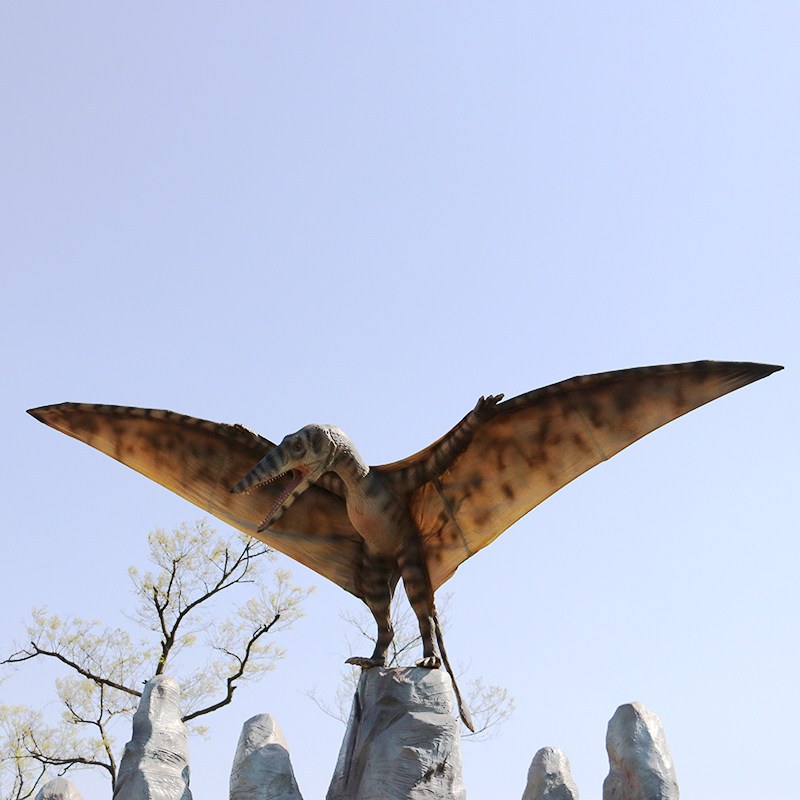
A pterosaur is read from the wings — the spread span is the whole animal, and a model that hangs flat or folds the […]
View Product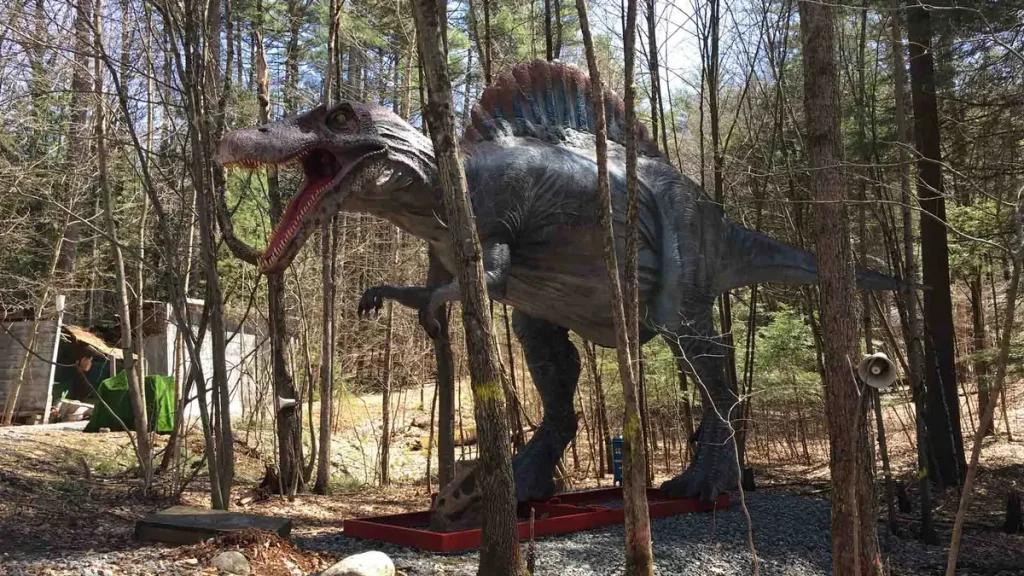
Life-size animatronic Spinosaurus with its signature sail, crocodile-like snout and jaw, neck and tail motion — built to order, outdoor rated.
View Product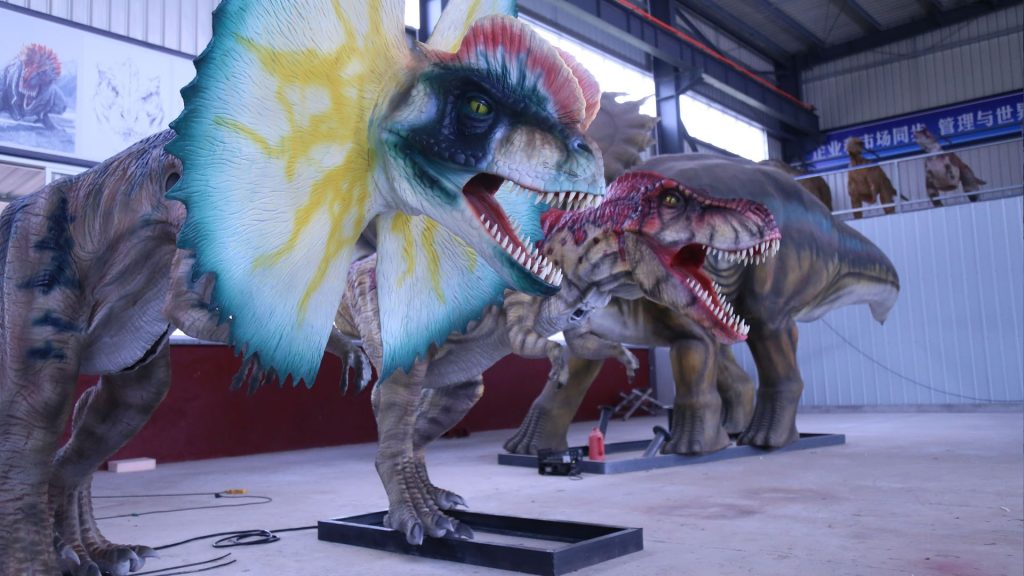
A Spinosaurus is a silhouette before it is an animal, and the sail is the reason. The tall ridge running down the back is […]
View ProductThree things buyers usually want settled before they ask for a drawing — what drives the number, how the piece is actually built, and what to check between suppliers.
Animatronic Dinosaur Buying Guide for Museums & Theme Parks Choosing the right animatronic dinosaur for your museum, theme park, or zoo is one of […]
Read the guide →From fossil reference to finished skin — how proportions, texture, colour and weathering are decided, and what separates a realistic build from a cartoon one.
Read the guide →Why Motor Choice Matters More Than Buyers Expect Motor selection is usually treated as a manufacturing detail. It is not. It is the decision […]
Read the guide →Send your dimensions, movement requirements and installation site. You get a realistic budget range and a dated build schedule.
Or email info@hltdino.com — we reply within one business day.