Dinosaur Skeletons & Fossils
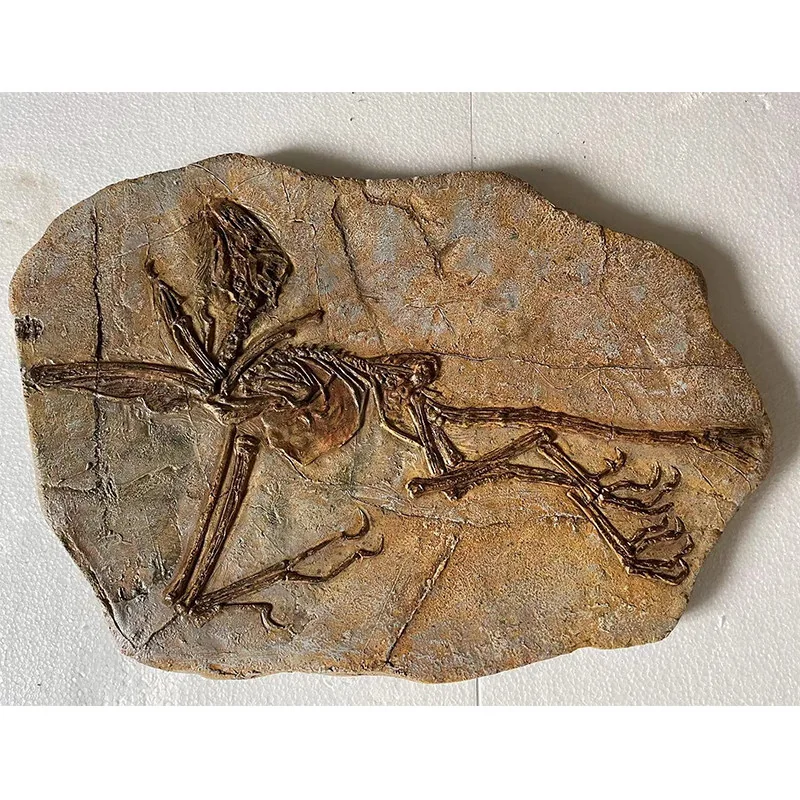
Archaeopteryx is the fossil that made feathers ordinary, and the feathers are the hardest thing to reproduce. On the Solnhofen plates they survive as carbon films, a dark stain on pale limestone that records the outline of the vanes without preserving any of the structure that made them.
A cast has to translate that stain into relief. Too little and the wings disappear under gallery lighting. Too much and the feathers become a row of carved grooves that no fossil ever had. Ours sits at the shallow end: the feather outlines stand about a millimetre proud of the matrix, enough to catch a raking light, not enough to read as sculpture.
The wing feathers are the part to check on any replica you are offered. They should fan from a single point at the wrist and overlap in a consistent direction. Casts that show them as parallel bars have been modelled from a photograph rather than from a specimen.
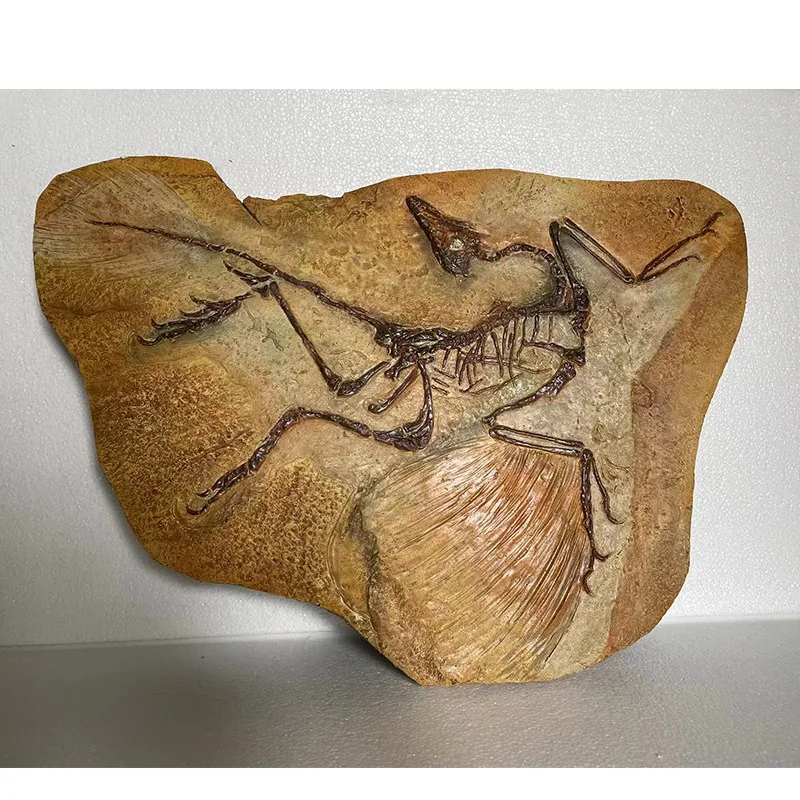
Archaeopteryx has a long bony tail, longer than its body, with feathers running down both sides in a paired arrangement. Every modern bird has a short tail bone with feathers fanning from one point. That difference is the single most reliable way to tell an Archaeopteryx cast from a cast of any later bird, and it is visible from across a room.
The other two features are the teeth and the wing claws. Archaeopteryx has both, and both are usually visible in relief on a good plate. If a plate shows a toothless beak, it is not Archaeopteryx.
The Solnhofen limestone is fine-grained and pale, laid down in a lagoon that was quiet enough to preserve soft tissue. Plates are quarried in thin sheets, and the specimen is usually split into a slab and a counter-slab, one carrying the impression and one carrying the raised counterpart.
We cast the impression side as standard, because that is the side museums display. The matrix is hand-tinted from a pale cream through to a warm grey, with the darker carbon film worked into the relief rather than painted on top of it. Our plate edges are broken rather than cut square, which is how a quarried slab actually looks.
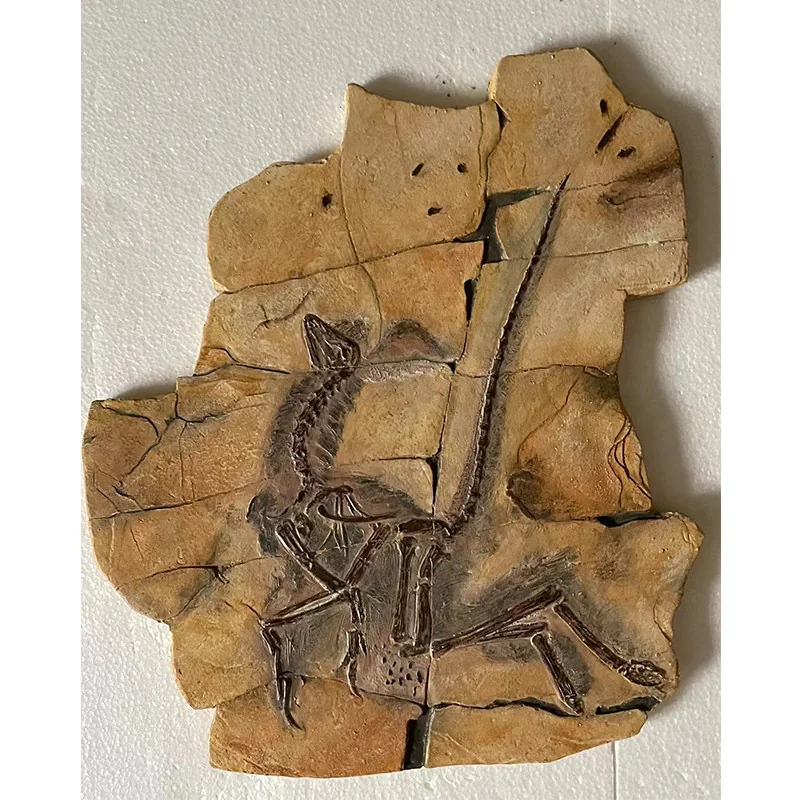
This is a plate that lives or dies by its lighting. A frontal light flattens it into a painted panel because the relief is only a millimetre deep. A light angled from above and about thirty degrees to one side pulls the feather outlines, the ribs and the tail vertebrae into separate shadows, and that is how the specimen is lit in every museum that displays one well.
Hang it flat and dead vertical, with the plate centre at about 1.5 metres. A tilted plate catches reflections along the top edge and the carbon film disappears into the glare.
If the plate goes behind glass, the glass is the thing that will ruin it. Standard float glass reflects about eight per cent of the light that hits it, and on a pale limestone plate that reflection sits directly over the specimen. Anti-reflective coated glass drops that to around one per cent and is the single upgrade worth paying for on this piece.
Do not tilt the plate to solve a reflection. Tilting moves the reflection but it also changes the angle at which the relief is lit, and a plate lit at the wrong angle loses the feather impressions entirely. Fix the light instead, or move the case.
If the plate is framed, keep the frame shallow. A deep frame throws a shadow onto the top edge of the matrix, which is where the wing feathers sit.
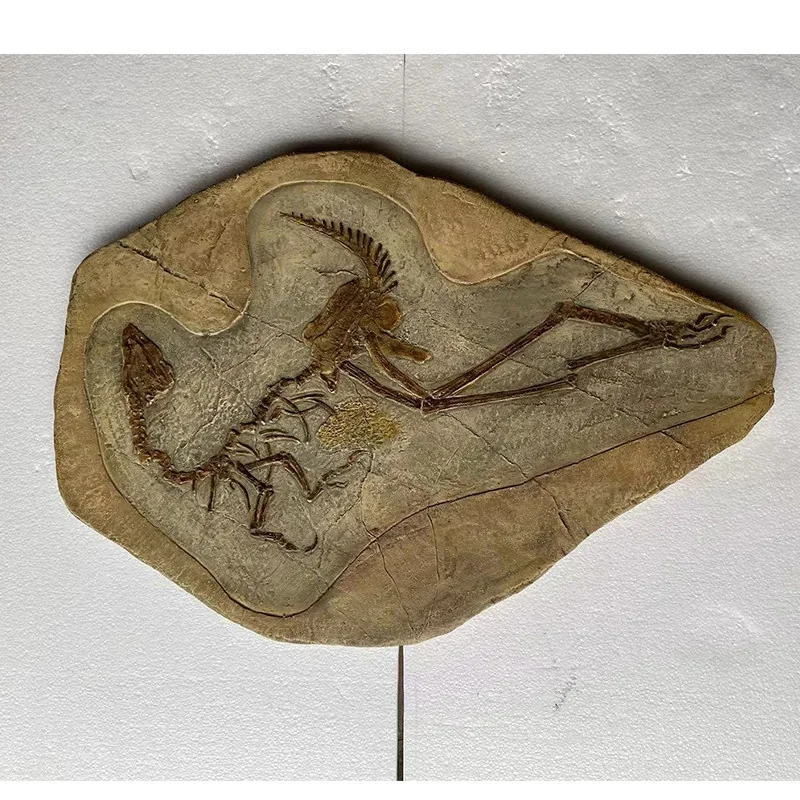
A cast plate is the only version of this specimen that can be passed around, which makes it the useful one for teaching. The original is behind glass in Europe and always will be.
For a teaching set, order the 600 mm plate with the sealed finish and no frame. It can be laid flat on a table, lit from one side with a desk lamp, and the three diagnostic features, the long bony tail, the teeth and the wing claws, can be pointed at directly. That is a better lesson than any label.
Keep a note with the plate saying it is a replica. Not for the visitors, for the staff. A convincing cast that ends up in a storeroom without documentation is how institutions end up with objects nobody can account for.
| Species | Archaeopteryx lithographica |
|---|---|
| Age | Late Jurassic, roughly 150 million years ago |
| Type | Fossil plate replica. Static, no mechanism |
| Plate size | 600 x 400 mm typical; 900 x 600 mm also produced |
| Specimen | About 500 mm nose to tail, wings folded |
| Material | Cast composite on limestone-filled resin matrix, broken edge |
| Surface | Relief about 1 mm, hand-tinted carbon film, matte sealed |
| Mount | Concealed French cleat; plate hangs flat and vertical |
| Weight | About 3.6 kg at the 600 mm plate |
| Duty | Indoor only. UV and moisture both attack the tint |
| Customisation | Plate size, matrix tone, impression or counter-slab side, framed or unframed |
Is this the impression side or the raised side? Impression as standard, because that is the side museums display and the side that reads correctly under raking light. The counter-slab version can be cast to order.
How deep is the relief? About one millimetre on the feathers, slightly more on the bones. It is deliberately shallow: deeper relief reads as carving rather than as a fossil.
Will it show up under normal gallery lighting? Only partly. This plate needs a light angled from above and to one side. Under flat frontal light it looks like a printed panel, which is the commonest installation mistake with any fossil plate.
Can it go outdoors? No. UV fades the tint and moisture opens the sealed surface. This is an indoor piece.
Do you do the counter-slab as a pair? Yes, and the pair is worth having if the case is deep enough to show both faces. Ordered together they are finished to the same matrix tone.
Is the plate edge really broken? It is cast with a broken profile rather than cut square, so it looks quarried. The edge is sealed so it will not chip further.
Can the plate be framed? Yes. An oak or blackened steel frame suits it, though most museums hang it unframed against a dark wall.
Same factory and the same build standard. What changes is size, movement set and how the exhibit is meant to be used on site.
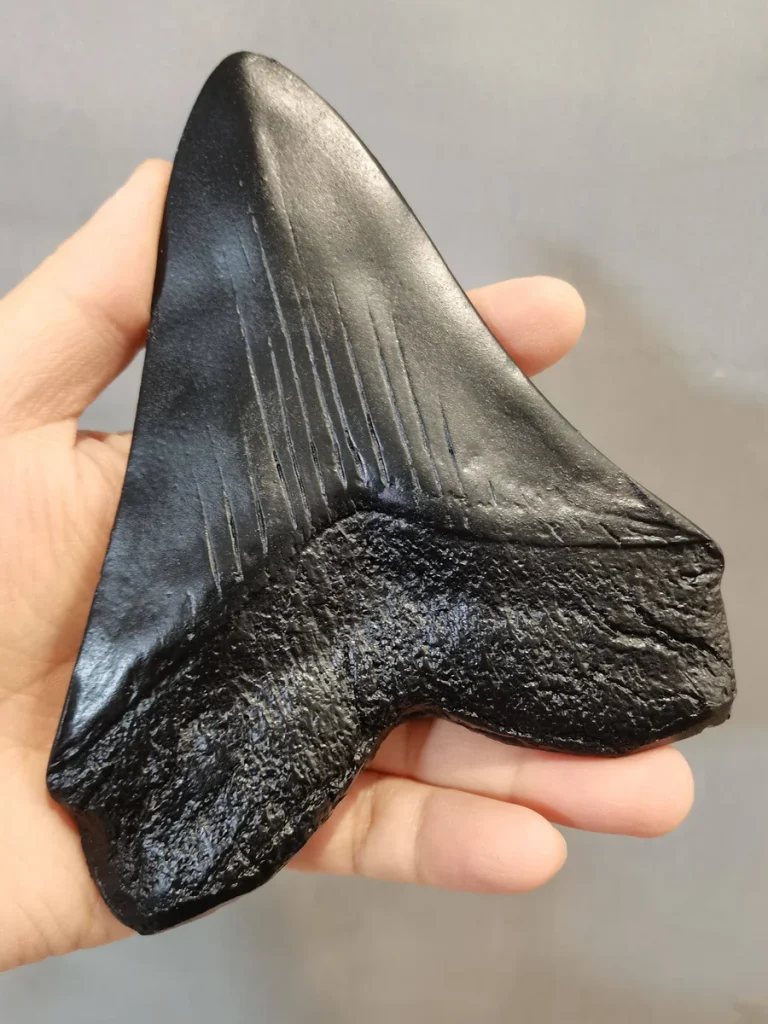
Serrations Are Where Cheap Casts Show Carcharodontosaurus teeth are laterally compressed blades with serrations running along both edges. The serrations are fine, closely spaced […]
View Product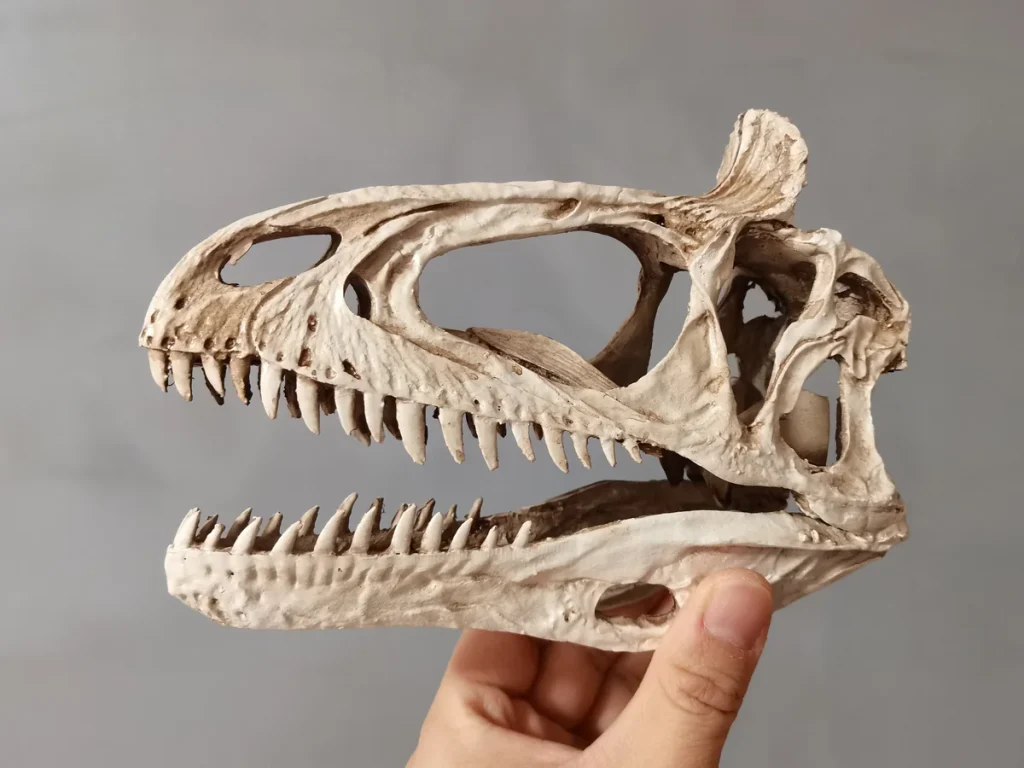
The Crest Does All the Work Cryolophosaurus is identified by one feature: a thin, high crest that rises across the skull roof in front […]
View Product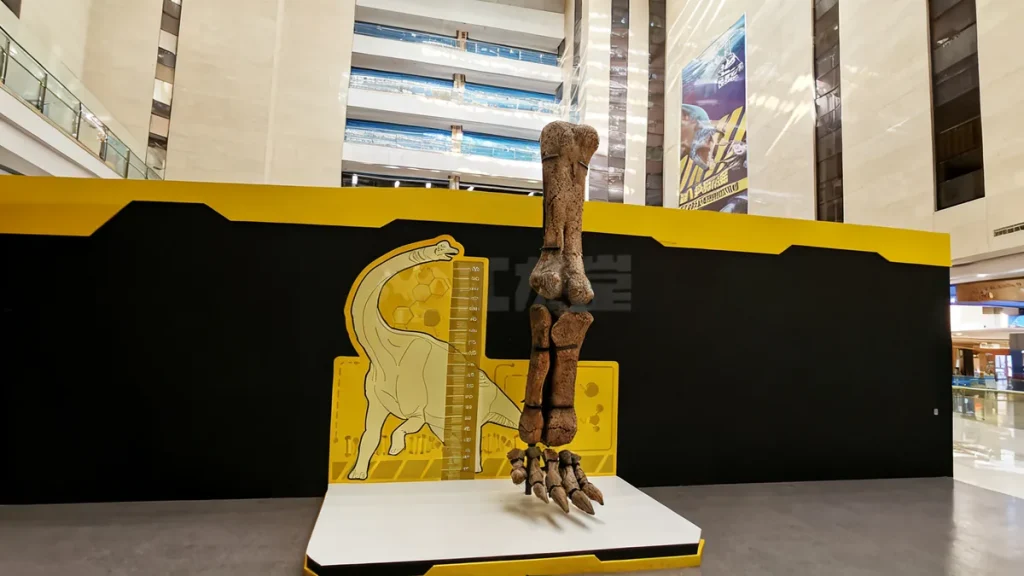
Single bones are the least glamorous thing we make and the most useful thing a museum can buy. They go on handling tables, into […]
View ProductThree things buyers usually want settled before they ask for a drawing — what drives the number, how the piece is actually built, and what to check between suppliers.
From fossil reference to finished skin — how proportions, texture, colour and weathering are decided, and what separates a realistic build from a cartoon one.
Read the guide →Frame, drives, skin, sensors, sound and weatherproofing — the six systems behind every animatronic dinosaur, and how each one changes cost and behaviour.
Read the guide →Choosing the right animatronic dinosaurs for your venue is not just about picking the most famous species — it is about matching each dinosaur […]
Read the guide →Send your dimensions, movement requirements and installation site. You get a realistic budget range and a dated build schedule.
Or email info@hltdino.com — we reply within one business day.