Dinosaur Skeletons & Fossils
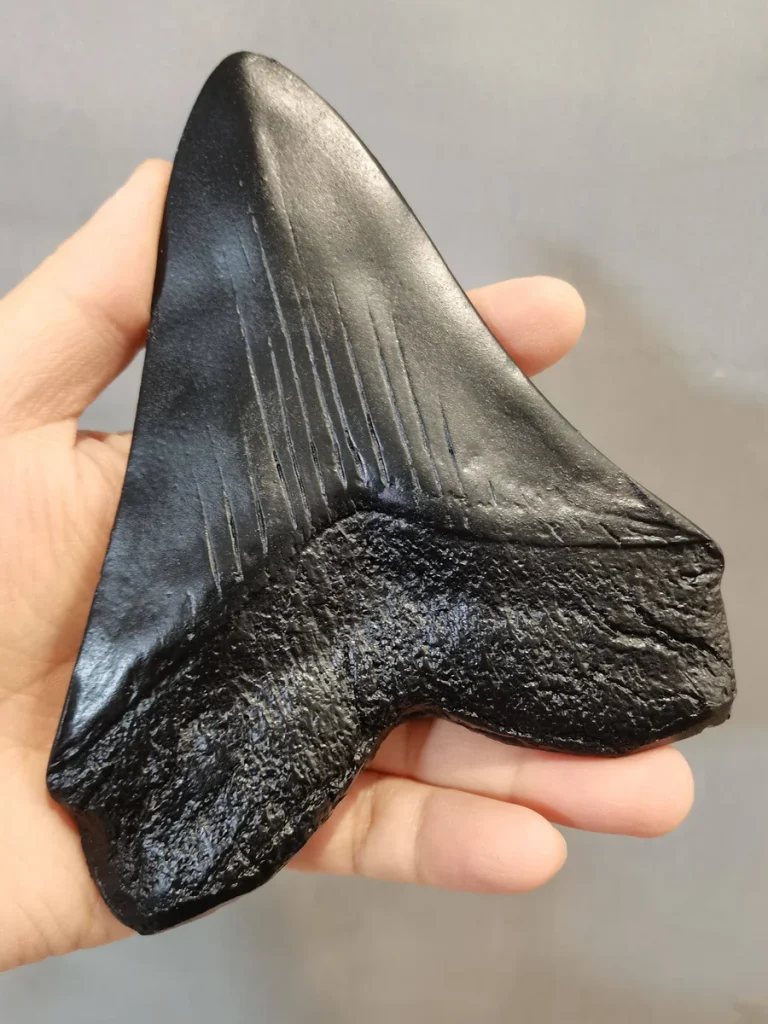
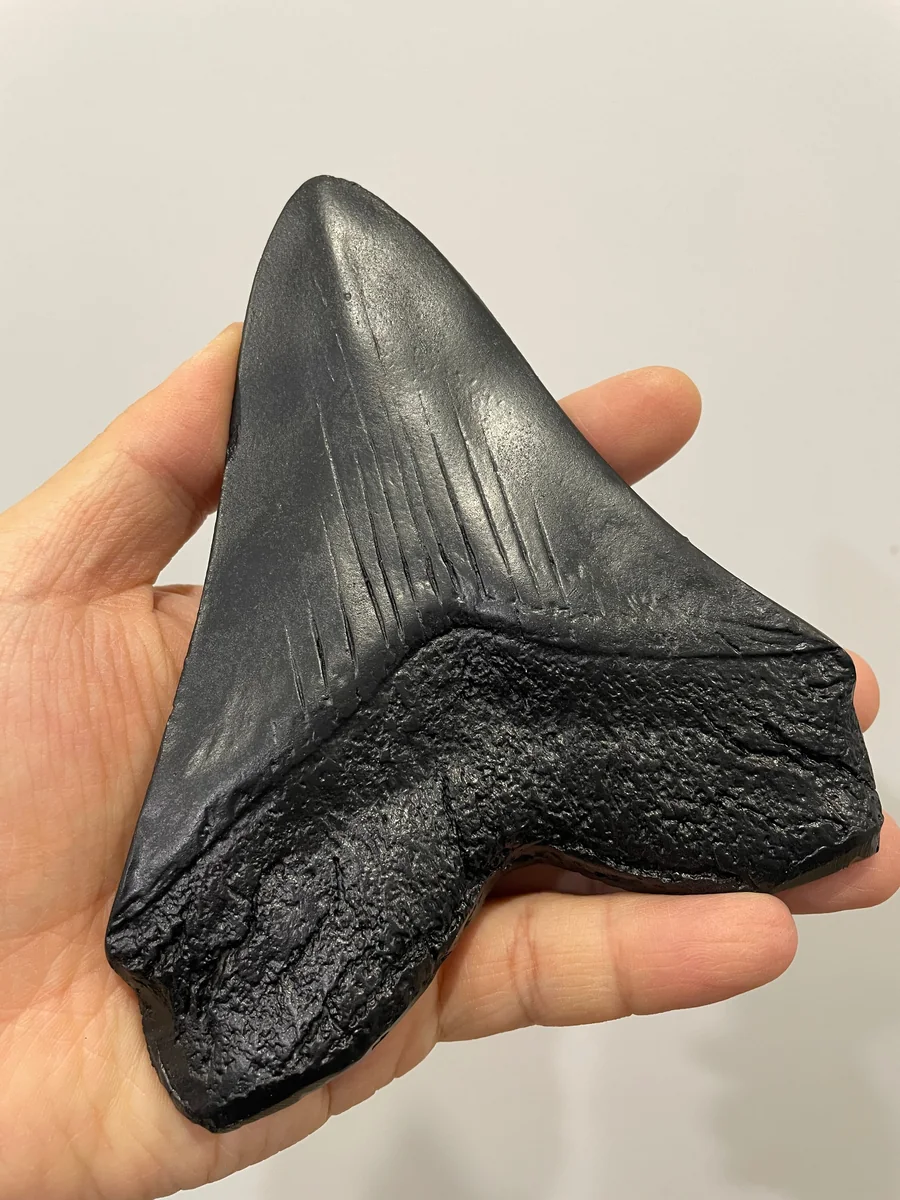
Carcharodontosaurus teeth are laterally compressed blades with serrations running along both edges. The serrations are fine, closely spaced and continuous, and they are the single hardest feature to reproduce. A mould that has been pulled too many times rounds them off, and the tooth comes out looking like a smooth dagger with a scalloped edge.
On ours the serrations are cast in and then checked under a loupe before finishing. They should be countable along a ten-millimetre run, not just visible as a texture. If you cannot count them, they are not serrations.
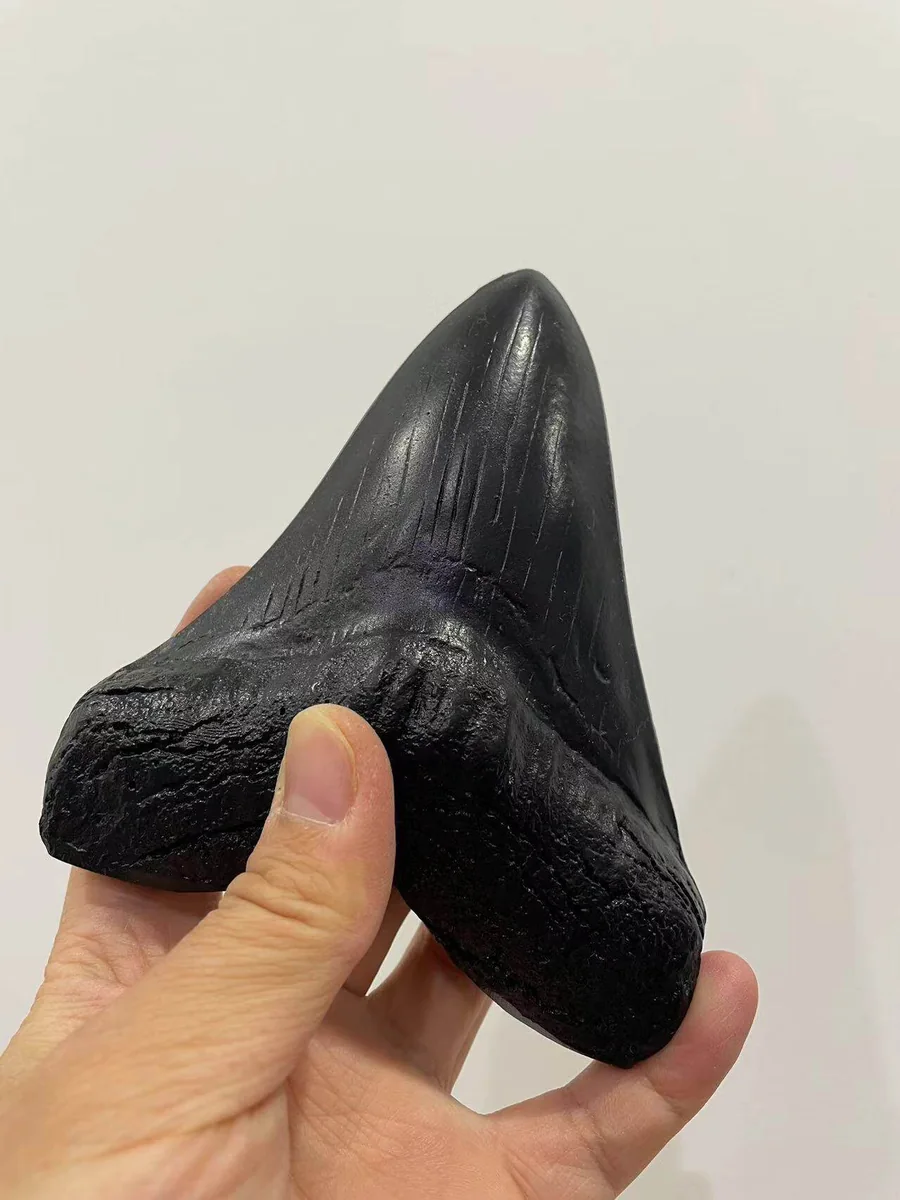
The second feature is the compression. A Carcharodontosaurus crown is thin from side to side and broad from front to back, which is what makes it a blade rather than a cone. Casts that thicken the crown to survive shipping lose the profile, and the tooth stops reading as this animal.
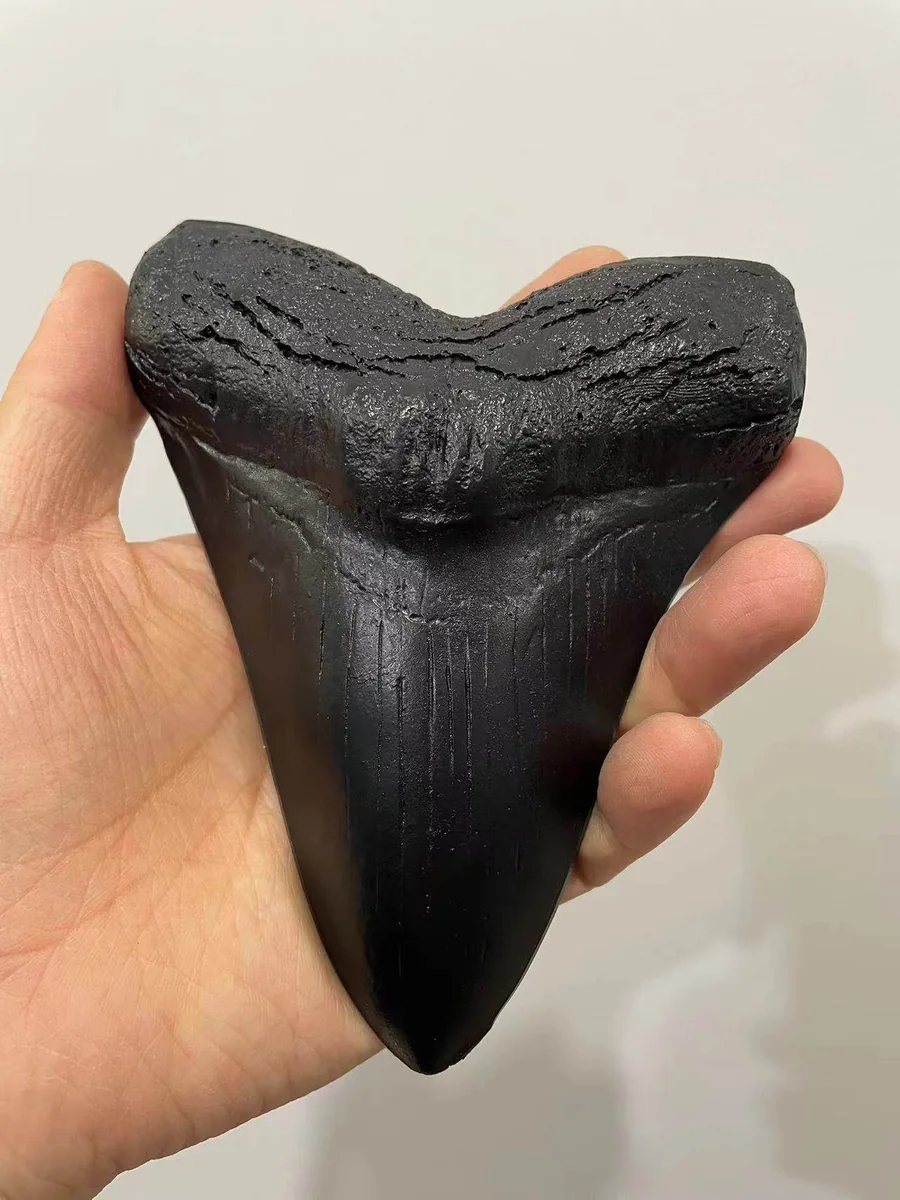
A shed tooth has a crown of enamel and a root of dentine, and the boundary between them is a clean line where the enamel ends. On a real specimen the two materials weather differently, so the crown reads darker and glossier than the root.
We finish the two sections separately for that reason, with the enamel slightly darker and the root a matte, chalkier tone. A tooth painted in one colour looks like a prop. The junction should also show the slight swelling where the enamel thickens at its base, which is where the tooth was gripped in the jaw.
The tip is usually worn or broken on real specimens, because a tooth that has been used and shed rarely comes out perfect. We finish a small wear facet rather than a pristine point, which is both more accurate and less likely to be read as a manufactured object.
Three things separate this tooth from a Tyrannosaurus tooth of similar size. First, the compression: Tyrannosaurus teeth are thick and banana-shaped, Carcharodontosaurus teeth are flattened blades. Second, the serrations: Tyrannosaurus serrations are coarser and more widely spaced. Third, the curvature: this crown curves backwards along its whole length, where a Tyrannosaurus crown tends to stay straighter and then hook.
If a seller offers you a large theropod tooth without saying which of the two it is, the compression test answers it in your hand.
A tooth is a small object and needs either a very small case or a lot of deliberate space. Our standard mount is a clear acrylic block with a machined recess, holding the crown upright at a slight angle so the serrated edge faces the viewer.
Where the tooth is going into a handling collection, order the sealed finish. Enamel is the part that chips, and a chipped serration is the first thing a visitor will find with a fingernail.
A 95 mm crown is a large object in the hand and a small one in a museum case. The working rule is the same as for any specimen: the object needs to fill about a third of the viewing frame at the distance people stand, which for a standard case is roughly 600 mm.
That puts the 95 mm crown in a case of about 300 mm internal width, or in a group of four to six teeth where the group fills the frame rather than any one tooth. A single 60 mm crown alone in a large case disappears, which is why the small size is usually bought as part of a set rather than on its own.
If you are lighting it, put the light above and to one side. A tooth lit from the front loses the serrations entirely, because they sit in the silhouette rather than on the face.
Teeth are the most collected vertebrate fossil after sharks’ teeth, and they are the easiest way to build a comparative display that fits in one case. The set that teaches most: a Carcharodontosaurus blade, a Tyrannosaurus banana, a Spinosaurus cone, and a dromaeosaur sickle. Four shapes, four functions, one case, and the visitor works out the difference without reading anything.
We cast all four and finish a set to one tone. Ordered separately over time they will drift, because the tint is mixed per batch, so tell us at the first order if a set is the intention.
Label each tooth with the species and the jaw position. Position changes the shape more than most people expect: a front tooth and a rear tooth from the same animal can look like two different species.
| Species | Carcharodontosaurus saharicus |
|---|---|
| Age | Early Cretaceous, roughly 100 to 94 million years ago |
| Type | Single tooth replica. Static, no mechanism |
| Crown height | 95 mm; 60 mm and 130 mm also produced |
| Profile | Laterally compressed, curved backwards along the full crown |
| Serrations | Fine, closely spaced, continuous on both edges |
| Material | Cast composite with two-tone enamel and root finish |
| Mount | Clear acrylic block with machined recess |
| Weight | About 130 g with mount |
| Duty | Indoor |
| Customisation | Crown height, upper or lower jaw position, sealed handling finish |
Is this a real tooth? No. It is a replica cast from reference material and finished by hand. We do not sell original specimens.
How is it different from a T-Rex tooth? The crown is flattened into a blade rather than thick and banana-shaped, and the serrations are finer and more closely spaced. Those two differences are visible in the hand.
Are the serrations actually countable? Yes, along a ten-millimetre run. If they read as a texture rather than as individual teeth, the cast is worn and should be rejected.
Can it go outdoors? No. UV degrades the two-tone finish and moisture opens the sealed surface. Indoor display only.
Does it come with a stand? Yes, the clear acrylic block is included. It holds the crown upright with the serrated edge facing the viewer.
Can you supply a matched set of teeth? Yes. We produce several large theropod teeth and can finish a set to a consistent tone for a comparative display.
Is the tip meant to be worn? Yes. Real shed teeth are rarely perfect, so we finish a small wear facet rather than a pristine point.
Same factory and the same build standard. What changes is size, movement set and how the exhibit is meant to be used on site.
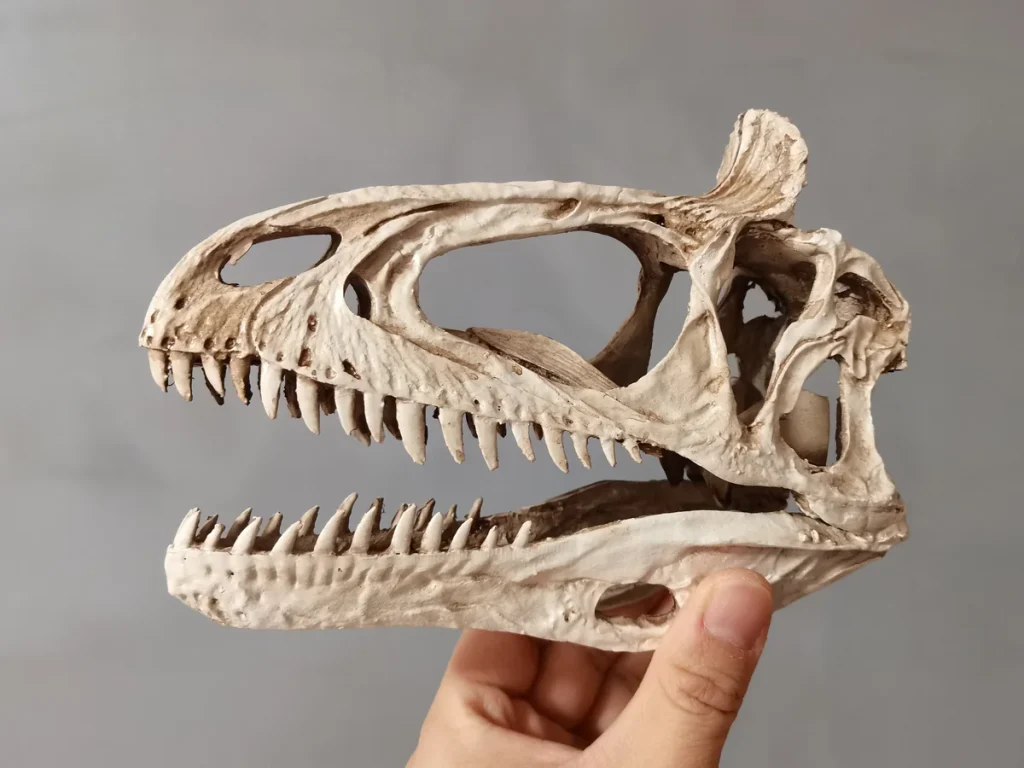
The Crest Does All the Work Cryolophosaurus is identified by one feature: a thin, high crest that rises across the skull roof in front […]
View Product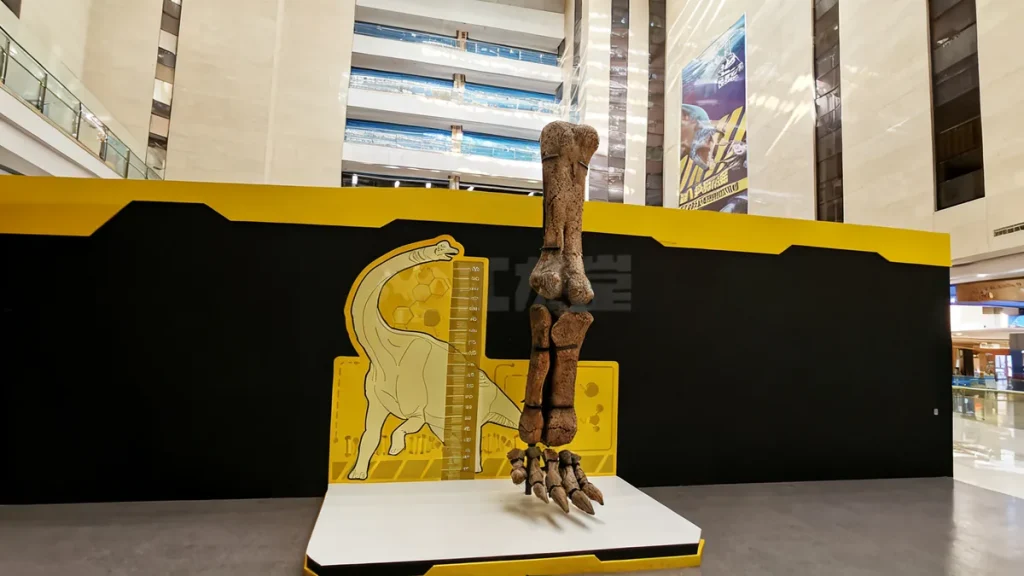
Single bones are the least glamorous thing we make and the most useful thing a museum can buy. They go on handling tables, into […]
View Product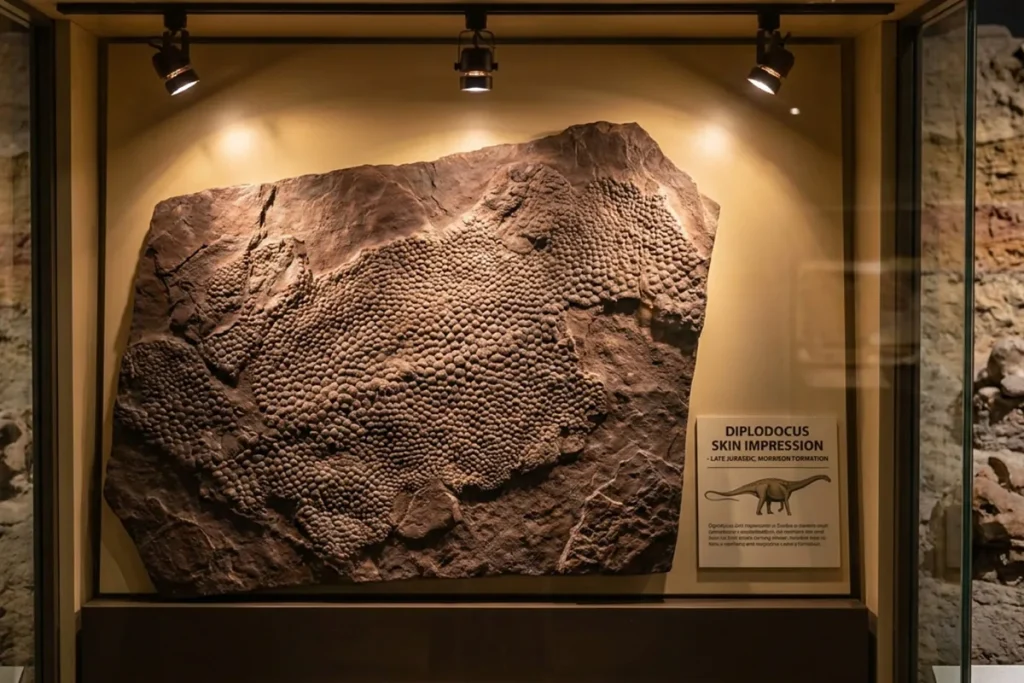
Skin impressions are the hardest fossil to fake and the easiest to ruin. Everyone knows what dinosaur skin is supposed to look like, which […]
View ProductThree things buyers usually want settled before they ask for a drawing — what drives the number, how the piece is actually built, and what to check between suppliers.
From fossil reference to finished skin — how proportions, texture, colour and weathering are decided, and what separates a realistic build from a cartoon one.
Read the guide →Frame, drives, skin, sensors, sound and weatherproofing — the six systems behind every animatronic dinosaur, and how each one changes cost and behaviour.
Read the guide →Choosing the right animatronic dinosaurs for your venue is not just about picking the most famous species — it is about matching each dinosaur […]
Read the guide →Send your dimensions, movement requirements and installation site. You get a realistic budget range and a dated build schedule.
Or email info@hltdino.com — we reply within one business day.