Dinosaur Skeletons & Fossils
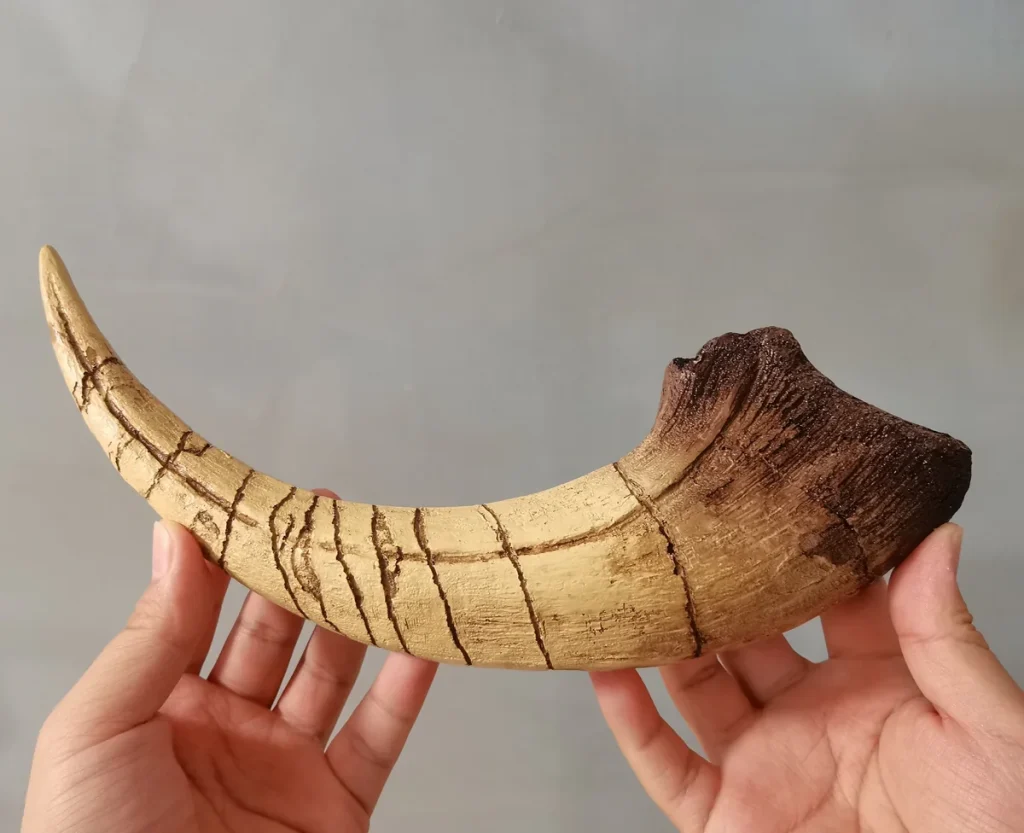
The tip is where a cast either works or does not. On a real claw the bone core tapers to a point that has usually been worn, broken or rounded by use, and a mould taken from a pristine specimen produces something that looks like a thorn rather than a working claw.
Ours carries a slight blunt facet at the tip, the way a claw that has been used looks. It is a two-minute difference in finishing and it is the difference between an object that reads as bone and one that reads as plastic.
The second thing to check is the base. A claw sits in a socket at the end of the toe, and the base of the core carries a concave joint surface. Casts that end in a flat cut look like they were snapped off, because they were.
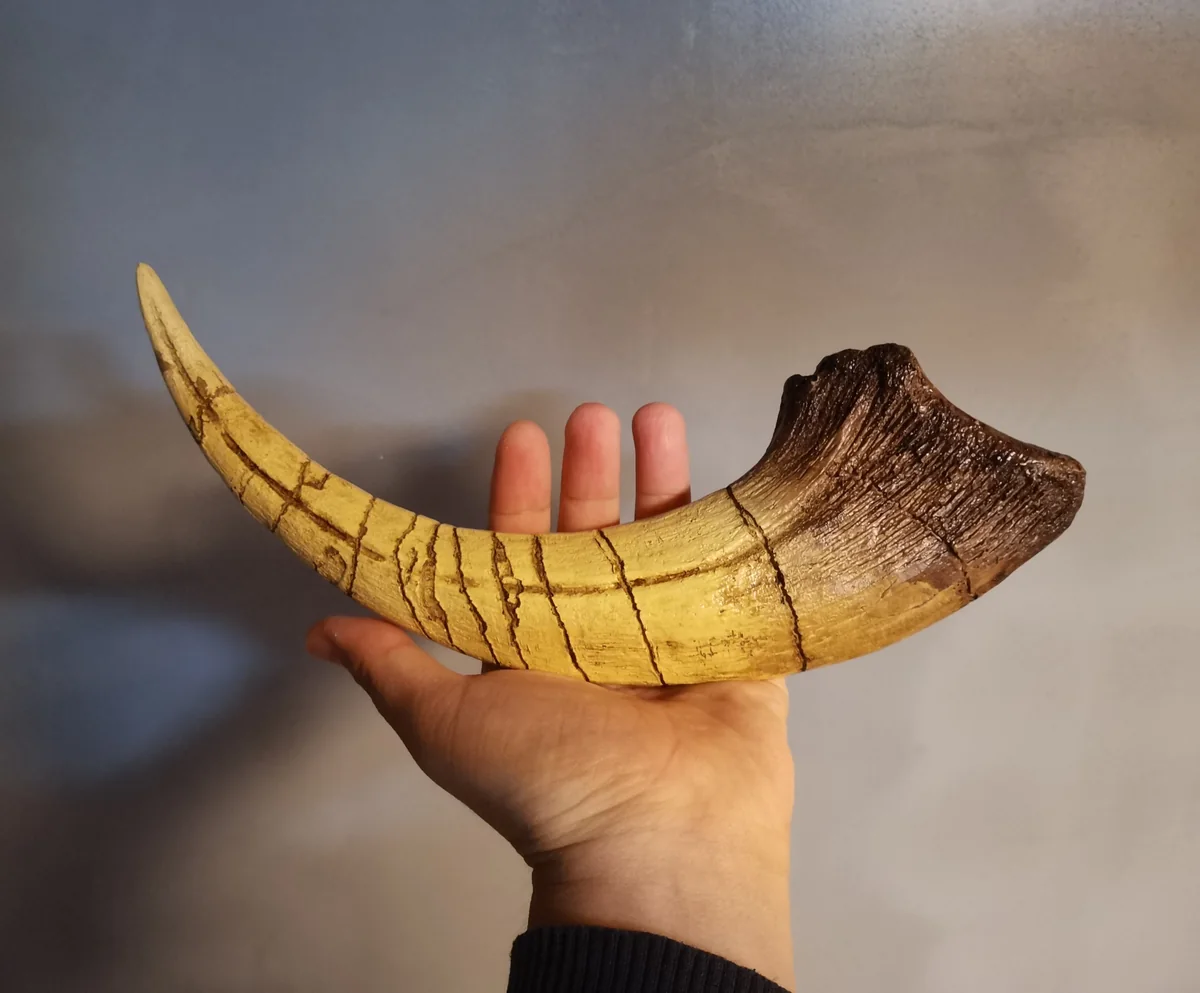
Here is what most claw replicas get wrong. What survives as a fossil is the bony core of the claw, not the claw. In life a keratin sheath covered that core and added roughly a third again to its length, and it carried the colour and the sharpness.
So a cast taken straight from a fossil is not a picture of the animal’s claw. It is a picture of the scaffolding inside the claw. Both are legitimate products and they answer different questions, which is why we offer both: the skeletal core for comparative collections and teaching sets, the sheathed version for public display where the object has to read as the animal rather than as its skeleton.
If your label says claw and the object is a core, a knowledgeable visitor will notice. If your label says claw core, nobody will.
Monolophosaurus is a mid-Jurassic theropod from the Junggar Basin in Xinjiang, known from a single fairly complete skeleton. Its hand claws are curved but not specialised into the deep sickle of the dromaeosaurs, which tells you something about how it used them: for gripping and holding rather than for hooking.
That difference is worth knowing when you are choosing a claw for a display. A dromaeosaur claw is a dramatic object that reads as a weapon. A Monolophosaurus claw is a working hand, and it pairs better with a skeleton mount or a feeding-scene exhibit than with a stand-alone hero case.
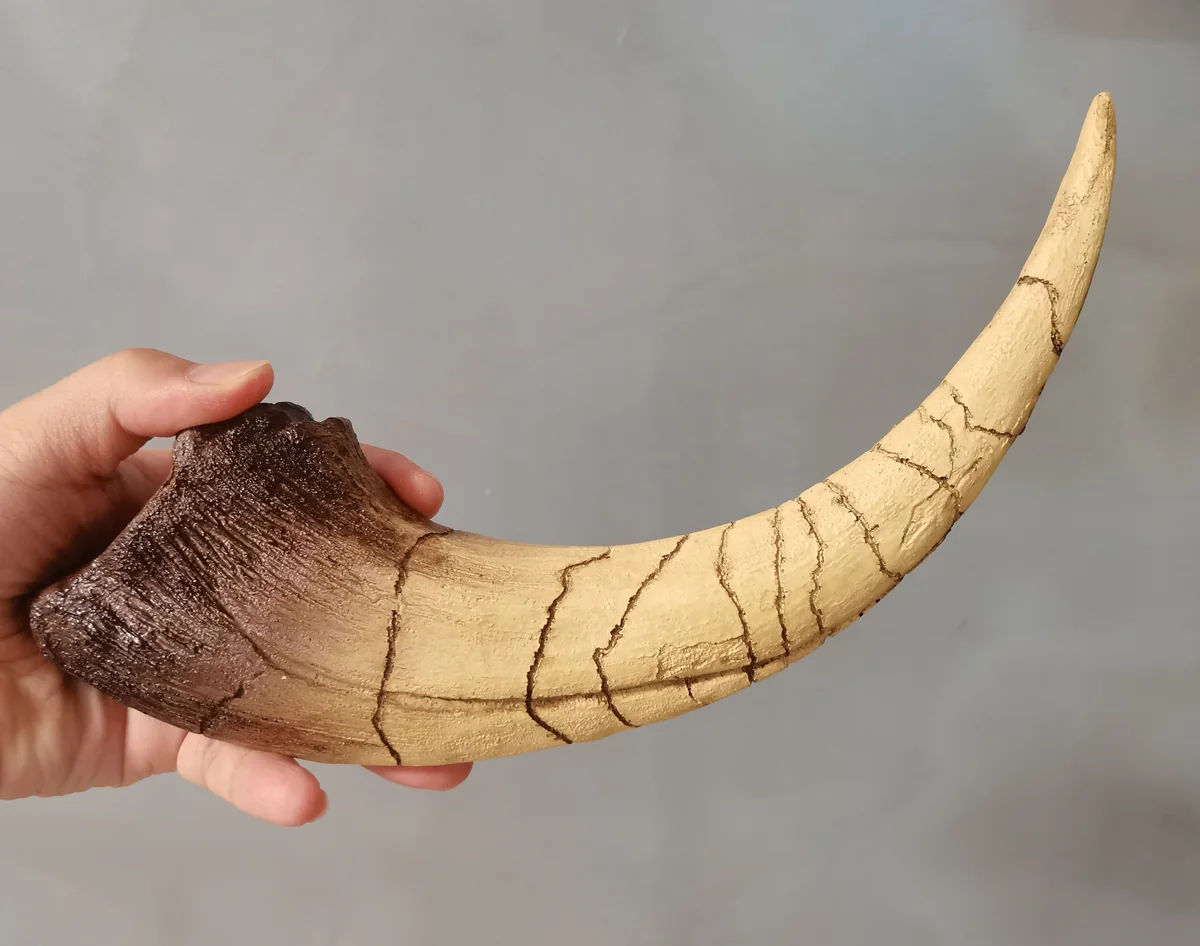
A single claw is a small object and it needs either a lot of space around it or a very shallow case. Our standard mount is a clear acrylic block with a machined recess, holding the claw at about thirty degrees so the curve is visible from a standing position.
For a wall display, a shadow box works better than a bracket: the claw is small enough that a bare wall mount makes it look lost. Keep the interior of the box dark and light the claw from one side, low, so the curve casts a shadow on the backing.
A single claw answers one question. A row of claws from different theropods answers the question visitors actually ask, which is why some claws are shaped the way they are. Put a Monolophosaurus hand claw beside a Velociraptor sickle claw and the difference is immediate: one is a gripping tool with a moderate curve, the other is a hook that turns through most of a circle.
If you are building that row, decide the version first. A set of bare cores is a scientific comparison. A set of sheathed claws is a picture of what the animals carried. Mixing the two in one case produces a comparison between products rather than between animals, and it is the commonest mistake in this kind of display.
Scale matters less than tone here. Claws of different sizes read fine side by side, but a set finished in four different shades of bone reads as four separate purchases.
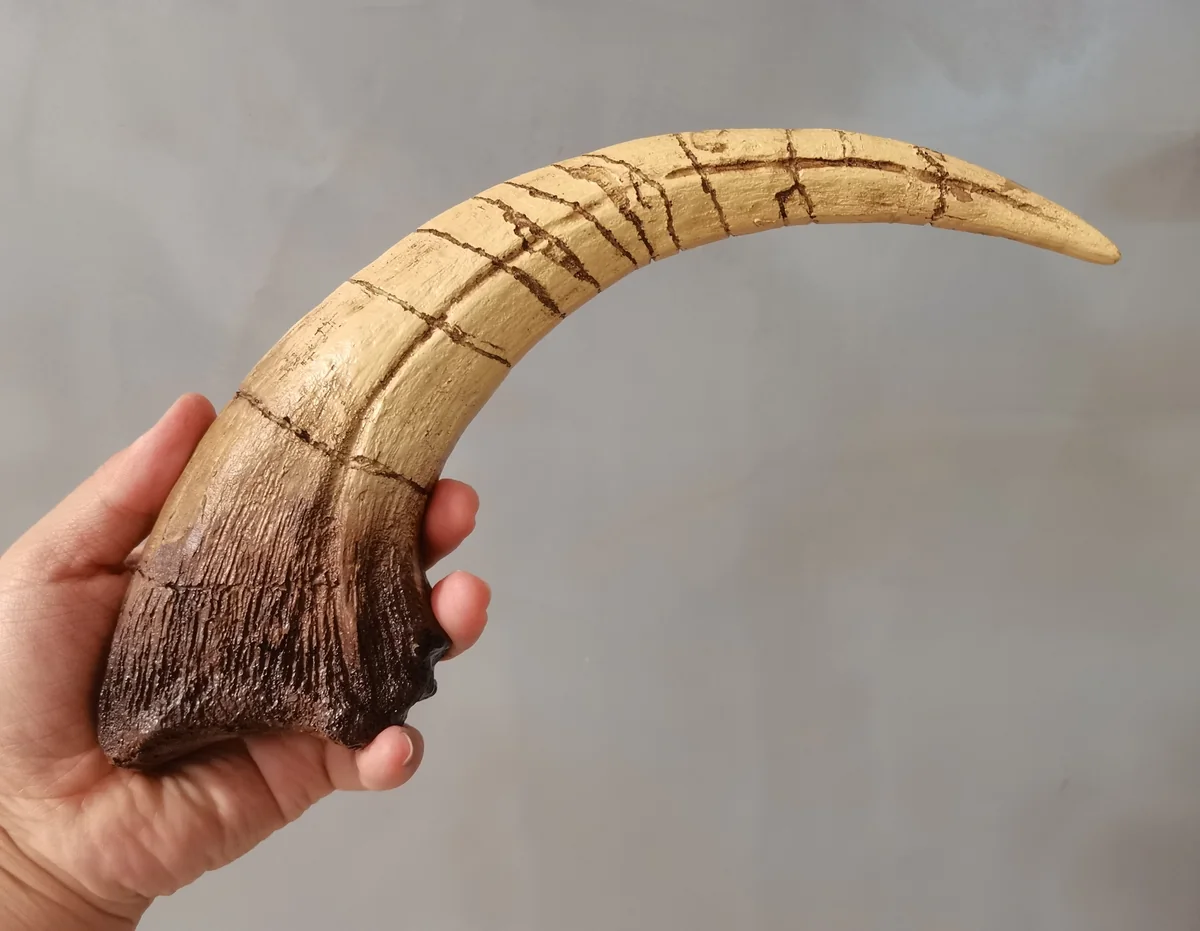
Two finishes. The bone tone is pale, chalky and slightly warm, which is what a claw looks like when it comes out of a limestone bed. The dark finish is a mineral-stained brown-black, which is what the same claw looks like after a hundred million years in an iron-rich bed.
Both are accurate; they are accurate about different sites. The pale version suits a case with other Solnhofen-type material. The dark version suits Morrison and Junggar material and photographs better, which is why catalogue images tend to use it.
We do not offer a gloss finish. A polished claw looks like a carved ornament, and the whole point of the surface grain is that it reads as bone.
| Species | Monolophosaurus jiangi |
|---|---|
| Age | Middle Jurassic, roughly 170 million years ago |
| Type | Single claw replica. Static, no mechanism |
| Length | 145 mm along the curve, bony core; 185 mm with sheath |
| Versions | Skeletal core, or core with reconstructed keratin sheath |
| Material | Cast composite with mineral pigment finish, matte sealed |
| Detail | Wear facet at the tip, concave basal joint, lateral groove |
| Mount | Clear acrylic block with machined recess, thirty degrees |
| Weight | About 180 g with mount |
| Duty | Indoor. Resin is not UV stable over years of direct sun |
| Customisation | Core or sheathed, left or right hand, mount type, display height |
Is this the claw or the bone inside it? Both versions exist. The standard piece is the bony core, which is what a fossil actually preserves. The sheathed version reconstructs the keratin that covered it and is the right choice for public display.
Why does the sheathed version look bigger? Because the sheath added roughly a third to the length and to the curvature. A real claw was a considerably larger object than the fossil core it left behind.
Can I order a left and a right? Yes. Specify the digit and the side and we cast the pair as a matching set, finished to the same tone.
Will it stand on its own? The acrylic block holds it at thirty degrees. Without the block it lies flat, which is not how a claw should be read.
Does it come with a display case? No. We supply the mount only. A shadow box with side lighting shows a single claw better than an open shelf.
Can it be mounted with a skeleton? Yes, and that is how most of these are used. We finish the claw to the same tone as the skeleton so the pair does not read as two different products.
Is the tip sharp enough to be a hazard? It is blunt by design. We finish a wear facet rather than a point, which is both more accurate and safer in a handling collection.
Same factory and the same build standard. What changes is size, movement set and how the exhibit is meant to be used on site.
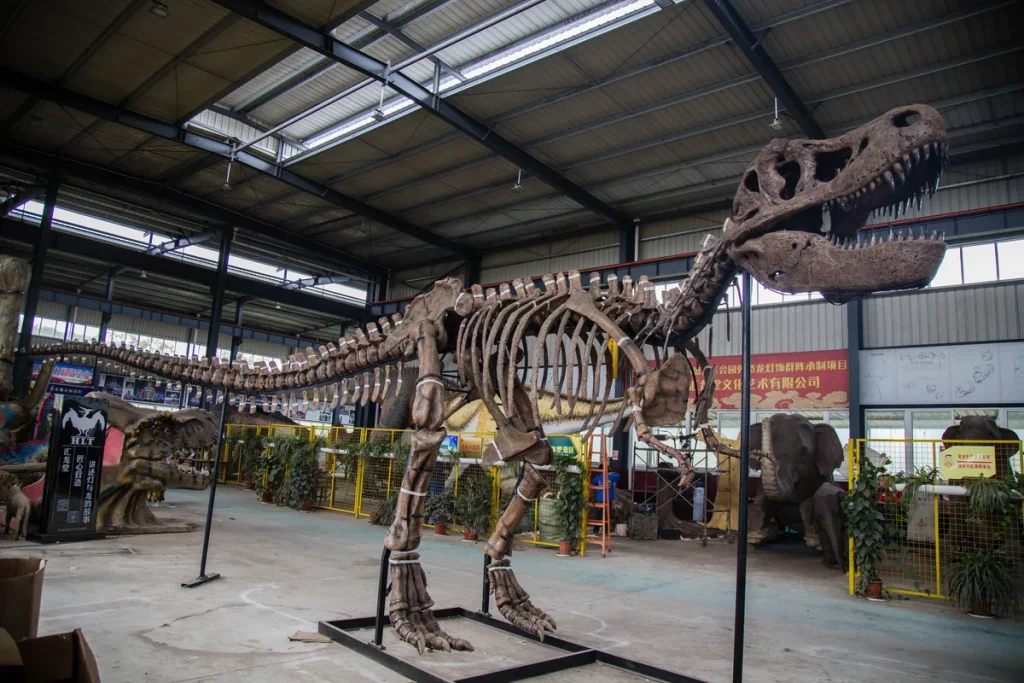
A skeleton reads differently from a mounted animal, and the difference is the gaps. There is no skin to hide the joints, no pose […]
View Product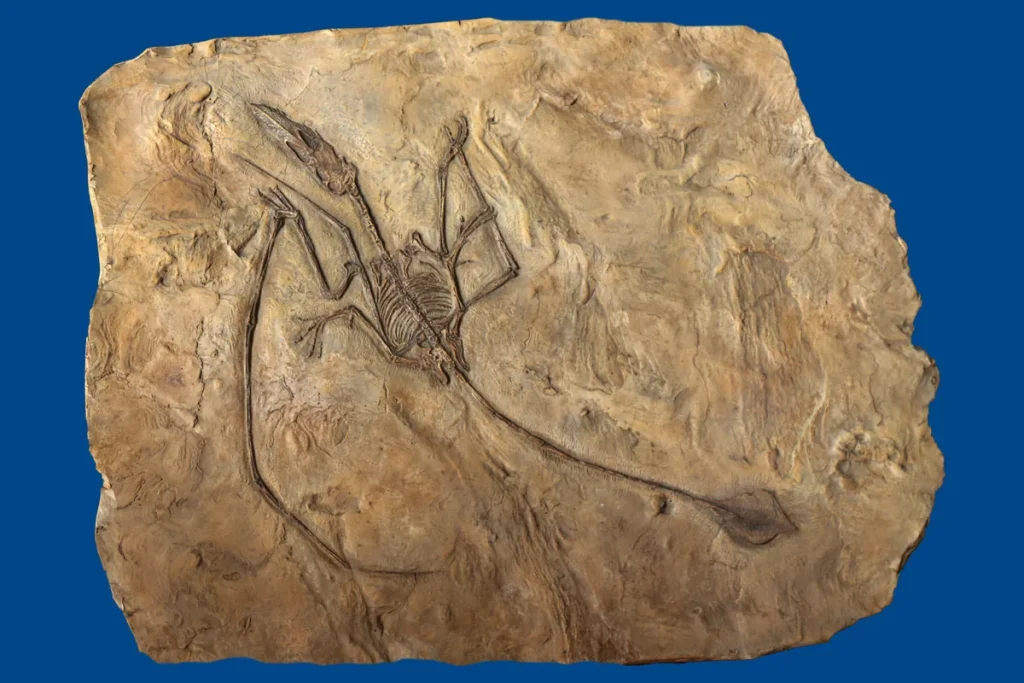
A pterosaur is the one prehistoric exhibit where the skeleton cannot be separated from the membrane. The wing is the fourth finger, drawn out […]
View Product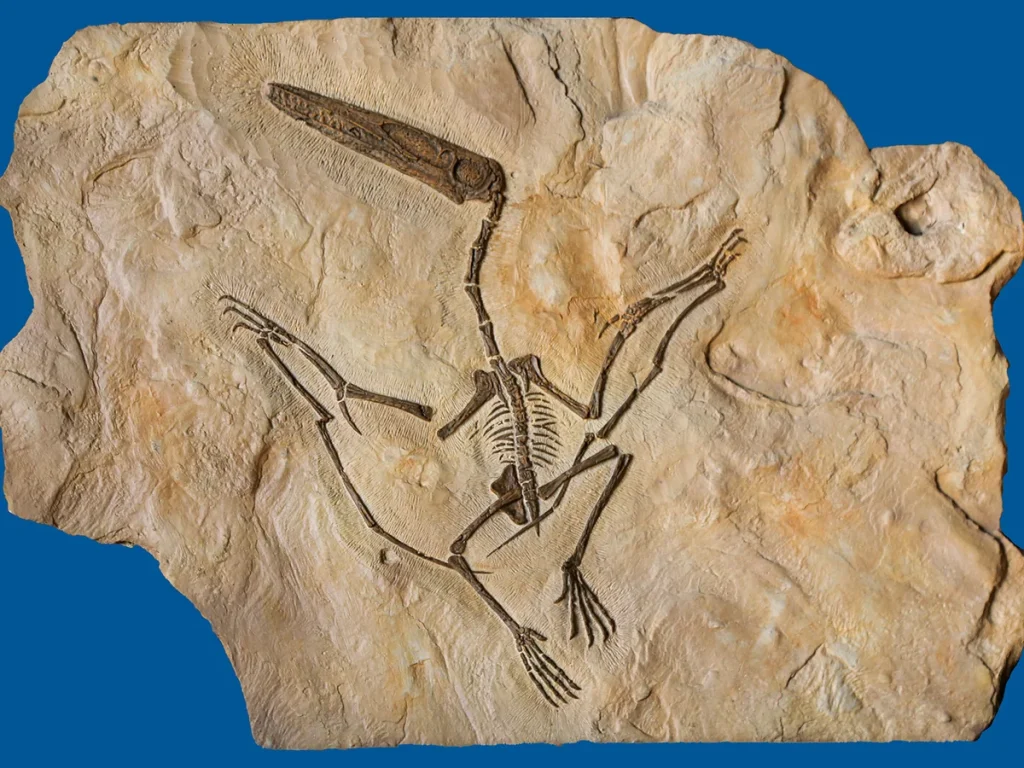
The short-tailed pterosaurs are the ones that look wrong at first glance. No long bony tail, a much shorter skull, and the wing finger […]
View ProductThree things buyers usually want settled before they ask for a drawing — what drives the number, how the piece is actually built, and what to check between suppliers.
From fossil reference to finished skin — how proportions, texture, colour and weathering are decided, and what separates a realistic build from a cartoon one.
Read the guide →Frame, drives, skin, sensors, sound and weatherproofing — the six systems behind every animatronic dinosaur, and how each one changes cost and behaviour.
Read the guide →Choosing the right animatronic dinosaurs for your venue is not just about picking the most famous species — it is about matching each dinosaur […]
Read the guide →Send your dimensions, movement requirements and installation site. You get a realistic budget range and a dated build schedule.
Or email info@hltdino.com — we reply within one business day.