Animatronic Dinosaurs
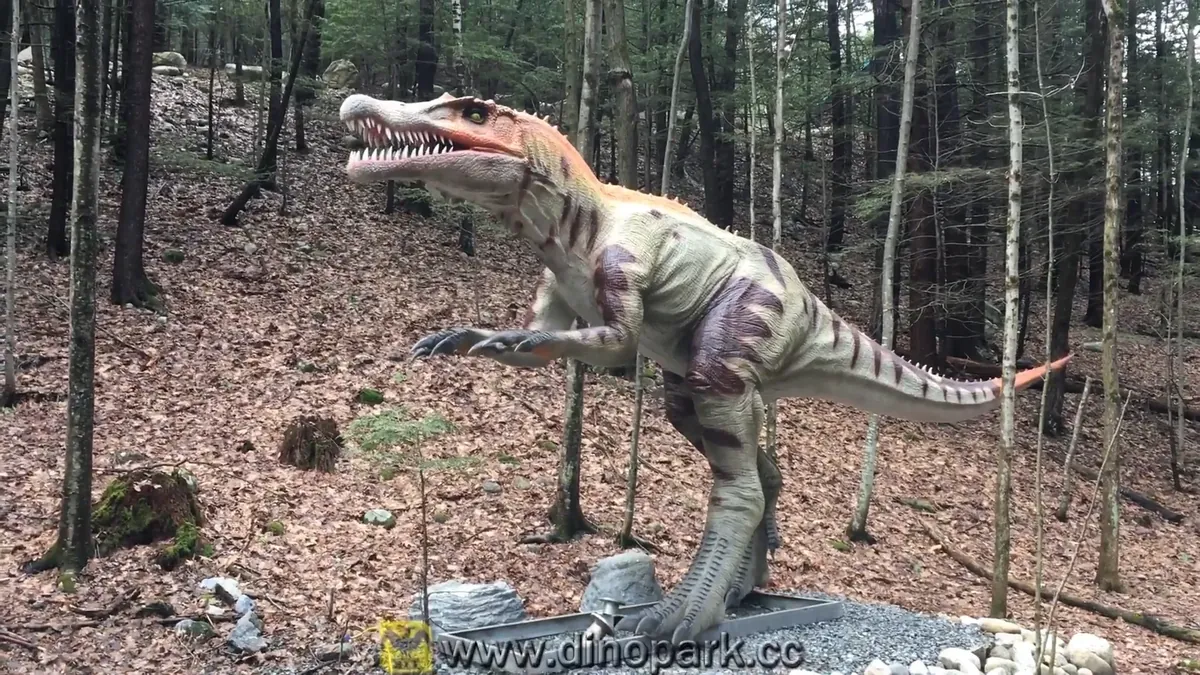
Life-Size Animatronic Baryonyx
A life-size animatronic Baryonyx at 11 m — long crocodile snout, thumb claw and a fish-eater stance built for waterside exhibits and river walks.
A life-size animatronic Baryonyx at 11 m — long crocodile snout, thumb claw and a fish-eater stance built for waterside exhibits and river walks.
A Baryonyx is identified by two things, and only one of them survives at distance. The long, low, crocodile snout reads in silhouette from fifty metres. The thumb claw — the single oversized claw on the first digit that gave the animal its name — only reads up close. A build that gets the snout right and the claw wrong still passes at a glance, which is exactly why so many of them do.
| Product type | Large electric animatronic dinosaur model |
|---|---|
| Overall size | Length 11 m, height 2.8 m at the hip — full custom sizing |
| Power | 110 V / 220 V, specified per site |
| Power draw | 400–1500 W depending on movement count and control type |
| Control | Industrial single-chip controller · sensor trigger · remote · coin-op optional |
| Materials | National-standard steel frame · first-tier servo motors · high-density foam · composite silicone skin · elastic fibre mesh reinforcement |
| Movements | Jaw open and close · head turn and nod · neck raise and lower · tail sway · eye blink · breathing · forelimb raise |
| Weather rating | −20 °C to +60 °C, outdoor rated |
| Lead time | 30–45 days after drawing approval |
A Baryonyx skull is around 1.5 m long and barely 40 cm deep at the jaw hinge. That ratio is the whole animal, and it is also the hardest part to fabricate: a long thin snout on a moving head is a lever, and every kilo at the tip multiplies back at the neck joint.
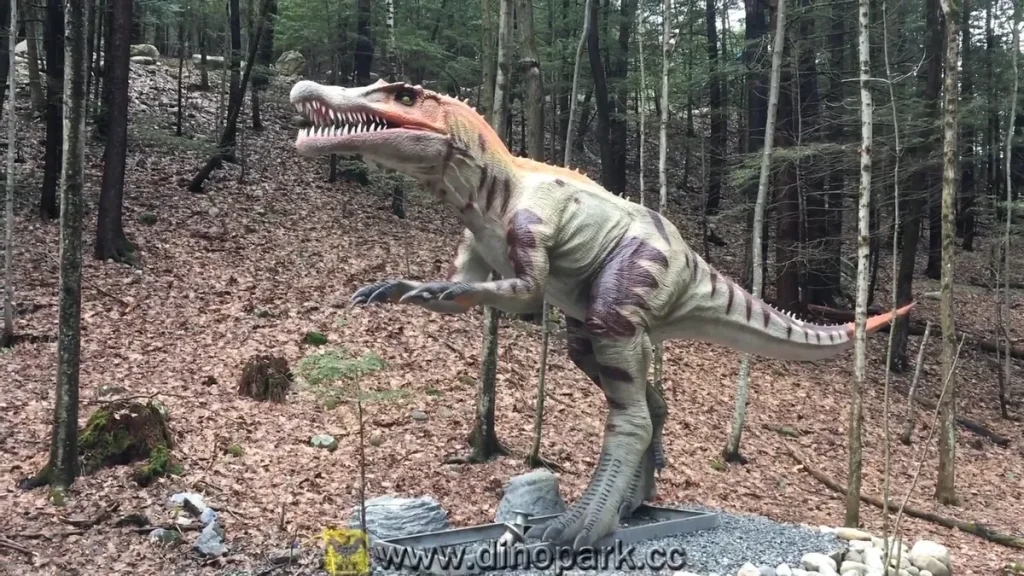
Two consequences follow. The skull is built as a separate lightweight unit rather than as part of the neck sculpt, and the jaw drive is mounted back at the hinge instead of in the jaw itself. Get that wrong and the head visibly droops a few degrees after a season, which reads as a tired animal rather than a broken one — visitors notice without being able to name it.
The teeth are individual castings, not a moulded strip. On a jaw this long, a continuous strip goes rigid in the curve and the front teeth end up out of line, which is the fastest way to make an otherwise good head look like a costume.
Baryonyx is one of the few dinosaurs with direct dietary evidence attached — fish scales and a young iguanodon in the type specimen’s gut cavity. That is a placement instruction, not a piece of trivia: put the animal where the story makes sense.
River walks, lake edges, aquarium forecourts and wetland boardwalks all work because the stance explains itself. A Baryonyx standing on dry gravel in the middle of a car park requires a caption. A Baryonyx leaning over water with its snout down requires none — the visitor completes the story on their own, which is what a good exhibit is for.
For waterside installations we raise the electrical enclosure above the 100-year flood line and specify the frame coating for standing humidity rather than rainfall. Splash zone is a different corrosion problem from rain, and a model specified only for weather will rust from the feet up.
Visitors routinely mistake one for the other, and the difference is worth designing for rather than correcting with signage.
The Spinosaurus has a sail. The Baryonyx does not — its neural spines are low, and the back runs nearly flat from shoulder to hip. If a Baryonyx and a Spinosaurus stand in the same park, separate them physically. Placed side by side, the bigger sail pulls every eye and the Baryonyx becomes the animal nobody photographs.
The second difference is the arm. Baryonyx carries a genuinely heavy forelimb with a single oversized claw; a Spinosaurus forelimb is proportionally slighter. On our builds the claw is cast separately and finished to a different sheen from the surrounding skin, so it catches light as a hard object rather than reading as one more scale.
Can it be posed mid-strike? Yes. The standard pose is a walking stance with the head lowered; a lunging pose with one forelimb raised is available and changes the frame layout, so it has to be agreed before welding.
How many movements should we specify? Seven to nine is the sensible range for this animal. Beyond that the cost climbs without the visitor noticing, because the snout already does most of the acting.
Can it go in shallow water? Yes, with the specified splash-zone treatment. The animal can stand in up to 300 mm of water; anything deeper needs the base raised and the drive units re-sited above the waterline.
Does the jaw need to close fully? On our build it does, and we recommend it. A jaw that stops short of closing looks injured rather than open-mouthed, and children read that as a sick animal.
Is the skin repairable on site? Yes. Silicone patching is a documented procedure with the supplied kit; a 50 mm tear is a twenty-minute repair, not a factory return.
An 11-metre animal ships in four sections — body, neck and head, tail in two parts — crated for ocean freight. On-site assembly is typically one day with a small crane, followed by a full motion and audio test before handover.
Every project ships with a spare-parts list, a maintenance guide and the wiring diagram. Servo units, controller boards and the jaw drive are all individually replaceable on site.
Related. the full animatronic dinosaur range, the Spinosaurus with sail, theme park exhibit planning.
Same factory and the same build standard. What changes is size, movement set and how the exhibit is meant to be used on site.
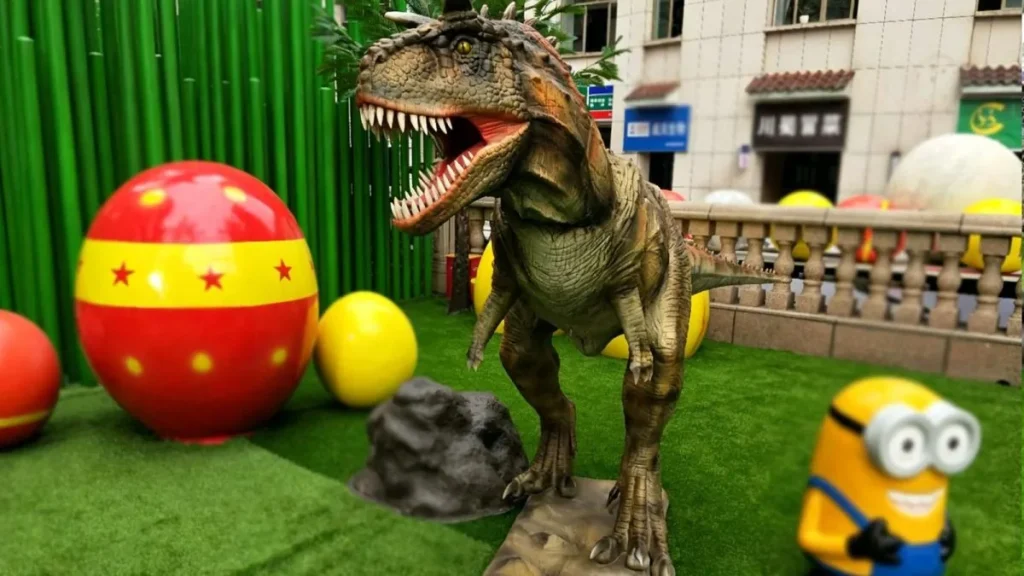
Life-size animatronic Carnotaurus in a roaring pose — articulated jaw, forward-set horns and roar audio on a rock base for outdoor display.
View Product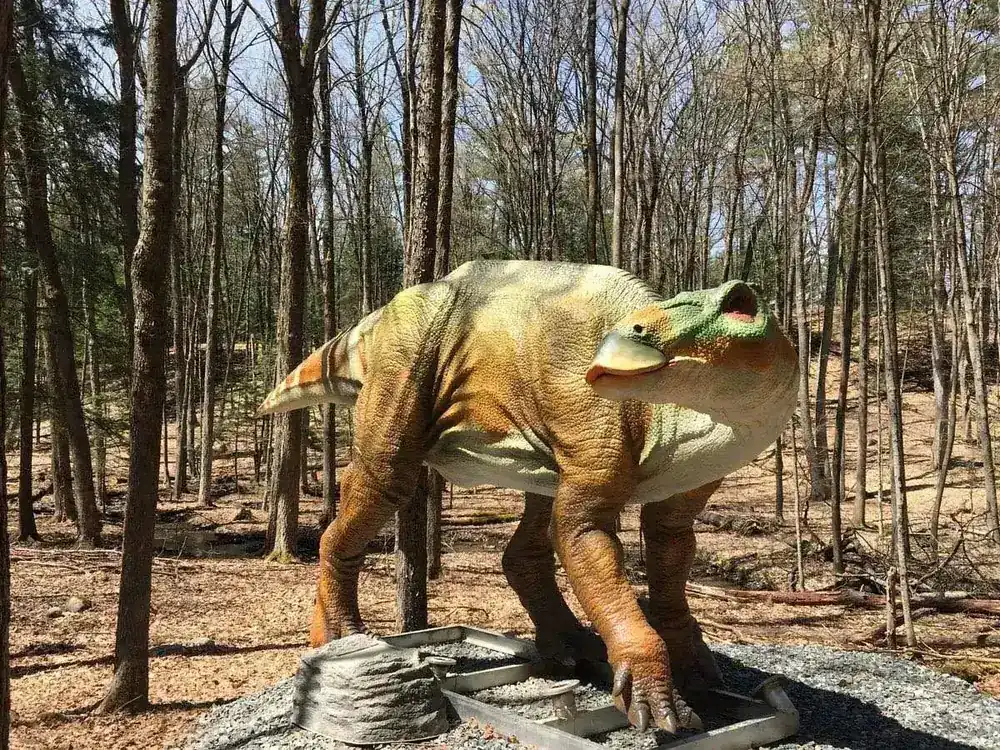
The duck-billed dinosaurs are the least dramatic animals in the catalogue and the ones that read most like real animals. That is the appeal: […]
View Product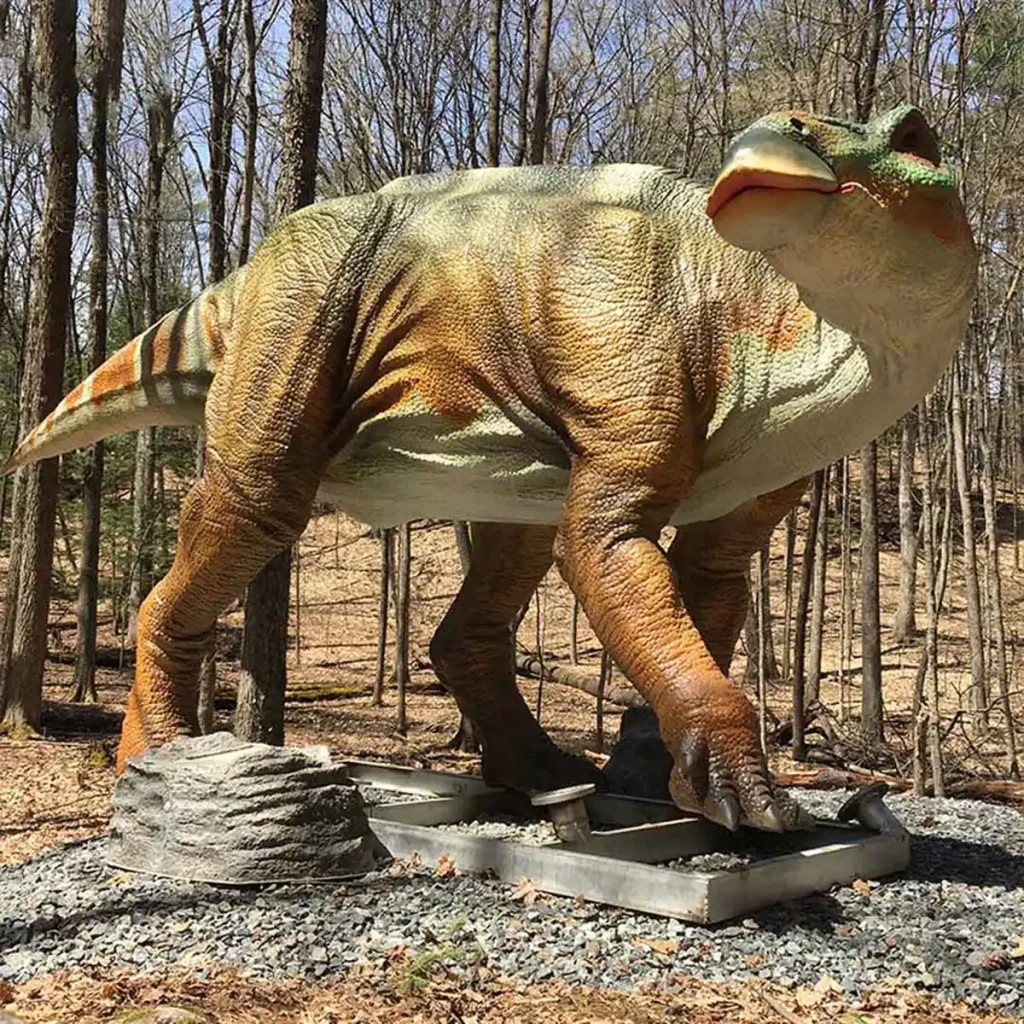
A 10 m animatronic Iguanodon with the correct thumb spike, a two-or-four-legged stance and a museum-grade finish — built for education trails.
View ProductThree things buyers usually want settled before they ask for a drawing — what drives the number, how the piece is actually built, and what to check between suppliers.
Animatronic Dinosaur Buying Guide for Museums & Theme Parks Choosing the right animatronic dinosaur for your museum, theme park, or zoo is one of […]
Read the guide →From fossil reference to finished skin — how proportions, texture, colour and weathering are decided, and what separates a realistic build from a cartoon one.
Read the guide →Why Motor Choice Matters More Than Buyers Expect Motor selection is usually treated as a manufacturing detail. It is not. It is the decision […]
Read the guide →Send your dimensions, movement requirements and installation site. You get a realistic budget range and a dated build schedule.
Or email info@hltdino.com — we reply within one business day.