A molded silicone skin is what separates a museum-grade exhibit from a prop that reads as a toy at three metres. This is the material, the casting process, and the movement systems behind every silicone-skin dinosaur we build.
A molded silicone skin is the difference between a museum-grade exhibit and a model that reads as a toy up close. Four properties decide which one you get.
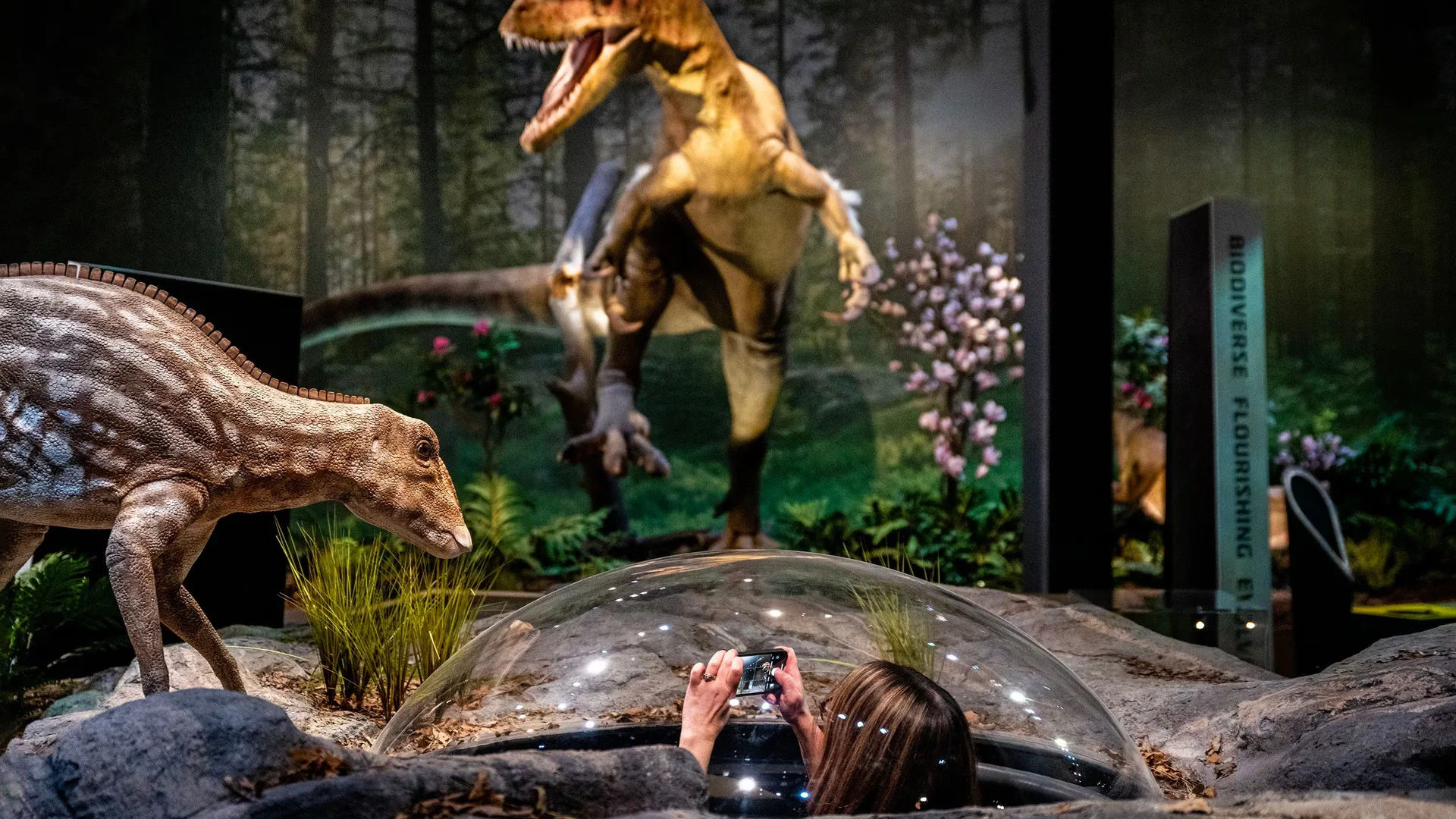
Scale and wrinkle detail survives a 30 cm viewing distance — where painted fibreglass and foam models go flat. The texture is cast into the mold, not painted on, so it does not wear off with handling.
Skin stretches and returns as servos drive the head, jaw, eyes and breathing — no cracking at the joints where a rigid shell would fail first. Movement stays smooth across thousands of cycles a day.
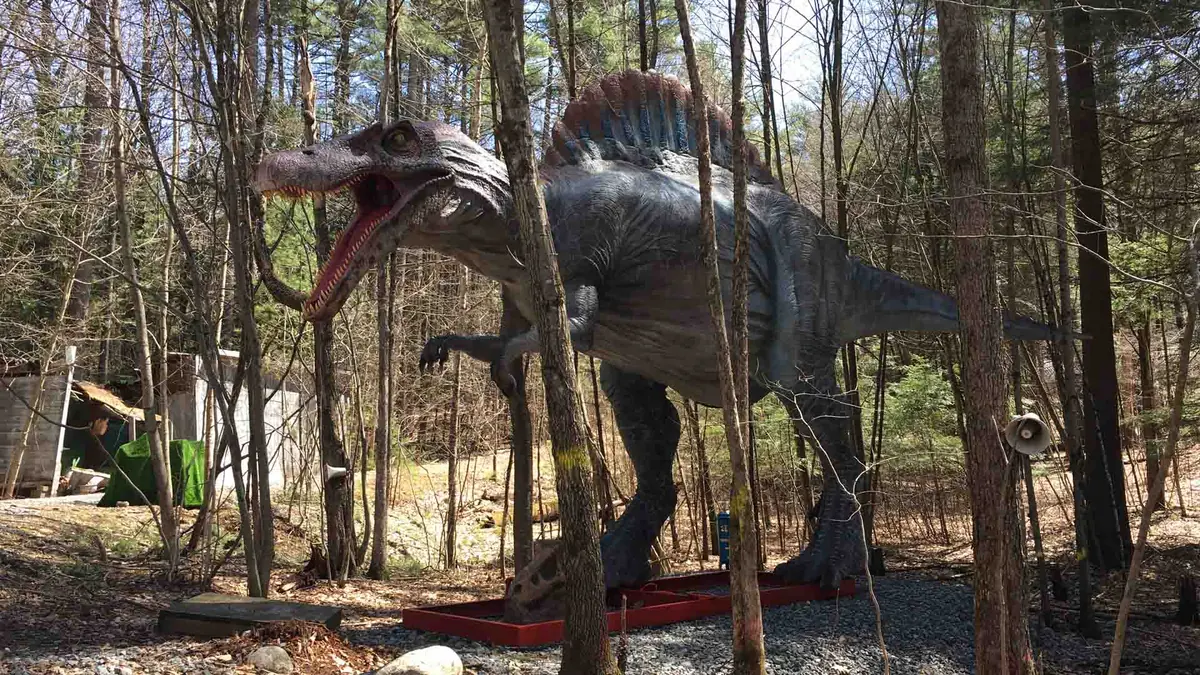
UV-stable pigments and a waterproof silicone formulation are made for outdoor museums, zoos and theme park trails. The galvanised frame and sealed control box complete the outdoor spec.
A soft, skin-like give invites supervised interaction — a differentiator for children's museums and discovery centres where visitors are encouraged to touch the exhibit.
Patent ZL 2022 1 0224489.5 covers a molded silicone casting method that delivers skin-like flexibility with the detail of a sculpted surface. Four stages, each with a review point.
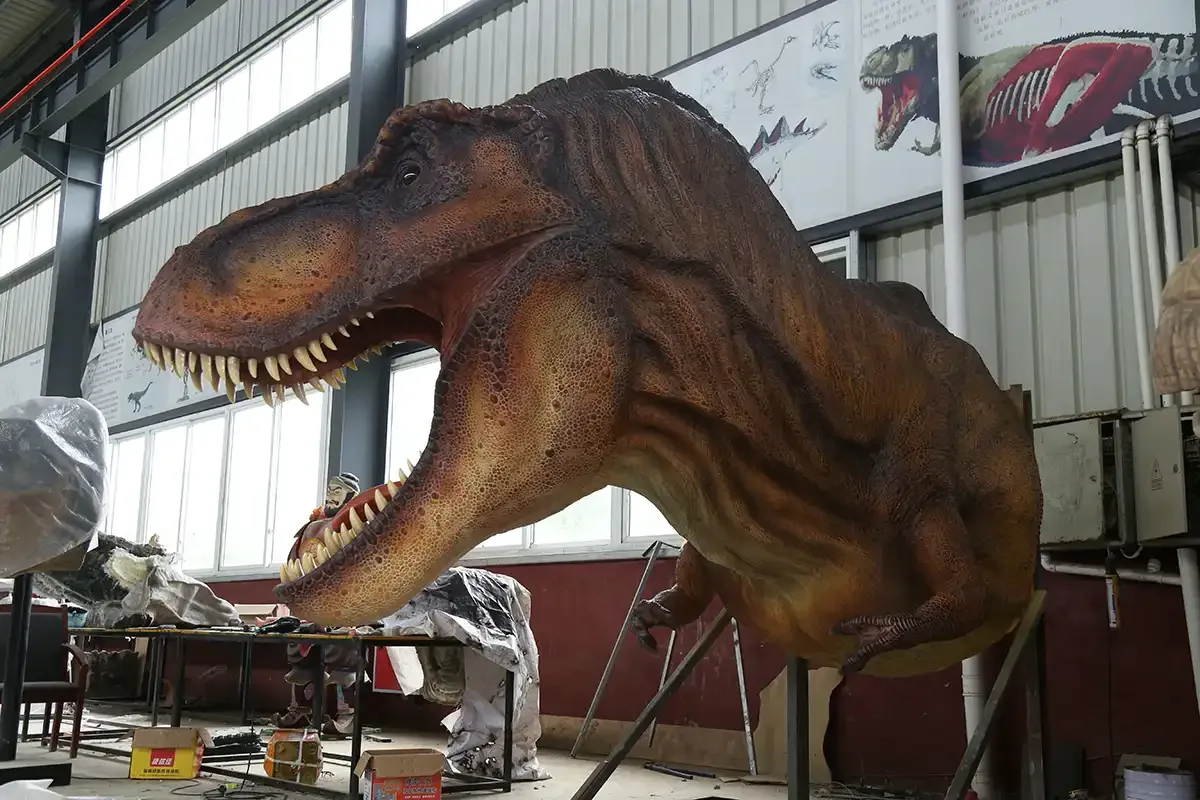
Tubular steel skeleton welded to support the full weight and motion load, galvanised for outdoor resistance.
Foam is cut and carved to form muscle contours over the frame — the anatomy that gives the skin natural volume.
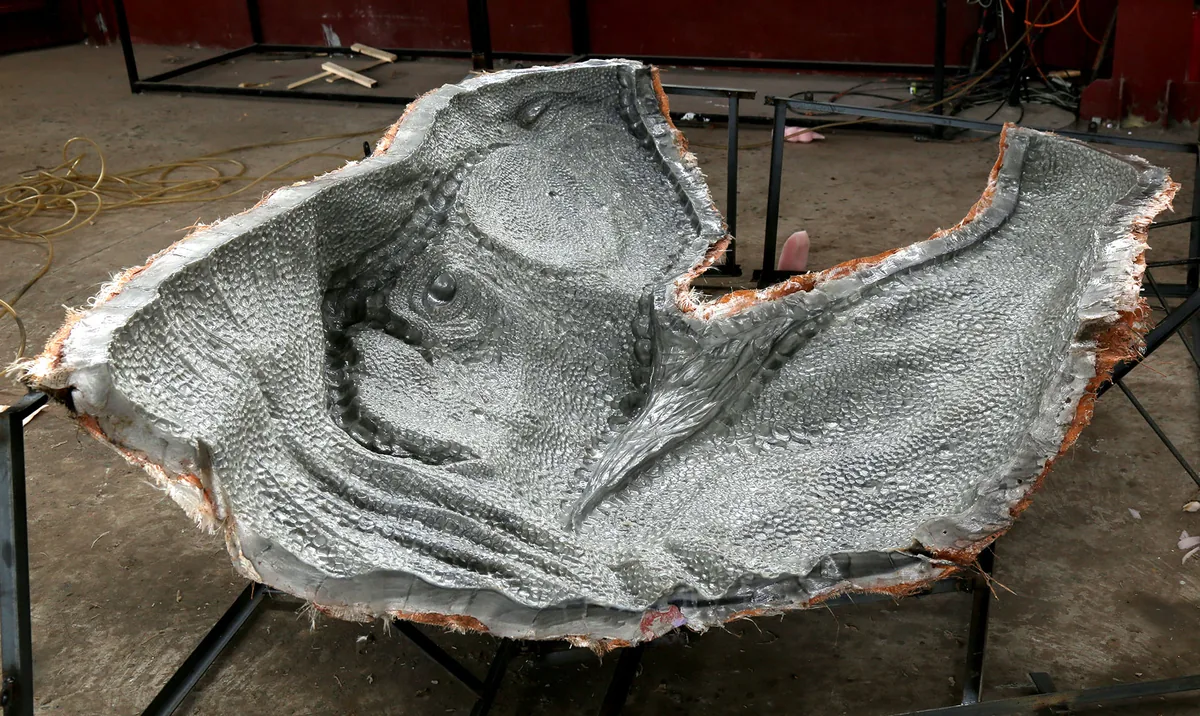
Under patent ZL 2022 1 0224489.5, silicone is cast in molds taken from a sculpted surface — flexible, with the scale texture molded in rather than stamped on.
Airbrush and hand detailing add colour gradients, scars and wear that make each exhibit feel like a living animal rather than a uniform finish.
The whole sequence — moulds taken off a sculpted surface, demoulding, overmoulding onto the frame, then the finishing passes — is documented photograph by photograph in the patent case study. Read it before you compare surface options; the failure points are easier to spot once you have seen them.
Three surface builds, three very different answers to the same question: what does the animal look like when a visitor stands next to it.
| Property | Foam + Sealant | Painted Fiberglass | Molded Silicone |
|---|---|---|---|
| Surface texture | Hand-pressed, uneven | Smooth, glossy | Molded-in scale & wrinkle |
| Flexibility | Cures rigid, cracks | Rigid | Flexes with motion |
| Up-close realism | Looks like a toy | Plastic appearance | Skin-like, museum grade |
| Outdoor life | Fades in 1–2 years | Fades | UV-stable, waterproof |
| Patent | — | — | ZL 2022 1 0224489.5 |
Every build is scoped to the site it will stand on — from a small indoor hatchling to a life-size outdoor landmark. Nothing is pulled from a fixed catalogue.
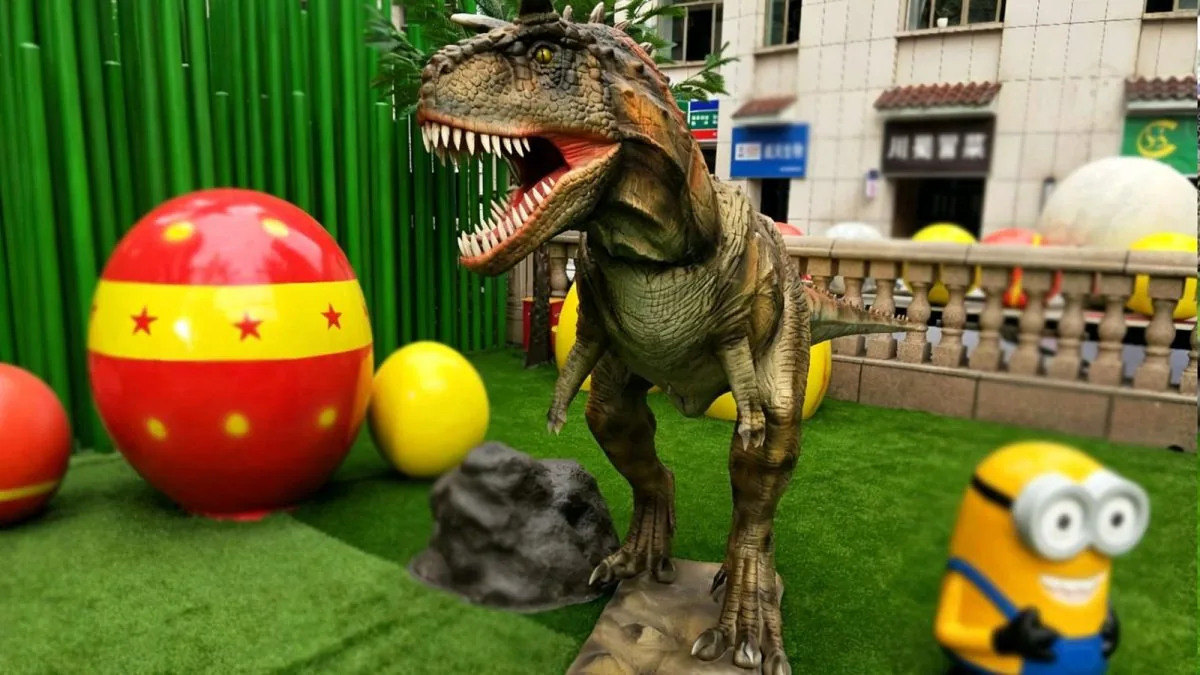
1–3 m animals for children's museums, gallery exhibits, mall atriums and travelling shows, where ceiling height and crate size set the real limit.
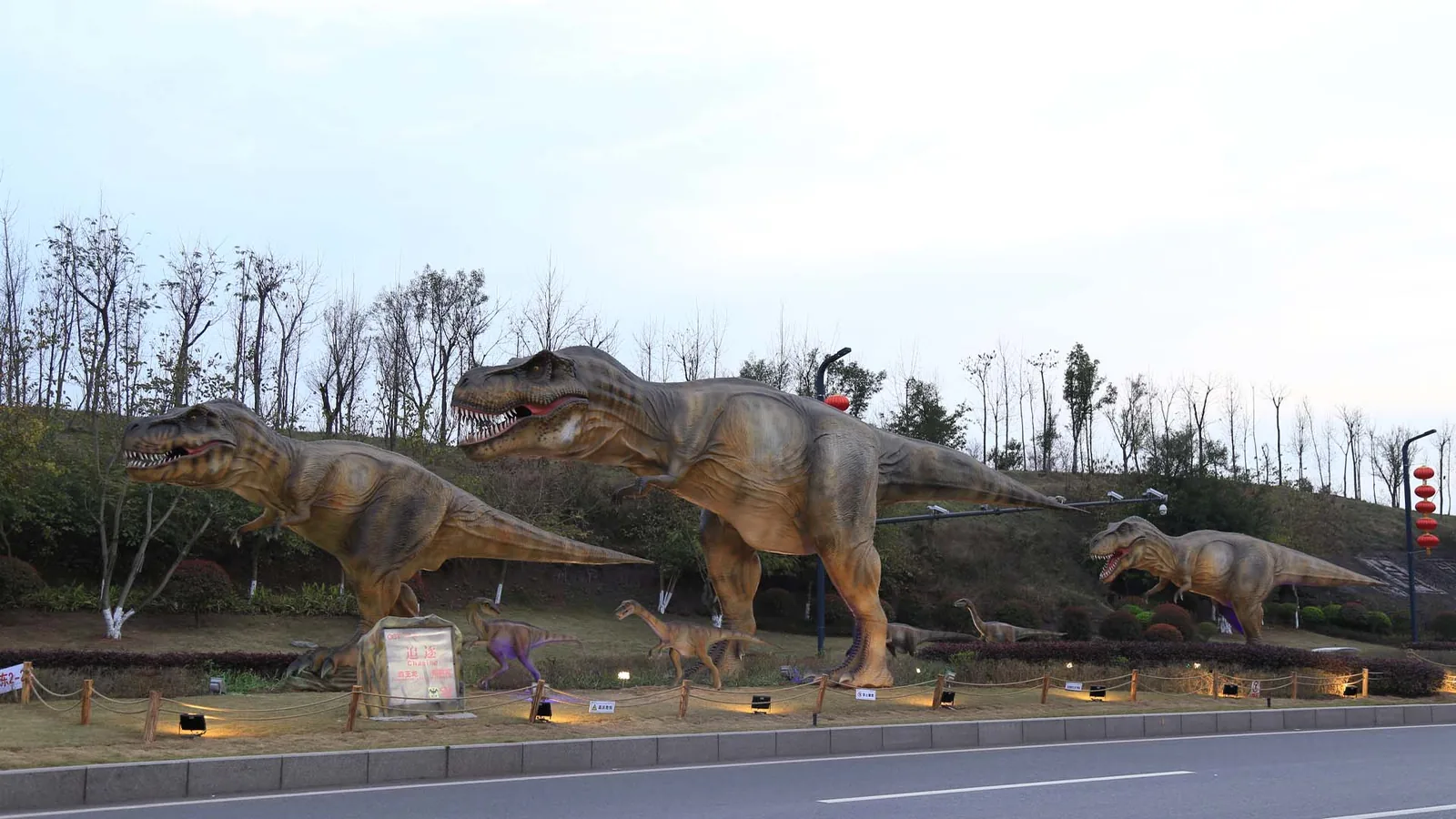
4–8 m life-size animals for zoo trails, theme park plazas and dinosaur parks — the size at which a piece still reads clearly from a moving walkway.
10 m and above, engineered for wind load and public safety, for park gateways, city squares and main-show positions.
Height limits, gate widths, freight routes and floor loading are surveyed before the design is fixed — not discovered on delivery day.
Movement and sensing sets run from simple to fully interactive, depending on how close visitors get to the piece.
Servo-driven head turn, jaw open and close, and blinking, programmed to a natural rhythm rather than a mechanical loop.
Chest rise and fall plus subtle body sway, which is what makes a still animal read as alive at a distance.
Tail sweep, forelimb reach and head-lowering for feeding poses — useful where visitors pass directly underneath.
Roars, calls and breathing supplied with adjustable volume, set differently for indoor galleries and open outdoor trails.
Proximity sensors trigger a movement and sound sequence when visitors approach, then return the animal to standby when the area is clear.
Loop, timed, manual and sensor-triggered modes on one controller, so opening hours, quiet periods and special events do not need a rebuild.
Movement is easier to judge on film than on a spec sheet — watch a servo-driven juvenile run its jaw and neck cycle, and a life-size baryonyx work through a full programme, filmed in the workshop with no music added.
The same animal is specified differently for a theme park plaza, a zoo trail and a museum gallery. An outdoor, weatherproof build is not an indoor build placed outside.

High visitor numbers and long opening hours mean thousands of movement cycles a day. Drive units, joints and fixings are specified for continuous use.
Theme Park Exhibits
Where animatronic pieces sit near living animals, movement timing and sound levels are assessed against the real collection.
Zoo Exhibits
Indoor builds favour smaller sizes, quieter mechanisms and close-range detail, often paired with interpretive panels and timed talks.
Museum Exhibits
Exhibits that move between venues are built around crate dimensions, fast re-assembly and a documented packing list.
Mall Displays
Long outdoor routes need landmark pieces placed at intervals, each engineered for wind load and anchoring on grass, gravel or hard standing.
Browse DinosaursBecause each setting carries different constraints, every project is quoted as a custom build rather than a catalogue item. If you are shortlisting suppliers, ask for the site survey, the movement schedule and the crate list before you compare anything else. Send us the site, the species and the expected visitor flow, and we will propose the sizes and movement set that fit.
The patented skin is available across the full range. These are the models most often specified for silicone-skin builds.

Flagship Tyrannosaurus with head, jaw, eye and breathing motion plus roar. The piece most parks anchor a trail on.
View Details →
Sensor-triggered version that wakes as visitors approach, then returns to standby. Built for outdoor walkways.
View Details →
Distinctive horned theropod that works as a surprise piece in a museum sequence or a trail turn.
View Details →
Life-size aquatic predator for water-themed exhibits and lagoon-side placement.
View Details →A flexible outer layer cast from silicone rubber, molded to reproduce real skin texture — scales, wrinkles, pores — and designed to flex with the animatronic's moving parts.
Our silicone skin uses UV-stable pigments and a waterproof formulation, suitable for outdoor exhibits in sun and rain. The galvanised steel frame and sealed control box complete the outdoor spec.
Yes — species, size, pose, colour and motion level are all customizable. Tell us your space dimensions and the experience you want visitors to have, and we return a specification and design proposal.
We ship crated and modular worldwide, and our technicians can install and commission the exhibit on site. Installation support and remote guidance are included.
Tell us the species, dimensions, motion level and destination. We return a specification and design proposal — factory direct, no reseller in between.
Or email info@hltdino.com — we reply within one business day.