Dinosaur Skeletons & Fossils
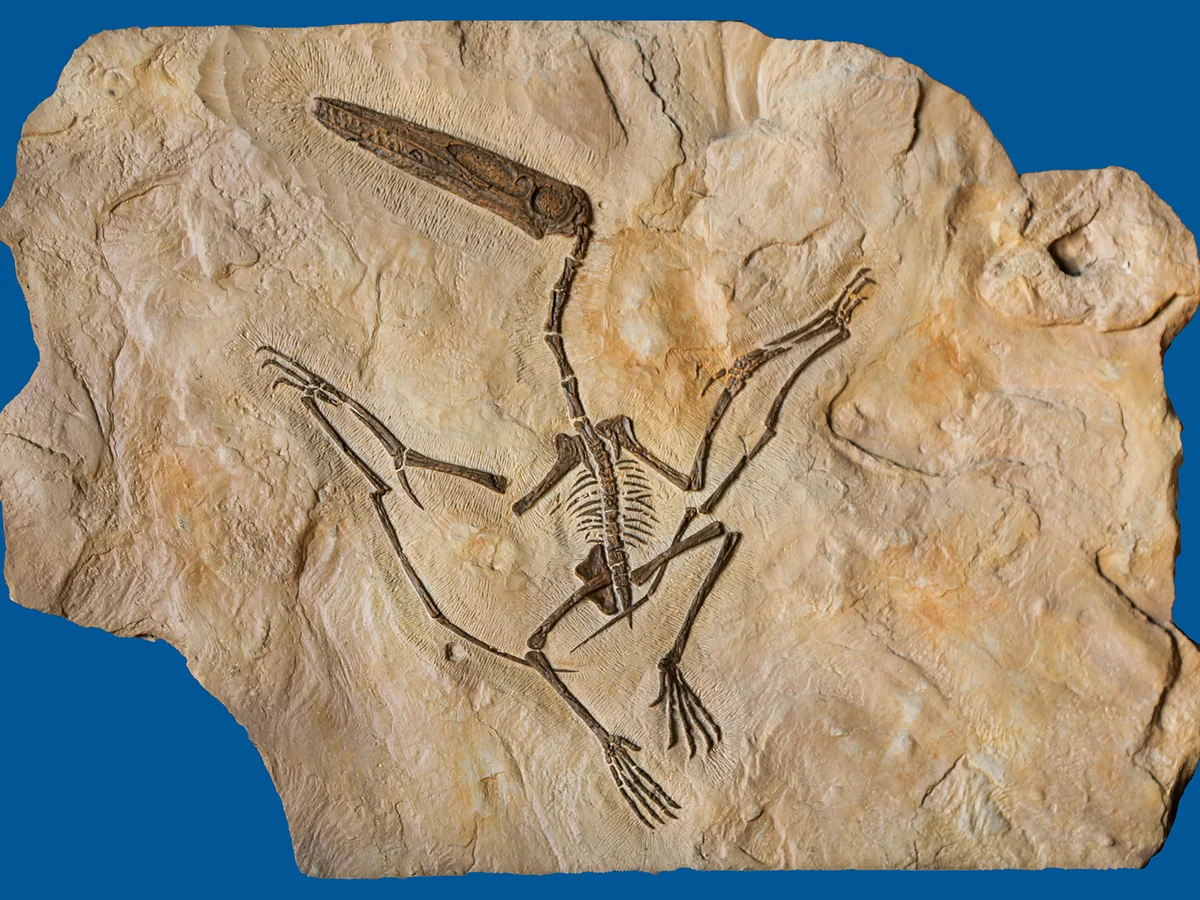
The short-tailed pterosaurs are the ones that look wrong at first glance. No long bony tail, a much shorter skull, and the wing finger folded into the matrix rather than spread. Visitors who know pterosaurs expect a long tail, so a plate with the tail missing reads as an incomplete specimen unless the mount explains what it is.
That is the whole reason this piece is worth having in a wall sequence. Pterodactylus sits at the point where pterosaurs became efficient flyers rather than gliders, and a plate that shows the short tail next to a long-tailed plate tells that story in one glance.
| Species | Pterodactylus-type short-tailed pterosaur |
| Era | Late Jurassic, roughly 150–148 million years ago |
| Type | Wall-mounted fossil plate replica — static, no mechanism |
| Size | Plate 900 × 600 mm typical; specimen about 1.1 m wingspan folded; custom sizes available |
| Material | FRP plate cast over a light steel stiffener, bones in cast composite |
| Surface | Hand-finished stone texture, layered mineral pigment, matte sealed |
| Animation | None |
| Sound | None; interpretation audio can be added as a separate unit |
| Power | None |
| Installation | French cleat or concealed bracket, two-person lift, under an hour |
| Customisation | Plate size, matrix tone, specimen pose, label plate, framed or unframed |
| Support | 12-month warranty; bracket and touch-up pigment supplied |
Early pterosaurs carried a long stiffened tail that acted as a counterbalance. The short-tailed forms lost it, because the wing and the skull had taken over the job. In a plate, that means the specimen reads as compact and front-heavy — and it is exactly what makes it a useful teaching piece beside a long-tailed plate.
Where a museum runs a wall sequence, putting the two side by side with a single caption does more than either plate alone. The comparison is the exhibit; the individual plate is the medium.
The bones sit in relief rather than flush, cast as separate elements and bonded onto the plate before finishing. Set them flush and the plate reads as a printed image; leave them proud by two to three millimetres and the raking light in a gallery picks out the edges the way it does on a real slab.
The wing finger is the detail most often got wrong. On a real specimen it folds back along the body, and the membrane impression survives as a faint darker field around it. The plate carries that field in the pigment layer rather than as a sculpted shape, which is what keeps it looking like rock rather than like a model of a rock.
The plate is hollow-backed over a steel stiffener, so a 900 × 600 mm piece hangs on a domestic-scale wall without a structural fixing. The bracket is a French cleat, which means the plate sits flush and can be lifted off for cleaning.
Where a sequence of plates is being hung, set the centres at a consistent height and keep the gap between plates equal — the wall reads as a collection at that point rather than as a set of objects. This is the one installation detail that changes how the whole wall looks.
No. It is a sculpted replica built to published proportions for the species. Where a museum needs a specific specimen number, that requires specimen data supplied to us, and the build becomes a different project.
Not as standard. The plate is built for indoor display; outdoor mounting needs a different sealing system and a heavier fixing. Where an outdoor plate is required, tell us at order rather than after delivery.
A plain label plate is supplied on request, and a framed version with a printed caption is available. Both are separate items from the replica itself, because caption wording is usually decided by the institution.
Yes — the specimen scales with the plate up to about 1.8 m wide, above which the FRP plate needs a heavier stiffener and a two-point wall fixing.
Same factory and the same build standard. What changes is size, movement set and how the exhibit is meant to be used on site.
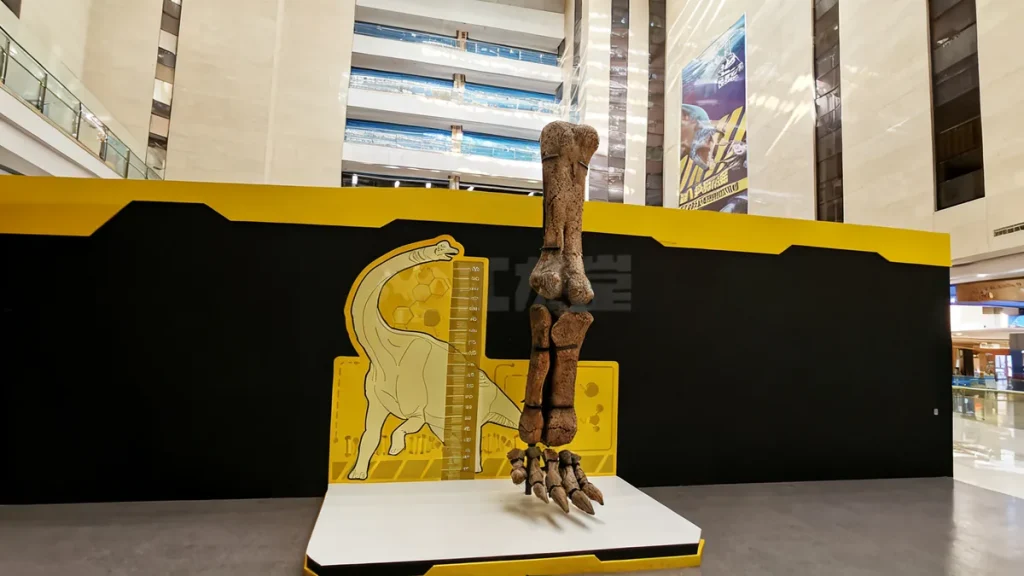
Single bones are the least glamorous thing we make and the most useful thing a museum can buy. They go on handling tables, into […]
View Product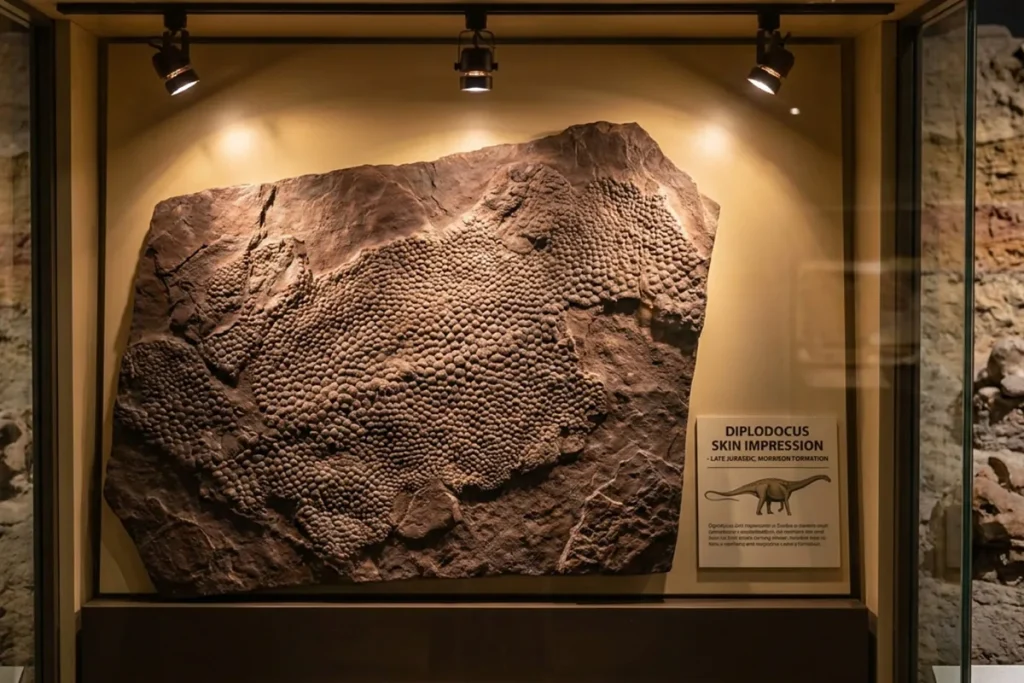
Skin impressions are the hardest fossil to fake and the easiest to ruin. Everyone knows what dinosaur skin is supposed to look like, which […]
View Product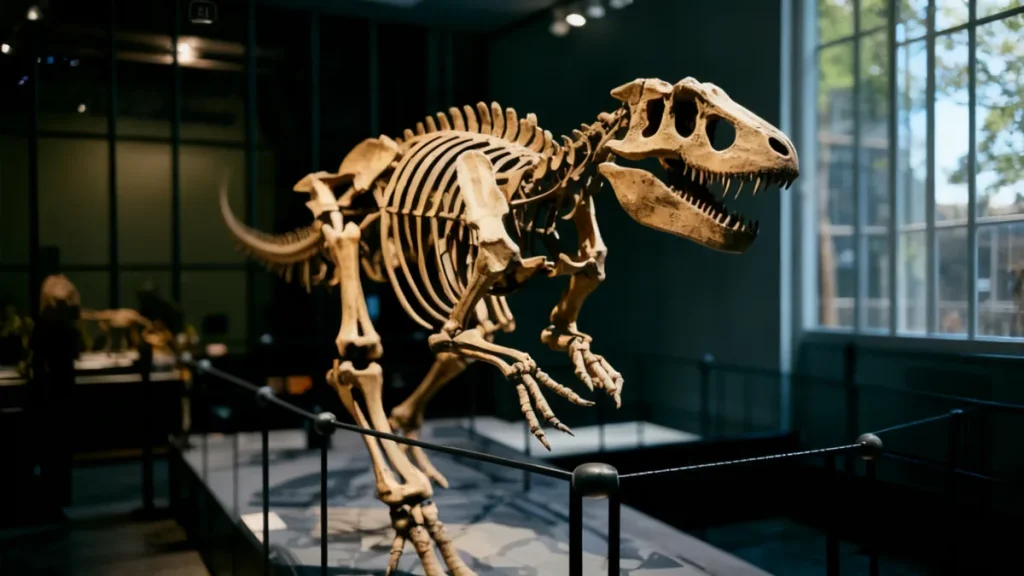
Above about ten metres a dinosaur skeleton stops being an exhibit and becomes a structure. The engineering changes category: wind load replaces handling as […]
View ProductThree things buyers usually want settled before they ask for a drawing — what drives the number, how the piece is actually built, and what to check between suppliers.
From fossil reference to finished skin — how proportions, texture, colour and weathering are decided, and what separates a realistic build from a cartoon one.
Read the guide →Frame, drives, skin, sensors, sound and weatherproofing — the six systems behind every animatronic dinosaur, and how each one changes cost and behaviour.
Read the guide →Choosing the right animatronic dinosaurs for your venue is not just about picking the most famous species — it is about matching each dinosaur […]
Read the guide →Send your dimensions, movement requirements and installation site. You get a realistic budget range and a dated build schedule.
Or email info@hltdino.com — we reply within one business day.