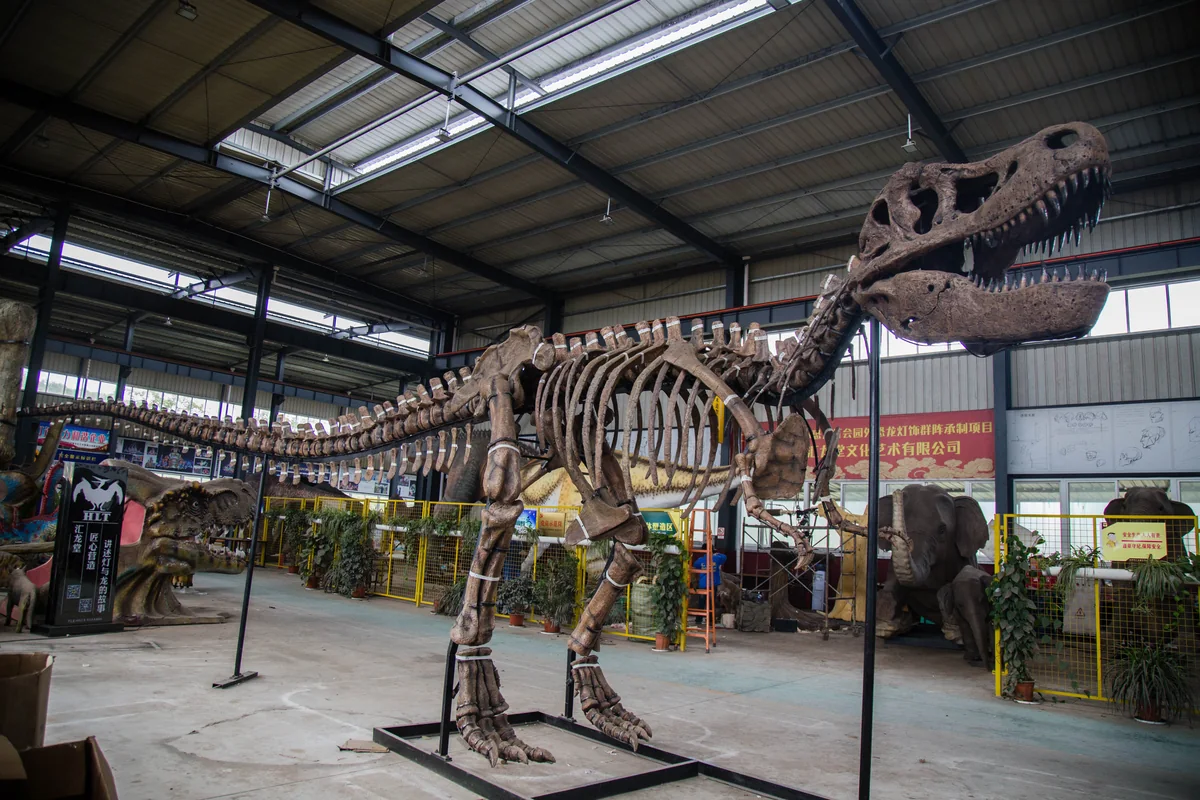
Dinosaur Skeletons & Fossils
A skeleton reads differently from a mounted animal, and the difference is the gaps. There is no skin to hide the joints, no pose to disguise the proportions, and nowhere for a bad casting to disappear. A visitor walking round a skeleton is reading the structure itself, which is why museums are far less forgiving of a replica than a theme park is of a statue.
This piece is built the way a museum mount is built: a steel armature carrying the load, FRP bone elements formed over it, and a hand-finished fossil surface. It is a static replica — there is no mechanism, and nothing to service beyond the finish.
| Species | Theropod base — T-Rex, Allosaurus, Carnotaurus and others on request |
| Era | Mesozoic; period follows the species specified |
| Type | Static skeleton replica, no mechanism |
| Size | Life-size to the species; custom dimensions available |
| Material | FRP (fibre-reinforced polymer) bone elements over a heavy-duty galvanised steel armature |
| Surface | Hand-painted fossil texture with rust-brown patina, sealed against UV and moisture |
| Animation | None — static mount |
| Sound | None as standard; optional interpretation audio on request |
| Power | None required; optional lighting or audio adds a supply at the position |
| Installation | Freestanding, partially buried or landscape-integrated; concrete anchor points; 3–5 technicians, 2–4 days |
| Customisation | Species, size, pose, mounting style, base and landscape design, patina tone |
| Support | 12-month warranty on structure and FRP; touch-up pigment supplied for patina maintenance |
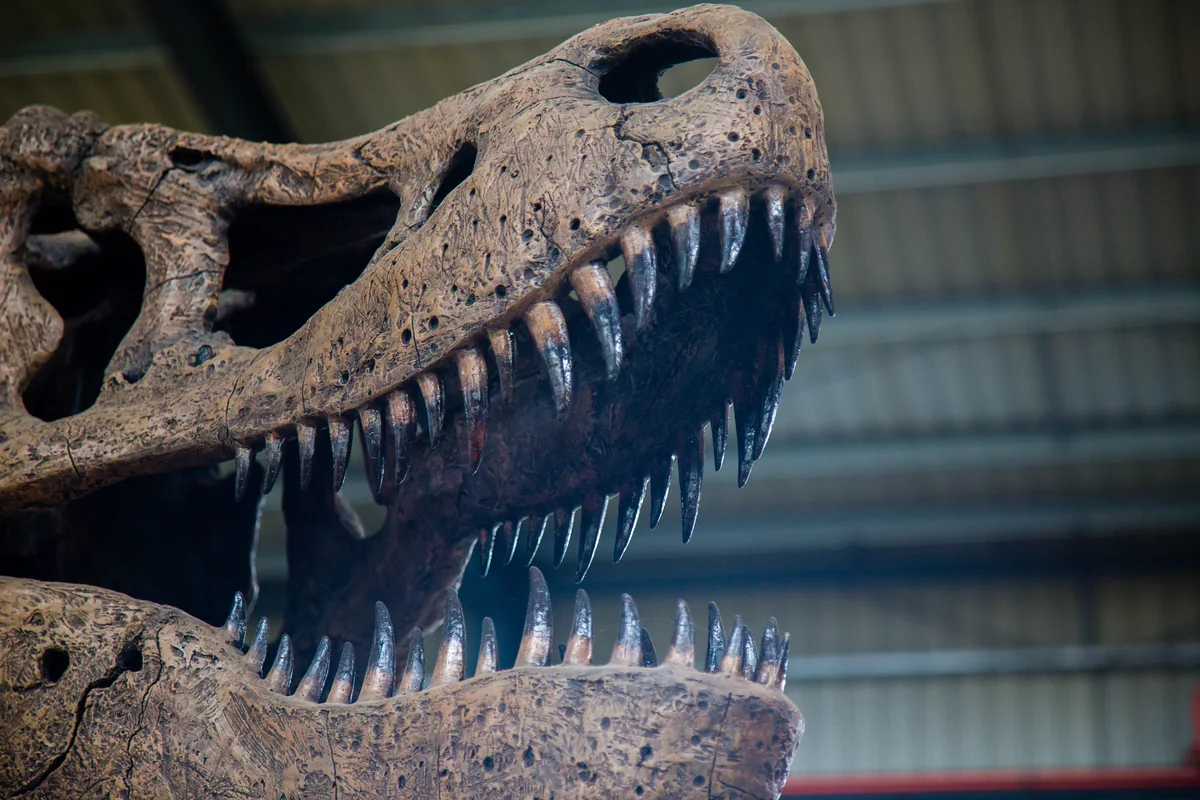
FRP bones are light, which is an advantage in shipping and a problem in mounting: a light bone on a visible support looks suspended, and a suspended skeleton looks like a model rather than a mount. The fix is to design the armature first and the bones around it, so the supports sit where the anatomy would carry load anyway.
On a theropod that usually means the spine runs on a continuous steel line from skull to tail base, with the ribs cantilevered off it and the legs carrying down to the anchor points. Where a museum mount hides the armature inside the bone profile, the result reads as a skeleton standing up rather than a skeleton hung on a frame.
Three arrangements are common, and they are genuinely different builds. Freestanding on a plinth is the simplest: the armature carries everything to a base plate and the plinth takes the load. Partially buried puts the anchor points below grade, which reads better in a landscape and needs drainage designed into the excavation.
Landscape-integrated is the one that gets underestimated. Where the skeleton emerges from planting or a rock feature, the armature has to be built to be loaded asymmetrically — some of the visual support comes from the landscape, and none of the structural support does. That means a heavier armature than a freestanding mount of the same size.
Fossil colour is not a single pigment. It is layered — a base tone, a darker wash in the recesses, a lighter dry-brush on the high points, and a sealing coat that holds the whole thing. Done properly it reads as mineral rather than as paint.
It also fades unevenly outdoors: the high points go first because they take the sun and the rain. That is why touch-up pigment ships with the piece rather than being a later order. An hour of local touch-up every second season keeps a mount looking excavated; ignoring it for five years means a full repaint.
Indoors, the constraint is fire performance and weight on the floor. Outdoors, it is UV, frost and water sitting in the recesses. The FRP and armature are the same; the sealing system and the anchor design are not.
Where a piece is going to move between the two — a travelling exhibition, for instance — it is built to the outdoor specification and mounted indoors on a lighter base. That is more expensive than an indoor build and avoids rebuilding the seal every time it moves.
No. It is a sculpted replica built to the species’ published proportions, not a cast of a specific specimen. Where a museum needs a named individual, that requires specimen data we would need supplied — and the build becomes a different project.
The mount ships in sections with a numbered assembly drawing, and a team of three to five can assemble it. The part that usually needs support is the final positioning and the anchoring, because the load path has to be verified once the piece is standing. We can send a technician for that stage.
Weight scales with species and size, and the point loads are concentrated at the anchor points rather than spread across the base. On a suspended floor or a mezzanine, the anchor loads have to be checked against the slab — send us the floor detail and we will size the base plate to it.
The FRP itself is stable; the surface is what ages. Sealed and touched up on a two-season cycle, an outdoor mount holds its reading for well over a decade. Left unsealed, the patina chalks and the piece starts to look like painted plastic.
Same factory and the same build standard. What changes is size, movement set and how the exhibit is meant to be used on site.
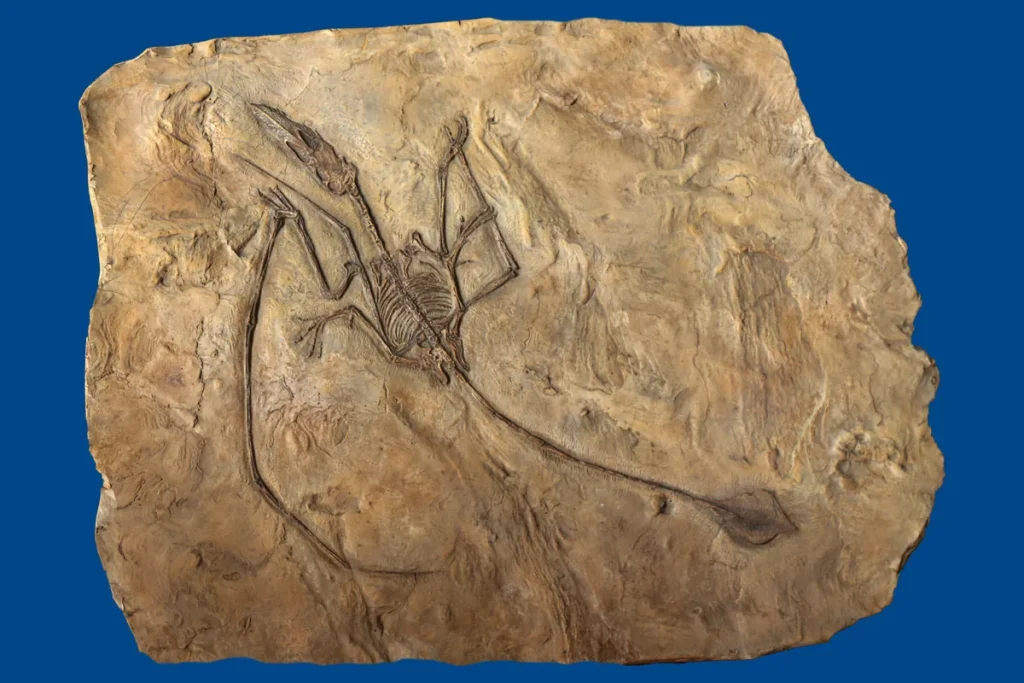
A pterosaur is the one prehistoric exhibit where the skeleton cannot be separated from the membrane. The wing is the fourth finger, drawn out […]
View Product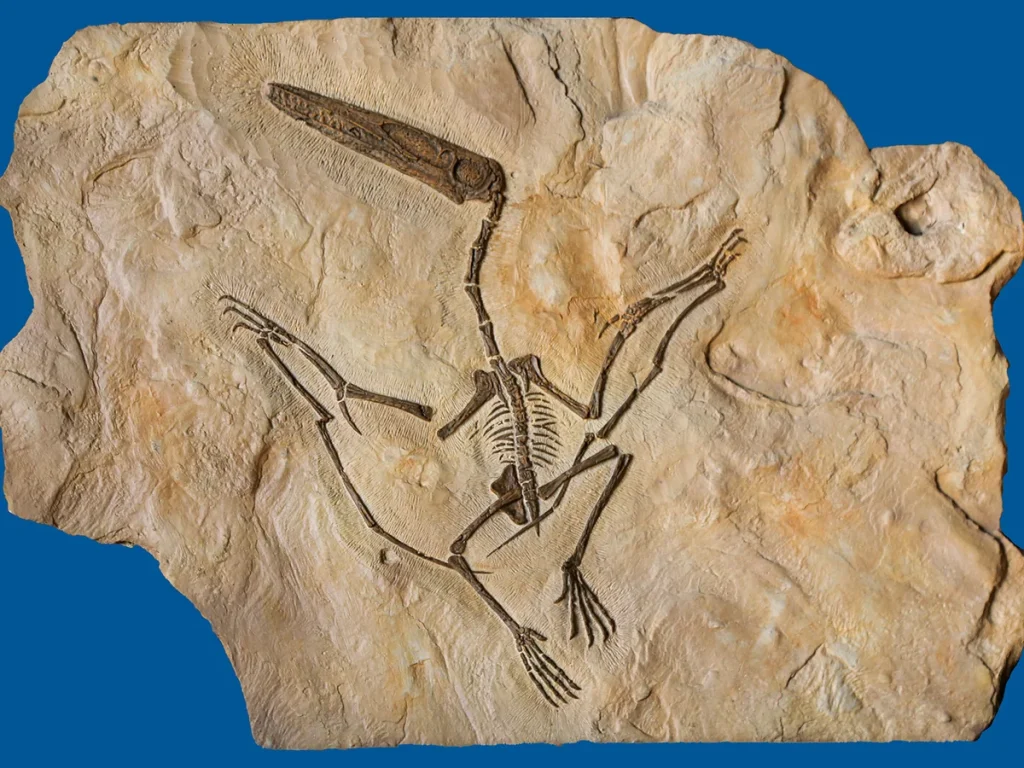
The short-tailed pterosaurs are the ones that look wrong at first glance. No long bony tail, a much shorter skull, and the wing finger […]
View Product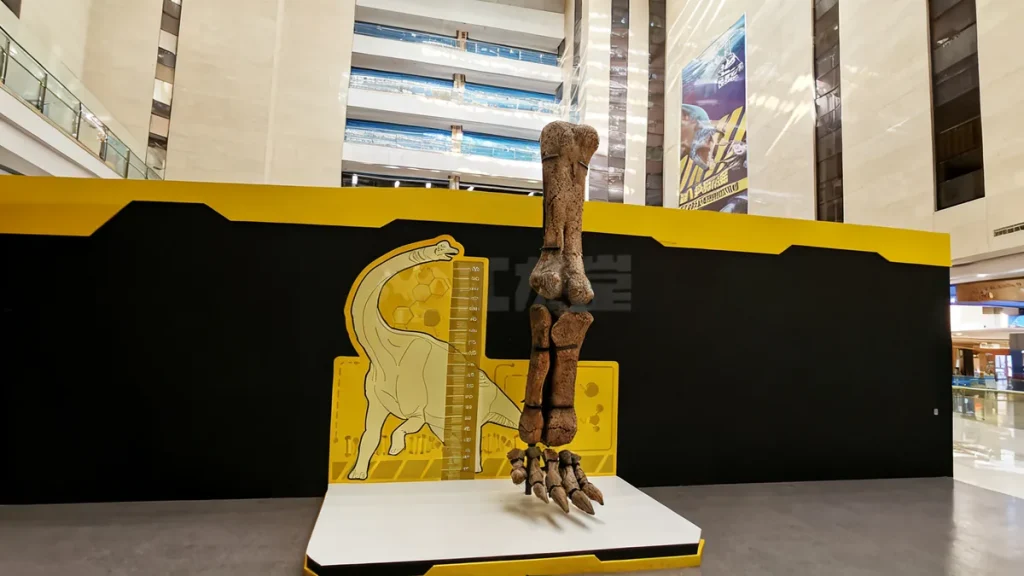
Single bones are the least glamorous thing we make and the most useful thing a museum can buy. They go on handling tables, into […]
View ProductThree things buyers usually want settled before they ask for a drawing — what drives the number, how the piece is actually built, and what to check between suppliers.
From fossil reference to finished skin — how proportions, texture, colour and weathering are decided, and what separates a realistic build from a cartoon one.
Read the guide →Frame, drives, skin, sensors, sound and weatherproofing — the six systems behind every animatronic dinosaur, and how each one changes cost and behaviour.
Read the guide →Choosing the right animatronic dinosaurs for your venue is not just about picking the most famous species — it is about matching each dinosaur […]
Read the guide →Send your dimensions, movement requirements and installation site. You get a realistic budget range and a dated build schedule.
Or email info@hltdino.com — we reply within one business day.